

Football analytics and probability modeling for slot machine behavior and match outcome analysis
Source: Canva Editor
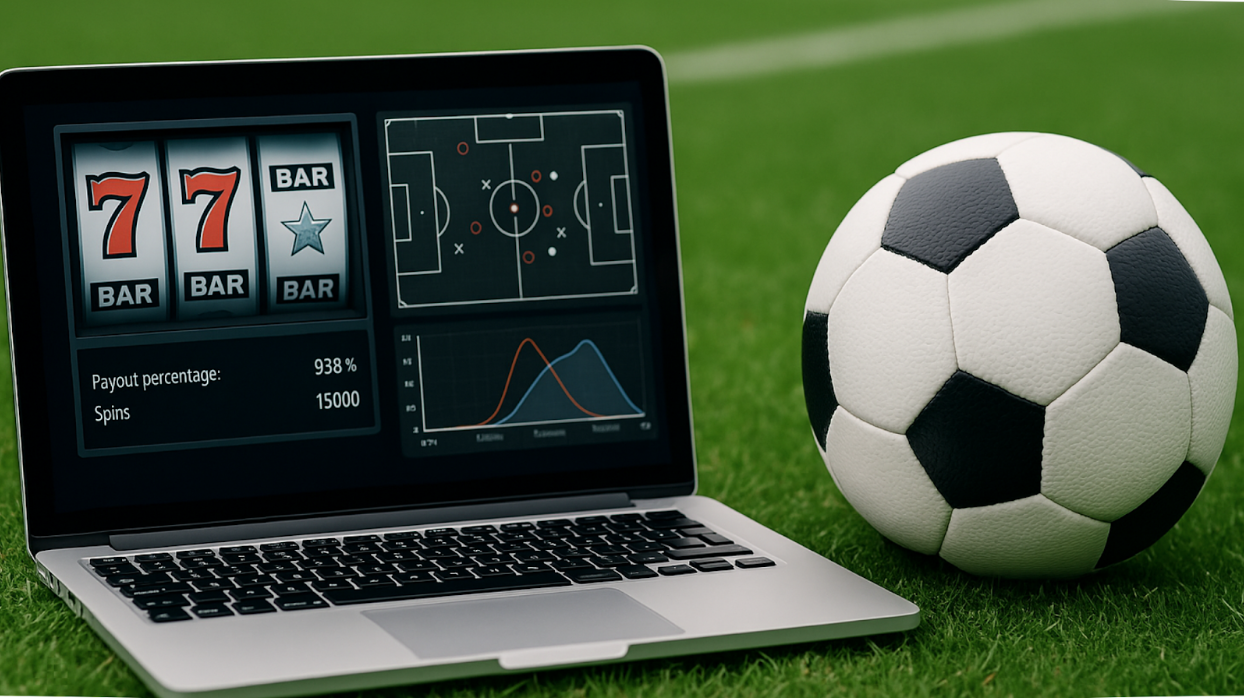
Football analytics, lately, seems to be nudging match predictions in directions that, honestly, weren’t really on the radar just a few years ago. By the time 2024 rolled around, it looked like Bayesian math, a lot of machine learning, and various stochastic tricks started shaping both the guesses people make before a match and the shifting odds you might see once play gets underway. Funny enough, slot machine modeling, totally unrelated at a glance, leans on things like Markov chains and stochastic simulations too, all to make sense of expected payouts or random spins.
At their core, both deal with probability, but that’s about where the similarities end. Football analytics gets tangled in unpredictable, streaming events; slot machines, on the other hand, might as well be rolling dice in a vacuum, each outcome sealed off from the last. Despite the gap, it’s not uncommon now for these fields to riff off each other, borrowing bits of methodology or even casual language that sometimes floats across domain lines, whether for convenience or maybe just curiosity.
Match prediction technologies and methodology
When you peel back the curtain on modern football analytics tools, some of these platforms pack in hundreds of variables just for a single match. It’s not just goals or red cards, analysts pull from everything: past performances, lineup strength, stadium quirks, fluctuating odds, you name it. In 2023, an AI model achieved a 55.5% correct prediction rate in European leagues. Not exactly a slam dunk, but that number varies a lot depending on which division you’re looking at and how much data the teams feed into the system.
More layered models lean into neural networks or even Random Forests, spitting out evolving probability estimates before kickoff and during play. The unpredictability of low-scoring games, along with frequent draws, really throws off tuning, and researchers say models need constant recalibration — sometimes minute by minute. Oddly enough, the same science powering these tools is used by bookmakers, who tweak their in-play odds to keep their own numbers sharp.
Slot machine probability modeling and online gameplay parallels
When it comes to probability modeling for slots, it’s a totally different animal. This space relies on each spin being isolated, no memory, no context, just a pure, independent roll subject only to the RNG churning underneath. Markov and Poisson models pop up again, apparently, but mostly to capture things like volatility, hit rates, expected results, the nuts and bolts that slot players (and regulators) want documented. Payout rates usually hover somewhere between 92% and 97%, you hear those numbers a lot. Notably, comparison to sports pretty much ends right there. Context? Doesn’t matter.
One spin could be after a thousand, and it still faces the same odds as the very first. Applications for sweet bonanza and similar online slots leverage these principles to deliver transparent payout percentages and random outcome histories, verified through regulatory audits. Chasing streaks or so-called lucky runs is, statistically, just a trick of the mind, as dryly illustrated in streak probability models. Regulations now insist on simulated playthroughs to check the math before new slot titles go live, just to make sure nothing slips through the cracks. So, while sports analytics keep whirring along with shifting chaos, slots cling to mechanical regularity and, well, that’s sort of the whole point.
Comparing dynamic sports analytics with static gaming models
What really separates these two approaches is basically the idea of dependence, or, maybe, how much the past matters. Football has this living, evolving nature. Every goal, yellow card, and injury ripples into updated predictions. Analysts and academics tend to favor Bayesian and real-time machine learning models, especially for recalculating chances on the fly as new developments occur.
By contrast, slot machines, sweet bonanza among them, function under strict independence. The last round, win or lose? Doesn’t matter. Each spin kicks off with no baggage, everything pre-set by house edge and paytable, numbers that never budge. In football, a single unexpected goal can swing probabilities wildly, favorites might become second-favorites in the span of minutes if something big happens early. But on the slot side, the probabilities endure, almost stubbornly, sticking precisely to their published payout ratios even if players sense patterns that just aren’t there.
Real-world application and explainability in prediction
Out in the practical world, you can spot football analytics engines humming quietly behind all sorts of decisions, coaching tweaks, lineup changes, or even mid-match changes on formation. The bigger clubs, they do seem fairly invested in plugging these numbers into tactics or, at the very least, using them as a sanity check. Bookmakers, on their end, typically update live odds every few dozen seconds, sometimes less, with algorithms digesting live-match data.
This ongoing synthesis helps stress-test the market itself, matching up expected numbers against end results over entire seasons. For slots, the story’s tilted toward regulatory and audit trails. Operators run billions of simulated spins on sweet bonanza and comparable games to document compliance with stated theoretical payout rates. Regular checks, randomness audits, there’s a steady rhythm aimed at catching anything that drifts from mathematical expectations. Something that’s gained traction lately (in both fields, actually) is model transparency: football setups often include dashboards breaking down which inputs nudged the odds most, while slots now routinely show their paytables and reveal the basics of their underlying randomness.
Responsible use in prediction and gaming
At the end of the day, having solid probability models is powerful, for sure, players probably get more clarity than ever. Still (and this can’t be stressed enough), for all their technical shine, these models don’t hand out guarantees. Predictions, even really clever ones, are just outlines in fog. People dipping into either world, sports or slots, might be wise to stay alert to risks, set sensible limits, and remember that, ideally, this is all supposed to be enjoyable, not a money-making scheme.
Regulation helps, at least in theory. Support and resources are available for anyone seeking to maintain control. In the end, even the most transparent probability systems can only illuminate, not ensure, outcomes. Maybe the best anyone can do is stay informed, tread carefully, and, well, take it as entertainment, if possible.