
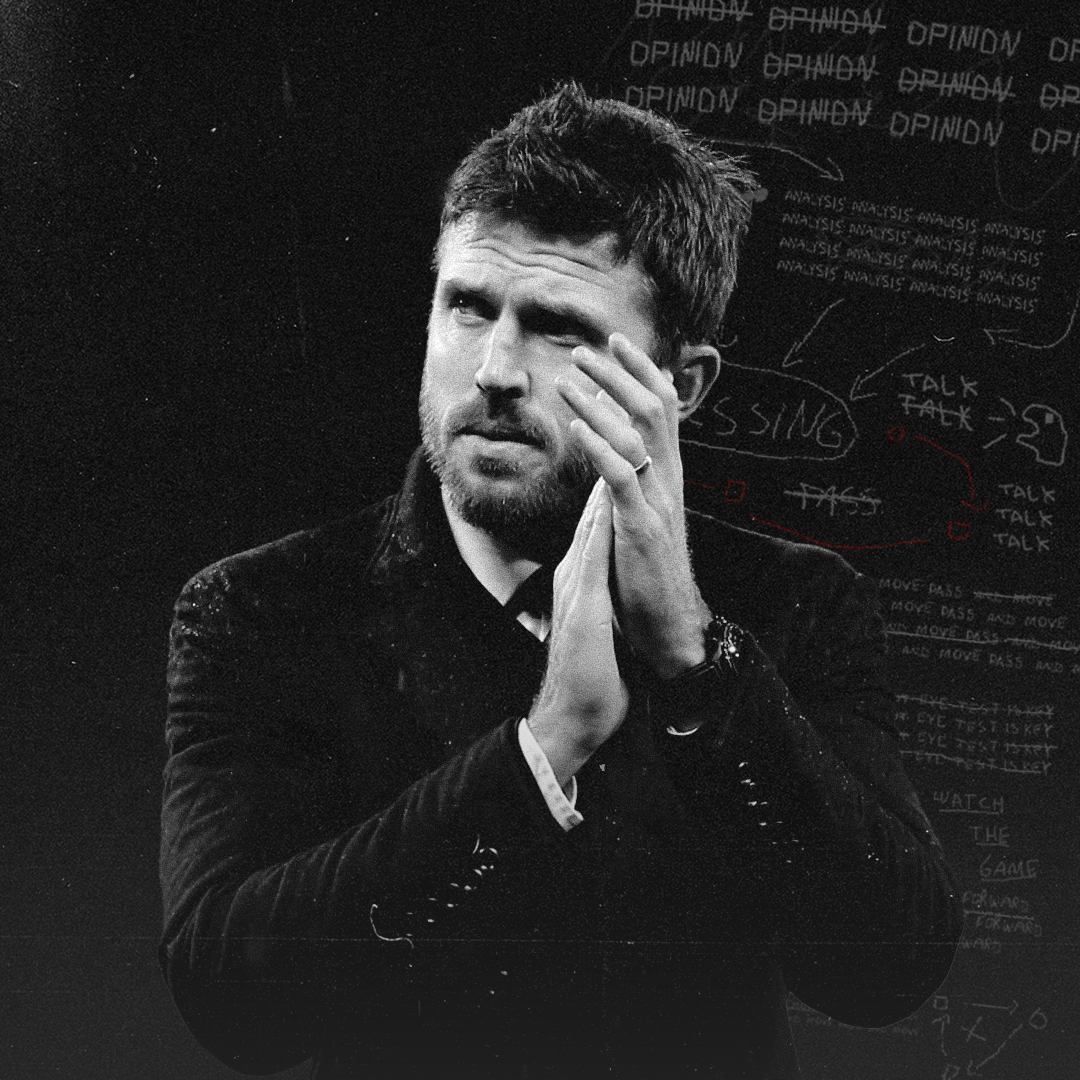
Michael Carrick, Manchester United, and the Gospel of Relationism
There is a way of playing football that does not begin with space. It begins with people. Before the chalk lines. Before the tactical boards. Before the idea of width or compactness or overloads. There is simply one truth: football is a relationship. Brazil turned this truth into a philosophy. They rejected positional rigidity.
They rejected the sterile obsession with zones. THEY preached proximity — players close enough to feel each other’s breath, close enough to improvise, close enough to think together. They sought not to stretch the field into mathematical, but to compress it into intimacy.
Relationism is not a tactic. It is a rebellion. And in Manchester, something similar is unfolding. Under Michael Carrick, Manchester United are not becoming Brazilian. They are not abandoning structure. But they are rediscovering a sacred idea: that football’s deepest power lies in connection. And the connection is not drawn. It is lived.
Bryan Mbeumo: The Tactical Engine Powering Manchester United’s New Attack
The Man Who Saw the Game Before It Happened
Carrick, the player, was rarely the headline. He was the afterthought to the afterthought. But those who understood football felt him everywhere. He did not chase the game. He anticipated it. He did not wrestle with tempo. He bent it gently. His gift was not domination, but orchestration. A pass played two seconds before the danger. A shift into a space that made three other movements possible.
That intelligence was relational. He played for others. He thought for the collective. He understood that football is less about what you do with the ball than what you enable without it. Now, as a coach, that same sensibility defines his United. He is not imposing a machine. He is cultivating a network.
Double Pivot: A Chamber of Thought
If relationism has a sanctuary, it is the double pivot. In many modern teams, the pivot is tasked with destruction or distribution. Under Carrick, it becomes a chamber of collective thought. When Casemiro partners with Kobbie Mainoo, the dynamic is less hierarchical than conversational. Casemiro’s experience anchors; Mainoo’s elasticity animates.
They exchange vertical and horizontal responsibilities fluidly. When one steps toward pressure, the other folds into coverage. When one draws a marker, the other exploits the vacated corridor. This interplay does more than recycle. possession. It destabilises opposition pressing schemes. Because pressing is about isolating a node. Relationism ensures there is never only one.
Manchester United’s New Number 10: How Cunha Fits Into Amorim’s System
Press Mainoo, and Casemiro opens. Press Casemiro, and the centre-back widens. Close the centre, and the inverted full-back becomes the new axis. It is network theory translated onto grass.
The Ball As The Human Connector
The ball is not an object but a bridge between people. Carrick’s United treat it similarly. It is not accumulated for aesthetic control. It is circulated to sustain relationships. A short pass invites support. A wall pass reinforces rhythm. A third man run completes a triangle that momentarily tilts the defense line.
Each exchange says: I am here. Each return says: I trust you. Each movement says: we are together. Goals emerge from this accumulation of affirmations. The final shot may draw applause. But the seduction lies in this sequence.
Cultural Relationism
Perhaps the most compelling aspect of Carrick’s philosophy is that it transcends tactics. Relationism permeates the dressing room, shaping culture as much as shape. Training sessions emphasize anticipation, understanding, and collective responsibility, teaching players to sense each other’s intentions, to trust, and to act in concert. This cultural cohesion acts as invisible duct tape, binding tactical principles with emotional intelligence, and fostering a sense of collective belief and ownership.
Why Amad Diallo is Emerging as Manchester United’s Creative Protagonist
Players speak of a renewed joy in football, a calm authority that replaces chaos with clarity. Players are encouraged not merely to execute patterns, but to feel each other’s rhythm. When a team shares emotional alignment, tactical fluidity becomes possible. The player dares to attempt the risky pass because he knows support is near. The defender steps into midfield because the pivot senses the win.
Relationism demands vulnerability. And vulnerability requires trust. Rarely does a United player appear alone with the ball. Notice how often triangles appear organically. Notice how pressure seems absorbed rather than feared.
Compression As Courage
Relationism’s critics accuse it of recklessness. “Too many players in one space,” they say. “Too vulnerable in transition.” But compression is not recklessness. It is courage. To stand close to your teammate under pressure is an act of faith. To receive with three opponents near you and two allies even nearer is to believe in shared intelligence.
Carrick’s United have adopted a tempered version of this courage. Against pressing sides like Manchester City and Arsenal F.C., they do not scatter in fear. They condense. The distances shorten. The angles multiply. The ball travels in tight circuits until the press unravels. This is relationism’s defiance: we will not escape by abandoning each other. We will escape by moving together.
Where Relationism Can Still Be Tested
No philosophy is flawless. Relationism depends on intelligence and buy-in. Against the very best who press with aggression and discipline or defend compactly, the network can be strained: miscommunication between nodes leads to turnovers and vulnerability in transition. Carrick’s task is to keep the language simple enough to be fast and robust enough to survive elite pressure.
The second test is personnel turnover. If the club shifts rapidly from one personnel set—for example, a change from interim manager to another, or even a transfer of players under Carrick should his appointment be made permanent— another, the network must be re-taught. That is why recruitment under this model is not about marquee names alone but about players whose movement enriches the weave. The signings of Matheus Cunha, Benjamin Šeško and Bryan Mbeumo—forward types who offer different, complementary moves—are a step in the right direction and the club needs to build on that. It is thinking in those terms
Why You Fall in Love With It
Relationism reminds us why we fell in love with football in the first place. Not for the violence of the duel. Not for the spectacle of the sprint. But for the miracle of understanding –when eleven minds move as one, when the ball becomes a thread stitching intentions into action, when the structure transforms into emotion. In those moments, Carrick’s United feels less like a formation and more like a conversation. And conversation, at its most beautiful, is music.
By Tobi Peter / @keepIT_tactical
Featured Image: @GabFoligno / Matthew Peters / Man United