
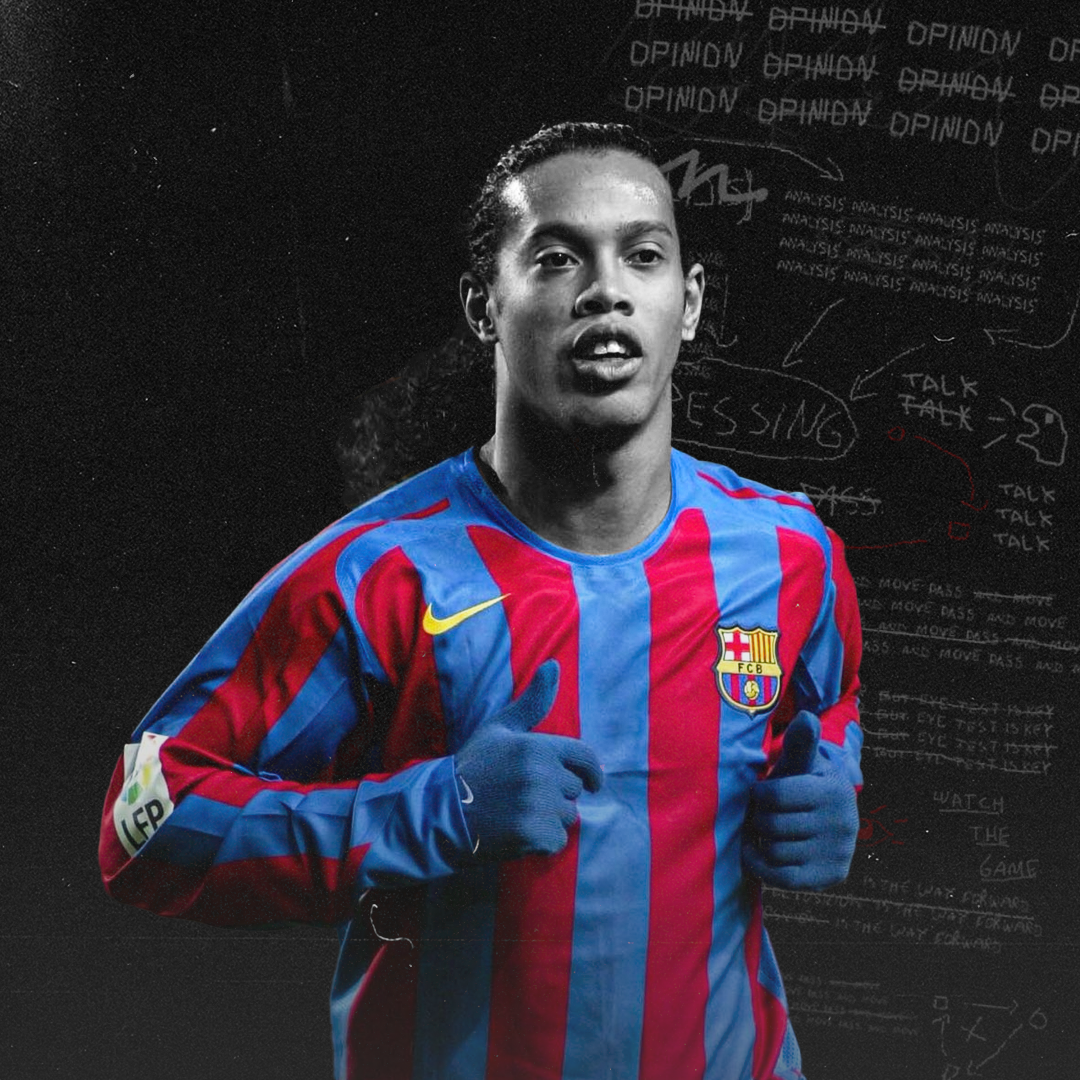
Ronaldinho – A Midsummer Night’s Dream
“I have had a dream, past the wit of man to say what dream it was: man is but an ass, if he go about to expound this dream.” – William Shakespeare
Let me ask you something: A Brazilian talent, born in the favelas, who managed to rise from deep poverty and reach the very top. How many names came to your mind right away?
Now put everything aside. And listen to me. There was a player. A magician. One who only wanted to bring joy. And to give. Whose smile and style of play felt like something out of a dream. And once you saw him, you never forgot. Ever. You already know who I’m talking about, don’t you?
FC Barcelona in the early 2000s was living through its darkest period. The club was at a low point both professionally and financially, often described as a “nightmare best forgotten.” In 2003, newly elected president Joan Laporta had initially campaigned on signing David Beckham, but Real Madrid ruined those plans. Fortunately. Because that is how Ronaldinho arrived in Catalonia.
From the very moment he was introduced, you could feel the wind of change. After the press conference, the young Brazilian walked onto the pitch and was handed a ball. And he didn’t stop to pose for the cameras. He acted on instinct. Immediately, he began juggling. Elastico moves, flicks, playful touches-dancing with the ball, all while that iconic, wide smile was there on his face. And the crowd? It exploded.
Euphoria took over, the stadium echoing with the chant: Ro-nal-din-ho. This wasn’t a presentation. It was the beginning of a dream. One that no one could explain.
“The greatest thing he did was to give Barcelona back its spirit. He taught us how to smile again.” – Carles Puyol
There are things in life that cannot be explained. Dinho was one of them. He didn’t give Barcelona a system. He gave them freedom. Not tactics. But joy. And his first goal? It was a message to the world. From 30 meters.
Ronaldinho became a key figure both on and off the pitch. His charisma, his Brazilian joy, breathed new life into Barça. In the 2004/05 season, after six painful years, he led the club back to the league title and won the FIFA World Player of the Year award. And when the lights of the Camp Nou went out, that’s when he truly switched on. The city’s night bars became his second home.
At 1 AM, he would still be having dinner with friends by the seaside, then Range Rovers would head toward clubs pulsing with Caribbean rhythms. Samba, funk, and Rihanna’s “Umbrella” blending with the Brazilian groove. And Ronaldinho –smiling, dancing, controlling everything, just like he did on the pitch. The ball flew, the music played, the crowd went wild. And no one could explain how it was all possible.
Now let me ask you to name the three biggest derbies in world football. I’ll bet El Clásico was one of them. The ultimate match, where hatred and rivalry rule. In 2005, in one of these clashes, something happened that until then had only existed in our dreams.
At the Bernabéu, Barcelona put on a masterclass. More precisely, Ronaldinho did. His second goal came after a classic dribbling run, where he made defenders dance. And what happened next, there are no words for it. The Madrid crowd gave him a standing ovation. The Bernabéu rose to applaud the Brazilian’s magic. Because Ronaldinho wasn’t playing against them. He was playing the beauty of football. And that belongs to everyone.
What’s the Best Football Team for Each Letter of the Alphabet?
The dream continued. In 2006. In the Champions League. With joy and freedom, he created magic. Against Chelsea, from a standing position, almost dancing, he controlled the ball and struck it into the top corner in a way that could be taught in textbooks. And finally, for the first time since 1992, Barcelona returned to the throne of Europe, with Dinho, who became the Ballon d’Or winner. But then dawn began to approach.
“I have had a most rare vision. I have had a dream, past the wit of man to say what dream it was.” – William Shakespeare.
After 2006, something changed. Not overnight. Slowly. Quietly. Like when, at the sweetest part of a dream, a cold wind suddenly blows through the window. The nights grew longer. Morning trainings sometimes late, sometimes he arrived “too happy.” Barcelona manager Frank Rijkaard could no longer protect him.
In 2008, Pep Guardiola took over. In his eyes, Ronaldinho had become too much of a risk. His freedom no longer fit into the system. The smile was still there. The fire was not. Dawn had arrived. And the dream ended. Not dramatically, not with scandal. Quietly. Like when the music fades and the lights come on.
At the end of his play, Shakespeare apologizes: “If we shadows have offended, think but this, and all is mended: that you have but slumbered here.” But Ronaldinho was not just a dream. We saw him. And he cannot be explained. Only experienced.
By: Krisztián Horváth / @horvathk705