
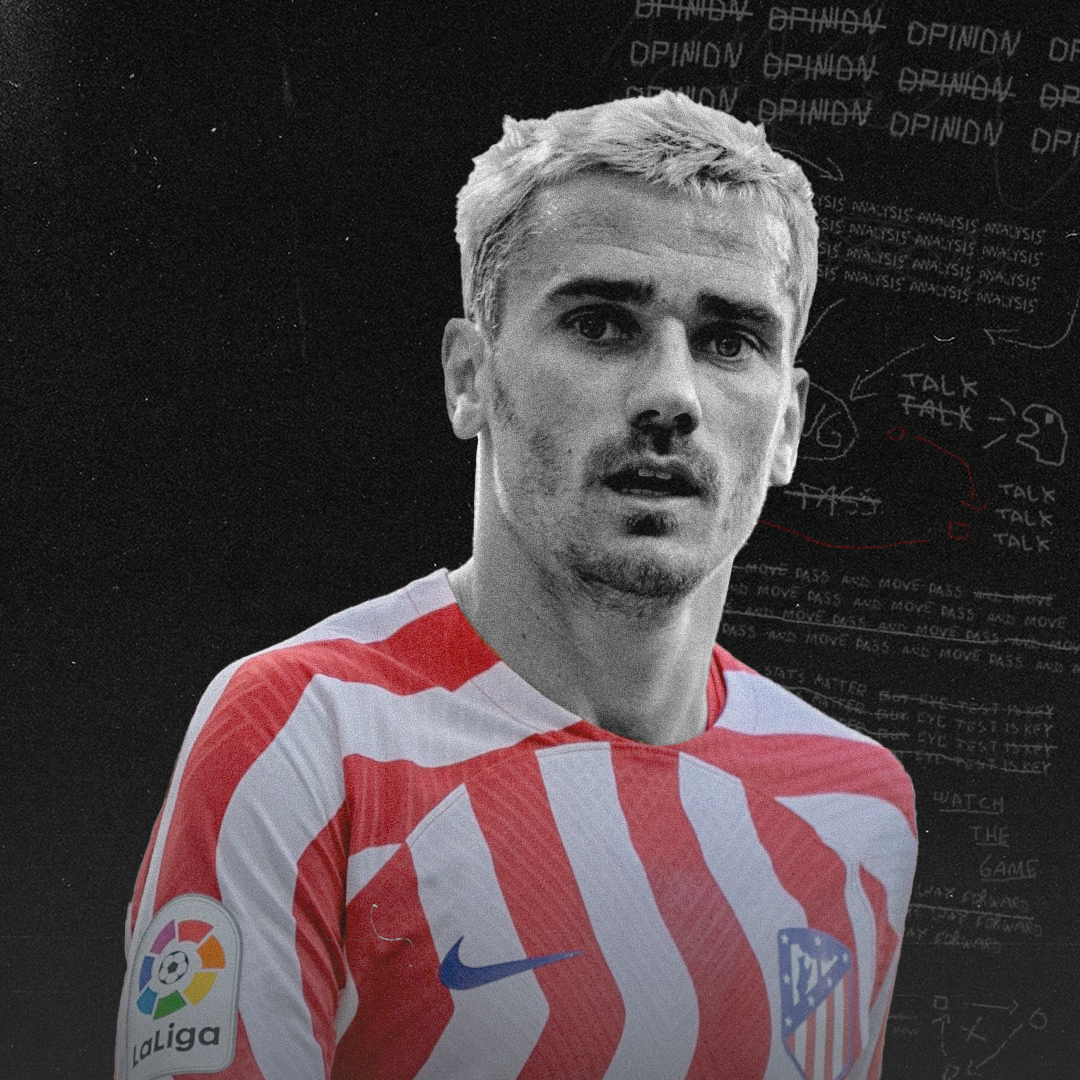
The Eternal Bond Between Antoine Griezmann and His Managers
Some players define eras. Others define systems. Antoine Griezmann did something rarer: he became the embodiment of his managers’ ideas. Even at 34 years old, he continues to showcase his quality, but with a reported move to Major League Soccer, he may be approaching the end of his time in European football.
For more than a decade, Griezmann’s career has unfolded under two of football’s most distinct tactical identities. At Atlético he thrived within Diego Simeone’s relentless intensity. With France he became Didier Deschamps’ most trusted lieutenant. His talent was undeniable, but his legacy is inseparable from the coaches who shaped it.
Joining Simeone’s team in 2014, Griezmann was voted as La Liga’s best player and placed third in Ballon d’Or voting within two seasons. A combative midfielder in his playing days, Simeone built his team on defensive solidarity and mirrored that same intensity as a coach. Griezmann adjusted quickly, absorbing those principles and contributing defensively despite his forward role. As a result, his role became a rarity among attackers – often winning the ball high while dropping into midfield to provide support.
Griezmann’s time with the national team further evidenced his ability to represent his manager’s identity. Deschamps was commonly referred to as the ‘water carrier’ – a player who made sacrifices to allow his teammates creative freedom. Griezmann mirrored that selflessness with Les Bleus, regularly recording impressive running stats. The 2022 FIFA World Cup illustrated that trait most distinctly. Deschamps asked Griezmann to operate in midfield to accommodate Kylian Mbappé and Ousmane Dembélé. He received plaudits for his performances in a deeper role, and helped lead the team to the final.
Arguably the biggest question mark on Griezmann’s career is his inconsistent spell at Barcelona. While Simeone and Deschamps’ tactical identities were clear, he played under three different managers in two seasons at the club, and his role was rarely defined. The Frenchman was deployed on both wings, in attacking midfield, and as a striker. In the absence of an explicit duty, he was unable to flourish.
That Barcelona tenure raises questions about Griezmann’s potential without the strict ideals of Simeone and Deschamps. Is he a system player, or the player they built a system around? His goal-scoring, passing and creativity are well regarded, but have not received the same recognition as the players he sacrificed for, such as Mbappé and Dembélé. Yet adapting to his manager’s needs may ultimately have elevated his long-term standing to match those peers.
On the other hand, Griezmann’s uniqueness actually serves to boost his status. He filled a role in Simeone and Deschamps’ teams that few others could. After a surprise call-up in 2014, he immediately established himself as indispensable for France. Once his coaches discovered his abilities, they were reluctant to relinquish his services. That is why he spent a decade under each. Griezmann’s alignment with their ideas and outlook has ensured his legacy will be inseparable from theirs.
By: Calvin Burton / @CalvinBurton_
Featured Image: @GabFoligno / Flor Tan Jun / Getty Images