
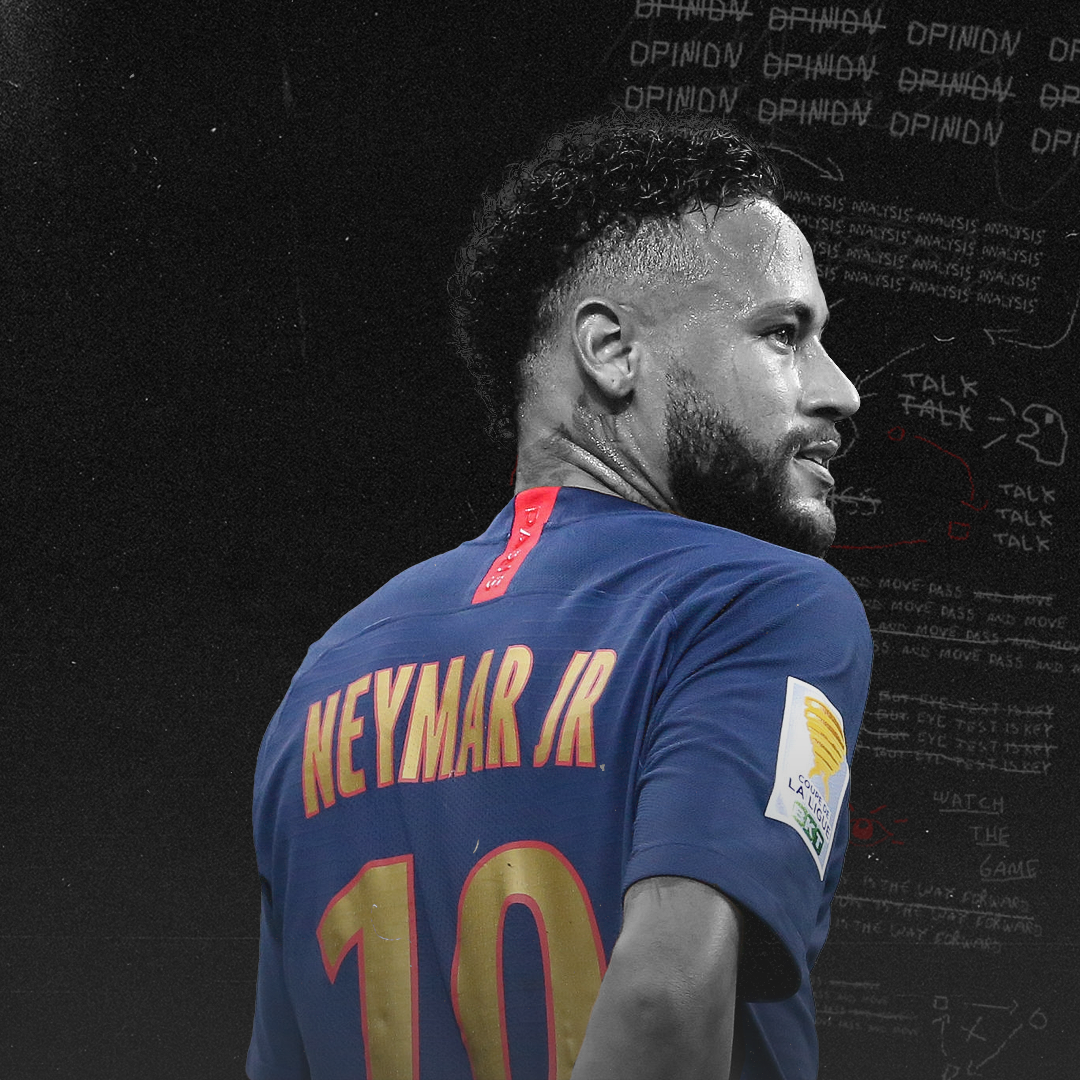
Neymar and Brazil 2026 – A Transition or a Turning Point?
For over a decade, Neymar Jr. has been central to Brazil’s attacking identity, shaping both their creative output and tactical structure. From his early emergence to becoming one of the most influential players in Brazilian football history, the team has often revolved around his ability to decide matches in key moments.
This was on display during the 2014 World Cup before his injury — particularly in the quarter-final run where he carried Brazil’s attacking output — and his decisive contributions in the 2021 Copa América, including his influence in the semi-final against Peru where he dictated the tempo and created multiple chances. However, as the 2026 World Cup approaches, a more complex question is beginning to take shape — is Brazil evolving beyond Neymar as its primary focal point?
Brazil’s Changing Squad Dynamics
Recent squad selections suggest a clear shift in direction. The gradual integration of younger attacking profiles such as Endrick reflects a long-term plan built around mobility, intensity, and positional flexibility. Alongside him, players like Vinícius Jr. and Rodrygo offer directness, pace, and vertical threat from wider areas — attributes that contrast with Neymar’s more central, ball-dominant creative role.
Igor Jesus: A Comprehensive Analysis of Brazil’s Rising Forward
Rather than relying on a single creative hub, Brazil appears to be transitioning toward a more distributed attacking model — one where responsibility is shared across multiple players. This structural change allows for greater unpredictability and reduces tactical dependence on individual brilliance.
Availability and the Impact of Injuries
A key factor influencing this transition is Neymar’s recent injury record. Over the past few seasons, recurring fitness issues — including his long-term injury absence during the 2023–24 period — have limited his availability, disrupting continuity at both club and international level. This was particularly evident during Brazil’s recent international fixtures where tactical consistency had to be adjusted in his absence.
At elite tournaments, reliability is often as important as quality. While Neymar’s technical ability remains elite, Brazil’s planning must account for scenarios where he is unavailable. In addition, injuries have increasingly affected his ability to contribute defensively and sustain high-intensity pressing phases — a key requirement in modern international football.
Tactical Evolution Without Neymar
Traditionally, Brazil’s attacking structure has relied on Neymar’s ability to operate between lines, dictate tempo, and create overloads in central spaces. His presence allowed Brazil to progress through tight defensive structures using individual creativity, particularly against low-block teams. For example, in several Copa América matches, Neymar’s ability to receive between lines and draw multiple defenders was key in unlocking compact defensive structures.
Without him as the constant reference point, the team appears to be moving toward a more balanced approach. Transitional speed, wider attacking distribution, and collective movement — particularly through players like Vinícius Jr. attacking space in transition — could become defining features. This shift not only enhances attacking variability but also improves defensive stability by reducing structural imbalance when possession is lost.
A Balanced Perspective on Brazil’s Direction
From a broader perspective, Brazil’s tactical shift toward younger players and a more dynamic structure appears to be a positive step. Integrating emerging talents brings fresh energy, intensity, and long-term stability. However, Neymar’s role should not be overlooked. With over a decade of experience at the highest level, he offers decision-making under pressure, composure in key moments, and leadership that younger players are still developing.
A useful comparison can be drawn with Argentina’s use of Lionel Messi during the 2022 World Cup, where the system was adapted to maximize his strengths while compensating for physical limitations. Similarly, Brazil may not need to build entirely around Neymar, but rather integrate him into a structure that balances collective efficiency with individual brilliance.
A mix of youth and experience is often what defines successful tournament teams, and Neymar still has the potential to contribute in that role if he regains fitness. The discussion surrounding Neymar and Brazil’s 2026 World Cup plans is not about replacement, but adaptation. Brazil are building a system capable of functioning both with and without their long-time focal point. Ultimately, the defining challenge is not whether Neymar remains central — but how effectively Brazil manage this transition. Because in tournament football, evolution is essential, but balance is what defines success.
By: Dhruv Kapoor
Featured Image: @GabFoligno / Jean Catuffe