
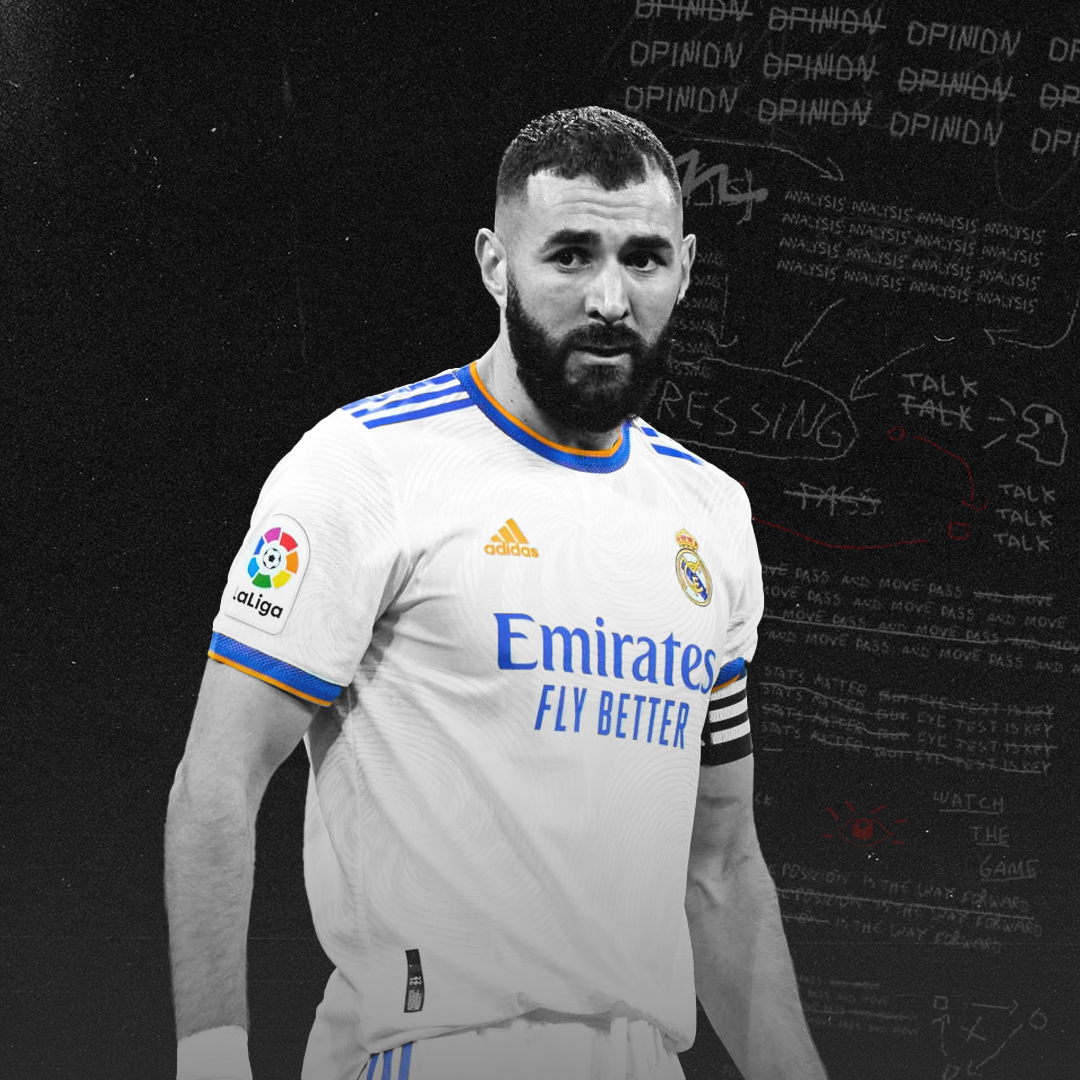
The Wrong Team Always Wins the Champions League
Say it with me. The UEFA Champions League — the most watched, most romanticised, most achingly beautiful club competition in the history of sport — does not give the trophy to the best team. It never has. And deep down, if you’ve been watching long enough, you already know this. You’ve felt it in your gut on those nights when something that shouldn’t have happened, happened.
When a team you knew — knew — was superior packed their bags and flew home while an inferior side celebrated like they’d conquered the world. You told yourself it was football. You told yourself anything can happen on the night. You moved on. But the lie piled up. Season after season, the lie piled up.
So let’s finally say it out loud: the Champions League is not a meritocracy. It is the greatest theatre on earth — but theatre and merit are not the same thing. And the sooner we stop pretending otherwise, the more honestly we can appreciate what this competition actually is.
First, the format. Because the format is everything. Domestic leagues don’t lie. Thirty-eight games, every opponent, home and away, across nine brutal months. Injuries happen to everyone. Bad runs happen to everyone. Referees cost you points here, a last-minute winner gifts you three there.
Tactical Profile: Shining the Spotlight on Marco Silva’s Fulham
Over thirty-eight games, all of it — every piece of chaos and fortune — averages out. The best team wins the league. Not always perfectly, not always cleanly, but the table tells the truth eventually. The Champions League gives you none of that.
From the quarterfinals onward, you get two legs. One hundred and eighty minutes — give or take extra time — to prove you’re the best in Europe. One red card in the wrong minute. One goalkeeper who decides tonight is the night he becomes immortal. One deflection off a shin that loops over the line. And you’re done. No correction. No second chance. No averaging out.
The margins in elite football are so microscopic that over two legs, even the best team in Europe probably wins their tie sixty, maybe sixty-five percent of the time. Let that sink in. The best team — the one that has been dominant all season, the one that passes through opponents like they’re training cones — has a one-in-three chance of going home anyway. That thirty-five percent isn’t an upset. That’s not a giant killing. That’s just what happens when you compress elite sport into too small a window and call the result a verdict.
Now let’s talk about Amsterdam in the spring of 2019. Because nothing captures this better. Erik ten Hag’s Ajax were something rare. Something that comes along maybe once a decade — a team so young, so fearless, so tactically devastating that watching them felt less like watching football and more like watching someone rewrite the rules in real time. They pressed like wolves. They moved like water.
Bernardo Silva’s Latest Milestone is a Manifestation of Pep Guardiola’s Tactical Evolution
They had a twenty-two year old Frenkie de Jong orchestrating from midfield and a twenty-one year old Matthijs de Ligt commanding the backline like a general who’d been doing this for fifteen years. They went to the Bernabéu and dismantled Real Madrid. Real Madrid. At their own ground.
Ajax flew to Turin and humiliated Juventus — Cristiano Ronaldo, the reigning Ballon d’Or winner, and the rest — so completely that the Juventus supporters stood and applauded them off the pitch. Think about what it takes to make opposition fans applaud you at their own stadium.
In the semifinal against Tottenham Hotspur, they led 3-0 on aggregate going into the dying seconds of the second leg at the Johan Cruyff Arena. Three goals ahead. Seconds away. An entire city holding its breath in the best possible way. Lucas Moura scored in the 96th minute. Away goals. Ajax were out. That team — that extraordinary, generational, once-in-a-decade team — never got their night in Madrid.
The Champions League didn’t pause to acknowledge what they were. It didn’t offer condolences or context. It simply moved on, handed Tottenham a final they lost to Liverpool, and filed the whole thing under classic drama rather than what it actually was: a brilliant team being robbed by a format that was never designed to find the best. That Ajax side deserved better. The game deserved better. But deserving means nothing here.
Then there is Pep Guardiola. And the case of Manchester City. For six years — six — City were the most structurally sophisticated, financially empowered, tactically evolved team in European football. Guardiola, the greatest coach of his generation, built and rebuilt them in his image. Season after season they arrived at the Champions League as genuine contenders, sometimes as overwhelming favourites, and season after season the competition found a way to spit them out.
Monaco caught them cold in 2017. Liverpool dismantled their high line in 2018 — twice, home and away — with a directness so surgical it felt personal. Lyon, in the ghost-stadium chaos of the 2020 mini-tournament, pulled off an ambush that made no tactical sense and every chaotic sense.
Then came 2021 — a final against Chelsea where City, the better team by any reasonable measure across that season, froze. Tactically paralyzed, they lost to a side that had simply figured out the specific problem of beating them on one specific night. And then, in 2022, they met the beast directly. Real Madrid. Trailing. Deep into injury time of the semifinal second leg at the Etihad.
City were minutes — seconds — from the final. From the moment the cloud finally broke. Rodrygo scored twice in two minutes. Extra time. Karim Benzema. Penalty. Done. When City finally won the Champions League in 2023, the emotion wasn’t celebration. It was relief. It was the particular, exhausted relief of a debt being repaid. The universe correcting an error it had been carrying for years.
Nobody talked about City as worthy winners — because worthiness was never in question. The question was always whether the competition would let them have what they’d already earned. That is not what a meritocracy feels like. And then, on the other side of that coin, there is Real Madrid 2022. If City were the cautionary tale, Madrid were the proof. They should have gone out against PSG.
Benzema’s 17-minute hat-trick in the second leg said otherwise. They should have gone out against Chelsea. Rodrygo disagreed. They should — genuinely, by almost every tactical and statistical measure — have gone out against City in that semifinal. They didn’t.
Were Real Madrid the best team in Europe that season? Honestly? No. Probably not even close. But were they the most psychologically indestructible, the most experienced in the specific art of surviving chaos, the most culturally equipped to believe in miracles until miracles arrived? Absolutely. Without question.
And here is the thing — that is a real quality. That is something earned over decades of history and culture and late nights exactly like those. Madrid’s 2022 run wasn’t luck. It was something stranger and more specific than luck. It was a club that had been in these moments so many times that the moments no longer scared them. But being unafraid of chaos is not the same as being the best team. And a competition that consistently rewards the former over the latter is not a meritocracy. It’s a different kind of test entirely.
So what is it, then? What are we actually watching? We’re watching theatre. The most magnificent, heart-destroying, euphoric theatre that sport has ever produced. We’re watching what happens when elite athletes are placed under pressures so extreme that logic breaks down and something rawer takes over. We’re watching variance and nerve and history and culture collide in a format deliberately too small to contain them cleanly.
And that is fine. More than fine. The Champions League is the greatest competition on the planet precisely because it is unpredictable. Precisely because Ajax can be eliminated in the 96th minute and Real Madrid can come back from the dead three times in one campaign. The chaos is the point. The drama is the product.
But let’s retire one phrase. Let’s finally bury it. Stop calling the winner the best team in Europe. Call them what they are — the last team standing after one hundred and eighty minutes of football went their way, when it just as easily could have gone the other way, in a format that was never designed to settle the argument fairly. Which, honestly, might be the harder and braver thing to be.
The best team wins the league. The Champions League? The Champions League finds something else entirely.
By: Shawal Hossain / @itadorinotyuji
Featured Image: @GabFoligno / Angel Martinez – Getty Images