

4 Proven Recovery Habits for Footballers
“Lazy” footballers recover faster because they intentionally prioritize disciplined rest. They combine strict sleep schedules, immediate post-match nutrition, active mobility work, and routine heat therapy over unnecessary physical exertion.
Modern football’s congested fixture lists and high-pressing systems create massive physical debts that raw talent cannot fix.
By treating the 72 hours between matches as a calculated performance phase, these players consistently clear metabolic waste and minimize muscle soreness.
There is a particular type of player every dressing room knows well.
He is not the loudest voice in the warm-up or the last one off the training pitch. After a demanding Tuesday night away fixture, he is often the first one on the treatment table and the first to leave.
By Wednesday evening, he moves with quiet deliberation while others still process the deep fatigue in their legs.
Modern football has made matchday recovery a highly competitive variable. Fixture congestion is no longer an occasional inconvenience reserved for clubs deep in cup runs.
For sides operating across multiple competitions, the gap between matches has compressed to the point where 66 to 72-hour turnarounds are routine.
High-pressure tactical systems demand extraordinary aerobic and neuromuscular output, with some outfield players covering over twelve kilometres per match at peak intensity.
What separates players who remain consistent from those who fade is not raw talent. Increasingly, it is recovery intelligence and access to the right home wellness tools.
Players are utilizing everything from compression boots and massage guns to a Sun Home Saunas’ infrared sauna to accelerate tissue repair. These recovery habits are accessible to everyone, from academy players in youth development to committed amateurs.
1. The Unusual Tool of Sleep Discipline
Elite clubs have employed sleep consultants for years to optimize player performance.
At several academies, circadian rhythm education is now built into long-term player development programmes alongside technical coaching.
That is not an indulgence, but rather a reflection of what science consistently shows about post-match physiology.
After a competitive match, the body is not simply tired. Cortisol levels remain elevated, competitive arousal keeps the nervous system active, and late kickoff times often keep players awake past midnight.
In fact, match competition substantially increased saliva cortisol and testosterone levels. The natural sleep window is disrupted at precisely the moment recovery demands it most.
For players navigating tournament turnarounds, every hour of structured sleep carries measurable value.
This means consistent sleep and wake times are maintained even on rest days.
After experiencing highly intense training sessions, athletes showed significantly longer wake times the following night. Structured napping during multi-match weeks becomes essential when full overnight cycles cannot compensate for accumulated fatigue.
The footballer who protects eight hours of quality sleep after a midweek fixture makes a deliberate performance decision.
Muscle soreness perceived the following morning is partly a function of how effectively the body repaired during the night. Player performance on Saturday essentially begins on Tuesday night.
2. How to Master Incredible Nutrition Timing
Picture the post-match dressing room where isotonic drinks are passed around. What most players ignore is that the 30 to 60 minutes immediately following the final whistle represent the most influential nutritional window.
Ninety minutes of high-intensity football depletes glycogen stores substantially. Protein synthesis windows, which support muscle repair, are widest in this immediate post-match period.
Electrolyte losses through sweat affect muscle function and hydration status well into the following day if left unaddressed.
For players in high-pressing systems, the physical load is measurably greater. A midfielder in a heavy pressing structure accumulates muscle fatigue at a rate that makes post-match nutrition timing a genuine injury prevention priority.
Professional setups address this systematically with pre-match carbohydrate loading and immediate post-match recovery nutrition.
At the academy level, inconsistent education around timing remains a highly preventable contributor to soft-tissue injuries.
Clubs that teach nutrition timing early see much better durability across the season. Their players are not necessarily eating differently, but they are consuming nutrients at the correct moments.
Matchday recovery nutrition relies heavily on specific timing rather than just food quality.
| Key Insight: Timing is everything in recovery. Consuming carbohydrates and proteins within 60 minutes post-match maximizes glycogen replenishment and muscle repair, preventing the compounding fatigue that often leads to mid-season soft-tissue injuries. |
3. Why Does Unbelievable Active Recovery Work?
The two most common instincts among players the day after a match are training hard to stay sharp or doing absolutely nothing.
Neither approach serves the body particularly well during a congested season. Heavy training adds to accumulated fatigue before it has naturally cleared from the system.
Resting completely leaves metabolic waste products and joint stiffness completely unaddressed.
Active recovery sits perfectly between these two extreme approaches. Light cycling, brisk walking, and dynamic stretching sequences stimulate blood flow and support the clearance of lactic acid.
Research shows that elevated CK levels persist up to 48 to 72 hours after the match. Moving deliberately helps address joint mobility without adding any meaningful muscular load to the body.
Professional training grounds build flush sessions into the day after a match as a structured weekly ritual.
For footballers, specific mobility targets like hip flexors and thoracic rotation matter immensely. These areas deteriorate without deliberate maintenance due to the repetitive demands of running, turning, and aerial challenges.
Ankle mobility also remains a recurring focus in conditioning programmes managing players across heavy fixture congestion.
The broader insight is career-level rather than just focused on a single session. Treating active recovery and mobility work as a regular discipline manages the cumulative physical cost of football. It is arguably the simplest habit in this framework to implement.
Sadly, it is also the one most frequently sacrificed to a rest day that becomes entirely passive.
4. The Interesting Ritual of Heat Recovery
Heat therapy has been deeply embedded in football recovery culture for several generations. The steam rooms at traditional club facilities and post-training saunas are thoroughly documented.
What is evolving today is the recognition of exactly why it works so well.
Players are also discovering how to make it repeatable without relying on complex institutional infrastructure.
The physiological case for heat exposure is extremely well established in modern sports science.
Deliberate heat exposure promotes vasodilation, naturally supporting the clearance of metabolic waste from tired muscle tissue. It noticeably reduces perceived muscle soreness following high-intensity exercise on the pitch.
Repeated heat sessions are also associated with improved parasympathetic nervous system recovery.
The practical challenge for most amateur and academy players is consistent access to quality facilities. Professionals have facility-based options seamlessly built into their working week.
Sporadic access to a commercial facility sauna is far less valuable than consistent access to a more modest setup. This is where home-based heat recovery tools have totally reshaped the 48 hours after a match.
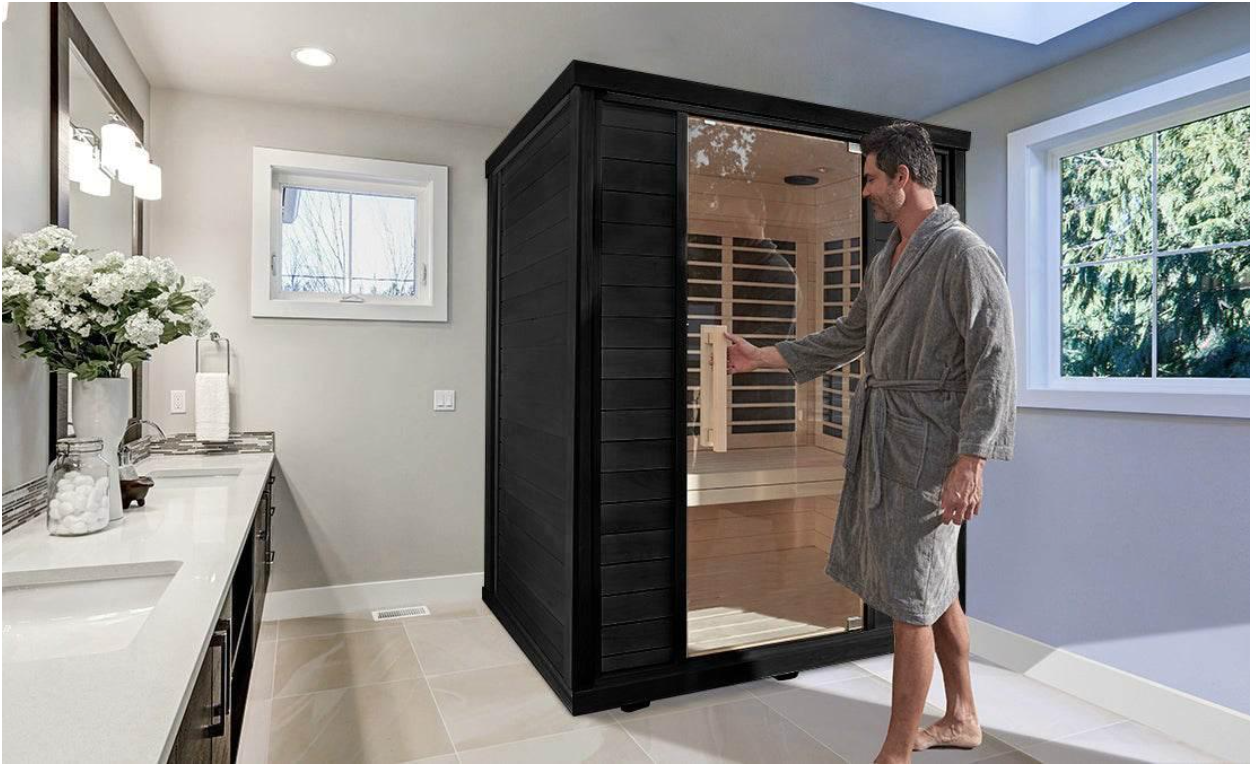
Many athletes and serious amateurs use an infrared sauna at home for convenience and routine-building. Having an accessible at-home setup ensures players can maintain their protocols without relying on commercial facility hours.
Three consistent heat sessions per week, integrated into a normal home schedule, deliver immense cumulative benefits.
When a player steps into a dedicated heat environment late on a Sunday, recovery becomes an unbreakable habit.
| Pro Tip: Establish a consistent heat therapy routine at home to ensure you never miss a recovery window. Frequent, shorter sessions are more effective for nervous system regulation than occasional, long sessions at a commercial facility. |
The Bottom Line
These four habits do not operate independently of one another. Sleep quality directly influences the effectiveness of post-match nutrition.
A disrupted night blunts glycogen uptake and noticeably reduces the efficiency of protein synthesis. Active recovery the following morning reduces the muscle soreness that might otherwise compromise sleep the next evening.
Heat therapy supports the parasympathetic recovery state, making both sleep and active movement more effective.
The footballer who appears to be doing nothing between matches is typically doing all four of these things. They execute these recovery methods with quiet, unwavering consistency.
The ultimate paradox holds, as disciplined rest serves as disciplined preparation.
None of this requires a highly lucrative professional contract. It simply requires education, intentionality, and the willingness to treat the 66 hours between matches as a structured performance phase.
As football’s physical demands continue to increase, recovery literacy will define the next generation of durable players.
The players who stay on the pitch are the ones who know exactly what to do when the match is over.
| Author Profile: Sun Home Saunas is America’s fastest-growing consumer services company specializing in premium home wellness equipment, specifically award-winning residential saunas and cold plunge therapy systems. |