
4 Surprising Links Between Football and Chivalry
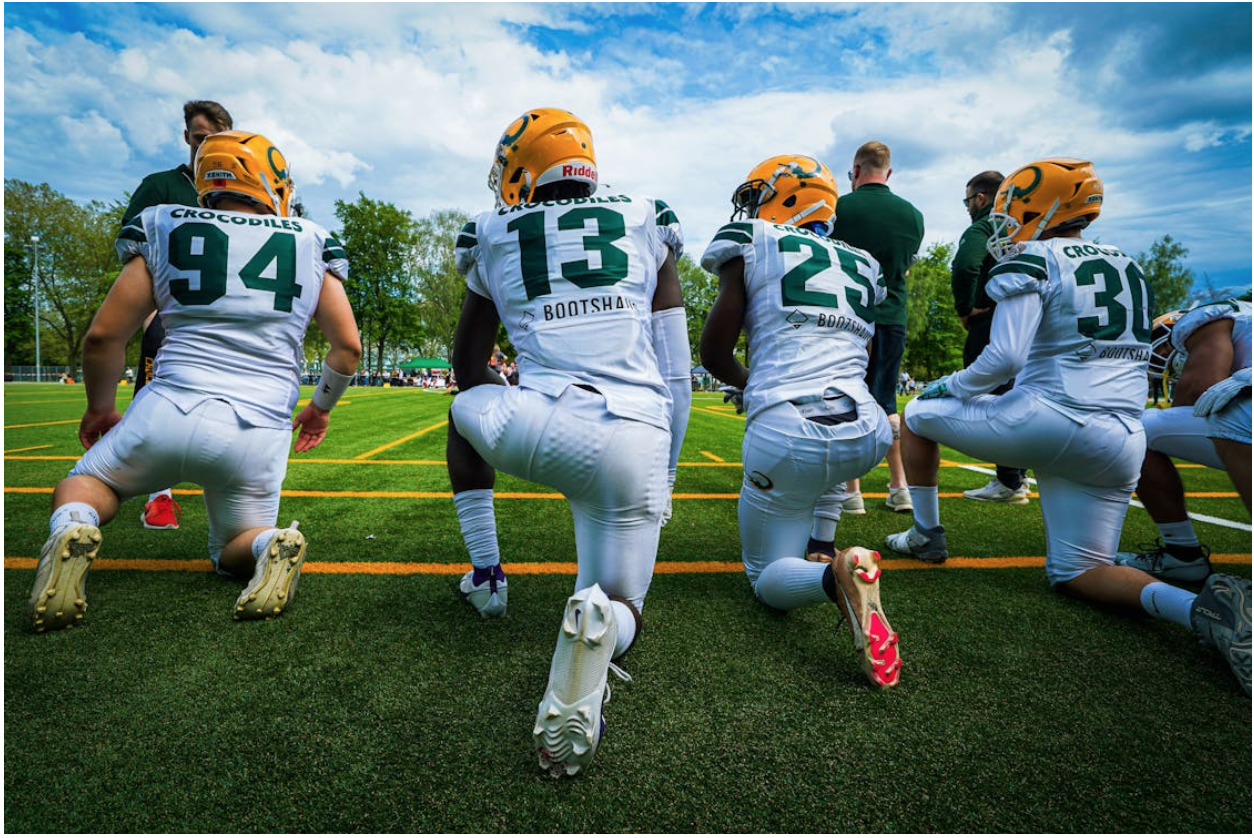
The four secret reasons football is actually chivalry include the use of club crests as living heraldry, team kits functioning as modern battle dress, stadium rituals mirroring tournament ceremonies, and supporter loyalty echoing ancient codes of belonging.
These elements prove that modern football culture relies heavily on medieval pageantry and structural traditions rather than just sporting tactics.
By understanding these deep-rooted connections, fans can see how the theatricality of the pitch preserves the moral theater of honorable competition.
The noise arrives before the light does. Standing in the Anfield tunnel, a player hears it first. It is a gathering and pressurized roar filtering through concrete and steel.
Ten thousand voices fuse into something that no longer sounds like human sound.
Seven hundred years earlier, a knight would have understood this threshold completely. In the tournament lists of 14th-century Europe, the knight’s entry was never simply a physical act. It was a declaration of identity and purpose.
His colors were already visible and announced by heralds long before combat began.
This parallel is not merely decorative or coincidental. Football did not simply borrow chivalric aesthetics, but inherited its deep cultural grammar.
The pageantry, ritual architecture, coded allegiances, and moral theater of honorable competition remain fully intact today.
The symbols have changed over the centuries, but the deeply ingrained human instincts behind them have not.
1. Club Crests as Living Heraldry
Medieval heraldry was never intended as simple decoration. In a battlefield where the noise was total, a coat of arms functioned as critical survival technology. It was an instantly readable system of visual identification communicating lineage and allegiance.
Invented in the twelfth century, heraldry clearly publicized knightly status at a time when feudal ties were crucial.
Stand in the away end at a stadium you have traveled three hundred miles to reach. The first thing you look for is not the scoreboard. It is your crest on a scarf, flag, or shirt moving through the dense concourse.
Chelsea’s lion rampant and Crystal Palace’s eagle with wings spread serve exactly this ancient identifying purpose.
Many of these modern clubs deliberately use traditional heraldic elements like beasts and colored stripes.
These are not corporate logos in any traditional marketing sense. They are authentic heraldic devices declaring presence and carrying the weight of generations in a single compressed image.
The shield shape dominating most modern badge design is actually the literal form of the heraldic escutcheon.
When Juventus controversially simplified their badge in 2017 to a geometric monogram, the fan reaction was intense. It structurally matched exactly how a medieval community would respond to an altered lord’s device.
Club identity at that level of emotional investment is never a simple visual preference. It represents a living lineage and inherited communal history.
Real Madrid’s badge offers a revealing case study regarding ongoing symbolism in football.
The royal crown added to the crest in 1920 firmly embedded the club within a visual language of power. Opponents could easily read this legitimacy from the far end of the pitch.
This iconography was always explicitly designed to be felt long before it was consciously understood.
2. The Kit and the Armor
When Bill Shankly switched Liverpool to all red in 1964, he made a psychological choice rather than a fashion statement.
An entirely red figure looks bigger, more unified, and far more threatening to opponents. Red communicated aggression and dominance across a pitch or through a wall of crowd noise.
The all-white kit of Real Madrid operates on the same psychological and visual principle.
Medieval knights wore identifying colors for the same converging reasons. They needed to identify themselves, intimidate enemies, declare group coherence, and inspire fighting men beside them.
Function and symbol were never separate categories in historical combat scenarios. A knight’s colors provided practical identification while stating what specific values he had sworn to uphold.
Historical combat aesthetics still deeply influence how we imagine strength and status today.
Modern football gear serves the same structural role by marking the body for contest and drawing a line between participant and crowd. The aesthetic grammar of strength and protection was originally written in steel and leather.
To understand the visual language of modern gear, one can look to the functional beauty of medieval armor from Medieval Collectibles, which established the standard for how a warrior represents their status and strength.
The transformation psychology involved in preparing for contest runs deeper still.
Players and supporters consistently report that putting on the club shirt changes something profound experientially.
The physical act of wearing the colors functions as an oath of temporary identity. It causes a momentary dissolution of the individual into the focused collective.
| Key Insight: Modern kits function as ritual battle dress. The act of “donning the colors” serves as a psychological threshold, transforming a person into a public representative of their team’s history. |
3. Stadium Ritual as Tournament Ceremony
Medieval tournaments were elaborate social performances rather than simple, chaotic fights. Combat was the central act, but far from the only highly organized one.
Chronicles describe formal processions, heralds announcing contestants, banners raised above pavilions, and crowds assembling from across entire regions.
A carefully staged architecture of beginning and end gave the whole event its cultural meaning.
The specific rules governing noble conduct were as important as the physical combat itself. The manner in which a knight competed was publicly witnessed, publicly judged, and publicly remembered by peers.
The modern match day reproduces this ceremonial architecture with a fidelity that is difficult to dismiss as coincidence. The national anthems, the coin toss, and player walkouts echo tournament traditions perfectly.
The pregame handshake line is a formalized acknowledgment of opponents as worthy adversaries rather than bitter enemies.
Most modern commentators treat this as a bureaucratic formality rather than the ancient stadium ritual it actually is. The narrow tunnel walk at Anfield serves as a deliberately maintained psychological threshold between preparation and performance.
The sudden eruption from near silence into blinding light and voices primes human psychology for collective contest.
The massive coordinated visual exhibition known as the tifo deserves serious cultural and analytical attention. Organized supporter groups produce these giant displays before major matches using incredibly strict internal structures.
Galatasaray’s fire and crimson displays reliably overwhelm the opposition’s imagination before the first whistle even blows. The purpose is completely identical to heraldic banners raised to demonstrate collective will as a force in itself.
4. Supporter Loyalty as a Code of Belonging
Chivalric codes were primarily rigid social contracts binding knights to lords and brothers in arms. They created a shared ideal of honorable identity that vastly transcended individual selfish interest.
Membership in a chivalric order was sworn publicly and heavily maintained through repeated acts of loyalty. The code derived its total authority directly from the dedicated community that enforced and embodied it.
A true supporter tradition operates on precisely this strict architecture of inherited or chosen allegiance. It is performed through faithful attendance in bad weather, singing loud in hostile grounds, and wearing colors in unwelcome environments.
This is a severe code of conduct organized around loyalty and physically constituted through collective action. Teams lacking this deep communal backing genuinely suffer, as researchers found they are 20% more likely to lose matches without moral support.
The rich tradition transmitted across generations in working class communities carries the full weight of inherited knightly obligation.
Dedicated grandfathers proudly pass timeless chants down directly to their eager grandchildren. Historic scarves successfully carry rich local histories that are no longer strictly attached to living memory.
Supporting a team is frequently inseparable from a profound sense of ancestral belonging to a specific geographic place.
Intense ultras subcultures make this underlying traditional architecture completely explicit and visible. The organizational structure of a serious ultras group mirrors medieval guilds with absolutely startling specificity.
Formal hierarchies, initiation processes, strict codes of conduct, and fierce internal honor firmly define these brotherhoods.
Borussia Dortmund’s massive standing supporters function as a living collective organism with tight internal governance and high standards of participation.
The fundamental concept of honor in defeat survives completely intact within these deepest communal values. A team that fights hard until the final whistle earns profound, enduring respect even in loss.
Conversely, a team that surrenders early draws something much closer to pure contempt than mere disappointment. The code has modernized its daily vocabulary, but its strict moral structure remains fundamentally unchanged.
| Pro Tip: True supporter loyalty operates as a chivalric social contract. It is an inherited code of conduct where the honor of the struggle is often more important than the final score. |
The Big Picture
Return for a moment to the concrete stadium tunnel. The player standing at that threshold occupies a space that is not simply physical or architectural.
It is the precise point where a modern athlete briefly transforms into something much older. The bright colors he currently wears carry incredibly ancient heraldic logic.
The loud ritual surrounding his emergence holds intense ceremonial weight inherited directly from historical tournament culture.
The massive crowd waiting for him organizes firmly around strict codes of collective identity that medieval communities would recognize immediately. Structurally speaking, he is bravely stepping out into the light to enter the lists.
This emotional power heavily draws on the human need to organize deep meaning around spectacle and honor.
The chivalric codes of medieval Europe openly expressed profound human instincts that predate them by millennia. Humans require strong group cohesion, transition rituals, and visual symbols anchoring identity in something much larger than individual preference.
Football has successfully found a highly effective modern form for that ancient historical grammar. Its crests are coats of arms, and its colorful kits function as vital battle dress.
This reality explains why the game inspires a fierce loyalty that completely outlasts reason or logic. It survives devastating relegations, turbulent ownership changes, and long decades of disappointment with absolutely no rational justification.
Football is ultimately a chivalric order played with a ball and strictly governed by a whistle. Millions of people inherit this allegiance and eventually discover they already belong.
A true supporter’s scarf announces something that wildly exceeds simple consumer preference entirely. It proudly declares total allegiance, deep history, and the exact kind of person they have chosen to become.
Consider what sweeping historical lineage you are actively joining the next time you wear your team colors. It is considerably older and deeper than the game itself.
| Author Profile: Medieval Collectibles is the leading online retailer of authentic medieval replicas and fantasy collectibles for history enthusiasts, reenactors, and collectors worldwide. |