
Television vs. Terraces: Online Fandom and Matchday Supporters
The shimmering dissent within the fandom of Premier League clubs which has been building over the last few years has become more and more acute and at present feels it is about to erupt in to total warfare. This distinction revolves around an identifiable rupture between two types of fans: those who attend matches on a regular basis and those who predominantly consume their football through the media, online and on television.
With the economic development of the Premier League, the negative connotations around the football tourist have continued to grow: those who travel to Premier League matches and buy the half-and-half scarves and treat attending a football match like an adult version of a trip to Disneyland. These individuals travel from Asia, the US and further afield, with many maintaining a deep connection to their club of choice.
The invention of the 12:30 kickoff on a Saturday morning was specifically to feed the Asian market with its time difference. The fact that such a kickoff time is wholly unsuitable for players and match-going fans alike is sacrificed to the commercial need for growing the game in new markets. Of course, the irony remains that broadcasters need full stadiums to ensure an atmosphere for their telecasts. Those who watch from afar want to participate, even at a distance, with the environment that is created by local and often more passionate support.
Match-going fans and those who predominately consume their football through television exist in an uneasy symbiosis. This historical split has only accelerated online as various social media platforms allow each group to interact with the other. Varying views collide, and fanbases turn toxic. Those who consume their football predominantly from their sofa and those who stand in the rain are separated by a gulf which is quickly growing into a chasm. Fanbases can quickly turn sour, ensuring the entire footballing narrative can become a very cruel and unforgiving place.
Manchester United, just as one example, is a clear illustration of this. While Gary Neville and Roy Keane have long exhibited a toxic approach to their former club on Sky Sports, this was largely tolerated by both tribes of fans due to the love and affection both ex-players have with supporters. There is also the suspicion that, particularly in Keane’s case, a role is being played. That here is a pundit that knows what will sell, what will go viral, what will get clicks. While many of Keane’s utterances can be very humorous, there is little doubt that they have in the past gone too far.
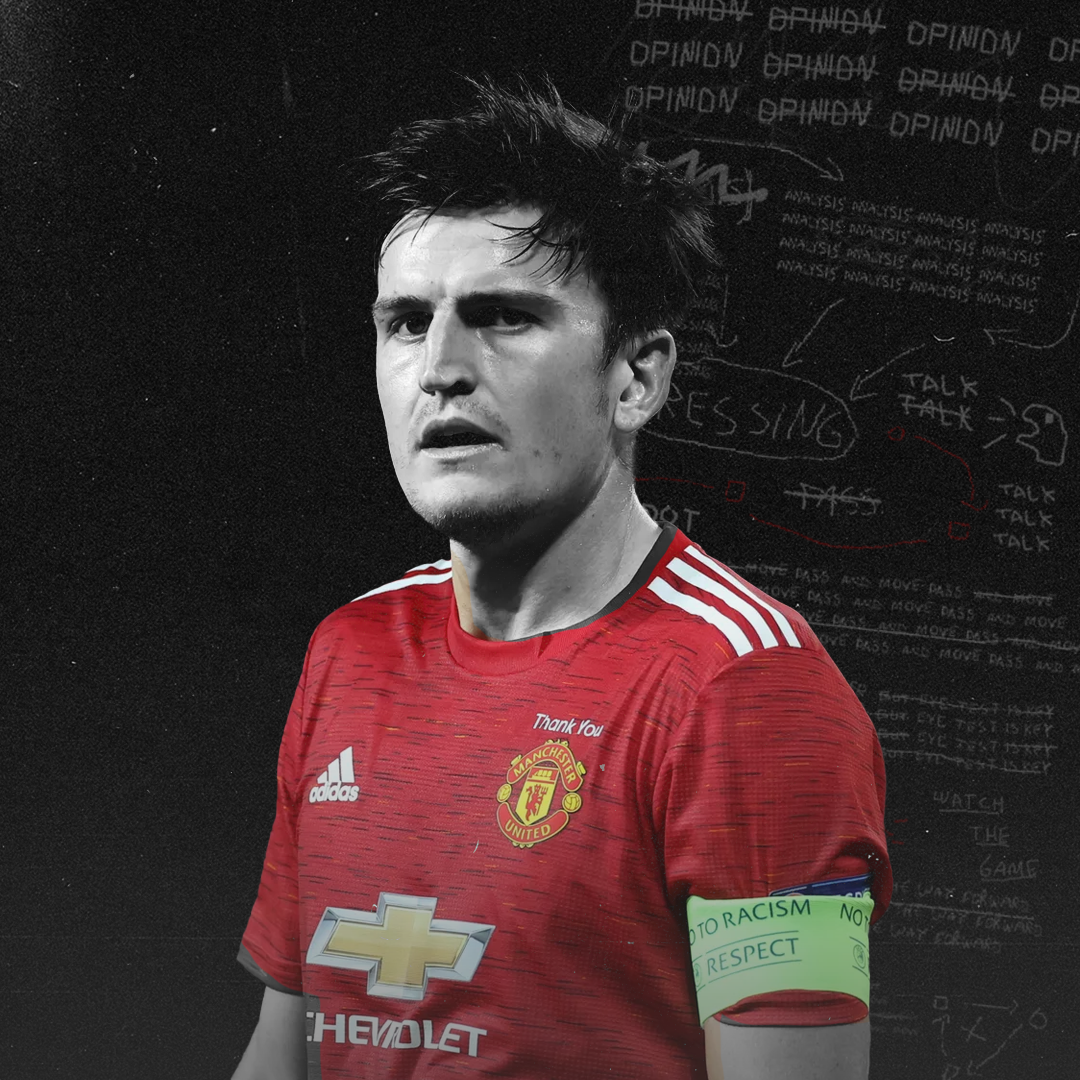
Keane declared after a game against Tottenham Hotspur in 2020, “[Harry] Maguire and [David] De Gea, I wouldn’t let them on the bus after the match, let them get a taxi back to Manchester.” This situation has only worsened in recent months with Nicky Butt and Paul Scholes speaking on a podcast prior to the Manchester Derby, with the two ex-Reds finding humor in comparing Lisandro Martínez to a toddler who Erling Haaland would pick up and carry around. The fact that Haaland was withdrawn after 80 minutes in which Martínez ensured the City talisman barely had a kick left the United legends with egg on their face.
In true punditry fashion, they simply doubled down on their criticism in the face of facts that proved their analysis wrong, and many match-going Reds seem to be getting a little tired of it all. The rise of the fan channel and watch-alongs has also become an issue. Arsenal Fan TV, or AFTV, has contributed heavily to the impression that Gunner fans are some of the most annoying and deluded in the Premier League. YouTube personalities from the channel such as “Ty”, Taiwo Ogunlabi, have been ridiculed for his famous ‘It’s been raining’ excuse to explain why Arsenal lost to Watford at home in 2017.
He routinely states that Arsenal will win the Quadruple, which culminated in an altercation with a steward at the Stadium of Light in November 2025 after Arsenal drew 2-2 with Sunderland. =Violence against online personalities is not limited to one club. Brent Di Cesare, better known as Mark Goldbridge, has received abuse on the occasions that he actually attends Manchester United games. Of course, the influential YouTuber doesn’t help himself by declaring “I’ve been to Old Trafford a few times and sat with people who go every week, and I don’t know why they go. Their opinions are awful.”
Frank Ilett, a United fan and content creator, who refuses to cut his hair until his Reds win five games in a row, was assaulted on a concourse at the home game with Chelsea in September 2025, with a supporter being given an indefinite ban from Old Trafford by United for the incident. One group of fans see his content as harmless fun while the other see it as ridiculing their beloved club.
Over at YouTube channel Anfield Agenda, Craig Houlden, famous for his reactions to Liverpool goals has engaged in an open argument with mainstream football journalists, especially Dominic King of the Daily Mail. In February 2026, King stated, “The growth of your account and the views of your videos are entirely dependent on Liverpool playing poorly. You, like so many others, know exactly what you are doing.”
The Dubliner responded with an explosive post on YouTube stating that King was “a cowardly little pet for John and FSG” and that Anfield Agenda had “a little bit more weight with the Liverpool fanbase than you do”. His rant continued in a tirade of expletive-laden abuse, stating “you know absolutely diddly squat Dominic.” Houlden unintentionally identifies the crux of the issue when he states “I know it’s easy for you absolute clowns to just point the finger at YouTubers and think that we make money off toxicity.”
In this, I agree with Dominic King: Houlden believes that the online fan community has as much right to express their opinions as match-going fans and indeed they do. The irony is Goldbridge, Houlden and Ty are often more popular with opposition fans than with supporters of their own club. Rival fans find them funny. Their own clubs’ often fans find them embarrassing. The suspicion that all the outrage is essentially clickbait is often central to this hostility.
If those involved in the United Stand and Anfield Agenda are viewing the games in their homemade studios they, by definition, can’t be at the game. The fact that these YouTubers have so much sway over the online fandom is deeply worrying. Many online football ‘commentators’ even feel entitled to attack match going fans mistaking loyalty for delusion, devotion for passivity and allegiance for lack of criticism.
In the English lower leagues, attendance is required as there is little to no televised content. Of course, there is still online content, still outrage, but the influence this has over the wider fanbase is much reduced. Peterborough United owner Darragh MacAnthony actually went on a fan podcast of his club ‘Up the Poshcast’ to engage directly with criticism of his ownership. The result was a strong defence of his time in charge.
In the League of Ireland, it is the same, especially for First Division teams. While there are some digital platforms focusing on Irish domestic football such as Off The Ball, Between the Stripes and LOITALK, they certainly are nowhere near as influential as their English counterparts. This space however is growing and the influence it may generate could likewise grow. A Cobh Ramblers fan account on Instagram recently ran a poll on whether the Rams manager Fran Rockett should be sacked. This was after seven games in charge of the club.
Irish terrestrial television shows little interest in the League of Ireland. While Virgin Media broadcast Premier Division games, our national broadcaster has no League of Ireland content at all while simultaneously broadcasting league games from the GAA, making a total mockery of their claim of public sector broadcasting. As a first division supporter, you either get a single, 5-minute highlight clip on YouTube, or you have to shell out for LOITV with its patchy at best coverage.
In other words, if you are a League of Ireland supporter, physical attendance at the games is essential. In 2025, I attended 28 of the 36 games including all home games, 2 games in Kerry, 2 games in Athlone, 2 in Dundalk, 2 in Treaty United, Limerick, 1 in Finn Harps, Donegal and 1 in Longford. In my experience, match-going fans have a deeper connection with the team, often knowing players and staff as people not just as public figures but as individuals. Match-going fans are inevitably more supportive, even more forgiving of their team, and ultimately, they are more loyal.
Returning to the English Premier League, this trend is exasperated by a lazy media which often takes the online debate for the real mood of the fans. Sky Sports is the classic example of this, treating online outrage as the beating heart of a club’s fandom. How much easier it is to surf social media than actual attend a game and asking fans what they think?
This has inevitably led to the managerial merry goround where even a handful of bad results can signal the end for a head coach. Owners and chairman become all too aware of the avalanche of online toxicity washing over their club and instantly make a change. Hopefully the League of Ireland can resist this trend and remain focused on clubs, on the game and not media footprint with all its accompanying negativity.
By: Kenneth Hickey / @kenny_k75
Featured Image: @GabFoligno / Reuters / Carl Recine