
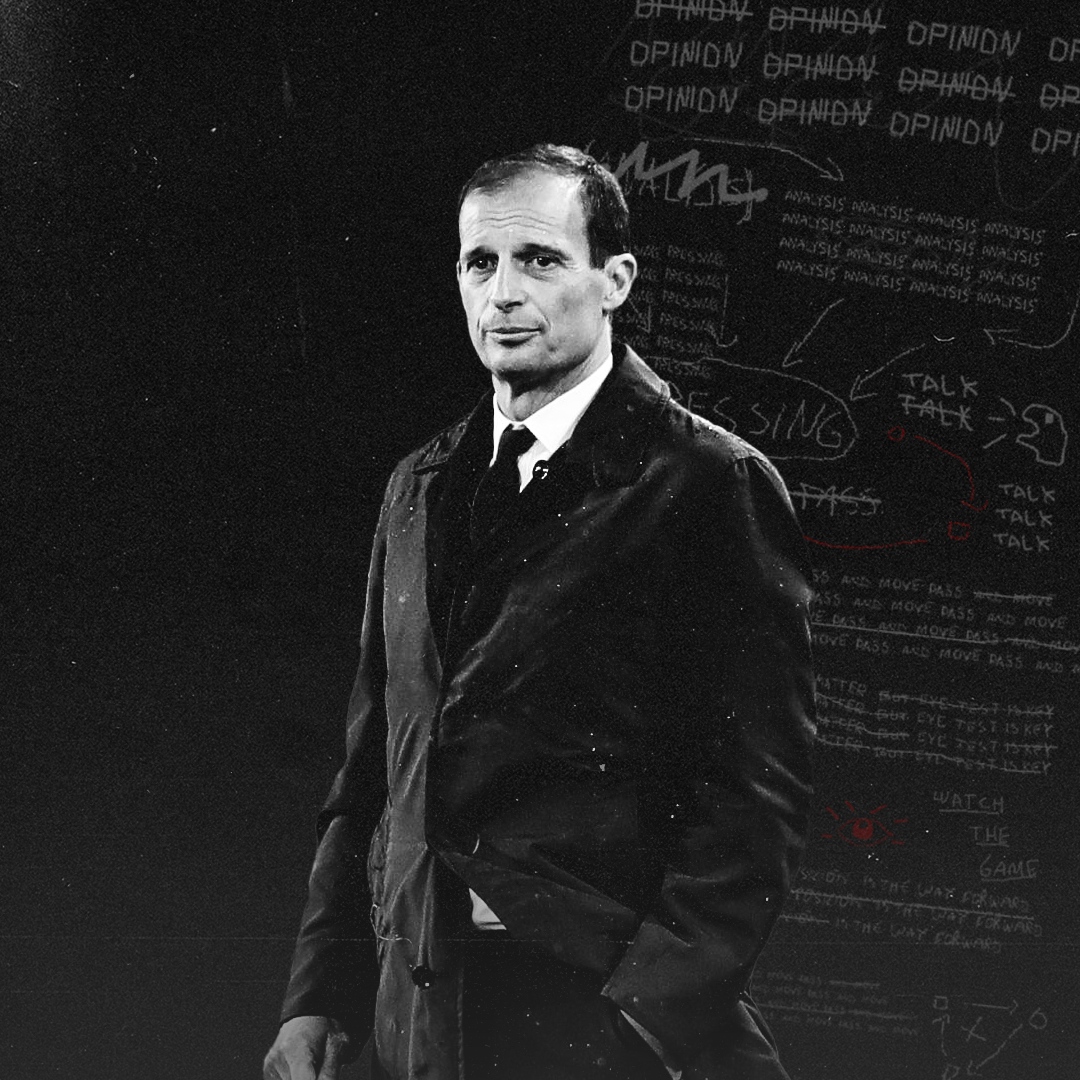
AC Milan: The Story of a Club in Decline
This weekend in Genoa, Milan put one and a half feet into the Champions League; a single home victory against an already-safe Cagliari side is all that is needed to secure third place. However—particularly for the *Rossoneri*—this past week has been turbulent, to say the least—if not downright embarrassing—especially when speaking of a team that is a seven-time European champion.
Chaos erupted at San Siro last Sunday amidst fierce protests directed at CEO Giorgio Furlani. A hostile San Siro crowd turned against an executive who is patently ill-suited for the role he occupies. Stepping back for a moment: realizing last May that it could not continue without a Sporting Director, Milan reached out to Igli Tare—an experienced football executive who had performed exceptionally well at Lazio.
However, the first major hurdle arose when Tare arrived at Milanello only to find that Reijnders had already been sold and Samuele Ricci had already been purchased—moves driven by the CEO’s relationship with Ricci’s agent, Busardò. Naturally, the question that immediately springs to mind is: how can a CEO—whose primary responsibility should be managing the club’s finances—conduct transfer negotiations that fall outside his remit?
Christian Pulisic at AC Milan: A Tactical and Performance Evolution
Moreover, with just two weeks remaining in the season, rumors have already surfaced suggesting that there is a 99% probability that Igli Tare will not remain as Milan’s Sporting Director; meanwhile, speculation regarding Tony D’Amico—currently at Atalanta—is growing increasingly persistent. It does not end there, for one of the most ambiguous roles within the Milan organization is, without a shadow of a doubt, that held by Zlatan Ibrahimović—who is not an employee of AC Milan itself, but rather of RedBird, the firm owned by Gerry Cardinale that manages the club.
Ibra—who had already clashed with Allegri during his playing days—did so again in his capacity as an executive. According to reports, he committed an act of unprecedented gravity: when the club asked Massimiliano Allegri to compile a list of players who might be sold should good offers arise, Ibra reportedly contacted those players directly, telling them that the coach was trying to force them out.
Amidst all this stands owner Gerry Cardinale, who still hasn’t grasped how football operations are conducted in Italy. Milan finds itself in a paradoxical situation: an CEO loathed by the fanbase, by Ibrahimovic, by Tare, and by Allegri; a Sporting Director who refuses to collaborate with the CEO or the individual technically serving as Senior Advisor; a head coach who cannot possibly continue working alongside a CEO and Senior Advisor who are actively trying to oust him.
And to top it all off, a Head Scout who—by all accounts—does everything *but* scout, given that the players to be monitored (and potentially negotiated for) are actually selected by entirely different people. It sounds like a bad joke, yet we are talking about AC Milan—the club from Milan, a seven-time European champion and eighteen-time Italian champion.
In the midst of such corporate chaos, having a coach capable of developing and enhancing the value of the players who join Milan—despite the turmoil—would undoubtedly be a major asset. While Massimiliano Allegri surely possesses other virtues, this particular quality is certainly not one of them.
He has managed to forge a cohesive unit out of a fragile squad, and he has attempted to shore up a defense that was constantly leaking goals last season; however, he has done so by employing a style of football that—for the majority of matches—has been both aesthetically dreadful and overly pragmatic.
This approach ceased to be effective once their phenomenal goalkeeper—who previously seemed capable of saving anything and everything—continued to perform well, but without having to pull off three miracles per match. The *Rossoneri* currently play with a defensive setup that morphs into a back-five operating in a low block, hoping to launch counter-attacks.
There is nothing truly codified or pre-planned in their strategy, aside from a reliance on individual quality—a quality which, contrary to some prevailing narratives, is abundant within the squad, featuring talented players capable of deciding the outcome of matches all on their own. A coach earning a net salary of 5 million euros cannot focus exclusively on the mental aspect and team cohesion while neglecting matters on the pitch.
Nor can he cling to a rosy past to validate his current abilities—especially when observing other coaches like Antonio Conte, who worked a masterpiece last year; like Gian Piero Gasperini, who is on the verge of bringing Roma back to the Champions League after eight years; or even Luciano Spalletti, who is paying the price for having joined Juventus mid-season, yet did so with strong ideas and a clear identity—something that is patently lacking in Max Allegri.
A few days ago, Mike Grella drew a brilliant analogy on a CBS television program regarding Massimiliano Allegri’s style of football and the current season, stating: “Allegri is like a pack of cigarettes: if you smoke it for one, two, or three days, nothing happens—it works out fine (with the Champions League objective nearly achieved)—but looking to the future, we all know that it cannot work and that it will end badly.”
The only certainty is that Milan is a club in disarray, with too many voices offering their opinions; it has an owner who rarely visits Italy and relies on secondhand reports—the accuracy of which remains unknown—a coach who is in the twilight of his career, and a squad that, despite its inherent strength, contributes to its own downfall by delivering performances unworthy of a glorious institution like AC Milan—a club that I hope, with every fiber of my being and with all my soul, will one day return to its former glory.
By: Matteo Zamprioli / @calcioconl57842
Featured Image: @GabFoligno / Chris Brunskill – Getty Images