

What Happens During a Criminal Trial in Georgia?
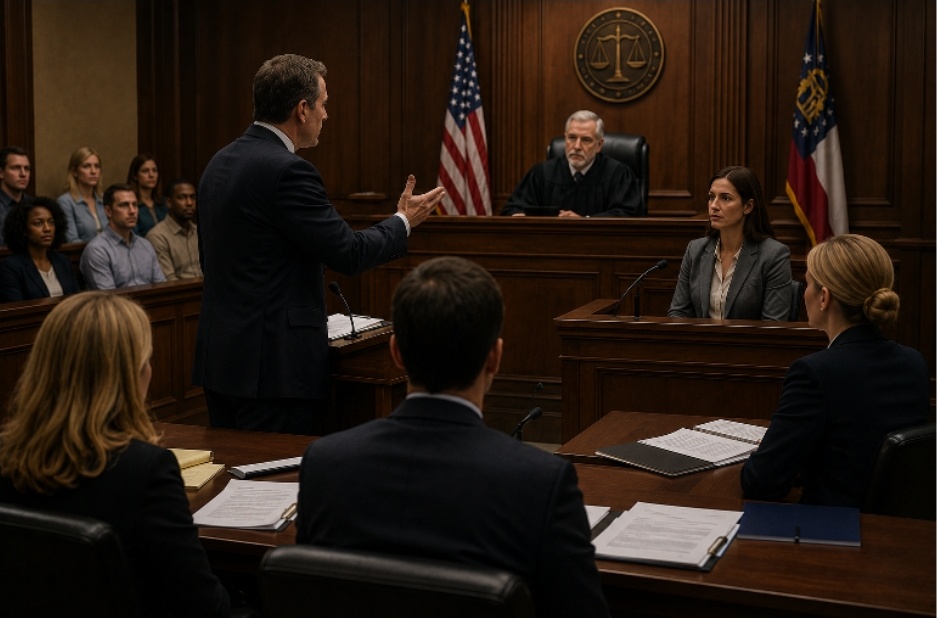
Facing a criminal trial can be intimidating, especially for individuals unfamiliar with the legal system in Georgia. Criminal trials are structured legal proceedings where prosecutors attempt to prove that a defendant committed a crime, while the defense works to challenge the evidence and protect the defendant’s rights. Understanding each stage of the trial process can help reduce uncertainty and prepare individuals for what lies ahead.
Jury Selection Begins the Trial Process
The first stage of most criminal trials is jury selection, also known as “voir dire.” During this process, attorneys for both sides question potential jurors to determine whether they can remain fair and impartial.
The prosecution and defense may dismiss certain jurors if they believe bias exists. The goal is to create a jury that can evaluate the evidence objectively and make a fair decision based solely on the facts presented during trial.
In some cases, defendants may choose a bench trial instead, where the judge alone decides the outcome without a jury.
Opening Statements From Both Sides
Once the jury is selected, the trial officially begins with opening statements. The prosecutor presents an overview of the charges and explains what evidence they plan to show during the case.
Next, the defense attorney provides an opening statement outlining the defense strategy and highlighting weaknesses in the prosecution’s case. This is not the stage where evidence is argued in detail, but rather an introduction to what each side intends to prove.
Experienced Augusta criminal lawyers often use opening statements to establish doubt early and shape how jurors view the evidence throughout the trial.
The Prosecution Presents Its Evidence
After opening statements, the prosecution begins presenting evidence against the defendant. This may include:
- Witness testimony
- Surveillance footage
- Physical evidence
- Police reports
- Expert witnesses
The prosecutor must prove guilt “beyond a reasonable doubt,” which is the highest burden of proof in the legal system.
Witnesses called by the prosecution are questioned directly by prosecutors and then cross-examined by the defense. Cross-examination is a critical opportunity for the defense to challenge credibility, expose inconsistencies, and weaken the prosecution’s arguments.
The Defense Has the Opportunity to Respond
After the prosecution rests its case, the defense may present evidence and witnesses on behalf of the defendant. However, the defense is not required to prove innocence. Instead, they only need to create reasonable doubt about the prosecution’s claims.
Defense attorneys may
- Present alibi evidence
- Challenge forensic findings
- Question witness reliability
- Introduce alternative explanations
A skilled criminal defense attorney Savannah GA may also file legal motions during trial if improper evidence or procedural violations occur.
In some cases, the defense may choose not to present additional evidence at all and instead focus entirely on arguing that the prosecution failed to meet its burden of proof.
Closing Arguments Summarize the Case
Once both sides finish presenting evidence, the attorneys deliver closing arguments. This stage allows each side to summarize the evidence and persuade the jury.
The prosecution argues why the defendant should be found guilty, while the defense highlights weaknesses, inconsistencies, or reasonable doubt within the case.
Closing arguments are extremely important because they leave a final impression on jurors before deliberations begin.
Jury Deliberation and Verdict
After closing arguments, the judge provides legal instructions to the jury. Jurors then enter private deliberations to discuss the case and determine whether the prosecution proved guilt beyond a reasonable doubt.
The jury may return one of several verdicts
- Guilty
- Not guilty
- Guilty on lesser charges
If the jury cannot reach a unanimous decision, the result may be a “hung jury,” which can lead to a mistrial.
The amount of time deliberations take varies widely depending on the complexity of the case and the amount of evidence presented.
Sentencing and Possible Appeals
If a defendant is found guilty, the case proceeds to sentencing. During sentencing, the judge determines the penalties based on Georgia law and the facts of the case.
Possible penalties may include
- Jail or prison time
- Probation
- Fines
- Community service
For serious felony offenses, penalties can be severe and long-lasting.
Defendants may also have the right to file an appeal if legal mistakes occurred during the trial. Appeals are handled by higher courts and focus on legal errors rather than re-examining all the evidence.
Conclusion
A criminal trial in Georgia involves multiple stages, each playing an important role in determining the outcome of the case. From jury selection and opening statements to verdicts and sentencing, the process is designed to ensure fairness and protect constitutional rights. Understanding how trials work can help defendants feel more prepared and informed during an otherwise stressful experience. Because criminal charges can carry serious consequences, having experienced legal representation is often one of the most important factors in building a strong defense and protecting your future.