
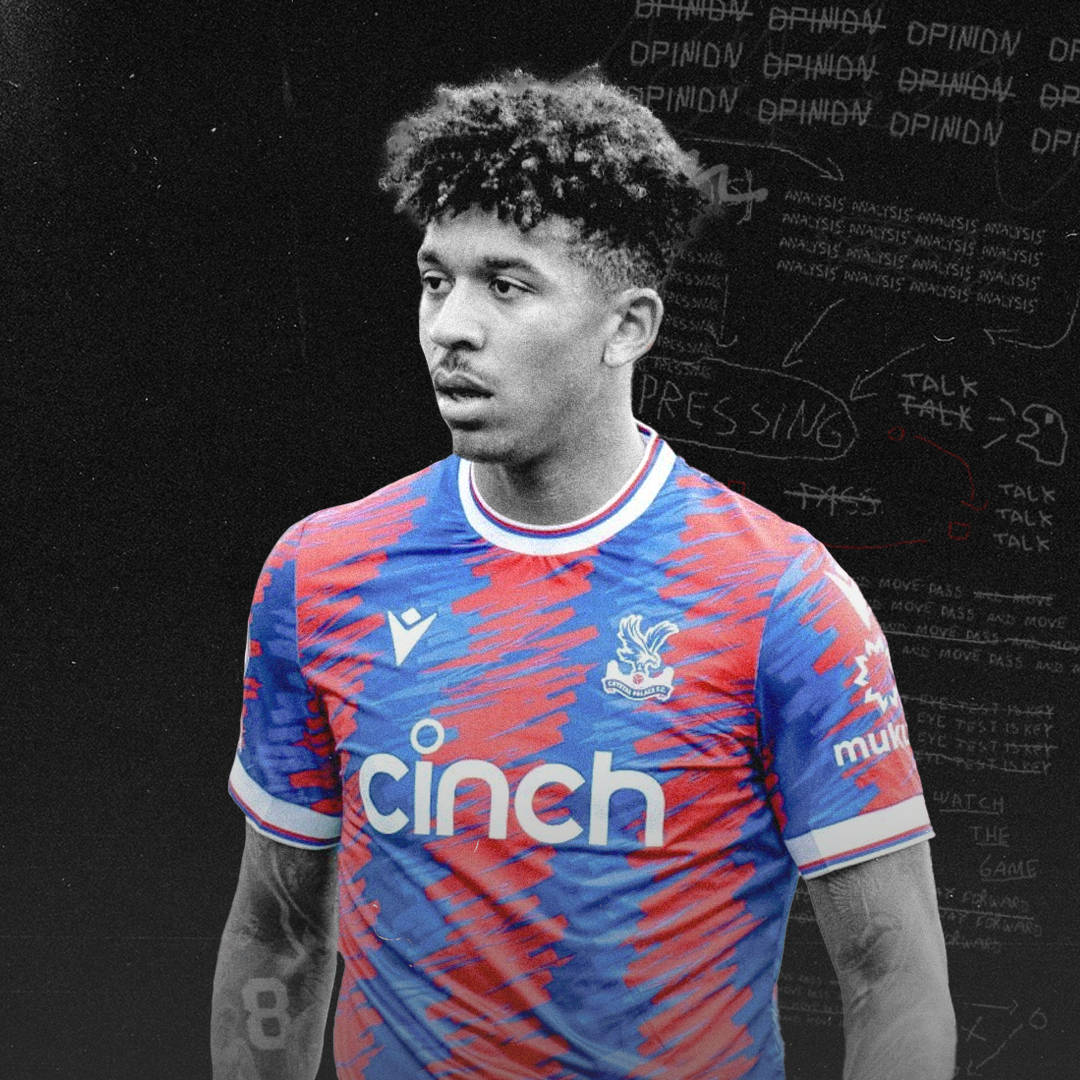
Tactical Roadmap: Should the United States Embrace “Managed Chaos” to Overcome Paraguay, Just Like France?
International football is, at its essence, a collision of conflicting realities. When two nations step onto the pitch, they are not merely kicking a ball; they are locked in a sophisticated struggle to impose their own version of football upon the opponent. As the United States prepares to lock horns with Paraguay, we are witnessing a classic tactical standoff. It is a meeting of two diverging philosophies: one deeply rooted in the clinical, structured norms of modern tactical discourse, and the other perfected in the dark, gritty arts of “controlled chaos.”
For the U.S. side, the challenge is not just technical; it is a test of intellectual maturity. They must decide if they are willing to step into the inferno of Paraguay’s favored game-state and retain the composure to emerge victorious. Paraguay do not win matches by out-possessing their rivals or by stringing together endless sequences of elegant passes. They thrive in the rupture. Their footballing identity is forged in the moments when the game descends into a frantic, decentralized brawl.
They are masters of a suffocating, attritional ecosystem where the match is fractured into a thousand tiny battles—duels, erratic ball-recycling, and high-intensity struggles for second balls. In the Paraguayan tactical dictionary, the “second ball” is the only currency that matters. Their defensive blueprint is engineered to drag even the most technical opponents into a swamp of physical frustration, where fluidity is stifled and the match becomes a war of attrition rather than a game of skill.
Newcomers and Second Appearances: What to Expect in the 2026 World Cup
For the United States, the gravitational pull toward patient, positional possession is understandable. It is the orthodoxy of the modern game, the method touted by elite academies, and for a generation of American players, it has become the instinctive default. However, executing a slow, methodical build-up against a side as resilient and disciplined as Paraguay is essentially an invitation for them to dictate the terms.
If the U.S. falls into the trap of purely horizontal circulation, they will inevitably become ensnared in a monotonous, soul-sapping rhythm that plays directly into the hands of a Paraguayan low block—a unit that thrives on waiting, absorbing, and pouncing on the slightest hint of complacency. To secure a win, the U.S. must abandon this “possession trap” and evolve toward a more daring, surgical form of verticality.
This is where the necessity of a “one-jolt” mentality becomes paramount. In the stratosphere of modern football, the most feared sides are not those that caress the ball for aesthetic pleasure, but those that treat it as a ballistic weapon to be delivered behind enemy lines at a moment’s notice.
The strategic goal for the U.S. should be to transition from a defensive shell to a potent offensive formation in under three seconds. This represents a seismic mental shift. It marks the transition from “aesthetic passing”—which looks polished but grants the opponent ample time to reset—to “functional passing,” which carves through defensive strata with ruthless precision.
Italy’s missing the World Cup is the Fault of Modern Football
Drawing inspiration from the blueprint of European giants like France, the U.S. can cultivate a similar brand of controlled intensity. France has long demonstrated how a squad can remain structurally sound while simultaneously thriving amidst the turbulence of a broken game. They transform chaos into a weapon rather than a hazard.
If the American squad can harness that same mental fortitude, they will stop viewing Paraguay’s provocations as threats and start treating them as opportunities. The objective is not simply to hold the ball, but to use it to exert relentless, uncomfortable pressure—a philosophy where every turnover is immediately converted into a transition threat.
If the U.S. adopts this mindset, they will cease to be merely participants in the game; they will become the architects of its intensity. Upon winning the ball, the priority must be an immediate vertical thrust into the space behind Paraguay’s backline. This is not aimless sprinting; it is “organized unpredictability.”
By maintaining a compact central triangle focused on the ball, while holding two players in disciplined covering positions, the U.S. ensures that even if a high-risk pass is intercepted, the team remains fundamentally sound. This is the paradoxical secret to beating a team that thrives on chaos: by being faster, more lethal, and ultimately more disciplined in your own moments of volatility.
Furthermore, the American arsenal must fully integrate the “five-second rule.” While counter-pressing is often framed as a purely defensive chore, against a side like Paraguay, it must be reimagined as the primary conduit for the attack. When the ball is lost, those initial five seconds represent a fleeting window of opportunity. Rather than scrambling to retreat, the U.S. must swarm the ball carrier, extinguishing Paraguay’s hope of a clean exit.
By forcing turnovers in the final third, the U.S. can dismantle Paraguay’s defensive structure while it is still in the process of resetting. This requires immense physical stamina, but it also induces the psychological exhaustion that inevitably leads to catastrophic defensive errors in the closing stages of the match.
However, even the most aggressive strategies must account for the reality of the “low block.” Paraguay is perfectly content to sit deep, fortify the central channels, and dare the U.S. to find a solution. In this scenario, the U.S. must avoid the “crossing trap.” Lobbing high, hopeful balls into the box against a team constructed to win aerial duels is a recipe for total futility. Instead, they must deploy “dynamic width.”
By utilizing overlapping fullbacks to stretch Paraguay horizontally, the U.S. will force the defensive unit to spread, creating micro-gaps between the center-backs. Once that defensive tension is high, the focus must shift to the half-spaces. A rapid, ground-level cutback to the penalty spot is statistically far more lethal than any aerial cross, as it places the burden of reaction on the goalkeeper and the defenders simultaneously.
The tactical significance of long-range shooting is another vital, yet often overlooked, component. When the passing lanes are congested, a strike from 25 yards serves a purpose far greater than just scoring; it acts as a structural disruptor. It forces the defensive block to break its rigid shell and step forward, inadvertently creating space in the previously locked-down penalty area.
Players must be trained to “hunt” these moments—the rebounds, the deflections, the loose balls. These are the chaotic scraps of possession that define results against a committed low block. Ultimately, the mastery of the match lies in rhythm management. A side that operates at one predictable tempo is a side that can be easily contained.
The U.S. must master the art of oscillating between periods of controlled calm and sudden, explosive eruption. Thirty seconds of rhythmic, patient circulation can lull Paraguay into a false sense of security, creating the perfect psychological environment for a jarring, sudden vertical strike. It is this abrupt change of gear that leaves even the most organized defenses scrambling.
While the current U.S. roster may not yet command the sheer individual star power of a team like France, they can effectively bridge that divide through an “analytical edge” and collective, machine-like precision. Victory will not be handed to them on a platter for “playing well.” It must be seized by becoming the most aggressive, most physically taxing, and most mentally imposing force on the pitch. It requires embracing the friction of the game and channeling it with surgical intensity.
By marrying this ruthless attacking philosophy with a disciplined, high-IQ defensive structure, the United States can effectively turn Paraguay’s controlled chaos against its creators. They can reshape a grueling, physical encounter into a masterclass in tactical intelligence.
The path forward is undoubtedly treacherous, but it is clear. More than just a win over a defensive-minded opponent, this represents a historic leap in the tactical maturity of U.S. soccer. The time for passivity is over. The U.S. must stop playing to Paraguay’s strengths and begin forcing them into the one game they dread: a high-speed, high-intensity, and tactically flawless clash.
Written by Safoura Tarzaban / @safouratarzaban / [email protected]
Featured Image: @GabFoligno / Sebastian Frej / MB Media / Getty Images