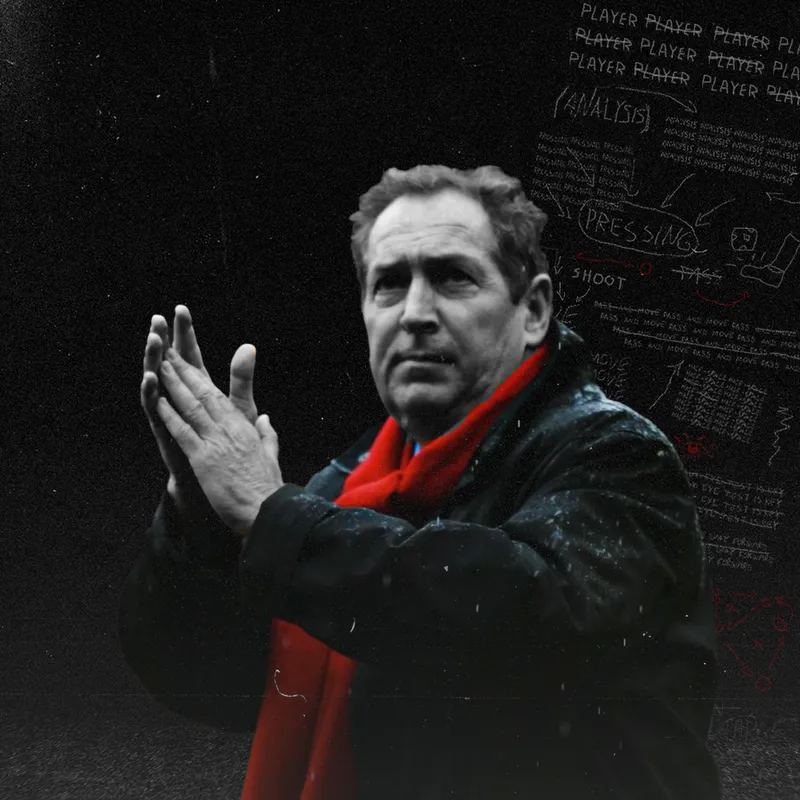
Illustrator @Juanffrann Photographer Clive Brunskill – Getty Images
The Little Treble, What Is It, and Who Has Won It?
The treble, probably the most coveted achievement in club football, besides your club getting bought out by people who have done crimes against humanity to artificially pump it full of cash. But I digress. Only 9 clubs have ever managed…
The treble, probably the most coveted achievement in club football, besides your club getting bought out by people who have done crimes against humanity to artificially pump it full of cash. But I digress. Only 9 clubs have ever managed this tremendous feat in Europe and only Bayern and Barcelona have done it twice. Interestingly enough Barcelona has two trebles for men’s and women’s football each but sadly that’s all I can talk about women’s football or else Eni Aluko will break down my door and kick me in the head.
The big treble as I like to call it consists in Europe of winning your respective league, your respective domestic cup competition the Champions League or European Cup. But what about the Little Treble, which I have just coined? Meaning what about the clubs who have won a treble consisting of the league, cup or two cups and a secondary European competition, like the UEFA Cup/ Europa League, the Cup Winners' Cup, the Conference League or even the Inter-Cities Fairs Cup?
Since I have found no official list relating to this topic since no one gives a damn and I have nothing better to do I have scoured the lists of winners in order to bring you the comprehensive list of all clubs in the history of the universe that have won the Little Treble. Thinking I would have no problem finding even more clubs I dove into my task. After all, I was researching four European competitions, some of which have been won by teams from countries not usually part of the top leagues in Europe, which are usually heavily dominated by a handful of clubs.
/@btl/juan-roman-riquelme-the-last-of-his-kind
You can imagine my desperation after having found only 5 clubs and resorted to researching things like the Mitropa cup or the Balkan cup. Quickly ending my spiral before it can truly ruin my night we start with our first entry, Liverpool. Four years before the most dramatic Champions League final of all time, Liverpool were still mired in the decline that had started during the 90s.
After winning the 1990 First Division title, the Reds spent a decade chasing the lost glory of the 1980s winning just one FA Cup and one League Cup, regularly finishing third or fourth and seeing their bitter rivals Manchester United emerge as the dominant force in English football. In 1998, Gérard Houllier was appointed as co-manager and took the main role during that season but could only guide the team to seventh in the league.
The next season Didi Hamann and Sami Hyypiä arrived but were offset by the departures of Paul Ince and Steve McManaman. Despite breaking the club’s transfer record to sign Emile Heskey for £11 million they missed out on the champions league to Leeds United by finishing fourth and would play in the UEFA Cup. That season Liverpool’s team finally started to click and formed a cohesive unit under Houllier playing in a 4-4-2 formation.
Homegrown young players Gerrard and Owen really started to shine alongside players like Heskey, Hyypiä, Carragher, Hamann and free signing Gary McAllister whom Houllier described as his "most inspirational signing". Their form in the league was patchy but it was in the cup competitions where the team really shone.
/@btl/gerard-houlliers-apotheosis-in-famous-anfield-european-night-against-roma
After needing extra time to progress past Chelsea in the League Cup they dispatched Stoke City, Fulham and Crystal Palace to reach the final against Birmingham City. Fowler’s goal in the 30th minute looked to have put Liverpool on the right track against a much inferior opponent but they couldn’t double their lead and were punished in the 90th minute when Darren Purse converted a penalty to level the game. Birmingham held out through extra time but were defeated 4-5 on penalties.
That very same week would prove instrumental for the Reds season as they would face Roma in the UEFA Cup and Manchester City in the 5th round of the FA Cup. Despite losing 1-0 to Roma at the Olimpico Liverpool went through, 2-1 on aggregate and dispatched City 4-2. The rest of their FA Cup games were against lower league opponents Tranmere Rovers and Wycombe Wanderers. In the UEFA Cup, Porto awaited them in the quarter finals.
A 0-0 draw at the Estádio das Antas and a 2-0 home win lined up a semifinal clash with giants Barcelona. Despite facing a star-studded team containing the likes of Frank De Boer, Pep Guardiola, Frank Kluivert or Rivaldo, Liverpool once again managed to draw the first leg away from home without conceding any goals. Houllier was somewhat criticized for his defensive approach but he would be vindicated in the return leg when Gary McAllister’s 44th-minute goal via a penalty would prove decisive as once again Liverpool prevented Barcelona from scoring.
Despite closing in on 60 games that season the Liverpool squad really came into their own during the final stages of the campaign winning 9 of their final 10 games of the season. Two of those games were the FA Cup and UEFA Cup finals played just four days apart. Despite the massive amount of games played that season 10 players started both finals. The first one, against Arsenal in the FA Cup started with both teams failing to take their chances.
/@btl/did-the-kgb-frame-russias-best-ever-footballer
They traded blows for more than an hour, unable to score until in the 72nd minute Ljungberg gave Arsenal the lead. Liverpool looked down and out as Henry nearly doubled the lead for the Gunners before Michael Owen decided to show the world why he was worthy of winning that season’s Ballon d’Or, turning the game around with two goals in the last 7 minutes of the game. Four days later, the Reds travelled to the Westfalenstadion in Dortmund to face Deportivo Alavés in their first European final since the tragic Heysel Stadium disaster.
Their opponents were playing semi-professionally just six years ago but Houllier dismissed any claims that it would be an easy tie. The chance of any major upset seemed to be put to bed as Liverpool were already 2-0 up within 16 minutes and despite Alaves pulling one back the first half ended 3-1. However in the second half Alavés proved why they were that season’s ultimate giant killers having previously eliminated Inter as they scored two goals in two minutes to level the game.
Fowler gave Liverpool back the lead in the 72nd minute but then in the 88th minute Jordi Cruyff, Johan’s son, levelled the game and forced extra time. Back then, the golden goal had been introduced to force extra time to make games more entertaining and would decide this final. Alavés held out until the 116th minute despite having two of their players sent off only for Delfí Geli to score an own goal which meant the underdogs lost in the cruelest of fashions. Liverpool’s treble sealed the Ballon D'or win for Michael Owen and arguably paved the way for the team’s 2005 triumph in Istanbul.
Our next club, Porto’s two trebles are a tale of two managers. The first one came in 2003 and its story starts in the winter of 2002 when the club were languishing in 5th. Above them were the usual suspects of Sporting and Benfica but also minnows União de Leiria who were massively overachieving for their stature. Naturally Porto decided to poach their manager who had previously worked for the club under Bobby Robson.
You can probably guess that this young manager was The Special One, Jose Mourinho. In his first press conference he outright stated that he would win next season’s league title and immediately proceeded to build his team around a backbone of Porto players like Vítor Baía, Ricardo Carvalho, Costinha and Deco, complimented by signings like Nuno Valente and Derlei from his old club Leiria and Paulo Ferreira or Maniche.
/@btl/the-four-best-players-to-play-for-both-arsenal-and-tottenham
Mourinho’s boldness, some would call it arrogance, would prove to be firmly anchored in reality as in the next season of the Portuguese League his team would lose only two games in the latter part of the campaign when the title was already decided, winning by 11 points with a massive +44 goal difference. In the cup, Porto managed to avoid their main rivals and dispatched Mourinho’s old club Leiria in the final. In the UEFA Cup they had similar luck, with Lazio being the biggest name they met in the semifinals. It was Panathinaikos however who they met one round prior who proved the biggest challenge.
The Greek side shocked Porto at the Dragao, dealing them their first defeat of the season 1-0. In the second leg Derlei levelled the tie in the 16th minute but had to wait until extra time to score his second to send his team through. Their rivals in the final, Celtic, had a much harder task in the quarters as they faced 2001 winners Liverpool but still managed to go through 3-1 on aggregate. The final held at the Estadio Olímpico de Sevilla, was a cagey affair in the first half with Deco and Henrik Larsson being the most influential players of the two sides.
It was Deco that struck first, assisting Derlei’s goal just before half time. However, two minutes after the restart Larsson equalized only for Deco to grab a second assist, this time for Alenichev in the 54th minute. But once again Larsson dashed Porto’s hopes, just three minutes later. With the game ending in a draw the silver goal rule would apply which meant that if a team went into half time of extra time in the lead they would win. The rule was nullified as neither team scored and it was Bobo Baldé’s dismissal in the 96th minute that proved instrumental.
Porto’s pressure eventually resulted in a second goal by Derlei and Mourinho had completed his first treble as a manager. He could not repeat the feat the next season as Benfica would ruin his plans, beating Porto in the Cup final, but they would still go on to win the 2004 Champions League final against Monaco. Eight years later history seemed to eerily repeat itself as in the summer of 2010 Porto appointed another young manager with a similar haircut to Mourinho, who had previously been his assistant.
/@btl/the-biggest-controversies-in-the-history-of-the-euros
If not as arrogant, Andre Villas Boas seemed like a Mourinho regen through and through and immediately won the Supercup against Benfica after taking charge. Similar to his illustrious predecessor a new core of quality players emerged, including Nicolás Otamendi, João Moutinho, James Rodríguez, Radamel Falcao, and Hulk. In the league he went one better on Mourinho finishing the season undefeated, drawing just three games with a huge 21-point cushion on second place Benfica. In the cup it was a similar story to 2003 up until the semifinals where Porto drew Benfica.
Having already defeated their rivals twice that season Porto started out as favourites but were shocked at home losing 2-0. In the return leg key players João Moutinho, Hulk and Radamel Falcao each scored once and despite Benfica pulling one back the tie went Porto’s way on away goals. In the final, Vitória de Guimarães were totally outmatched losing 6-2 to seal the second trophy of a much-anticipated treble.
In the newly rebranded Europa League, Porto had to enter the playoff round but Genk were no match for the Portuguese team and in the group stage they went undefeated. Two Russian teams, CSKA and Spartak, and Villareal posed no real issues so that the newly built Aviva Stadium in Dublin would host for the first time ever, an all Portuguese final and the first European final on Irish soil. Their opponents, the most Europa League team of the late 2000s and early 2010s, Braga started as firm underdogs.
This was reflected in the game as after a few promising attacks in the opening exchanges they settled into a more defensive shape and allowed Porto to pile on the pressure. Radamel Falcao broke the deadlock just before half time and Braga had no answer for Porto in the second half. The club’s second little treble was secure. I mentioned in the introduction how I expected many more little trebles to be found amongst the European leagues not usually considered to be close to the top and the rest of the clubs on my list all come from leagues slightly lower down in the European pecking order.
/@btl/the-biggest-controversies-in-the-history-of-the-champions-league-final
Some 20 years before Liverpool’s victory in Germany, IFK Goteborg became the first club to win a little treble in 1982. Their story of success starts in the mid 70s to the south of Goteborg in Malmo and Halmstad. Whilst still considered an illustrious footballing nation having reached the 1958 World Cup final and producing players such as the famous Gren Nordahl Liedholm, front three of Milan, Sweden was deemed lacking in terms of its league.
That was about to change as an English revolution would sweep Swedish internal football with the arrivals of Bob Houghton and Roy Hodgson who took charge of Malmo and Halmstad. Taking a version of the classic English 442 with them they adapted it into a much more compact and dynamic system playing a high line and employing zonal marking and a high press. I have covered their story in a previous video if you want to find out more but suffice to say that other managers in the league took notice and started employing similar tactics.
One of them, Tord Grip, who managed KB Karlskoga influenced a young Sven-Göran Eriksson who at just 27 gave up on his dreams of being a footballer and moved into management. His first managerial stint saw him help Degerfors reach promotion to the second league which prompted Goteborg to take a punt on the young manager much to the surprise of everyone including the club’s players who had never heard of him.
It took three years of near misses and second place finishes to implement the new hybrid English Swedish system until in 1982, when Goteborg went all out. They won the Swedish regular season, the Allsvenskan, the playoffs and the Swedish cup. Their European adventure in the UEFA Cup started against Utrecht and went on to Girondins de Bordeaux, Sir Alex Ferguson’s Aberdeen, Neuchâtel Xamax and Radnički Niš to reach the final against Ernst Happel’s Hamburg. Back then the final was to be played over two legs and Goteborg did their job at home through a solitary Tord Holmgren goal.
/@btl/candido-de-oliveira-portuguese-footballs-james-bond
However it was in the return leg that Eriksson’s team would really shine as they beat the team that would go on to become European Champions the next year 3-0 in their own backyard. Eriksson left at the end of their treble winning season and as did some key players but that did not stop Goteborg’s success.
A further two league titles followed and in 1986 the team reached the semifinals of the European Cup and the mighty Barcelona could only eliminate them on penalties. One year later they won their second UEFA Cup against Dundee United, but this time only they missed out both in the regular season and the Swedish cup, winning only the playoffs. During their first treble win, Goteborg became the first Swedish team to win a European trophy and in 2000 Galatasaray did the exact same thing but for Turkish clubs.
At the beginning of the 90s, Galatasaray had been on a steady rise for nearly a decade, helped by German coach Jupp Derwall and later Fatih Terim and Mustafa Denizli, who had worked under him. Signs of success were already showing with the club reaching the semifinals of the European cup in 1989. Helped by another three German coaches they entered the late 90s having eliminated Manchester United in the Champions League in 1993 and were no longer viewed as underdogs from Eastern Europe but a genuinely top quality team.
This newfound status under president Faruk Süren and head coach Fatih Terim enabled them to attract quality players like goalkeeper Claudio Taffarel and Romanian legends Gica Popescu and Gica Hagi. Alongside them Galata could rely on an excellent crop of homegrown players like Hakan Şükür or Ümit Davala, who would go on to finish third at the 2002 FIFA World Cup and play in the quarter-finals of UEFA Euro 2000. In the aforementioned 2000 season Galata reached their greatest achievement so far.
/@btl/candido-de-oliveira-portuguese-footballs-james-bond
An opening day loss to Gaziantep was quickly forgotten as the club embarked on a 24 match unbeaten run in the league which was enough to finish ahead of Besiktas to win their fourth consecutive league title. The Turkish cup was also won for a second time in a row but it was in Europe where the team really shone. Having entered the Champions League qualifying rounds they brushed aside Rapid Vienna to enter a potential group of death featuring AC Milan, Chelsea and Hertha Berlin.
The campaign did not start brilliantly for them as they drew Hertha 2 all in Istanbul before going on to lose their next three matches. Then, on 27 October 1999 their comeback started with a win against Hertha and the next match would decide the fate of the group. Milan, who had a rotten campaign, needed a win to stay in Europe when they travelled to the Ali Sami Yen Stadıum. Despite opening the scoring through George Weah, two late goals by Sukur and Davala meant that Galata ran out 3-2 winners and would place third behind Chelsea and Hertha with Milan going out of Europe in shameful fashion in last place.
This result gave them entry to the UEFA Cup where another Italian team, Bologna awaited them. A win against them, a shock 2-0 upset against Borussia Dortmund at the Westfalenstadion, an easy win against Mallorca and a 4*2 aggregate results against Leeds meant that they became the first Turkish club to ever play a European final. The events surrounding the semifinal against Leeds would sadly go on to haunt this final. Back in April, before the first match of the semifinal in Istanbul fights broke out in the Taksim Square between Leeds supporters and Galatasaray fans.
The reason for the fight breaking out is unclear as Turkish accounts blame Leeds fans for throwing beer bottles and insulting the Turkish flag and Leeds fans maintaining that Galatasaray fans started it all by throwing chairs at them. What is certain is that after the initial brawl a phone call was made to ask for backup from a hardcore section of Galatasaray ultras and the following clash resulted in the fatal stabbing of two Leeds fans. As the final in Copenhagen would be played against Arsenal several British hooligan firms including those of Arsenal, Chelsea, Leeds and even Rangers vowed revenge and made their way to Copenhagen.
/@btl/the-british-players-that-reached-champions-league-finals-with-foreign-teams
With the Danish Police totally overwhelmed the squares and bars of the city became a battleground between English and Turkish supporters, causing havoc all the way up to the final. The final itself was a cagey affair that ended 0-0 right up until the penalty shootout. Davor Suker and Patrick Vieira’s misses meant that Galata, who had converted all their penalties, ran out 4-1 winners and completed their treble. An inquest into the violence after the game led to the banning of several Arsenal and Leeds fans from games in the UK and the firing of several fans from their jobs.
The only problem was that the reason for the firings were baseless as the Daily Mirror, a piece of junk British tabloid had printed pictures of Arsenal fans supposedly involved in the fights to shame them. Trouble was journalistic integrity seems to be more of a vibe instead of a solid concept in the UK and many of the fans depicted had no involvement in the violence. In contrast Turkish papers blamed everything on the English and then swiftly moved on to celebrate Galata’s historic European Super Cup win against Real Madrid three months later.
In 2005 our fifth and final team completed its little treble serving as a hallmark of another shift in the European footballing landscape. Whereas Galata heralded the arrival of the Turkish league on the European stage, CSKA Moscow’s triumph marked the return of the Russian teams to European competitiveness. Historically, Russian teams playing in the Soviet League were fairly competitive in Europe but the collapse of the Union saw funds dry up and the league decline.
By the early 2000s however Russia’s oligarchs had finished squabbling over the country’s resources and finally had some time to invest in football, as instructed by Vladimir Putin. That investment, which was headlined by Abramovich’s purchase of Chelsea, was also to be found on the internal front where his oil and gas conglomerate Sibneft sponsored CSKA from 2004 to 2006. This investment enabled them to sign two of that season’s best players, future Bayern star Ivica Olić and one of the most streets will never forget footballers or whatever the kids say these days, Vagner Love.
/@btl/dortmund-real-4-1-where-are-the-bvb-players-now
These new foreign signings complimented the Russian core of the team where we can find throwback legends such as Igor Akinfeev and Yuri Zhirkov. Their third place finish the year before gave them a champions league spot for the 2005 season via the qualifying phase. Drawn in a group with Chelsea, Porto and PSG they managed a very respectable third place, above PSG and just one point behind last season’s winners Porto.
Another Portuguese opponent awaited them in the UEFA Cup round of 32, namely Benfica, followed by Partizan, Auxerre and Parma. The final itself was the first chance to win a trophy CSKA had that season, as the Russian Cup final was 11 days later and the league ran from March until November. Their opponent in the UEFA Cup final was Sporting who had a huge advantage, not only in terms of European pedigree but also in terms of support, as the game would be played in their own stadium, the Estádio José Alvalade.
Sporting immediately pleased their fans by opening the scoring in the 29th minute and went into the break 1-0 up. Sadly for them CSKA came into the second half with a vengeance and put three past Sporting’s goalkeeper Ricardo within 20 minutes. The Russians ran out 3-1 winners and after this success the Russian Cup and Premier League seemed like easy tasks. A 1-0 win over Khimki sealed their cup win and they won the league over rivals Spartak with a six-point cushion.
Credits
Words
Eduard Holdis