

4 Practical Rituals Football Fans Bring Home
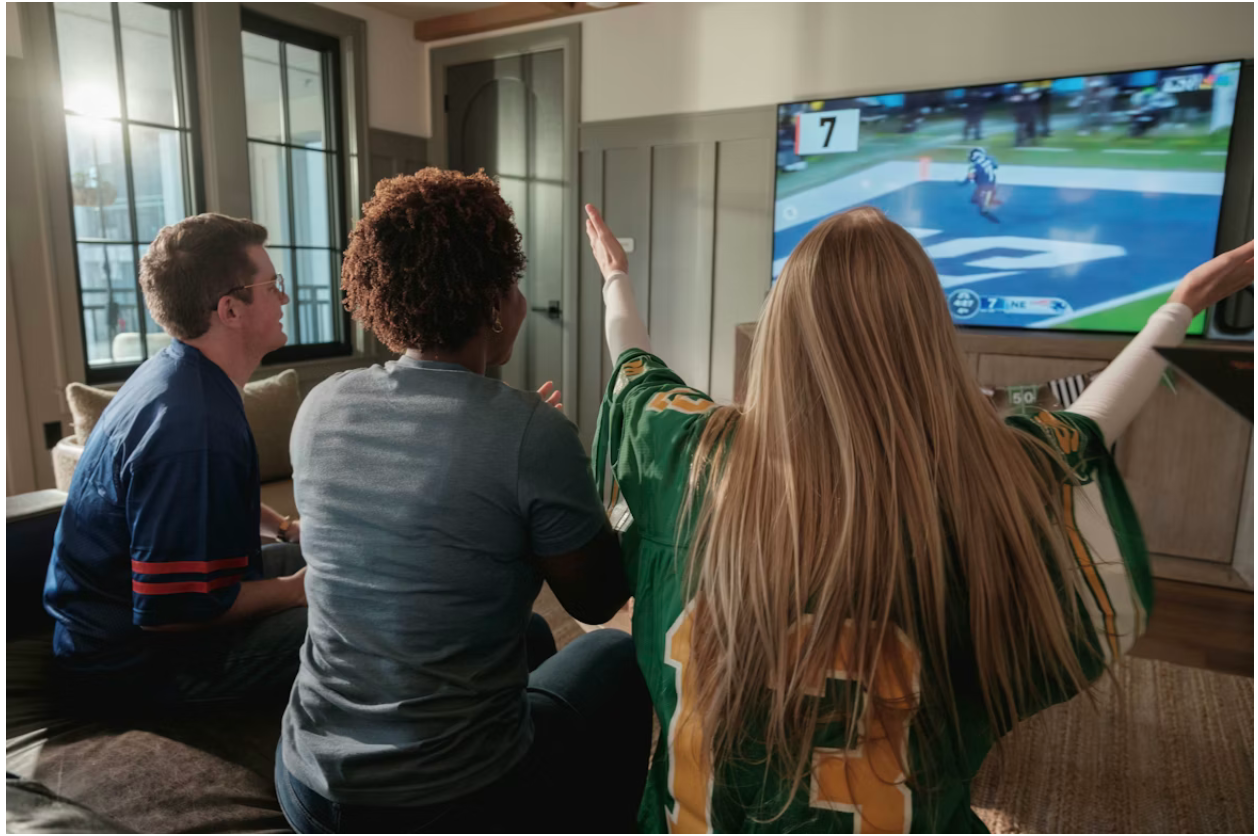
Alt Text: Group of friends watching American football in the living room
The four simple stadium rituals that can fix your everyday life include building a communal viewing setup, establishing deliberate pre-match routines, displaying club identity with restraint, and choosing functional seating.
Together, these elements transform passive home viewing into connected social experiences.
Football fan culture extends far beyond the stadium terraces to bring structured habits into the living room. By adapting these matchday traditions, fans create organized and welcoming environments that foster stronger social bonds.
Six friends squeeze onto one small sofa. A coffee table is already buried under crisps, drinks, and someone’s lucky scarf. It is a Champions League knockout night with away goals in play.
The living room simply does not have nearly enough seats.
Someone is perched on a dining chair dragged in from the kitchen. Another person has claimed the floor with a cushion and a blanket.
They have absolutely no intention of moving until the final whistle blows. The volume is turned all the way up.
The group chat is constantly pinging. Nobody has thought about the seating situation for a single second because the room is alive. Nobody planned for it to feel exactly this way. Somehow, it always manages to happen.
Football fan culture has this truly remarkable quality. It flatly refuses to stay contained within the stadium. The rituals, routines, and instinct to gather follow fans home week after week.
Here are four matchday rituals fans carry back from the terraces that are worth holding onto.
1. Building a Communal Viewing Setup
There is a reason the stadium experience is so hard to replicate and so easy to chase. It is not really about the pitch, the floodlights, or the acoustics.
Research shows that watching sports events boosts our subjective well-being by creating shared energy. It is about being surrounded by people who care about the same thing you do, at the same moment.
Watch a group of fans set up for a World Cup group-stage night or a local derby watch party, and you will notice something. They instinctively arrange the room the way a stadium arranges its stands.
The Art of the Small-Scale Stadium
Every seat faces the screen. The focal point organizes everything else. In a spacious living room, this is easy. In an urban flat, where the sofa nearly touches the TV unit, and three guests already feel like a crowd, it takes a bit more thought.
The challenge of small living room seating for communal sports spaces is real, but the trick isn’t needing a bigger room; it’s choosing furniture that earns its place during the big matches.
For a setup that prioritizes both comfort and floor space, Home Reserve’s loveseat offers a compact, two-seat format that fits snugly without swallowing the room.
These pieces are built for the ritual of matchday; they often feature washable covers that hold up against the inevitable spill, while their modular flexibility allows you to shift the layout as the guest list grows.
For a home viewing setup built around gathering closely without crowding the space, it is the kind of piece that truly earns its keep.
A good seating arrangement does not just solve a spatial problem. It encourages conversation, proximity, and the kind of easy togetherness that mirrors what fans feel on a terrace. The room does the work, and the football does the rest.
| Key Insight: A successful home viewing space mimics a stadium’s layout by ensuring every seat faces the screen. This simple alignment prioritizes shared energy and turns a passive evening into a focused, collective experience. |
2. The Pre-Match Routine
Before the first whistle, the players are already in their rituals. They use the same warm-up playlist and the same order when lacing boots. The same sequence of stretches, run-outs, and quiet moments prepares them for the game.
Pre-match routine is not just superstition, but rather a deliberate signal.
It tells the body and mind that this moment is different and truly matters. Fans do exactly the same thing, whether they realize it or not.
In fact, scientists have noted that the pre-game ritual generates more emotional synchrony than the game itself. From Buenos Aires to Birmingham, the international football nights that stick in memory all share the same invisible scaffolding.
You often see the same drinks order placed before kickoff and hear the same argument about the starting lineup. Then comes the moment where someone mutes the TV ads and someone else pulls up the team news.
An ordinary Tuesday evening gives way to something else entirely in those final minutes. That is not a coincidence, but rather a matchday ritual in action.
Supporters who have tracked their habits across a tournament will quickly recognize this pattern.
A group that has held the same World Cup watch routine for three tournaments running does not just turn up for the football.
They turn up for the shared snack spread and the ritual itself. The group message thread that starts exactly two hours before kickoff reinforces that unspoken agreement.
What makes this worth borrowing for everyday life is what it actually accomplishes.
It marks time and creates a transition between the ordinary and the meaningful. It tells everyone in the room that this gathering has weight and is not just passive TV time.
Building that kind of deliberate pre-match routine at home transforms the viewing experience from background noise into something worth showing up for.
3. Displaying Club Identity With Restraint
Walk into a stadium and the visual identity is absolute. The colors, the crests, the chants, and the banners dominate the space. There is no ambiguity about where you are or what this place is designated for.
This deep connection makes fans feel like part of something much bigger.
Studies suggest that social identification with organizations boosts our social well-being by providing a sense of purpose. Walk into the most compelling fan living rooms, however, and the identity is something much quieter.
You might find a single framed scarf above the TV or a color palette that nods toward club colors without announcing them. One pennant, placed deliberately, that has been there for fifteen years says this person cares without screaming it.
The contrast is highly instructive for anyone organizing their home. Football fan culture at its most lived-in is not about total saturation, but rather about considered expression.
The fans whose spaces resonate most are not the ones with every wall covered in merchandise. They are the ones who have chosen one or two pieces that actually mean something, and let those items speak.
Consider a Champion’s League viewer with a framed away-day ticket from a defining match. Picture a derby night host whose throw cushions happen to land in the right shades entirely by coincidence.
These communal sports spaces feel like they belong to a real person. They avoid feeling like a theme-park version of intense fandom.
The practical upshot for how fans think about their home viewing setup is that restraint in display actually deepens identity. It integrates fandom into the fabric of a lived-in home rather than competing with it directly.
Neutral-base furniture, like sofas and seating in classic tones, makes it easier to layer identity touches in and out of season. This adapts perfectly as the mood shifts and fandom evolves across seasons and transfers.
The goal is a space that works perfectly on a Tuesday night when nobody is visiting. It still needs to feel right when six friends pile in for a knockout tie.
Those two things are not in conflict at all. They just require a room that was designed to serve real life rather than a showroom version of it.
4. Choosing Seating That Actually Works for Long Matches and Regular Guests
Stadium seats are specifically engineered for maximum endurance. Designers know that fans will sit through ninety minutes minimum, through halftime, and often through added time.
They must even endure the peculiar agony of a penalty shootout. The seat has to hold people through all of it without the discomfort becoming part of the story.
At home, bad seating is the silent killer of any communal atmosphere. The first person to notice it will inevitably drift to the floor.
Then someone else disappears to the kitchen and does not come back until the break. The energy fragments, and the shared focal point dissolves completely.
What started as a proper derby watch party becomes four people watching the same game in slightly different directions. This is especially visible across a long tournament schedule.
Think about a group hosting every match of a national team run from the group stages through to the final. By the quarterfinals, the seating arrangement has quietly become its own distinct ritual.
Everyone claims the same spots and engages in the same cushion negotiations. There is always the same person who ends up too close to the speaker and does not complain until the second half.
What tournament gatherings reveal over time is that functional seating is the backbone of great communal sports spaces. It matters more than screen size or premium sound quality.
The room has to be able to hold people comfortably and repeatedly without wearing them down. For fan households, the traits that matter are highly practical and unapologetically unglamorous.
Seating must be easy to clean when spills happen, modular enough to rearrange for different group sizes, and incredibly durable.
These are not luxury considerations, but rather the baseline for small living room seating that actually serves its users.
It needs to sustain the kind of regular, enthusiastic use that matchday culture demands.
The furniture that works best in these spaces is never the furniture built for a pristine showroom. It is the furniture built for a room where people actually live and gather regularly. It must hold up when they occasionally lose their minds over a last-minute equalizer.
| Pro Tip: When selecting matchday seating, prioritize modularity and washable fabrics. The best furniture survives the physical energy of a last-minute goal and the inevitable spills, keeping the group together through every stressful minute. |
The Bottom Line
Return to that lively living room for a final moment. Picture the Champions League night, the mismatched chairs, and the coffee table disappearing under endless snacks. There are six people gathered in a space meant for three. Yet, nobody wants to be anywhere else.
The best fan spaces are never the absolute flashiest. They are not the ones with the biggest screens or the most comprehensive merchandise displays.
They are simply the ones that make gathering effortless. The seating pulls people close, the pre-match routine marks the occasion, and the room reflects something true about the host.
Everyone who sits down genuinely wants to stay for the duration. Football’s real appeal has always been heavily communal. The stadium is just the largest expression of something fans recreate instinctively, week after week, in living rooms across every time zone.
The habits they bring home from the terraces are, quietly, just good habits for living.
They cultivate shared routines and create spaces that eagerly welcome people. Having a clear focal point gathers attention and sparks deep conversation naturally.
The matchday ritual was never really about the game itself. It was always about who you watched it with.
| Author Profile: Home Reserve is the leading manufacturer of adaptable modular furniture for families seeking durable, sustainable solutions for everyday living. |