
Beyond the Big Leagues: How Scandinavia’s Tactical Innovations Are Influencing Major European Football

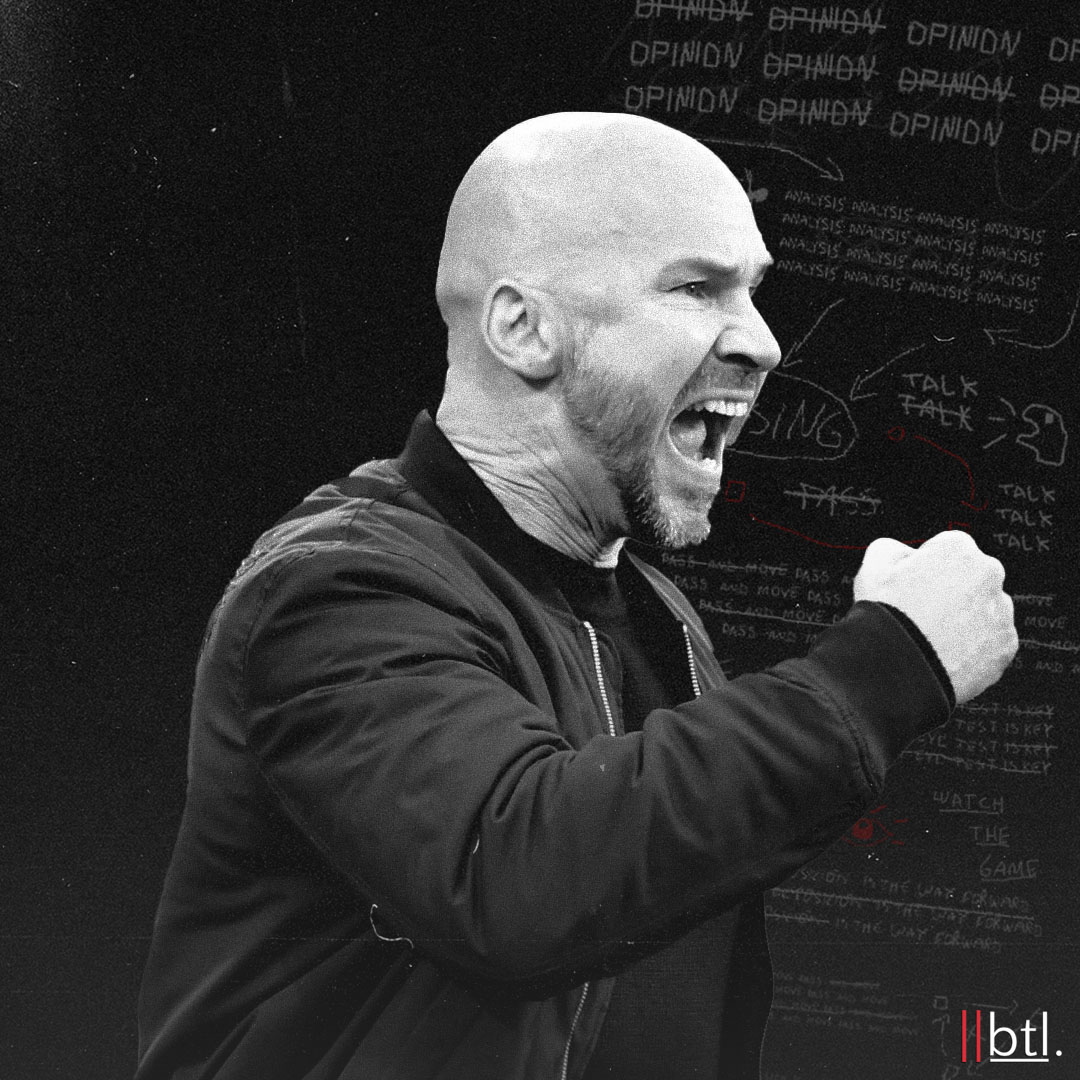
Photo source: screenshot: https://www.youtube.com/@SleeperFootball
From data-driven presses to hybrid shapes on the flanks, Scandinavian clubs are discreetly exporting tactical concepts. We examine how they’re reshaping the continental mainstream — including the fairytale ascent of Sweden’s Mjällby AIF.
The Nordics as the Quiet Innovators
When we think about tactical innovation in European football, headlines are likely to be dominated by Pep Guardiola’s positional play, Diego Simeone’s low-block specialist, or Julian Nagelsmann’s high-line pressing. Rarely do we look northwards — towards Scandinavia — as a hotbed of innovative strategic thinking.
And still, over the past decade, Sweden’s, Denmark’s, and Norway’s clubs have quietly developed ideas about collective pressing, data-driven recruitment, and hybrid formations that are now percolating into the continent’s big leagues.
In this article, we’ll trace three of the most important tactical trends from Scandinavia, follow their spread into bigger leagues, and highlight one of the most remarkable stories of the region: Mjällby AIF’s unlikely championship victory.
Pressing Intelligence & Vertical Transitions: The Nordic Model
Scandinavian sides are doing the best with what they don’t have (money) by prioritizing what they must have: discipline, collective organization, vertical transitions. Unlike the high-budgeted giants, their method demands a smarter system.
For instance, the Nordic pressing fashion is inclined to:
- Trigger-pressing from midfield rather than the frontline only, causing turnovers deep and targeting the vertical channel.
- A compact shape around the ball, transitioning instantly to wide overloads as soon as possession is regained.
- A “cold” rotation between third-man runners and wing-backs to bypass the defensive lines — somewhat similar to the “breaking the lines” concept.
These traits have had echoes at major European clubs. The “press, win, surge” concept isn’t novel, but its Scandinavian variant adds enhanced discipline and spatial flexibility that’s beginning to influence coaches beyond the region.
Hybrid Formations & Situational Tactical Flexibility
Another characteristic trend from Scandinavia is the utilization of hybrid formations that alter dynamically throughout matches in accordance with possession phase and opposition shape. Some examples include:
- A nominal 4-2-3-1 shifting to 3-4-3 when pressing high.
- Wing-backs shifting into a back three when the opposition has possession, releasing the midfield pair to press higher.
- Striker dropping deep to form a third midfielder in build-up, then sprinting into the box after the opponent drops.
These formations may not seem flashy, but they allow smaller teams tactical flexibility to adapt to bigger opponents. And increasingly, bigger leagues are embracing them: Bundesliga and Premier League coaches have started adopting mid-game morphing systems more typical of Scandinavian sides.
Data-Driven Scouting and “Money-Free” Margins
In football’s “money league,” Scandinavian clubs are at a disadvantage. They have small budgets; the export market is strong. How do they remain competitive, then? Through smart recruitment and resource efficiency.
They’ve begun using high-end analytics in scouting — quantifying “pressure regains per 90,” “line-breaking passes when under pressing,” and “recovery runs behind defensive lines” — metrics that identify undervalued players who fit the pressing/hybrid model.
And when such players do arrive, it’s the job of the coach to incorporate them into a collective system rather than relying on individual genius. This sort of systemic intelligence is now starting to be appreciated by larger clubs that want to reproduce that under-the-radar edge.
In fact, the exodus doesn’t stop at talent: media partners, streaming websites, and prediction websites are all signing deals with Scandinavian operators—the ones whose instructive comparison can be accessed under European bookmakers at https://bookmaker-expert.com/bookmakers/european-bookmakers/—underwriting innovation.
A Case Study: The Fairytale of Mjällby AIF
No story illustrates the power of the Scandinavian model better than Mjällby AIF’s rise.
A club from the small fishing village of Hällevik (pop. around 1,500), Mjällby claimed its first Swedish top-flight title in 2025 — sealing the league with a 2-0 win at IFK Göteborg and creating an insurmountable lead with three games left.
What’s incredible isn’t just the win — it’s the way they did it:
- A budget eclipsed by the big Swedish clubs.
- A squad built on a foundation of locally-born players, steady scouting, and universal buy-in.
- A coach (Anders Torstensson) who also served as a school principal and emphasized structure, routine, and tactical clarity.
Tactically, Mjällby employed a disciplined press, a hybrid shape that could shift between 4-3-3 in possession and 3-5-2 when pressing, and a ruthlessness in transition that caught bigger clubs off-guard. As one data-analysis piece observes:
They might have an argument that their success was even more surprising than Leicester when you factor in that their journey has seen them recover from the brink.
They are perhaps the greatest proof that “smaller club, smarter tactics, team implementation” can defeat brute economic might. For larger clubs observing, it offers a template: disciplined model + hybrid formation + data-driven recruitment = over-performance.
Implications for Major European Clubs
What do the big clubs in the big leagues have to learn from the Scandinavian model?
- Smaller margins matter more: The high-cost arms race can be replaced or supplemented by investing in tactical clarity, squad cohesion, and functional shapes.
- Flexibility pays: Hybrid systems don’t allow you to be wedded to one shape; this allows for tactical variation and unpredictability.
- Recruitment trumps spending: Identifying undervalued players for your system is more important than signing “big name” players who don’t fit.
- Culture over capital: Projects like Mjällby emphasize internal culture, shared values, and over-performance through collective identity rather than budgets alone.
We’re already seeing this influence: clubs in Germany and England are adapting lower-league/regional European models of pressing and shape-shifting. The Nordic approach — less flashy, but more sustainable — may become the blueprint.
Scandinavia’s Quiet Influence is Loudening
In the worldwide drama of football, the great leagues tend to occupy our focus. Yet in the lesser-known confines of Sweden, Denmark, and Norway, something intriguing is taking place — tactical innovation founded on limitation, ingenuity, and flexibility.
When a team like Mjällby AIF can rise from the brink of bankruptcy to national champions, it’s not merely a fairytale: it’s a message. The template they used will become the inspiration for more and more clubs throughout Europe.
If you’re analyzing football media, tech convergence, and the new frontier of tactical innovation, don’t ignore Scandinavia. Because while they may not yet dominate the headlines, their influence is quietly seeping into the major leagues.