
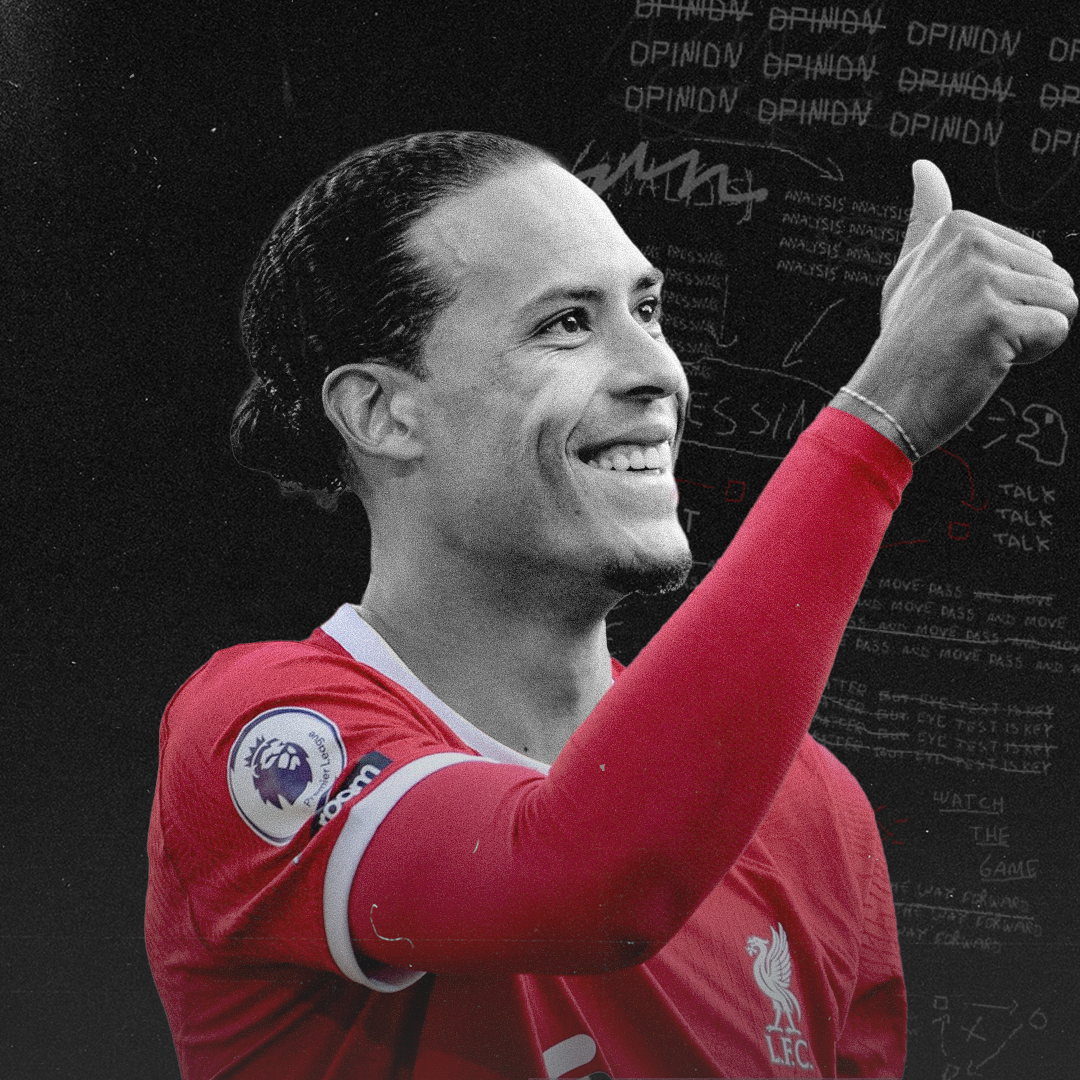
How do Liverpool eventually replace Virgil van Dijk?
Last summer will have felt like a whirlwind of emotions for Virgil van Dijk.
The Liverpool defender became the first Dutch captain to lift the Premier League title, ending the long wait for a proper party at Anfield. The 2020 trophy had been secured behind closed doors during the pandemic, denying supporters the celebration they deserved. Liverpool had waited over 30 years for that day, and Arne Slot delivered silverware in his maiden season.
To add the cherry on top, Van Dijk signed a contract extension which ended all kinds of drama and uncertainty around his future. The captain would stay, the rebuild would continue, and Liverpool looked set for sustained success.
Then came the loss of Diogo Jota over the summer, and the skipper’s job became less about what was happening on the pitch and more about how he could pull his side together through such an emotional time.
Whatever happens between now and the end of the season matters less in the long run than what Van Dijk represents.
All the summer spending. All the betting odds as title favourites. It all goes out the window when you factor in the human element.
That isn’t to say Van Dijk has dropped off a level as a footballer. He hasn’t. He’s still very much one of the best in the league. But with the 34-year-old out of contract in 2027, there have to be discussions about how you even begin to profile a replacement for a figure that big at Anfield. And that’s where things get complicated, both emotionally and tactically.
Speaking to Gambling.com, home of independent sportsbook reviews and trusted online UK casinos, one supporter said. “He’s right up there with the very best to ever lace up his boots and play for Liverpool. He probably just edges it over Hansen as the best centre-half we’ve seen. He’s won the lot and I don’t even want to think about him leaving just yet.”
The Reds hang on the periphery of the top four places, with Slot not sure if he’ll be staying beyond the spring after just six league wins in six months. But in the big picture, Van Dijk will be remembered as the man who held the club together, wherever they finish in the league.
Calm as you like
Strip back the emotion of it all, and Liverpool may have dropped their standards collectively, but Van Dijk is still ticking away in his eighth full season as a Red. His composure has been the constant in a campaign defined by chaos and uncertainty.
What made peak Van Dijk unique wasn’t just his aerial dominance or his reading of the game. It was his ability to defend huge spaces behind a high line, transforming Liverpool’s risk profile in transition.
He allowed Jürgen Klopp’s full-backs to bomb forward because he could cover the acres they left behind. He organised set-piece defence with authority. He made Liverpool’s entire tactical system viable.
Liverpool’s side used to be full of leaders, mental monsters who demanded excellence from themselves and their teammates. Sadio Mané, Mohamed Salah, Andy Robertson, Jordan Henderson, James Milner, Alisson. All captains within captains who’d worn the armband at international level. That culture has begun to shift. Of the new group, one has emerged as the clearest inheritor of that old leadership committee: Dominik Szoboszlai.
Szoboszlai has stood up for Liverpool when his teammates keep letting him down. Only Hugo Ekitiké, with 15 goals, has bettered his tally of nine, and he leads the way creatively with seven assists. With four direct free-kick goals under his belt in 2025-26, Liverpool haven’t had a more potent dead-ball specialist since Luis Suárez netted five in 2012-13.
He’s clearly picking up a lot from Van Dijk, whose composure and ability to ride the waves is what makes him so good at what he does.
Yes, he’s not the marauding defender who arrived in 2018, bombing past Adama Traoré or defending one versus two against Spurs to save the title race. But his game means he doesn’t have to be. After an ACL tear in 2020, he reinvented himself, and after taking the captaincy three years later, his influence in the dressing room is as important as on the pitch.
The twilight years and succession planning
The next 18 months are all about setting up the next generation of Liverpool’s squad, but the immediate future is just as important. Van Dijk’s role as mentor and leader will define how smoothly that transition happens.
Liverpool began the season with a habit of scoring late winners, plastering each dramatic moment as motivational images around the AXA training ground. Five games in, they had 15 points, a perfect record, and a wall full of last-gasp goals. But that’s changed.
Defensive cracks widened, and instead of snatching victories late on, Liverpool started conceding them. In the three league games after their perfect start, they were beaten by Crystal Palace, Chelsea and Manchester United via goals in the 84th minute or later. Erling Haaland’s stoppage-time penalty at Anfield became the fourth injury-time winner they’ve conceded in the league, a Premier League record for a single season.
Liverpool now look vulnerable in the very moments that once defined them. Van Dijk is elite, but he can’t do things on his own. That quality hasn’t disappeared, but it needs reinforcement.
Liverpool have finalised a deal for Jeremy Jacquet in a transfer worth up to £60 million, but the defender will not move to Anfield until the summer. It would not be an understatement to say he was a name most people were unaware of at the start of the winter window. To commit up to £60 million, £55 million up front before a potential £5 million in add-ons, for a 20-year-old is a hefty call.
But Liverpool view the French centre-back as a long-term investment and someone who will form an integral part of their backline for years to come.
It’s a sign of intent and shows whoever is in the dugout will be backed. Van Dijk must ensure his final seasons are about resetting the scene and not going through the motions. Jacquet will need guidance, mentorship and patience. Van Dijk is one of the few players at the club who has lived that journey from chaos to control, and his experience will be invaluable.
How do you replace the irreplaceable?
The honest answer is you don’t. Van Dijk’s influence extends far beyond his defensive ability. He’s a leader, a mentor, a presence that steadies the entire club when things threaten to unravel.
What Liverpool need to do is create a culture where leadership is shared rather than concentrated in one figure. Szoboszlai has shown he can carry that responsibility. Alisson remains a vocal presence behind the defence. The next captain might not be a single individual but a collective effort from multiple senior players who understand what it means to represent this club.
This already exists but will need an entire facelift with Virgil, Salah, Robertson and Trent Alexander-Arnold, founding members alongside Henderson and Milner, all moving on soon.
When legends leave Liverpool, they’re given a framed version of the Champions Wall, which honours their contributions to the club during their time. That sunny spring day at Anfield will hurt. When Peter McDowall reads off Virgil’s honours in that final curtain call, expect tears from all corners of Anfield.
But for now, there’s business to attend to. Van Dijk has become a conduit to carry the club through a season overshadowed by tragedy off the pitch. The captaincy lingers over the dressing room, that culture of leadership has been the cornerstone of success at Liverpool for years, and whoever takes the armband next has to be ready. You’d expect conversations will be taking place sooner rather than later.