

How Medicine Delivery Apps Improve Healthcare Accessibility in Rural Areas?
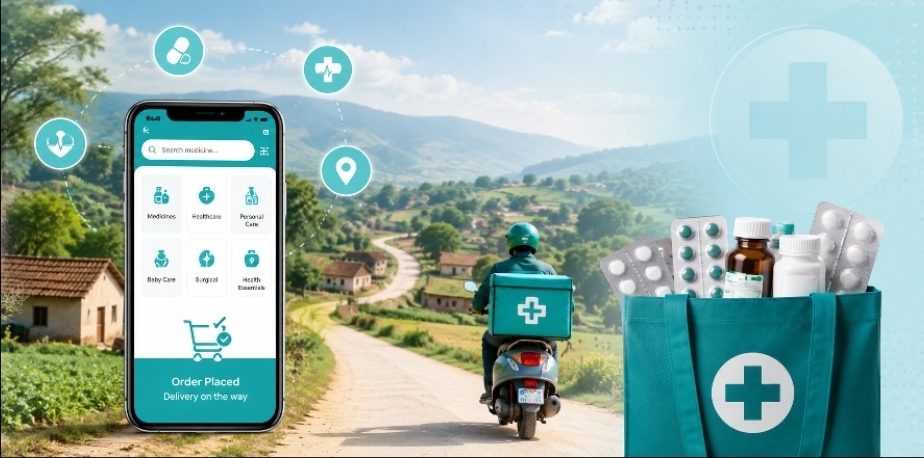
Healthcare access in rural areas has long been a major challenge, especially where hospitals and pharmacies are far from villages. Many people still travel long distances for basic medicines, leading to delays in treatment and an extra financial burden. In emergencies, this gap becomes even more critical, directly impacting timely care and recovery.
With the rise of digital healthcare solutions, medicine delivery platforms are helping bridge this gap by bringing essential drugs directly to people’s doorsteps. This shift improves convenience and also supports better treatment adherence for chronic conditions like diabetes, hypertension, and asthma.
As rural regions continue adopting mobile and internet services, these platforms are becoming an important part of the healthcare ecosystem. They are making essential medicines more accessible, affordable, and reliable for underserved communities, ultimately strengthening rural healthcare delivery and improving overall patient outcomes.
How Medicine Delivery Apps Are Bridging the Healthcare Gap
Medicine delivery apps are reshaping rural healthcare by removing barriers related to distance, availability, and timely access to medicines. These platforms digitally connect patients with pharmacies and streamline the process of getting prescriptions fulfilled in remote regions. As a result, healthcare delivery becomes faster, more organized, and more accessible for underserved communities.
1. Connecting Rural Patients with Urban Pharmacies
Medicine delivery platforms bridge the physical gap between rural users and pharmacy networks located in cities. Through mobile applications, patients can upload prescriptions and place orders directly. These systems ensure that even areas with limited medical infrastructure can access a wider range of medicines without depending on nearby stores.
2. Digitizing Prescription and Order Processing
These apps simplify healthcare access by converting traditional prescription handling into a digital workflow through medicine delivery app development. Patients can easily upload prescriptions, and pharmacies receive them instantly for verification and fulfillment. This reduces manual delays, minimizes errors, and ensures smoother coordination between doctors, pharmacies, and delivery partners in remote healthcare settings.
3. Streamlining Medicine Distribution Networks
Medicine delivery apps organize the flow of medicines through integrated logistics systems. Orders are processed digitally, assigned to delivery partners, and tracked in real time. This structured system reduces inefficiencies in rural supply chains and ensures medicines move quickly from pharmacies to patients even in hard-to-reach locations.
4. Improving Communication Between Healthcare Stakeholders
These platforms enhance communication between patients, pharmacists, and delivery personnel through real-time updates and notifications. Users can track order status, clarify prescription issues, and receive alerts about deliveries. This improves transparency and reduces confusion in rural healthcare transactions significantly across underserved regions.
5. Expanding Healthcare Reach Through Digital Platforms
By combining mobile technology and healthcare services, medicine delivery apps extend medical access to areas that previously lacked reliable pharmacy support. This digital expansion helps bridge infrastructure gaps and ensures essential medicines can reach even the most remote populations efficiently.
Key Benefits of Medicine Delivery Apps in Rural Communities
Medicine delivery apps deliver measurable improvements in rural healthcare by enhancing patient outcomes, reducing delays, and improving affordability. Their impact goes beyond access, influencing how patients manage treatment, how families handle healthcare expenses, and how communities experience medical support in daily life.
1. Strategic Healthcare Planning and Digital Growth
For healthcare startups and providers, scaling rural solutions requires careful planning of digital infrastructure and investment. Understanding the cost to develop a medicine delivery app helps organizations design sustainable models that balance affordability, technology, and long-term service delivery in underserved regions
2. Improved Treatment Continuity and Patient Outcomes
One of the most significant benefits is consistent access to prescribed medicines, which ensures uninterrupted treatment cycles. Patients no longer miss doses due to distance or pharmacy shortages. This improves recovery rates, reduces complications, and supports better long-term health management in rural populations
3. Reduced Financial and Time Burden on Families
These platforms help families save both money and time by eliminating the need to travel long distances for medicines. Transportation costs and lost work hours are significantly reduced. This makes healthcare more manageable for rural households, especially those dealing with chronic illnesses requiring regular medication
4. Better Emergency Response and Faster Access
In urgent situations, medicine delivery apps provide quick access to essential drugs without depending on physical pharmacy availability. Faster delivery can significantly improve patient outcomes during emergencies. This responsiveness plays a critical role in rural regions where medical infrastructure may be limited or delayed
5. Increased Reliability of Healthcare Services
Rural healthcare becomes more dependable as patients gain consistent access to verified pharmacies and structured delivery systems. This reduces uncertainty around medicine availability and builds trust in digital healthcare services. Over time, it encourages more people in rural areas to adopt formal healthcare channels
6. Long-Term Social and Health Improvements
Beyond immediate medical needs, these platforms contribute to long-term improvements in rural healthcare behavior. Patients become more regular with treatments, families become more health-aware, and communities gradually shift toward structured medical care systems supported by digital access
Technology Behind Medicine Delivery Platforms and Market Growth
Medicine delivery platforms are built on a combination of advanced digital systems that ensure fast, reliable, and efficient healthcare service delivery. These technologies not only improve user experience but also help scale operations across rural and urban regions.
1. Digital Infrastructure and Cloud-Based Systems
Modern medicine delivery platforms rely on cloud computing to store patient data, manage prescriptions, and handle pharmacy integrations. This ensures secure access to information from multiple locations while maintaining system reliability. Cloud-based infrastructure also supports scalability, allowing platforms to handle increasing order volumes without performance issues.
2. AI-Driven Recommendations and Smart Matching
Artificial intelligence plays a key role in improving user experience by suggesting relevant medicines, identifying prescription patterns, and optimizing pharmacy selection. These intelligent systems help reduce search time and improve order accuracy. AI also assists in demand forecasting, ensuring better stock availability across connected pharmacies.
3. Real-Time Tracking and Logistics Optimization
Advanced tracking systems enable users to monitor their medicine deliveries in real time. GPS integration and route optimization tools help delivery partners reduce delays and improve efficiency. This ensures faster fulfillment, especially in rural areas where logistics challenges are more common due to distance and infrastructure limitations.
4. Secure Payment and Data Protection Systems
Security is a critical component of medicine delivery platforms. Encrypted payment gateways and secure authentication methods protect user data and financial transactions. These systems build trust among users and ensure compliance with healthcare data protection standards, making digital healthcare safer and more reliable for long-term adoption.
5. Market Growth and Expanding Digital Healthcare Demand
The demand for digital healthcare solutions is rising due to increased smartphone usage, improved internet connectivity, and growing awareness of online healthcare services. This growth is driving investment in platform innovation, logistics expansion, and service diversification. As adoption increases, medicine delivery platforms are becoming a key part of the global healthcare ecosystem.
Conclusion
Medicine delivery apps are steadily transforming rural healthcare by removing barriers of distance, access, and delayed treatment. They connect patients with essential medicines quickly and reliably, improving overall healthcare reach in underserved regions.
These platforms are also strengthening trust in digital healthcare systems while supporting better treatment continuity for chronic and emergency needs.
As technology continues to advance, these solutions are becoming more scalable, efficient, and widely adopted across rural areas. They not only improve patient outcomes but also reduce the burden on families who previously struggled to access basic medicines.
With rising digital adoption and healthcare innovation, medicine delivery platforms are shaping a more connected and accessible healthcare future where quality treatment becomes easier to reach, regardless of location or infrastructure limitations.