

How to Design Landscaping in Your Backyard?
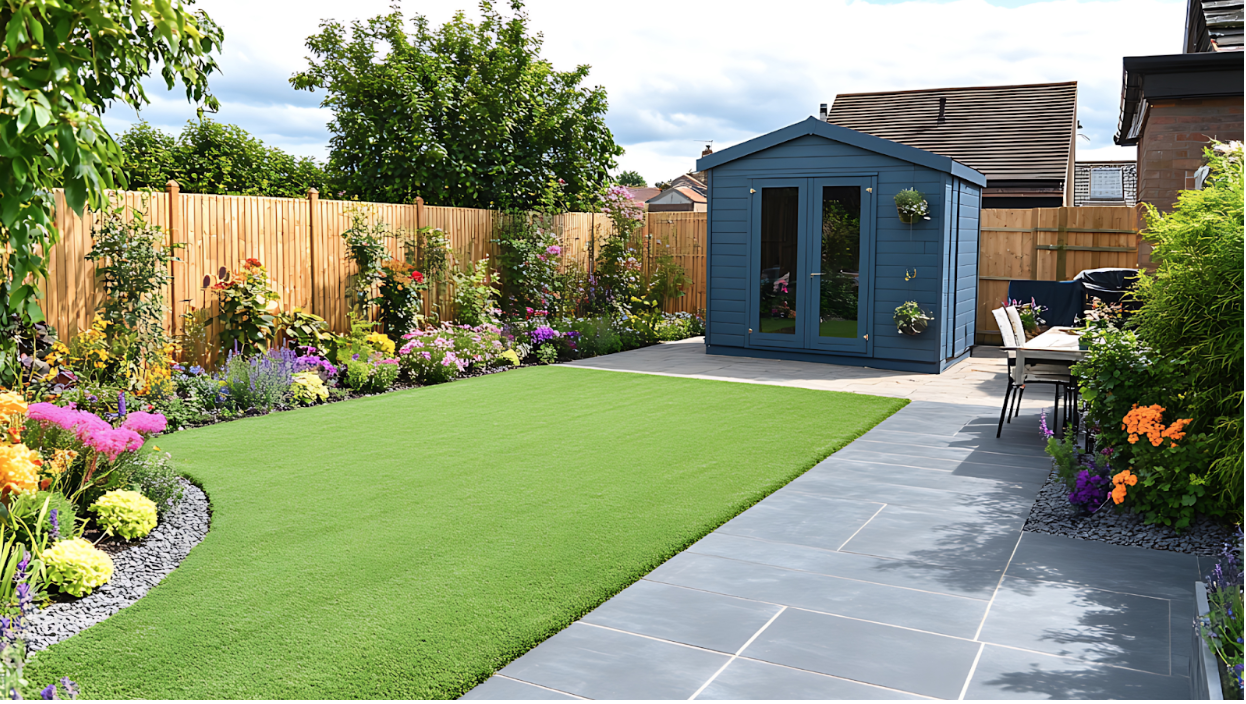
Have you ever looked out your window and said, Something is missing? Perhaps, your backyard is more of a gardener-obscured patch of grass than an intimate getaway. You are not alone, You’re not alone, millions of homeowners have a dream of a beautiful landscape in their mind, but they get frozen when it comes to planning the landscape.
In a nutshell, here is what you need to know: To plan landscaping in the backyard, you should start by developing a plan that will incorporate your way of life with the natural characteristics of the backyard space and then choose the plants, materials and lighting options that will work within your climate, budget and individual preference. That’s all you need to know. Let’s turn your drab yard into a stunning retreat!
The Importance of Backyard Landscaping
Come on, in your backyard, it is not purely outdoor space. It is an extension of the house, a place where you can relax, enjoy and touch nature. The appropriate design increases the value of your property and even makes you feel better.
The landscape is crucial because it has to be well planned. It can be a comfortable seat or a beautiful garden or a fireplace to use at night. The thoughtful design will change the perception of your experience at home. Not that it is about planting patiently, but rather creating flow, intent, and personality.
Step 1: Learn About the Natural Things in Your Backyard
Observe some time before drawing ideas or calling a contractor.See the way your sun comes over your lawn. Take note of the places where shadows are, how the water runs, and where the places are dry. This is aimed at collaborating with nature rather than confronting it.
You’ll want to identify:
- The soil type (clay, loam, sand)
- Drainage patterns
- Wind direction
- Exposure to the sun (full sunshine or partial or shade)
These are factors that influence every design choice. Even the most beautiful landscape can become a risk if you ignore them. If there are any structural considerations, this is the point where a professional construction estimation service can help you evaluate material and labor costs accurately without overspending. It also ensures you avoid purchasing excess materials that end up unused.
Step 2: Design a Workable Plan
It is as follows, everything beautiful in the backyard begins with a plan.
Finding outline of your yard on paper (you may use free online landscape design tools). and then subdivide it into functional areas:
- The area of relaxation: Deck, patio or seating corner.
- Recreational area: BBQ area, dining arrangement or mini outdoor bar.
- Playground: Children area (lawn, swing, or sandbox).
- Garden section: flower beds or bushes or raised planters.
Every area has to be functional and it must connect with other areas comfortably. The layout also has a visual rhythm in the form of paths, walkways, or stepping stones that make the whole layout seem purposeful and balanced.
Step 3: Select Plants to Fit Your Climate
It is easy to choose plants based on beauty but the magic will occur when form becomes functional. Plants to be used are those that naturally grow in your area.
Native species do not need as much water and care. Besides, they are attracting friendly wildlife such as butterflies and birds, which bring a vibrant eco-friendly backyard.
One of the tips that can be learned in a short time is to organize plants according to their water requirement. In such a manner, irrigation remains effective, and you do not spend a lot on the water bill.
Step 4: Shopping Hardscaping and Softscaping
Design does not merely mean greenery. It’s also about structure. Hardscaping is defined as non-living things such as patios, retaining walls, fences or stone walks. All living things fall under softscaping, that is, grass, flowers, trees, and shrubs.
The secret lies in balance. Too many hard elements can make your space feel cold and lifeless, whereas an excess of plants can make it look untidy. When outsourcing the job, it’s a good idea to request a blueprint takeoff for landscaping so you know the exact quantities of materials required. This helps you avoid overspending while ensuring you don’t end up with unused materials.
Step 5: Lights Are Added to Enhance Ambience
Lighting is often overlooked, yet it can completely transform your backyard at night. Soft, inviting lights along footpaths or garden walkways improve both safety and visual appeal, while trees can be uplighted and string lights or lanterns used to create a dramatic atmosphere.
A smart approach is to combine practical lighting for navigation with ambient lighting for beauty. For accurate planning and budgeting, estimating services rely on detailed electrical estimates to determine the right lighting quantities and installation costs, making this small upgrade one that delivers a big impact.
Step 6: Make Sustainability a Priority
Contemporary landscaping does not only mean beauty but it means responsibility.Drip irrigation systems should be preferred to sprinklers in order to minimize water wastage. Compost is a natural way of making your soil rich. Select patios or garden borders materials which are recycled or local.
Sustainability will ensure that your garden is green, your bills are reduced, and your conscience is relieved. In addition, it is also a single design element that can never go out of fashion.
Step 7: Budget, Plan, and Execute
To be frank, the landscaping may easily turn into a monetary black hole in case you do not plan. Make a clear budget before you begin purchasing supplies or outsourcing.
Break is broken down into categories:
- Plants and soil
- Hardscaping materials
- Lighting
- Tools and labor
As soon as you have a ball park figure, then you know what is realistic.
Step 8: Enhance Personality and Character
It is the entertaining bit – add your own flavor to make space your own.
Perhaps it is a hammock between two trees, a little pond or even a reading corner outside. Copying Pinterest boards is pointless. Take them as inspiration, by all means,but leave the style of life to be the last determinant.Keep in mind: a lovely backyard is one that represents you, but not only the most fashionable things.
Step 9: Maintain and Evolve
Landscaping is not a project to be done once. It is a changing association between you and your space.Give yourself some time once a week to do some pruning, watering and cleaning. Change the position of plants in season, introduce new colors and texture.
Imagine your backyard is a living canvas, it develops, transforms and catches you unaware when you look after it regularly.
Conclusion
Furnishing your backyard landscape does not necessarily have to be a burdening experience. The trick is that you need to begin small and see what space you have and what you want to introduce there.
With moderation and style, native plants, smart lighting and by keeping sustainability in mind, you will have not only a yard, but a home, where you will come home with each passing day.
The design will be the difference between the way you live outdoors in both cases: whether you do it yourself or involve professionals, the correct design will turn everything upside down.
FAQs
1. What is the time required in the design of a backyard landscape?
On average a good landscaping project would require between 2 and 6 weeks, which again is dependent on the size of your yard and the difficulty in your design. In case of hardscaping or irrigation, the same is likely to take several weeks before proper installation and settling.
2. When is the most appropriate time of the year to begin landscaping?
The best season is spring since plants grow quicker in low temperatures. However, in warmer regions, early fall can be just as effective since soil moisture helps roots develop before winter.
3. Can I design my backyard without hiring a professional?
Absolutely! Many homeowners design their landscapes using DIY apps and online resources. That said, for large-scale or structural work (like retaining walls or patios), getting help from a professional designer ensures stability and better long-term results.