

Pontoon Blackjack Strategy: Skilled Players Burst House Edge Below 1%
Pontoon blackjack players who master basic strategy can crash the house advantage from 4-5% to less than 1%, according to mathematical analysis of optimal play decisions. This card game requires understanding specific rule variations and applying proven decision-making methods rather than relying on chance alone.
Understanding Pontoon Rules and Hand Naming Conventions
NineCasino and other gaming platforms fire pontoon with distinct terminology and gameplay mechanics that differ from traditional blackjack. In pontoon, the dealer receives two cards face-down while players see only one dealer card. The game packs different hand naming conventions: a pontoon represents an ace with a 10-value card dealt in the initial two cards, equivalent to blackjack in traditional play. A 21 made from three or more cards is called a trick.
The dealer must continue hitting until reaching 17 or higher, but with a key restriction: the dealer must hit on soft 17 (a hand containing an ace counted as 11). This rule differs from many blackjack variants where dealers stand on soft 17. The payout structure also varies significantly. A pontoon pays 2-to-1, while a regular 21 pays 1-to-1. These variations cascade different probability distributions compared to standard blackjack.
Dealer Positioning and Game Dynamics
The dealer’s hidden cards create information asymmetry that affects player strategy. Players cannot see the dealer’s second card until all decisions are made, requiring decisions based on limited information. When the dealer shows specific cards between 2 and 6, the dealer has higher bust probabilities. When showing 7 through ace, the dealer has stronger hand probabilities.
Strategic Decision-Making for Optimal Play
Making correct decisions on hitting, standing, doubling, and splitting forms the foundation of reducing house edge. Each decision should be based on mathematical probabilities rather than intuition.
Hitting and Standing Decisions
Basic strategy dictates when to request additional cards. Players should hit on hands totaling 16 or less when the dealer shows 7 through ace. When the dealer shows 2 through 6, players should stand on 12 or higher. This principle exists because the dealer’s bust probability surges with weak showing cards.
Doubling Down Strategy
Doubling down (doubling the initial bet to receive one additional card) requires precise conditions. Players should double on hard 11 against dealer cards 2 through 10. Hard 10 should be doubled against dealer 2 through 9. This strategy roars winnings on favorable situations while limiting losses on unfavorable ones.
Splitting Pairs
Pair splitting decisions follow mathematical expectations. Always split aces and eights. Never split fives or tens. Split other pairs based on dealer’s showing card. The table below shows optimal splitting decisions:
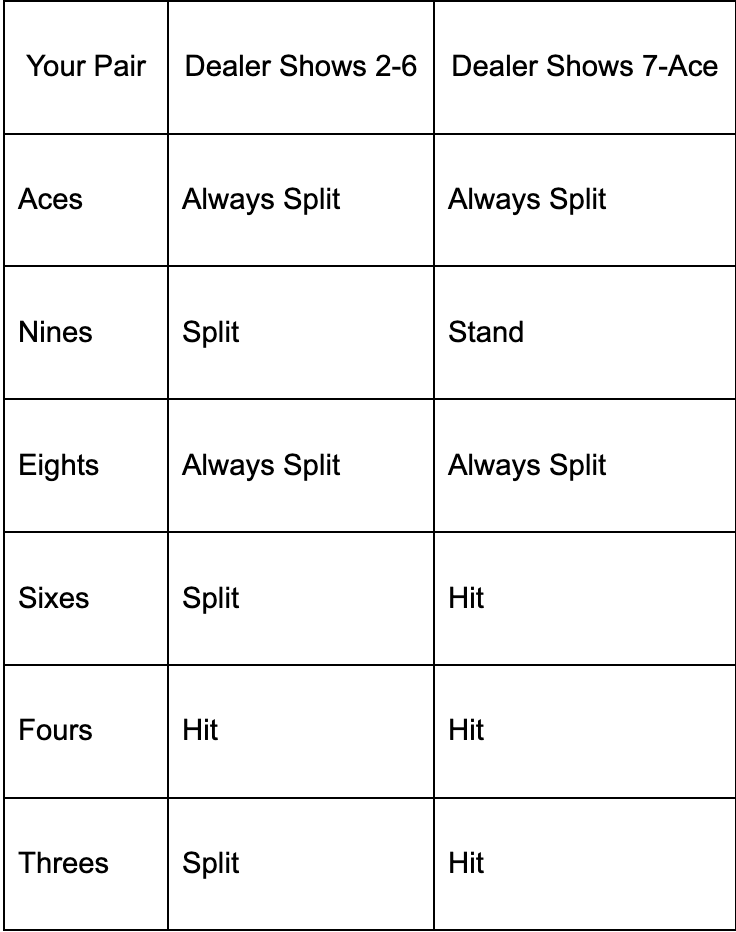
These decisions maximize long-term expected value by exploiting probability distributions unique to each situation.
Mathematical Probability Analysis and Expected Value
Understanding probability calculations helps players recognize why specific strategies work. Expected value represents the average outcome over many hands.
Hand Outcome Probabilities
When holding 16 against dealer 10, the player busts on 50% of hits while the dealer busts on 16% of hands starting with 10. Standing loses in most outcomes, but hitting provides better expected value by creating scenarios where the dealer busts before the player. The following list shows bust probabilities for common dealer hands:
- Dealer showing 2: Bust probability 35%
- Dealer showing 3: Bust probability 37%
- Dealer showing 4: Bust probability 40%
- Dealer showing 5: Bust probability 42%
- Dealer showing 6: Bust probability 42%
- Dealer showing 7: Bust probability 26%
- Dealer showing 8: Bust probability 24%
- Dealer showing 9: Bust probability 23%
- Dealer showing 10: Bust probability 23%
- Dealer showing Ace: Bust probability 17%
These percentages show why standing becomes correct when dealers show weak cards and hitting becomes necessary when dealers show strong cards.
Bankroll Management and Player Psychology
Maintaining long-term profitability requires more than understanding strategy. Players must manage money and emotions effectively.
Bankroll Sizing
Successful players establish a dedicated bankroll separate from living expenses. The bankroll should be large enough to survive normal variance in results. A minimum of 20 to 40 times the average bet size protects against temporary losing streaks. If playing with £10 average bets, maintain a bankroll of £200-400.
Emotional Discipline
The difference between average and skilled players often comes down to emotional control. Skilled players follow strategy regardless of recent outcomes. They avoid the tilt trap by increasing bets after losing hands. They accept winning hands without deviating from optimal play.
Advanced Techniques and Side Bets
Beyond basic strategy, several advanced methods exist to increase expected value or manage risk.
Position-Based Betting
Varying bet size based on deck composition provides an edge. After multiple hands of high cards explode through the deck, remaining cards contain proportionally more low cards. Low card concentration fuels the player in certain situations, justifying larger bets. This technique requires tracking discards mentally or through card counting methods adapted for shoe games.
Side Bet Evaluation
Pontoon packs optional side bets on specific outcomes. These include bets on whether the player receives a pontoon, whether the player beats the dealer, or specific card combinations. The following table shows typical side bet house edges:
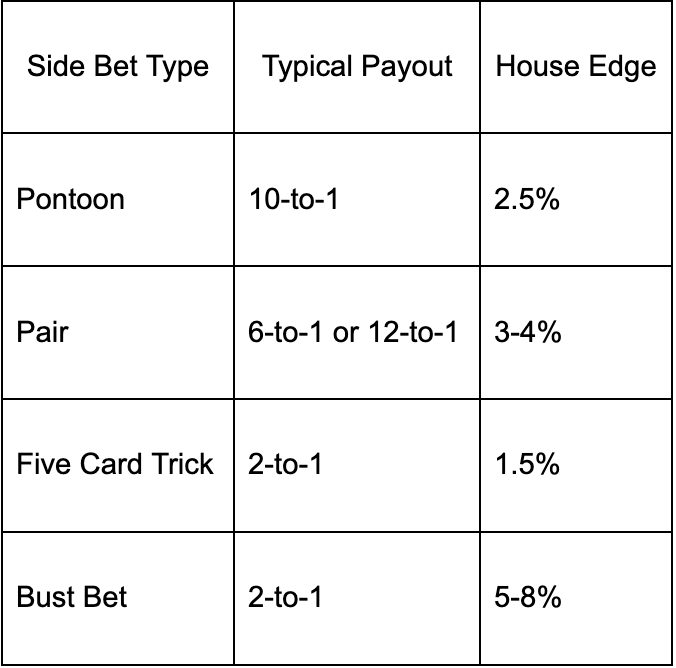
Most side bets crash with house edges exceeding main game house edge, making them unprofitable long-term investments. The exception is the five card trick bet when house rules drop favorable payouts.
Comparing Pontoon with Traditional Blackjack
Pontoon and blackjack share fundamental mechanics but contain critical differences that affect player advantage. Pontoon rules generally favor players more than standard blackjack because players see one dealer card while the dealer cannot see player cards until decisions are made. Pontoon’s soft 17 hitting rule for dealers zaps house edge in player favour. The 2-to-1 pontoon payout surges past traditional blackjack’s 3-to-2 payout rate.
Learning pontoon after blackjack requires adjusting strategy because optimal plays differ. A player’s 12 versus dealer 2 calls for hitting in pontoon but standing in standard blackjack. These variations make dedicated practice essential.
Achieving Consistent Results Through Applied Strategy
Transforming from casual player to skilled competitor requires commitment to strategy application. Players must study basic strategy charts, practice decision-making until it becomes automatic, and maintain bankroll discipline. The path from 4-5% house edge to sub-1% edge involves hundreds of hands where correct decisions compound into measurable advantages.