
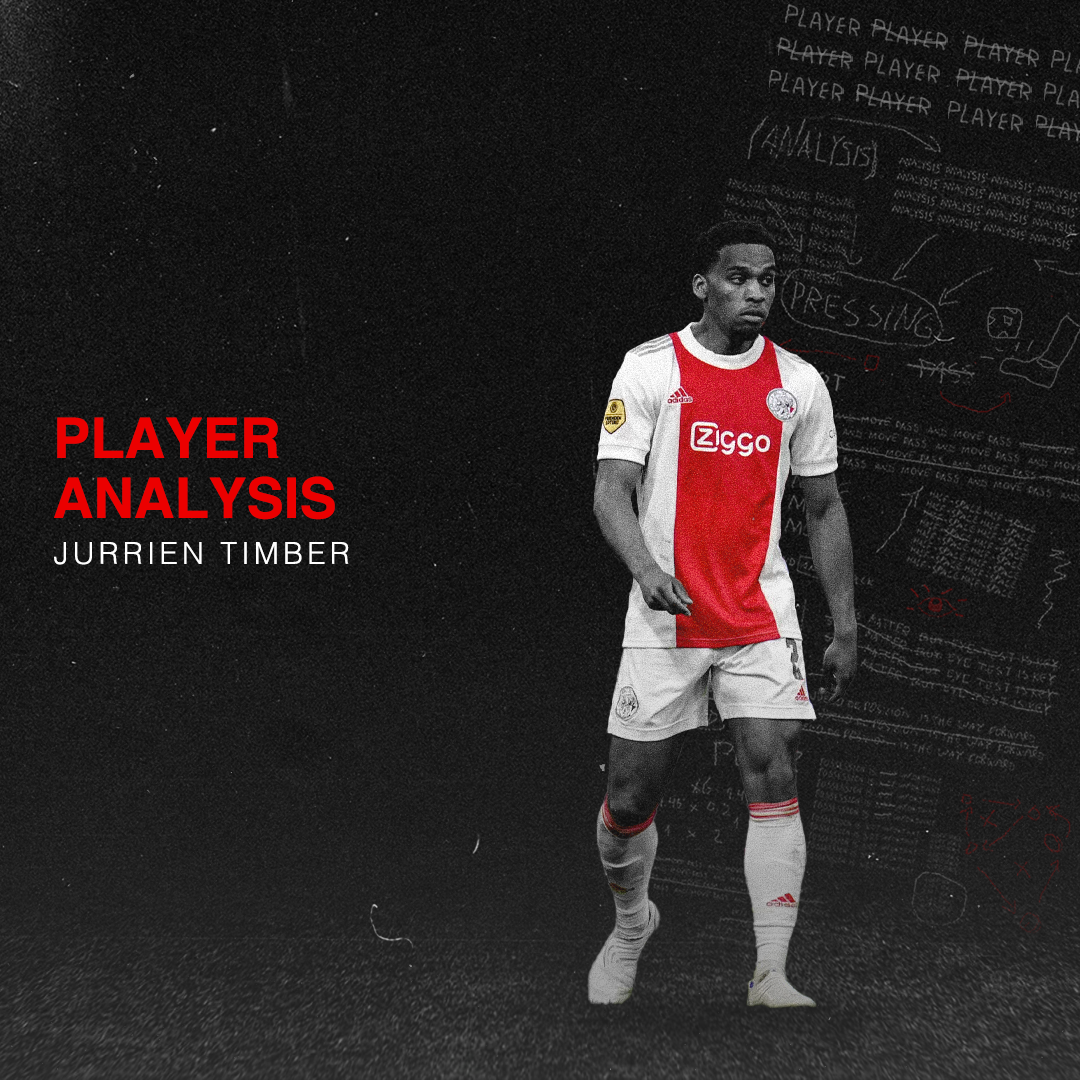
How Jurriën Timber Became Integral to Arsenal’s Rise to Glory
Few defenders can claim to have walked into one of the best defensive units in the world and made it better. That’s certainly something Jurriën Timber can say. What makes that even more remarkable is that he did it coming off an ACL injury that had kept him sidelined for the better part of a year: and into a new system, a league that offers no grace period for anyone and in his secondary position. The story of how he got here is worth telling.
Timber was born on June 17, 2001, in Utrecht, and carries Curaçaoan heritage through his parents. He and his brothers, including twin Quinten, took their mother Marilyn’s surname rather than Maduro, their father’s. He began his career in local football before joining Feyenoord’s academy, then made the move to Ajax at thirteen, going on to make his senior debut at eighteen.
Across more than a hundred senior appearances for Ajax, he proved he could operate anywhere across the back line, winning two league titles and a domestic cup before the continent’s biggest clubs came looking. It was Mikel Arteta who won the race, bringing him to Arsenal in July 2023 for £34 million, convinced that Timber’s profile suited precisely what his system demanded.
What happened next was almost cruel in its timing. He had looked sharp in preseason and in the Community Shield against Manchester City, generating excitement amongst the fans. Then, in Arsenal’s opener against Nottingham Forest, he went down early in the second half, and the subsequent diagnosis confirmed the worst: a ruptured ACL in his right knee. The rehabilitation timeline stretched to the better part of a year, and he returned for the final game of that season, playing 21 minutes.
The resilience required to rebuild after an ACL injury at that stage of a career is immense. Fresh into a new country, new club and new pressure, it takes a lot to get yourself to the level required and meet expectations. Many players return diminished in some way, but not Timber. He came back and imposed himself.
Operating as Arsenal’s first-choice right-back in a backline that conceded the fewest goals in the Premier League, Timber was central to the defence that eventually delivered the title this year. The numbers show just how difficult he is to beat in one-on-one situations. He was dribbled past just 0.3 times per game across thirty league appearances, an almost absurd figure for a full-back, given the relentless quality of wingers in this division and volume of such situations that they face.
He is clean in the tackle too: 2.2 tackles per game over the course of the season, producing only five yellow cards. He won 3.6 ground duels per game at a 54% success rate. In short, he shuts down his side of the pitch with a consistency that very few defenders in the world can match.
His versatility gives Mikel Arteta an extra tactical dimension to exploit too. Though primarily deployed as a right back at Arsenal, unlike at Ajax where he was primarily used as a centre back, he has also filled in at centre back and left back without any drop in performance. No matter where he lines up in defence, he adapts his positioning seamlessly to meet the team’s needs. He rarely gets caught high up the pitch or is left exposed, and his sharp reading of the game allows him to snuff out danger before it fully develops.
Arsenal’s South American Pipeline: Why the Quintero Twins Signal a New Era
This is what makes the attacking side of his game a more complicated conversation. Timber likes to come inside, which is a natural extension of his instincts; he is, after all, a centre-back who has been converted into a modern full-back. The problem is that Arsenal’s system demands more from their right-back.
When Timber tucks in, it pushes Bukayo Saka into a wider, more isolated role where he is less of a threat. The link-up between the two has been visibly underdeveloped: the timing, the movement to overlap or underlap, and also the sense of spatial awareness that full-backs and wingers need to build over time. When Timber does get into a promising crossing position, something too often goes wrong in the delivery or the timing.
The shooting numbers are an interesting addendum to this. He is not expected to be a goal threat, and he is not one. But what makes the figure notable is how often he arrives in dangerous areas. He missed seven big chances last season, generating an xG of 4.77. Among Arsenal players, only Viktor Gyökeres (13), Saka (8), and Leandro Trossard (8) missed more big chances.
For a right-back, it is evidence that the movement is there, that the positional instinct to arrive in good areas is real, but that the end product in the final third has not yet caught up. Such qualities are not innate; they can be taught and refined over time. At 24, Timber still has time to work on those things and reach a good level, especially with the foundation of his quality on the ball.
One thing that could get in the way of his development is injuries, which keep coming at the worst possible time, sabotaging his momentum. Heading into the Champions League Final, he was barely fit, having missed Arsenal’s previous fourteen matches across the league cup final and the Premier League run-in. Unable to start, he was introduced as a second-half substitute and played roughly an hour, including extra time, as Arsenal pushed unsuccessfully for a result.
Netherlands coach Ronald Koeman stopped short of blaming the club, but conceded those minutes “didn’t help.” Just days before the World Cup, the KNVB announced Timber would miss the tournament altogether, with the injury yet to heal. Lutsharel Geertruida was called up as his replacement. Koeman was blunt: “He hasn’t been fit for a long time and still has symptoms that aren’t healing quickly, meaning he won’t be match fit in the short term.”
For a player who has already seen a significant chunk of his career erased by injury, this is a brutal setback. The only silver lining is that he featured at the previous World Cup, starting as the Netherlands were eliminated in the quarterfinals. Another opportunity, with his country among genuine contenders this time, would have cemented Timber at the highest level of the game. Instead, he will watch from home.
It is reasonable to wonder whether those minutes in the Champions League final, played while not fully recovered, cost him his place in the tournament. That kind of decision happens in real time, driven by loyalty to club and competitive fire. But the body ultimately keeps the score and it comes back to bite later.
The bigger picture, though, is this: Timber is edging toward becoming a top-three right-back in the world. The defensive foundation is already elite. Then there is the mental fortitude to return from serious injury, establish himself in a title-winning side, and deliver the kind of consistency that draws comparisons to the greats.
What remains is the refinement of the attacking side: the crossing, the link-up with his winger, the decision-making in the final third. If those areas develop, the conversation will move from potential to legacy, especially if Arsenal go on to dominate English football and win the Champions League. He is worth keeping an eye on.
By: Astorre S. Cerebróne / @Cerebrone
Featured Image: @GabFoligno / BSR Agency / Getty Images