
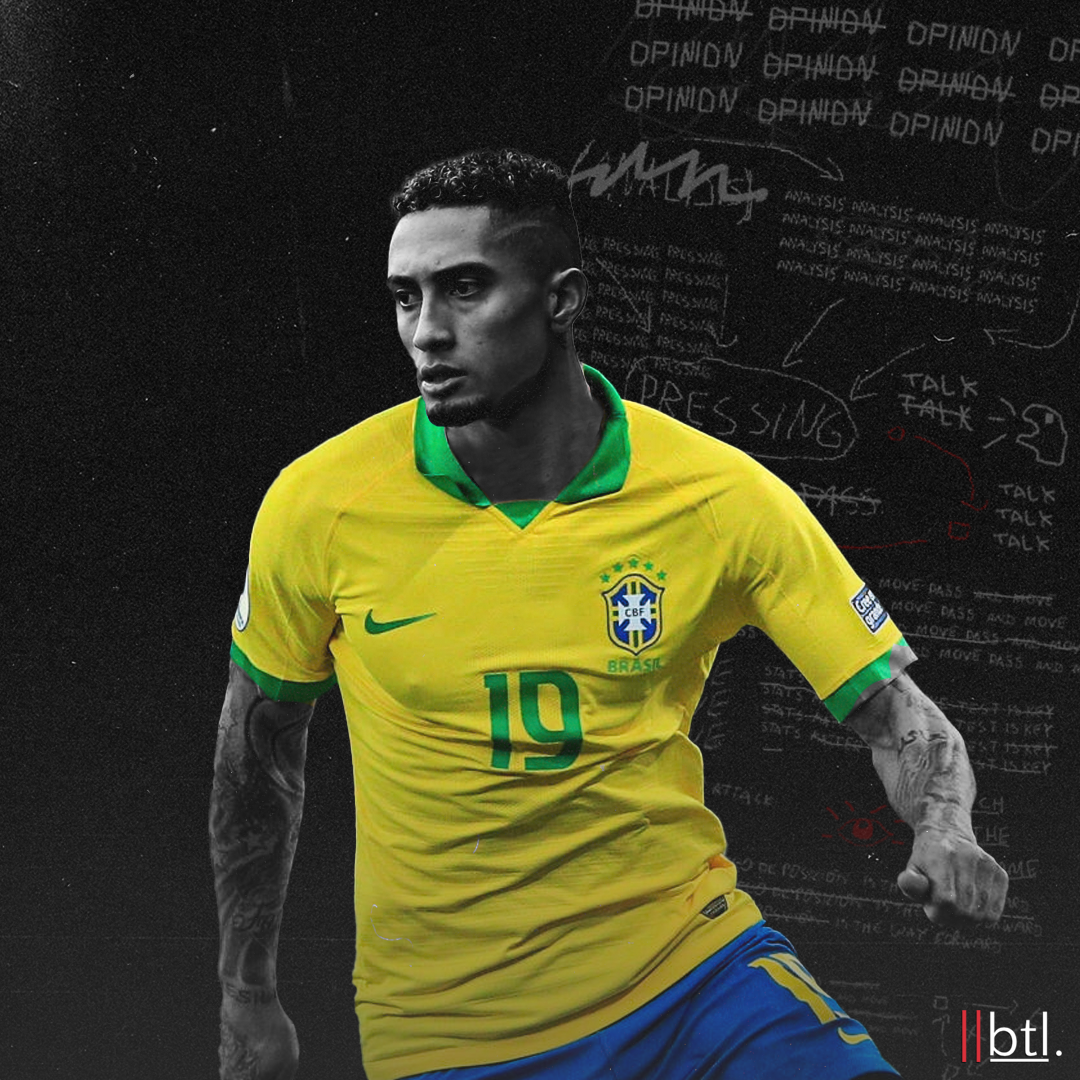
Raphinha’s Injury: Tactical Impact on Barcelona Ahead of the Champions League Quarterfinal
The tactical impact of Raphinha’s absence on Barcelona is profound, with the team looking weaker, slower, and far less aggressive. As a key component of Hansi Flick’s system, his absence does not just remove an attacker — it disrupts structure.
Introduction
Injuries are part of football, but timing defines their significance. With Barcelona entering a defining period of their season, Raphinha’s hamstring injury arrives at the worst possible moment. His role goes beyond output — he is a structural reference point within the system.
Operating on the right flank, Raphinha provides width, verticality, and defensive intensity. His ability to stretch the pitch horizontally allows Barcelona to maintain attacking balance, particularly with a more combinational and interior-focused left side. Without him, that balance begins to collapse. His absence does not just remove an attacker — it disrupts the entire attacking and defensive structure.
Key Tactical Consequences
Significant Drop in Pressing Intensity: Raphinha is crucial in initiating high-intensity pressing. He sets the tone for Barcelona’s defensive phase in advanced areas, allowing quick ball recoveries and sustained pressure. Without him, the front line becomes less coordinated, making it easier for opponents to bypass the press and progress through midfield. Raphinha often acts as the pressing trigger, aggressively jumping onto the opposition fullback and forcing play inside, where Barcelona can collapse centrally and regain possession.
Loss of Verticality and Depth: His diagonal runs behind defensive lines create constant vertical threats. This not only stretches opposition backlines but also opens interior spaces for players like Pedri and Lamine Yamal. In his absence, Barcelona’s attack becomes more predictable, with reduced penetration and fewer dynamic movements.
Increased Defensive Vulnerability on the Right: Raphinha’s defensive work rate is often overlooked. He supports the fullback consistently, helping maintain compactness. Without him, the right side — often occupied by Jules Koundé — becomes exposed, particularly against teams that overload wide areas.
Declining Structural Efficiency: Performance data further highlights his importance. Barcelona’s win rate drops to 58.3% in 13 matches without Raphinha (7 wins, 1 draw, 5 losses), compared to 85.2% with him. The team also concedes nearly double the goals per game (1.8 vs 0.9), underlining his impact on both attacking structure and defensive stability.
Real Match Example: Atlético Madrid
This issue is particularly evident against compact and disciplined sides like Atlético Madrid. In recent encounters, Atlético’s mid-block has forced Barcelona into central congestion, limiting their ability to progress through wide channels.
Without a consistent right-sided width provider, Atlético can narrow their shape, block central passing lanes, and force Barcelona into predictable patterns. This allows quick transitions, where Barcelona’s weakened right side becomes a clear target.
Champions League Implications
At Champions League level, these structural weaknesses are amplified. Against elite teams, the absence of width and pressing intensity is quickly exposed.
For example, a potential clash with Arsenal highlights this risk. Arsenal’s ability to overload wide areas — particularly through Bukayo Saka — could isolate Barcelona’s right-back. Without Raphinha tracking back, these situations can turn into 3v2 or even 4v3 overloads, creating consistent attacking advantages.
Alternatives and Adjustments
Hansi Flick may turn to players like Ferran Torres or adjust the system entirely. However, while these options offer different qualities, they lack the same combination of vertical threat, pressing intensity, and defensive discipline. This forces Barcelona into adaptation rather than continuity — a dangerous shift during a crucial phase of the season.
Club vs Country Dilemma
Beyond tactics, Raphinha’s injury highlights the ongoing club vs country debate. Players are pushed to perform under intense schedules, often returning with fatigue or injuries that directly impact club campaigns. While compensation mechanisms exist, they fail to account for the tactical and structural disruption caused by losing key players at decisive moments.
Conclusion
Raphinha’s absence is not just about losing a winger — it is about losing a system stabilizer. His role connects pressing, width, and defensive balance into one cohesive function. Without him, Barcelona risk becoming narrower, easier to press, and more vulnerable in transition. At the elite level, these small structural imbalances are not minor — they are decisive. And in a season-defining period, replacing that profile is far more complex than replacing a name on the team sheet.
By: Dhruv Kapoor
Featured Image: @GabFoligno / James Williamson – AMA / Getty Images Sport