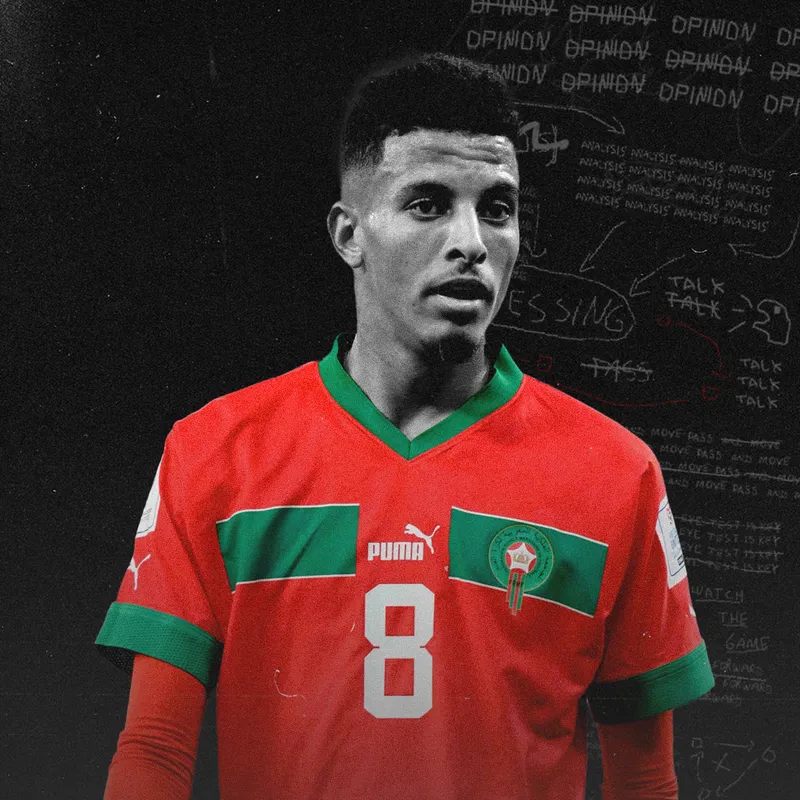
Morocco: A Long-term Dynasty or a One-Hit Wonder?

During the 2022 FIFA World Cup, Morocco’s national team made history and reached fourth place of the tournament, beating the likes of Spain, Portugal and Belgium. This achievement was not created out of thin air, but rather a result of a long process of developing a football identity and unique style that sparked a chain reaction across all age groups of Morocco. 


The Moroccan football, especially under Walid Regragui, was emphasized mainly on compact defense and quick transitions, highlighting individual technique and using wide players to create chances. That in turn created a very effective system on both ends of the field and an entertaining fast-paced style of football.


This system was created through the development of a specific type of players that combined the Moroccan creative with influences of European tactical discipline, which was achieved by the Moroccan academy players throughout the academies of the elite football clubs. 


The Moroccan Royal Federation for football basically acquired players that had Moroccan lineage and were training in Europe in the Elite academies. The proof for the success of this strategy can be found in the 2022 WC squad, in which you can find 14 of 26 players that were selected were born outside of Morocco, with the likes of Hakim Ziyech, Sofyan Amrabat, Yassin Bounou, and Achraf Hakimi.


A New Dawn for African Football: Morocco’s Dual Reality – Infrastructure Triumph v Operational Crisis


The diversity of development environments meant Morocco combined Dutch tactical intelligence, French athletic organization, Spanish technical quality, and Belgian youth-development structure, helping create the disciplined and adaptable style that carried them to the semifinals. 


The achievement of the senior team trickled down to the younger national teams and created a “golden generation” at that level. The U-23 team won its first African championships and qualified for the 2024 Olympics. There, the team received its first Olympic medal, after defeating Egypt 6-0. Meanwhile, the U-20 team achieved something even bigger and became the World Champions for the first time, beating Argentina 2-0 in the finals in 2025. 


Yet, despite the pink future that was drawn by Morocco, some concerns can be drawn from recent events about the present, and it seems like some cracks are starting to be created at the senior level. The first controversy occurred during the 2025 African Cup of Nations (AFCON) that was hosted by Morocco. Throughout AFCON 2025, Morocco faced accusations from rival teams and commentators that referees favored the hosts.


Moreover, several nations accused Morocco of excessive gamesmanship and tactical manipulation before and during matches. All of these stories drained and exploded in the Final game between Morocco and Senegal. Before the game, the Senegalese team complained about representatives of the Moroccan team who followed after Senegal’s training and disturbed them.


Brahim Díaz: The Swiss Army Knife of Attackers


During the final, the controversies continued with a goal that was denied late in the game for Senegal due to a marginal offside, and on the other hand, a marginal penalty was given to Morocco. These one-sided decisions at the end of the game led to a walk-off by the Senegalese team, and a later return that was concluded by a miss of the penalty of Brahim Díaz, and a goal in overtime to Senegal by Pape Gueye at the 97th minute, which eventually led to the win of Senegal. 


Another scandal that has popped up recently in Morocco was in the coaching department. Rumors about the resignation of Walid Regragui from the head coach position have spread, claiming that due to the huge pressure of the World Cup and the tragic loss in the finals of the African Cup of nations Reragui wanted to leave the team. The Royal Moroccan Football Federation repeatedly issued public denials about his departure, which itself became a media controversy.


Lastly, Morocco can lose its biggest star, Achraf Hakimi, even before the World Cup starts, and not because of an injury. Recently, it was confirmed that he will stand trial over alleged sexual assault accusations dating to 2023. Hakimi denies the allegations and says he wants the trial to prove his innocence, but time is ticking, and no one knows how the trial will develop. 


The World Cup is coming to Morocco at a mixed time. On one hand, the Moroccan football is thriving in all aspects, from young groups to senior levels, and the World Cup can be the greatest stage to display the talent on hand that Morocco has to offer, right before it will host the World Cup in 2030.


On the other hand, all the attention to the team is channeled to controversies and scandals that can have a very bad impact on the preparations for the current world championship, and at that critical point, Moroccan football is facing a defining moment; can it turn into a future football powerhouse, or would it only be forever a potential quietly doused? 


By: Ronen Bangiev

Featured Image: @GabFoligno / DeFodi Images