
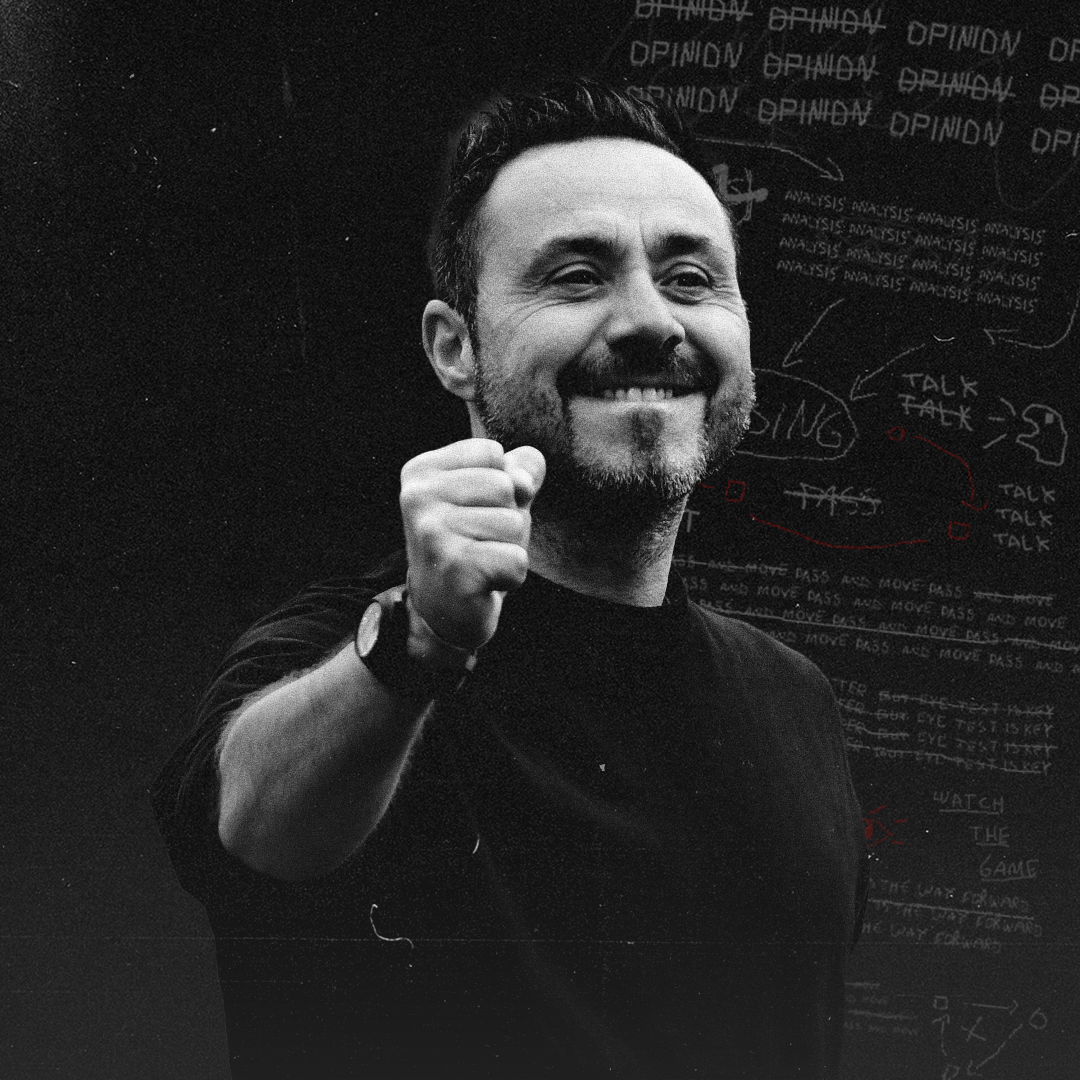
Tottenham Aren’t Just Struggling — They’re Caught Between Two Ideas
Tottenham’s relegation risk is a tactical mismatch — De Zerbi’s principles vs a squad built for something else, under extreme pressure.
Tottenham’s position in the relegation zone has been explained through form, injuries, and confidence. All of that is visible. None of it feels sufficient. Because this does not look like a team simply playing badly. It looks like a team unsure of how it wants to play at all. And that uncertainty — more than any individual error — is what makes their situation dangerous.
A System That Demands Clarity
Roberto De Zerbi’s football is often reduced to build-up patterns, but its real demand is psychological. His teams don’t just play short — they commit to it. Every pass invites pressure with the expectation that the next action will exploit it. That only works when decisions are made early and with conviction. Against Sunderland, Tottenham tried to replicate the structure. The centre-backs split, the fullbacks moved inside, and the midfield dropped to receive under pressure.
On paper, it was recognisable. In practice, it never settled. Midfielders received square rather than on the half-turn. Passing lanes appeared and disappeared before being used. The tempo felt controlled, but not by Spurs — by their hesitation. De Zerbi’s system doesn’t collapse dramatically. It fades when players stop believing in the timing of it.
Inviting Pressure Without Escaping It
The idea behind Spurs’ build-up is to draw opponents forward and then break through them. But that second part — the escape — has been inconsistent. There were moments where Tottenham successfully attracted Sunderland’s press, but the next pass either arrived late or into a player already under pressure. The structure created the advantage, but the execution never released it.
Around the hour mark, one sequence on the right side captured the problem clearly. With Sunderland stepping up, Tottenham built through the right side, pulling three players towards the ball. The central lane briefly opened, but the pass into midfield was delayed by a touch. By the time it was played, the window had closed, the receiver was immediately pressed from behind, and possession was turned over within seconds.
The opportunity existed. The timing didn’t. Other times, the ball was simply recycled backwards, resetting the phase without progressing it. That is the risk of this approach in its current state. It asks players to take responsibility in tight spaces, but offers them just enough doubt to hesitate. And once hesitation enters the sequence, the advantage is gone.
Roberto De Zerbi: Sixteen, Seven Games, and the Refusal to Hurry
Neither Direct Nor Controlled
What makes Spurs particularly vulnerable is that they are no longer clearly one type of team. Earlier in the season, even at their worst, there was a degree of verticality. The plan could be basic — win the ball, move forward quickly, rely on moments. It wasn’t always effective, but it was simple. Now, the intention is control. But control without authority becomes passive.
The midfield pairing often reflects this tension. Movements lack staggering, options appear on the same line, and possession circulates without shifting the defensive block. It creates the appearance of structure without the impact of it. Tottenham are trying to become something new without fully leaving behind what they were. That middle ground is where games drift — and points disappear.
The Psychological Ceiling
If the tactical issues define how Spurs start games, their mentality defines how they respond to them. Thirty-three matches without winning after conceding first is not just a statistic. It is a pattern of reaction. Against Sunderland, once they fell behind, there was no visible shift in intensity or risk. The game slowed rather than accelerated. Possession increased, but urgency did not.
This is where De Zerbi’s philosophy faces its biggest test. His teams are built to control rhythm, not chase it. But relegation battles rarely allow you to play on your own terms. Spurs are not just struggling to impose their game. They are struggling to adapt when it breaks.
From Reading to Pas-De-calais: The Formidable Rise of Austria’s Kevin Danso
Risk Without Trust
There is a difference between risk and belief. De Zerbi’s approach accepts risk as a tool — inviting pressure to create space. But that only functions when the players trust both the system and each other within it. Right now, Tottenham seem to trust neither fully.
Some sequences show players opting for safety too early, bypassing potential advantages. Others show them committing to the risk without the supporting structure, leading to immediate turnovers. The result is inconsistency, but more importantly, it is uncertainty. And uncertainty spreads quickly through a team already under pressure.
A Matter of Timing
The uncomfortable truth is that this might simply be the wrong moment for this kind of transition. De Zerbi’s ideas need time — not just to implement, but to internalise. Patterns become instinctive only through repetition. Spurs don’t have that luxury.
With six games left, survival will likely demand clarity more than complexity. Teams around them are not necessarily better, but they are more defined in what they do. Tottenham, by contrast, are still searching for that definition.
Conclusion
This is not just a relegation battle. It is a conflict between intention and reality. De Zerbi is asking for control, bravery, and precision. Spurs are offering hesitation, fragility, and inconsistency. There is still enough quality in the squad to survive. But quality alone doesn’t resolve uncertainty. And right now, that uncertainty is not just costing them moments. It is defining them.
By: Dhruv Kapoor
Featured Image: @GabFoligno / Mike Hewitt / Getty Images