
Every Team That Lost the Champions League Final: Where Are They Now?
Losing a Champions League final is heartbreaking. Apart from the World Cup and the Euros, it’s probably the biggest loss a football team could sustain. Some teams bounce right back, like Ajax, which lost the 1969 European Cup Final to AC Milan 4-1. It seemed that Catenaccio had triumphed against Total Football and that was that.
However, the very next year, Ajax embarked on a run that would see them win three successive European titles and put themselves and Dutch football on the highest levels. Others aren’t so tenacious; some teams fall apart after reaching a final and losing it, and some nearly destroy themselves trying to reach the heights they once did. So, in this video, let’s take a look at their stories and what they have been up to since losing the biggest game in European club football.
The first inclusion on the list, Stade de Reims, not only lost the first ever European Cup final, but lost again three years later to the same side, Real Madrid. Real Madrid even signed their talisman, Raymond Kopa, after the 1956 Final, who was replaced by Just Fontaine. Still, it wasn’t enough, and in 1959, Reims lost again. Their two defeats did not seem to harm the club at first, as they won the 1960 and 62 titles.
However, the very next season, they finished a shocking 17th, causing them to be relegated. The players of their golden years had steadily retired or moved away, but the relegation spelled the end for that golden team. Except for Kopa, who had returned to the club in 1959 and remained loyal until the end of his career in 1967, which was when Reims finally returned to Ligue 1. However, they went straight back down before re-emerging in 1970 and solidifying their place in the league.
A fifth-place finish was the best they could manage before getting relegated again in 1979. This relegation was the start of the lowest period of the club. Despite reaching two Coupe de France semifinals in 87 and 88 the club’s financial situation was rapidly deteriorating, and in 1991 they were declared bankrupt. The club auctioned off its trophies and records to gather money, and they even lost their name, becoming Stade de Reims, Champagne FC.
An arduous journey began from the lower leagues to reach the heights once graced in the past. In 1996, they regained their trophies, in 1999, their name, and in 2002, they were promoted to Ligue 2. The next several years were spent bouncing between the third and second tiers until the club finally got its ‘merde’ together and reached Ligue 1 in 2012.
Apart from two more years spent in the second tier between 2016 and 2018, the club’s trajectory was firmly upwards, finishing sixth in 2020 and playing in Europe for the first time since the 60s and reaching the 2025 Coupe de France final, losing to PSG. However, at the end of last season, they finished 16th in the league, losing their relegation playoff against Metz. A brief glimmer of hope was on the horizon as Lyon was momentarily relegated for financial reasons but reinstated on appeal. Today, Reims are battling for promotion in Ligue 2.
The second team to lose a European Cup Final was Fiorentina in 1957. Their final against Real Madrid was a contentious one as Real opened the scoring from a very dubiously awarded penalty. Enrique Mateos, the Madrid player who had been fouled, was not only outside of the box at the moment the foul occurred but was also offside as signalled by the linesman. However, Dutch referee Leo Horn ignored his assistant and awarded the spot kick.
It truly is a tale as old as time. In the following years, Fiorentina established themselves as one of Italy’s best sides but were somewhat perennial runners-up. Still, European success was finally attained in 1961 when they defeated Rangers to win the Cup Winners’ Cup before losing next year’s final to another Madrid team, this time Atlético. Aided by Kurt Hamrin, one of the club’s all-time greatest players, Fiorentina finally won their second Scudetto in 1969 but oscillated between high finishes and relegation battles in the 70s.
Their next best chance for a title came in 1982 when they were battling Juventus, Italy’s version of Real Madrid. Then the same tale as old as time received a new chapter. With the title going down to the final matchday, Fiorentina were denied a goal against Cagliari, whilst Juve received a dubious penalty in their game, ensuring their victory. This event sparked a rivalry between the two clubs, which was further inflamed in 1990 when the two teams played the UEFA Cup Final.
Strapped for cash, Fiorentina’s owner sold Roberto Baggio to Juve on the day of the final. This outrage turned into rioting in the streets of Florence and President Flavio Pontello was forced to leave, selling the club to filmmaker Mario Cecchi Gori. Under him and his son, Fiorentina had highs under Claudio Ranieri and Giovanni Trappatoni and signed the likes of Gabriel Batistuta and Rui Costa, but also repeated flirts with relegation.
Fiorentina Struggling on and off the Pitch in Nightmare Season
Two more Coppa Italia titles were all the club could manage before the rollercoaster completely came off its tracks in 2001, as the club’s debts were revealed to be around US$50 million. The club entered administration but was denied a place in Serie B and effectively ceased to exist, having to be reformed in the fourth tier. With some help from Italy’s federation, which enlarged the number of Serie B teams in 2003, they were back in the top flight by 2004.
With Cesare Prandelli at the helm and Luca Toni in attack, the club shot up to fourth in the second season in the top flight. Just when things were beginning to look rosy for the violets, Calciopoli hit Italian football like a freight train, and they narrowly escaped relegation alongside Juve, having to contend with a 15-point penalty. Despite this, they still managed to qualify for the UEFA Cup. Since then, Fiorentina has proven the ultimate dark horse team; you just never know if they are going to qualify for the Champions League, reach the Conference League final, or battle relegation.
The last of Real Madrid’s early victims in the European Cup makes our list as Eintracht Frankfurt. Similar to Fiorentina, this final was also shrouded in controversy. The German FA had banned their clubs from playing any team containing Ferenc Puskás after his allegations that the German team had used doping in the 1954 World Cup Final, which his Hungary team lost. Puskás had to make a formal written apology before the game could go ahead, but angering your opponent’s top striker isn’t really a good idea, as he scored twice in a 7-3 rout of the German team.
Their loss was followed by two second-place finishes, and in 1963, they were inducted into the Bundesliga as a founding member. They would never replicate their pre-Bundesliga success, and three DFB Pokals and a win against fellow German side Gladbach in the 1980 UEFA Cup final constitute the club’s best ever period. The 90s, on the other hand, saw the club fall from title challengers at the beginning of the decade to relegation in 1997. A cycle of relegation and promotion followed until 2012, when Bundesliga stability was slowly built.
Borussia Mönchengladbach: The Golden Years of a German Football Behemoth
Smart recruitment, both in terms of managers and players, was now the club’s main focus and Niko Kovač brought the club the DFB Pokal in 2018, and Luka Jović, Ante Rebić and Sébastien Haller brought them a semi-final run in the Europa League under Adi Hütter. Oliver Glasner was up next, and he managed to take the club even further, winning the Europa League in 2022. During this period, the behind-the-scenes development of the club is far more impressive.
Investments in training facilities, personalized coaching, nutrition, and player psychology have made Frankfurt one of the best teams in the world at developing young players. Strikers are their speciality with the club making over 300 million Euros in the last 6 years from striker sales. In the Bundesliga, the club has also risen steadily season by season, and in a future where Bayern seems somewhat rudderless, Eintracht might make a play for the Bundesliga sooner rather than later.
From Real Madrid’s last victim of their 5-year streak, we move on to Partizan Belgrade, who also lost to Real, this time in 1966. The club’s first decade of existence was marked by a perceived underachievement, and in 1958, they implemented two radical changes: a change of kit from blue and red to black and white and a focus on youth development. This paid off as the so-called Partizan babies took home three titles on the trot for the first time in the Yugoslav league and reached the aforementioned final.
Sadly, for them, a single Mitropa Cup won in 1978 is their only international trophy. To add insult to injury, right as the 90s began and Partizan embarked on their best decade in terms of domestic trophies, they had to watch arch rivals Red Star win the 1991 European Cup. This same hierarchy remains in the internal competitions, where they play second fiddle to Red Star in terms of league and cup titles. Despite that, they remain at the top of Serbian football alongside their rivals, challenging them at every opportunity.
In 1966, Partizan became the first Eastern European club to reach a European Cup Final, and in 1971, Panathinaikos took over the charge to become the first club from Eastern Europe to win the competition. They were managed by the great Ferenc Puskás himself and had won 6 titles in the previous decade, but facing them were none other than Ajax, Johan Cruyff, Rinus Michels, and their total football. Despite Panathinaikos losing the final, their feat of reaching the decisive game was even more impressive, seeing as Greek football was nominally amateur at the time, with professionalism being formally introduced only in 1979.
The club remained successful during the 70s and especially the 80s, but in the 90s, a new force in Greek football was rising, rival Olympiacos. During this time, Panathinaikos’ European pedigree continued to be as strong as ever, reaching two more European Cup semifinals in 1985 and 1996, the last of which saw them eliminated by their old rivals from ’71, Ajax. The 2000s and the more recent period have not been kind to the club, facing financial issues, European bans for FFP breaches and having to watch Olympiacos lift the first-ever continental title by a Greek side.
After the dominance of total football had somewhat waned, Bayern Munich caused a three-peat of heartbreak for clubs that had reached the final of the European Cup without winning it. First up is Atlético Madrid. Right after their first European Cup final loss – foreshadowing – the club appointed club legend Luis Aragonés as manager, who led them to the title three years later. However, a title drought ensued afterwards with the club winning the odd Copa Del Rey and losing another European final, this time in the Cup Winners’ Cup in 1986.
One year later, the club was taken over by one of the most corrupt individuals I have ever come across. Jesús Gil effectively took over the shares of Atlético fans without spending a single penny as the club was reformed from a fan-owned entity to an SAD, or a publicly limited sports company. Effectively, the lord of the Marbella region, Gil, who was a populist bigot and supporter of Francisco Franco (probably because Franco pardoned him after a building that he commissioned collapsed and killed 58 people) turned Marbella into a haven for British, Italian, and Russian gangsters as well as former adepts of the Austrian man with the moustache.
Gil’s rot spread so deeply into the Marbella city council that Spanish authorities took the unprecedented step of completely dissolving it to get rid of the corruption he left behind. His leadership of Atlético was therefore what most of you already expect, namely hiring and firing of managers on a whim, signing of pricy big-name players, and squad clear-outs. And since even a broken clock is right twice a day, his methods did pay off in 1996 when the club won a league and cup double despite having battled relegation the previous year.
What is more important is that four years prior, he had closed down Atlético’s academy, meaning that Raul moved to crosstown rivals Real Madrid, and the club effectively ceased its youth development operations. In the 1999-2000 season, things finally caught up with Gil as he was removed by the authorities for misappropriating club funds, and the team were relegated to the Segunda. Luis Aragonés once again came to the rescue and guided the club back to the top flight and more importantly, gave a young Fernando Torres his debut, starting a period where Atletico had top-class strikers.
From Diego Forlán and Sergio Agüero to Radamel Falcao, the club did not lack firepower during those years. This translated to three Europa League titles but sadly also two more lost Champions League finals in 2014 and 2015. Since 2011 the club has been synonymous with one man, Diego Simeone and have firmly established themselves as a top three club in Spain. Bayern’s next victim, Leeds United still consider themselves as rightful winners of the 1975 European Cup as they claim to have been unfairly treated by the referee during the game.
That final had come at the tail end of the legendary team built by Don Revie and a period of decline set in soon afterwards. The club’s board, still believing to be deserving of the performances of the Revie era, replaced several managers up until the club were relegated in 1982. However, by the end of the decade, the club was back on its feet, winning promotion in 1990 and winning the last English championship before the formation of the Premier League in 1992.
The Wacky and Wonderful World of English Football Club Nicknames
The early years of the Premier League were marked by top 5 finishes and European football, which was seen by chairman Peter Ridsdale as Leeds’ ticket back to the big time. In their constant pursuit of Champions League football he had taken out multiple loans with the expectation to repay them from the TV revenue of the Champions League. Sadly, the club failed to qualify for Europe’s top competition on two successive occasions and could not repay the money owed. This meant that when rivals Manchester United came in for their most prized asset Rio Ferdinand, Leeds had no choice but to sell.
The sale of Ferdinand was really the beginning of the end for Leeds, who narrowly avoided relegation. The very next season however they were relegated and what remained of the squad was sold alongside Leeds’ training grounds and stadium. The fire sale proved not enough and in 2007, Leeds entered administration and were relegated to the third tier, where they stayed until 2011. Since then, the club has undergone several ownership changes and are now back in the Premier League.
The last team Bayern defeated on their three-peat were Saint-Ètienne, which is French for PSG before it was cool for any of those who started watching football after 2015. Les Verts won their tenth league title, a French record that stood until 2022 but unknowingly to the club at the time it was to be their last. The very next season, their president, Roger Rocher was arrested for financial irregularities and just two years later, the club was relegated. Since then, the club has oscillated between top-half finishes and winning the 2013 Coupe de la Ligue and being a yoyo club bouncing between the first two divisions.
Seeing the fun Bayern had crushing the dreams of first-time finalists Liverpool thought they would give it a go and in the next two seasons did exactly the same to Borussia Mönchengladbach and Club Brugge. Gladbach lost that final during the golden decade of the club and are still arguably the only team in Germany to challenge Bayern’s dominance, besting them during a decade when the Bavarians won three European cups on the trot, a sort of Mikka Hakkinnen to Bayern being Michael Schumacher.
After the lost final, the Fohlenelf picked up their second UEFA Cup in 1979 and reached the final the next year, losing to the previously mentioned Eintracht Frankfurt. As a result of Gladbach’s brilliance, Bayern started signing their players and managers in the next decade, with Lothar Matthäus, Jupp Heynckes and Stefan Effenberg all moving to Bavaria from Gladbach. The team’s decline during the 90s can be best explained through the data showing the number of managers the club employed. From 1964 to 1987, the club only had three managers, from 1987 to 2008, 16. This culminated in the club’s relegation in 1999.
The efforts to revive the club’s fortunes were spearheaded by the construction of a new stadium, replacing their much smaller ground. Despite another relegation in 2007, Gladbach have slowly risen to become a top-half team in Germany and play European football once again. Club Brugge, on the other hand, did not experience such a marked decline and remain the second most decorated team in Belgium after rivals Anderlecht.
Their recent fortunes have improved, and in 2024 they just won their fourth title in 5 years. Sadly for them they haven’t managed to achieve any victories on the European stage and Anderlecht and Mechelen remain the only Belgian clubs with any European silverware. The very next year two first-time finalists met in the final, Nottingham Forest and Malmö. Malmö under Englishman Bob Houghton, were very much outsiders in a final of outsiders. To add to that they were missing three of their most important players, Bo Larsson, Roy Andersson and captain, Staffan Tapper.
The game itself was very much an anti-climax of the surprising final line-up and a single goal from Trevor Francis proved not only the decisive strike but also why Brian Clough had just made him Britain’s first £1 million player. After the lost final, Malmö kept their English connection with Keith Blunt, Tord Grip, who was Sven-Goran Eriksson’s mentor and finally, Roy Hodgson, and kept being one of the best sides in Sweden.
Henrik Rydström and Malmö FF: The Art of Relationism in Scandinavian Football
The 90s were not so kind to the club and prompted a change at the board level and a rethink of the club’s philosophy. The emergence of Zlatan Ibrahimović heralded the return of Malmö to the big leagues, and in 2004, they won their 15th Swedish title. Since then, they have been the dominant force in Swedish football, reaching an impressive 24 league titles, but they are currently sixth, which puts their fifth title in a row in serious doubt.
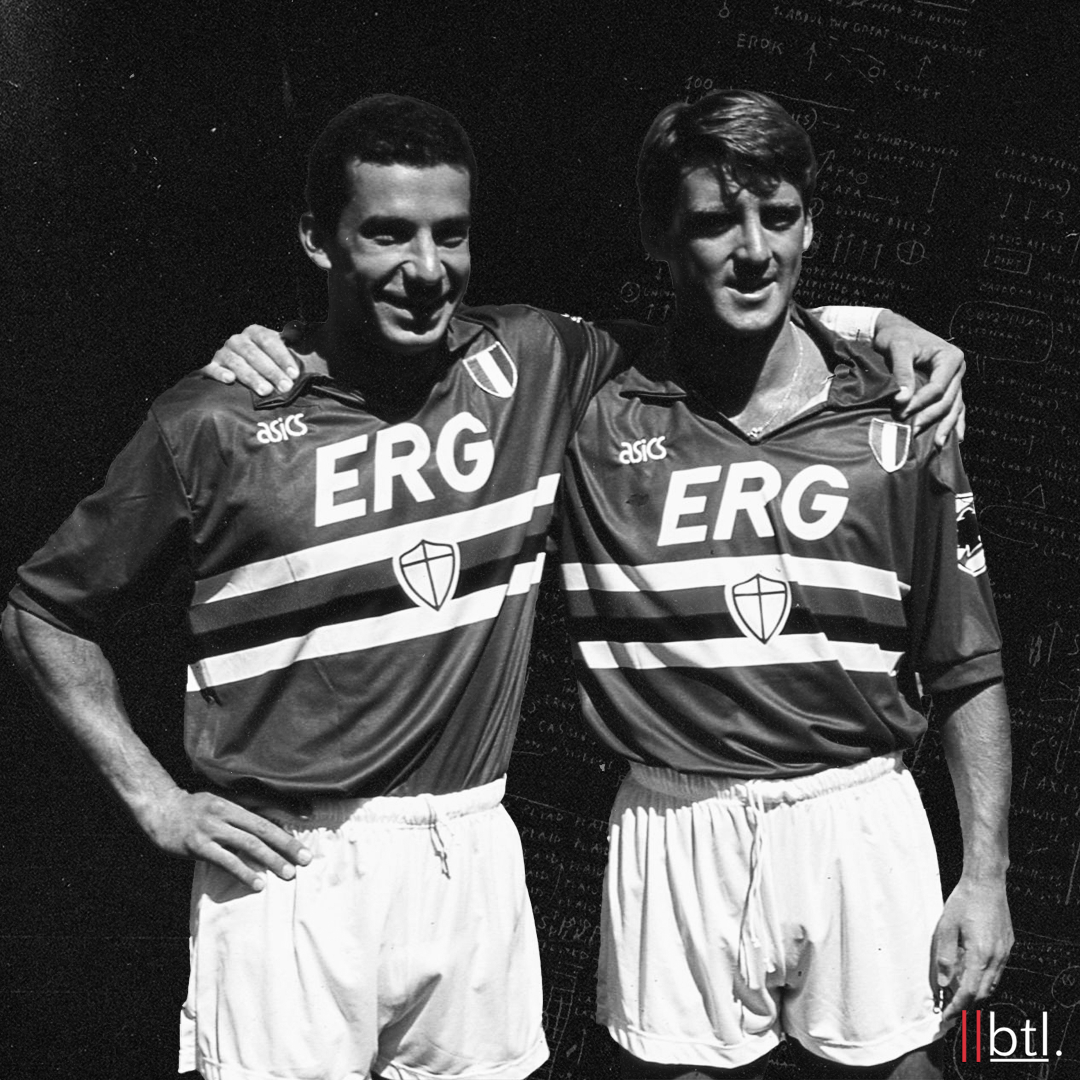
The next two inclusions are a double heartbreak for Italian football, eight years apart. The first heartbreak in 1984 even happened on home soil, when Roma lost to Liverpool on penalties in the Stadio Olimpico. In 1992, Sampdoria’s dreams were shattered by a solitary Ronald Koeman goal in extra time. Roma’s story after the lost final is one of what could have been. The very next season, they finished second to Juventus. After a period of moderate decline during the 90s in which they lost the UEFA Cup final to Inter, Francesco Totti’s emergence reinvigorated the club, leading them to the 2001 Scudetto.
Sadly for the club, they did not manage to win any other titles since then, finishing as runners-up eight times in the span of 24 years. In the Coppa Italia, the story was pretty much the same, losing five finals and only winning two in a row in 2007 and 2008. Not even José Mourinho’s dark magic could bring European glory to the Italian capital, as they also lost the 2023 Europa League final, though I would chalk that down to Anthony Taylor’s inability to correctly spot a handball.
Leaving Anthony Taylor’s absolute incompetence aside, even though Roma fans might be upset at their lack of trophies, Sampdoria fans would consider their plight to be a blessing. After their lost final, the golden generation of the club picked up one more Coppa Italia before being slowly lured away from the club. Despite replacing them with players like Juan Sebastián Verón or Clarence Seedorf and reaching the 1995 Cup Winners’ Cup semifinal, the decline of the team was sealed by relegation in 1999.
The Best Footballers That Became Politicians After Retirement
However, one thing Sampdoria didn’t lack was forwards. Just with Gianluca Vialli and Roberto Mancini who led them to the European Cup final, a new duo emerged, Antonio Cassano and Giampaolo Pazzini, who led them back to Champions League football. Their success, alongside Beppe Marotta, who would go on to preside over Juve’s most dominant period, meant that the club’s assets were lured away and they were once again relegated in 2011.
They came straight back up and even managed to one-up local rivals Genoa when they qualified for the Europa League in their stead after Genoa’s European license was revoked. With Fabio Quagliarella leading the line, Samp spent seven secure years in Serie A until the law caught up with owner Massimo Ferrero. Since then, the club has been teetering on the edge, narrowly escaping relegation to Serie C last season.
The 2000s provide our next four inclusions as a flurry of first-time finalists faltered at the last hurdle. First up is Valencia, who lost the 2000 final 3-0 to Real Madrid before being narrowly defeated by Bayern the very next year. They kept pushing on at the top of Spanish football, winning another La Liga in 2004 and the UEFA Cup the same year. However, an indecisive board and a managerial go round followed Rafa Benitez’s departure to Liverpool, and despite winning the 2008 Copa del Rey, Valencia was slowly but surely losing touch with the top of the table.
Just as the managerial situation was looking to become stable with the appointment of a young Unai Emery, the club came under scrutiny for its massive debts. Emery kept their league performances somewhat stable during those years as more and more future superstars like David Villa, Juan Mata, and David Silva left the Mestalla. In 2012, Emery left, and the club’s performances immediately started to dip. Compounded with the ever-increasing debts the club was bought by Peter Lim in 2014 who, after an initial uptick in form and investments, has made it his life’s mission to fall out with everyone at the club, including the fans.
Since this giant of Spanish football has somehow existed in a state of Peter Limbo, led by a hostile owner and somehow managed to remain in the top flight and even win the 2019 Copa Del Rey. With the shell of a new stadium that has been sitting empty for more than 15 years and a crook at the helm, the future doesn’t seem too bright for Los Che. One year after Valencia’s loss to Bayern, Leverkusen tried their luck at surprising Europe, only to be defeated by Real Madrid. That season, after having lost the league title and the DFB Pokal Final, the term Neverkusen was coined.
The term stuck with the team and with each passing season it was more and more embedded into the fabric of the club. Leverkusen became a good side in the Bundesliga, a wonderful club in terms of talent production, and basically quite boring. That was until Xabi Alonso took the helm in 2022 and led them to an unbeaten double the next season. Sadly, they couldn’t make it a treble, returning to their old Neverkusen ways in the Europa League final against Atalanta.
The Champions League then took a quick break from surprises to watch Milan and Juve play out a very Italian 0-0 draw before featuring a final with Porto and Monaco. Jose Mourinho’s genius meant that the team from the principality left the Arena AufSchalke heartbroken and spent the next four years being picked apart in midtable mediocrity. The natural conclusion of relegation came in 2011, prompting Russian oligarch Dmitry Rybolovlev to pounce and acquire the club.
Following the takeover, the club became one of the biggest spenders in Europe before pivoting to a more cautious approach. Then in 2017, led by Radamel Falcao and Kylian Mbappé, Monaco won the Ligue 1 title before nearly getting relegated. Two of the Monaco players from the 2004 final, Ludovic Giuly and Emmanuel Adebayor, found themselves on opposing sides two years later as Barcelona took on Arsenal. Giuly played for Barcelona and Adebayor who was an unused substitute in 2004, watched on as he was cup-tied.
Arsenal’s loss spelled the end of the Arsène Wenger golden years. Wenger’s brilliance then kept the club competitive despite a board that offered him a transfer budget of £2.50 every season before a group of losers decided that harvesting the frustration of football fans is actually a pretty good way to make some money. Chelsea would make it to the 2008 final only to narrowly lose on penalties to Manchester United, but they would return in 2012 and 2021, winning on both occasions.
The next team to make it to a Champions League Final (and lose) was none other than Arsenal’s archrivals Tottenham Hotspur, who fell to Liverpool in the 2019 edition, with Paris Saint-Germain following their path in 2020 and losing to Bayern Munich. Manchester City fell in their maiden trip to the final in 2021, but they would make amends two years later against Inter. Two decades after making it to their first final, Arsenal have a chance to secure their maiden Champions League trophy, and they’ll be looking to do so against defending champions PSG in Budapest.
By: Eduard Holdis / @He_Ftbl
Featured Image: @GabFoligno / Getty Images