
Why This Might Be the Last World Cup of True Football Cultures
Every World Cup used to feel like entering a different country before a ball was even kicked. Brazil played like music. Italy played like survival. Germany played like machinery. Argentina played like a street fight disguised as art. Different nations solved football differently because football itself belonged to different cultures.
You could watch ten minutes of a match and instantly recognize where a team came from. Their rhythm, their aggression, their spacing, even the way they celebrated goals felt tied to something larger than tactics. Old World Cups felt like watching football through different civilizations.
The 2026 World Cup feels different. Not emptier. Just strangely more uniform. But somewhere inside that perfection, football has started losing its accent. And that is why the 2026 World Cup feels strangely symbolic. It may become the final World Cup before globalization completely erases the last visible traces of footballing identity. Because modern football no longer develops cultures. It develops systems.
Atlético Madrid Without Griezmann: The End of Simeone’s Tactical Translator
Football’s Global Software Update
Watch enough football today and a strange pattern begins to emerge. Whether the match is being played in Tokyo, Lisbon, Manchester, or São Paulo, the geometry looks almost identical. The goalkeeper stands inside the build-up structure like an extra center-back. Fullbacks drift into midfield. Wingers invert into half-spaces. Teams press using synchronized touchline traps. Every player constantly scans over their shoulder every two seconds like they were built inside the same academy laboratory.
Football once grew naturally from local environments. South American street football created improvisation because children learned in chaos. Italian football created defensive cynicism because survival mattered more than beauty. German football prioritized structure because discipline shaped the country’s sporting philosophy. Now the entire planet consumes the same tactical software. From academies to YouTube breakdowns, young players across continents are now learning the same tactical language before they ever develop a local one.
Coaches copy-paste structures originally built by Pep Guardiola, Jürgen Klopp, or Mikel Arteta because international football increasingly rewards tactical familiarity over cultural uniqueness. Technically, the level has never been higher. But emotionally, something feels missing. Football used to feel human. Now it often feels optimized.
Built Before Success: How Football Identity Shapes Long-Term Performance
Brazil and the Death of Joy
No country represents that transformation more painfully than Brazil. Old Brazilian football felt alive in a way modern football rarely does anymore. It was chaotic, arrogant, unpredictable, and deeply emotional. Players dribbled not because it was efficient, but because expression itself mattered.
Ronaldinho smiled while humiliating defenders. Adriano played with emotional fury. Ronaldo Nazário looked like he was trying to outrun gravity itself. The old Seleção felt like football escaping structure, but modern Brazil feels different. The talent is still extraordinary, but the freedom has been sanitized. The smile disappeared.
Brazil once played like joy spilling into the street. Now they often play like a team terrified of losing structure. And maybe no player represents that transition better than Rodrygo. He still carries traces of old Brazilian elegance. You can see it in the softness of his touches and the effortless way he glides past defenders. But at Real Madrid, he became the perfect modern tactical employee.
Tottenham Aren’t Just Struggling — They’re Caught Between Two Ideas
Rodrygo plays wherever the structure demands. Left wing, right wing, false nine, midfield support runner. He sacrifices individuality for collective balance. And at Real Madrid, that sacrifice is not a loss, but a requirement. And that is exactly the point. The modern game no longer rewards beautiful disorder. It rewards controlled efficiency.
Italy No Longer Looks Italian
The same identity crisis exists elsewhere. Italy once terrified opponents psychologically before matches even began. Their football was built on suffering, control, and defensive paranoia. Players like Giorgio Chiellini and Leonardo Bonucci mastered the dark arts of defending. They treated blocked shots like goals. Every match felt like controlled chaos managed by cynical geniuses.
Now Italy often looks caught between identities. They attempted to modernize into a more aggressive pressing side, but in doing so, they lost part of what made them emotionally distinct. Their center-backs defend forty yards higher. The old defensive cruelty faded. The fear factor disappeared.
Even Alessandro Bastoni perfectly symbolizes the transition. He is an exceptional modern defender: elegant on the ball, progressive in possession, technically polished enough to play midfield passes through pressure. But he feels like a product of modern football globalization rather than a descendant of pure Italian defensive brutality. Italy did not become worse. It became less Italian. And that tension between identity and evolution defines their modern struggle.
Rio Ngumoha and the Mbappé Comparison — Why Liverpool’s Teenager Matters Now
Germany, Portugal, and the Rise of the Global Player
Germany’s transformation may be even more fascinating. For decades, Germany represented ruthless tournament inevitability. They were football’s machine. Structured, relentless, emotionally cold. Then came the Pep Guardiola influence. German football became obsessed with possession purity and positional control. The directness disappeared. The emotional sharpness softened.
During the 2018 and 2022 World Cups, Germany dominated possession statistics while looking strangely fragile whenever matches became chaotic. They no longer looked like Germany. Ironically, the new generation now seems to be correcting that mistake. Jamal Musiala and Florian Wirtz represent a more vertical, transitional version of German football again.
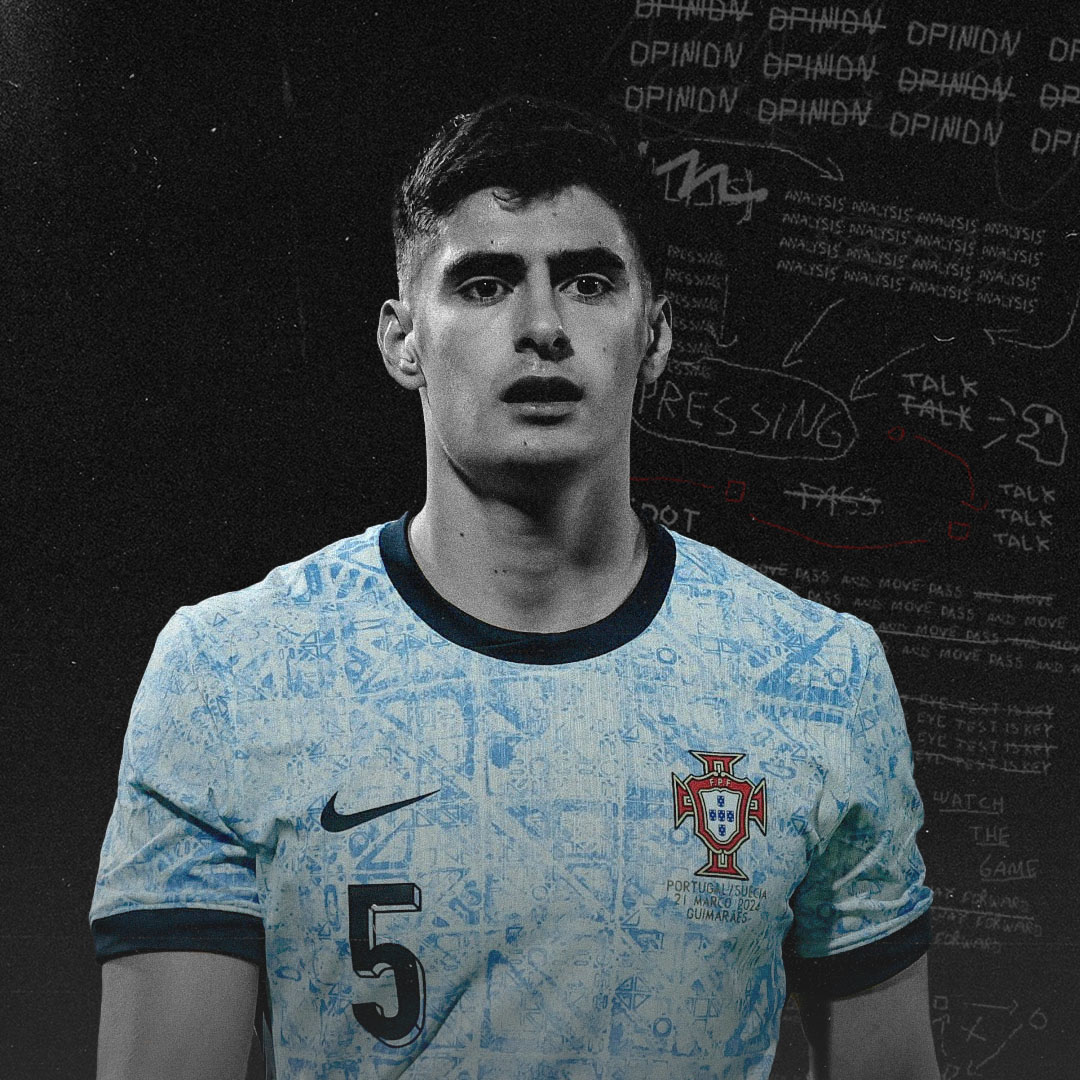
Portugal tells the same story through a different lens. For years, Portugal revolved around singular superstars carrying the emotional burden of the nation. Cristiano Ronaldo represented that era perfectly. Entire systems bent around the maverick.
Now, Portugal’s midfielders rotate constantly. Attackers exchange positions fluidly. Collective structure replaced individual dependence. Cristiano Ronaldo once carried Portugal’s identity alone. Now the identity is shared across eleven players, but diluted in the process.
Japan and the Future of Football
Japan may represent the future most clearly of all. For years, Japanese football was technically elegant but passive. Now they play with frightening tactical sharpness. Their victories over Germany and Spain in 2022 did not happen because of luck. Japan simply mastered the same globalized tactical software more efficiently.
They defended inside perfectly synchronized mid-blocks, triggered pressing traps with machine-like precision, and attacked space vertically with ruthless timing. It was globalization succeeding. The entire world learned the same language. Japan did not break the system. They mastered it faster than those who created it.
Spain vs Morocco: The Match That Explained Everything
Spain vs Morocco at the 2022 World Cup might become the defining image of modern football’s identity crisis. And somehow, the performance felt emotionally empty. The ball moved endlessly around Morocco’s block in perfectly clean geometric patterns, yet Spain rarely looked dangerous. Possession became an aesthetic prison. Meanwhile, Morocco defended with something modern football increasingly struggles to manufacture: emotional fury.
Every tackle felt personal. Every defensive recovery carried emotional weight. The stadium vibrated with tension. Morocco looked alive. Spain looked programmed. That match felt like a collision between football’s past and future. And for one night, football remembered what it felt like to resist perfection.
How Morocco Condemned Spain to a Second Straight Penalty Shootout Elimination in the Round of 16
The Death of the Unscripted Footballer
The saddest part of modern football is not tactical evolution itself. It is the disappearance of the unscripted player. The old game allowed room for irrational geniuses. Footballers who ignored structure. Players who solved matches emotionally rather than algorithmically.
Modern football views that freedom as a risk. Young attackers are taught when to dribble, where to stand, how many touches to take, when to recycle possession, and how to maintain the team’s rest-defense shape. By the age of twelve, elite prospects already move like miniature professionals. The flaw has been coached out of them. And flaws were often where football’s personality lived. That is the version of football many people fell in love with.
The old World Cup felt magical because nations carried imperfections unique to themselves. Argentina played with emotional chaos. Italy weaponized suffering. Brazil embraced improvisation. Even dysfunction felt culturally authentic. Now the edges are being sanded down. Football is becoming cleaner. Smarter. Faster. And strangely less memorable.
From Control to Pressure: Can Arsenal Finally Win the Double — or Is Another Heartbreak Coming?
Why 2026 Feels Like a Funeral
That is why the 2026 World Cup feels emotionally heavier than a normal tournament. This is likely the final World Cup for Lionel Messi, Neymar, and Luka Modrić players shaped before football became fully institutionalized by academy systems and data-driven optimization.
After them comes an entirely different generation. Cleaner. Smarter. More efficient. Even the structure of the tournament reflects that transformation. The expansion to 48 teams feels less like footballing necessity and more like content maximization.
The World Cup increasingly resembles a global entertainment product optimized for broadcasting inventory, commercial reach, and corporate expansion. And hosting it across North America feels strangely symbolic. Football’s most emotional tournament arriving inside the world’s most commercialized sporting environment.
Perfect stadiums. Perfect branding. Perfect packaging. Maybe that is the future. But it does not always feel like football’s soul survives inside perfection.
Newcomers and Second Appearances: What to Expect in the 2026 World Cup
The Last World Cup of True Football Cultures
None of this means modern football is bad. The level is extraordinary. Players today are tactical monsters. The collective organization of elite teams would overwhelm many great sides from previous generations. The sport evolved intellectually in remarkable ways.
But evolution always costs something. And perhaps the price football paid was individuality. The old World Cup was beautiful because it felt unpredictable culturally as much as tactically. Nations carried emotional fingerprints. Teams reflected streets, histories, and social identities larger than football itself. Now, the differences are shrinking. Systems travel faster than culture.
Maybe this evolution is inevitable. Maybe football was always going to become cleaner, faster, and more optimized. But when the 2026 World Cup begins, it may quietly mark the end of something far older than tactics. Because once every nation starts speaking the same football language, the World Cup stops being a meeting of identities. It becomes a comparison of execution. And football, for all its evolution, risks forgetting why it was ever beautiful.
By: Dhruv Kapoor / @kapoordhruv755
Featured Image: @GabFoligno / Carlos Rodrigues / Getty Images