
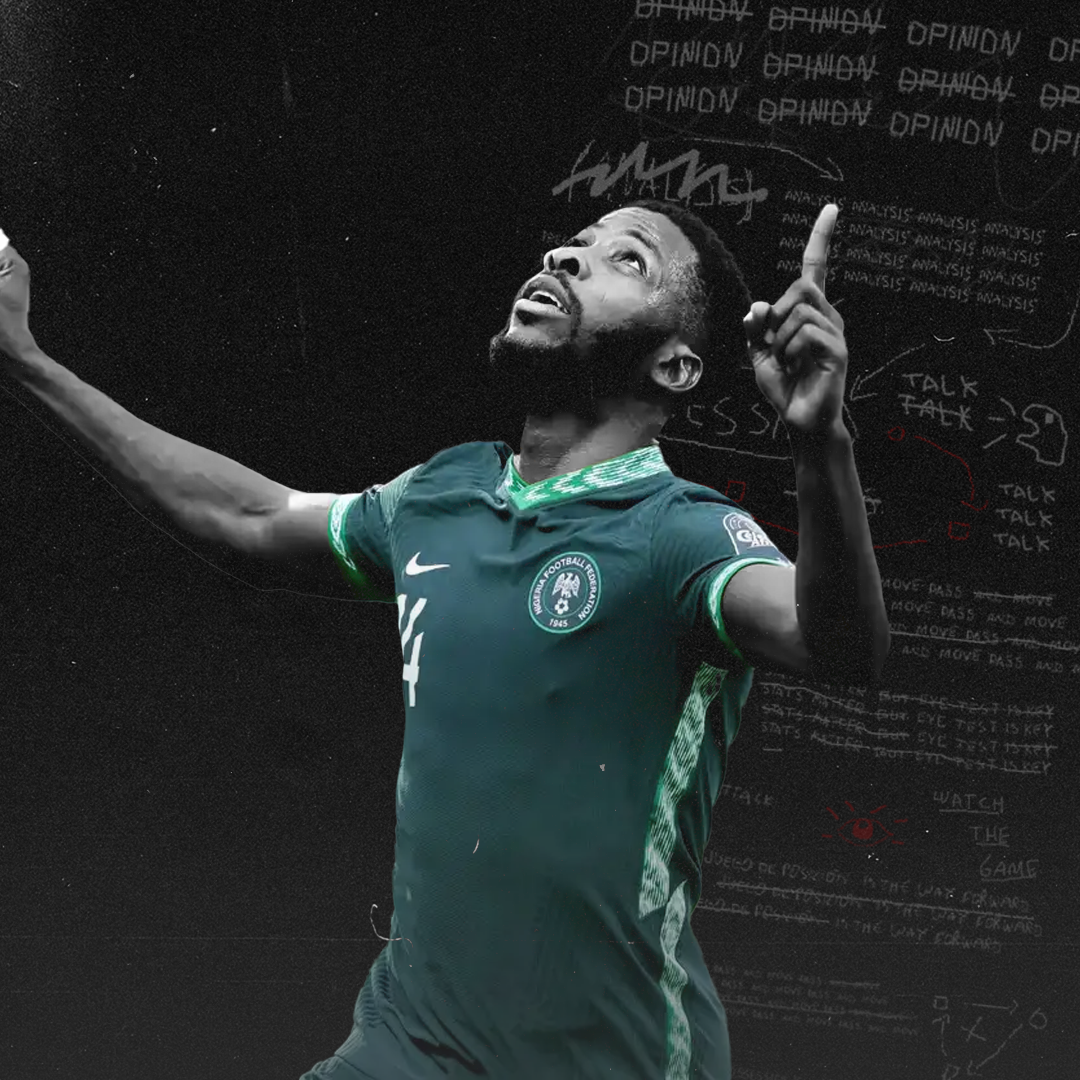
Nigeria’s World Cup Problem: Why the Super Eagles Keep Falling Short
For decades, Nigeria occupied a position that few African nations could match. The Super Eagles were often the benchmark against which others were measured, combining a steady stream of talented players with a level of consistency that made qualification for major tournaments seem almost routine. From their World Cup debut in 1994 through to the 2018 edition in Russia, Nigeria qualified for six of seven tournaments, establishing themselves as one of Africa’s most dependable representatives on football’s biggest stage.
During that period, World Cup qualification was rarely treated as an achievement in itself because it had become an expectation, while the growing presence of Nigerian footballers in Europe’s top leagues reinforced the country’s reputation as one of the continent’s leading football nations. That history makes Nigeria’s recent World Cup record particularly difficult to explain.
The Super Eagles have now failed to qualify for consecutive FIFA World Cups, first missing out on Qatar 2022 before suffering another disappointing campaign ahead of the 2026 tournament. For a country that once seemed almost certain to secure its place among Africa’s representatives, two successive failures mark a significant departure from what had become the norm.
What makes the situation even more surprising is that Nigeria’s struggles have not coincided with a decline in the quality of players available to the national team. Victor Osimhen remains one of the most highly regarded forwards in world football, Ademola Lookman has developed into one of Europe’s most effective attacking players, and several members of the current squad continue to perform at a high level across some of the strongest leagues in the game.
Ademola Lookman: Why the Nigerian Star Deserves to Be Crowned as Africa’s Finest
The issue facing Nigeria is therefore not a shortage of talent but a recurring inability to translate that talent into successful qualification campaigns. This is where discussions about the Super Eagles often become too focused on individual players. Whenever qualification slips away, attention naturally turns towards missed chances, defensive errors or underperforming stars. While those factors matter, they rarely tell the full story.
Football history is filled with talented national teams that failed to achieve what appeared possible on paper, and the reasons are often rooted in wider issues than the performances of a few players. The strongest international sides are usually built on a combination of talent, continuity, leadership and long-term planning. Nigeria has rarely struggled in the first of those areas, but the others have often been far more difficult to establish.
The contrast between Nigeria’s World Cup qualification record and their recent performances at the Africa Cup of Nations illustrates this point clearly. The Super Eagles reached the final of AFCON 2023 in Ivory Coast before following that achievement with a semi-final appearance at AFCON 2025 in Morocco. Those results demonstrate that Nigeria remains capable of competing with Africa’s strongest teams and progressing deep into major tournaments.
They also undermine the argument that the country has somehow stopped producing players capable of performing at the highest level. A team does not reach an AFCON final and then a semi-final through luck alone. Those campaigns required quality, organisation and resilience, all of which suggests that the foundations for success remain in place.
Rafiu Adekunle Durosinmi: The Nigerian Striker Primed for a Big Move
Yet those same achievements only make Nigeria’s World Cup failures more difficult to understand. A nation capable of reaching the latter stages of consecutive AFCON tournaments would ordinarily be expected to secure qualification for the World Cup. Instead, the Super Eagles have found themselves watching from home while other African nations take their place on football’s biggest stage.
The contradiction suggests that Nigeria’s problem extends beyond talent and beyond any single qualification campaign. While tournament football has often brought out the best in the national team, qualification campaigns have repeatedly exposed weaknesses that continue to prevent Nigeria from meeting expectations.
Part of the problem has been the absence of continuity. Over recent years, the Super Eagles have experienced frequent changes in direction, with different coaches arriving with different ideas about how the team should play and what the long-term vision should be. While managerial changes are common in international football, constant change rarely creates stability.
National team coaches have limited time with their players, making consistency even more important than it is at club level. The most successful international teams often spend years refining a clear identity, allowing players to understand their roles and build familiarity with one another. Nigeria, by contrast, has often appeared to be searching for solutions rather than building upon a settled foundation.
The uncertainty has not been confined to the technical area. Discussions surrounding the Super Eagles have regularly included concerns about administration, planning and decision-making away from the pitch. These issues may not attract as much attention as results, but they often influence those results more than supporters realise.
Strong football structures create an environment in which players and coaches can focus entirely on performance, while unstable structures introduce distractions that become increasingly difficult to overcome over time. A talented team can occasionally succeed despite organisational shortcomings, but maintaining that success over multiple qualification campaigns is far more challenging.
What makes Nigeria’s situation particularly frustrating is that the ingredients for improvement already exist. This is not a nation searching for a new generation of footballers, nor is it a team that has lost the ability to compete with Africa’s strongest sides.
Recent AFCON performances have shown that the Super Eagles remain capable of matching the continent’s best when they are organised, disciplined and working towards a clear objective. The challenge is not discovering talent but creating the conditions that allow that talent to produce consistent results over the course of a qualification campaign.
The failure to qualify for consecutive World Cups should therefore be viewed as more than a disappointing statistic. It highlights a gap between Nigeria’s potential and what the national team has achieved in recent years. For a long time, individual quality often helped the Super Eagles overcome problems that existed elsewhere within the system. Recent qualification campaigns suggest that this approach is no longer sustainable.
Modern international football rewards stability, planning and consistency as much as it rewards talent, and Nigeria have too often found themselves relying on the latter while struggling to establish the former. If the Super Eagles are to return to the World Cup and reclaim the position they once occupied within African football, the solution is unlikely to come from discovering another talented generation. Nigeria has continued to produce elite players and there is little evidence that this will change in the foreseeable future.
The greater challenge lies in building an environment capable of maximising that talent and ensuring that strong individual careers translate into collective success. Until that happens, Nigeria will continue to face the same question that has followed the national team throughout recent qualification campaigns: how can one of Africa’s most talented squads remain absent from football’s biggest tournament?
By: Abubakar Hamman-Joda / @TheFinalWhisle
Featured Image: @GabFoligno / CAF