Shadows at the Bernabéu: Why Real Madrid’s 1–0 Win Masks a Deep Tactical Rot
Real Madrid's 1-0 Narrow win Against Villarreal Exposed Serious Tactical Fractures with Los Blancos's Performance
On paper, a clean sheet and three points at the Santiago Bernabéu should mark a successful evening. Real Madrid’s 1–0 victory over Villarreal on Round 8 of the 2026/27 La Liga season keeps them moving forward in the standings. But if you strip away the final score and dive into the granular data, a starkly different reality emerges—one that mirrors the exact structural flaws plaguing Los Blancos since the opening whistle of the campaign.
In the style of Breaking The Lines, let’s dissect the tactical architecture, the underlying numbers from FotMob, and why this disjointed performance leaves little room for optimism.
1. The Midfield Creative Void & Build-Up Dysunction
Modern elite football is dictated by control, spatial manipulation, and the ability to cleanly bypass an opponent’s initial pressing block. Against Villarreal, Real Madrid’s structural deficiencies in possession were glaringly exposed.
- Passing Deficits: Villarreal dictated the tempo, controlling 54% possession and completing 478 passes at an 88% accuracy rate compared to Real Madrid's 406 accurate passes.
- The Progressive Problem: The central zone lacked the vision and press-resistance required to slice open defensive blocks. Whenever Villarreal initiated a mid-block press, Real Madrid's build-up from the back looked messy, uncoordinated, and frantic.
- Zone Distribution: Both sides heavily funneled their creative output down the left flank—Real Madrid directed 52% of their attacks down that channel, yet lacked the structural triangles needed to turn that territorial presence into sustained dominance.
2. Squandered Chances & the xG Illusion
Real Madrid did carve out the game’s higher-value openings, but efficiency remains a chronic sickness for this squad.
- The Expected Goals Gap: Los Blancos accumulated an xG of 1.43 from 11 total shots, outperforming Villarreal’s 0.59 xG from 15 total shots.
- Wasted Opportunities: Real Madrid registered 9 shots inside the box and generated 4 big chances, yet they missed 3 big chances.
- The Finishing Flaw: Villarreal peppered the goal from distance—registering 8 shots outside the box—while Madrid's reliance on chaotic transitional moments rather than structured patterns meant that when chances arrived, composure deserted them.
3. Out-of-Possession Sluggishness & Disciplinary Meltdown
While Real Madrid managed to edge the physical battles—winning 57% of total duels and 60% of ground duels—these numbers completely paper over a team playing without a coherent collective plan.
- Passive Ball Retention: Without the ball, Madrid's defensive shape looked slow, disjointed, and structurally weak. They struggled immensely to re-establish pressure or intelligently close down passing lanes.
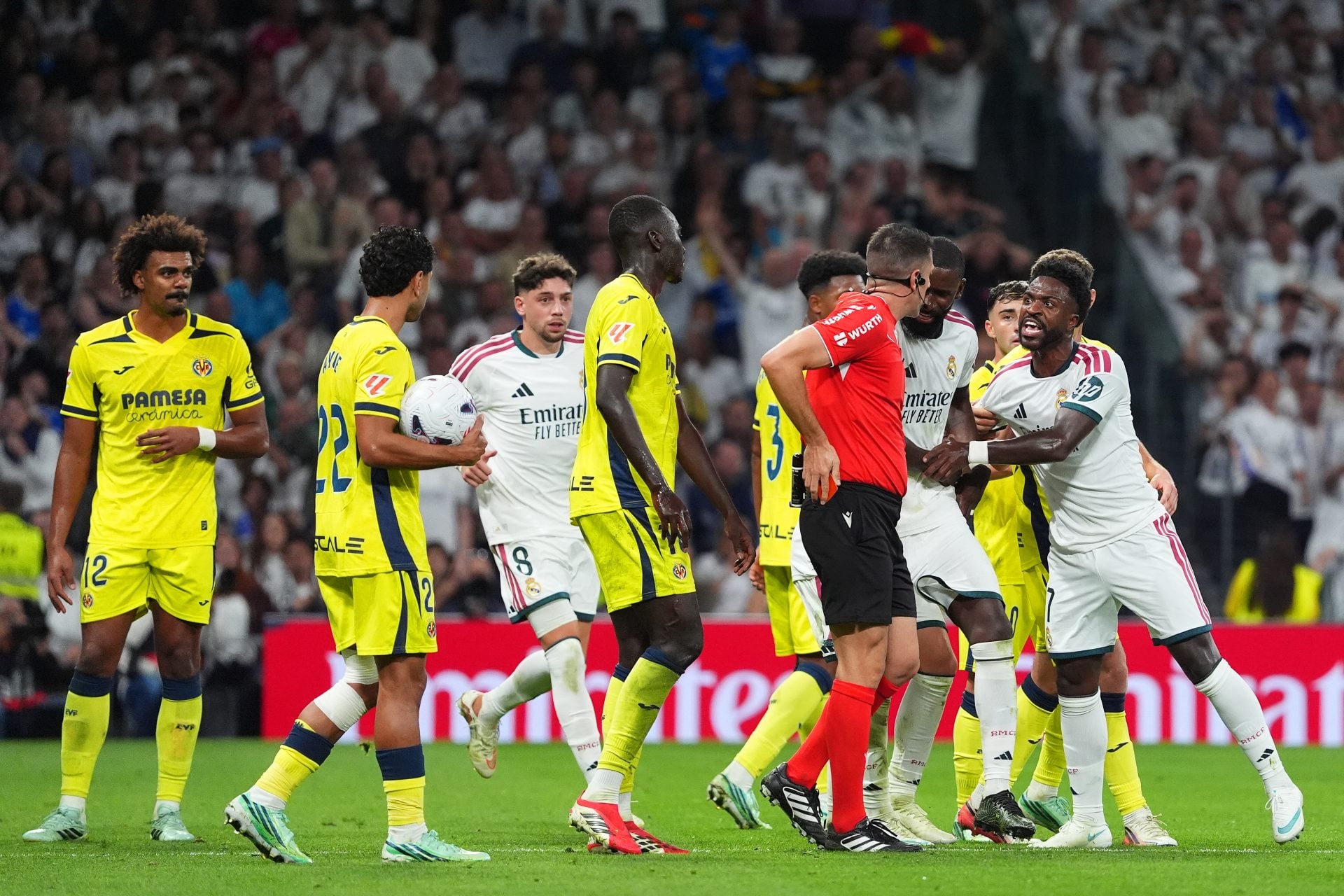
- Avoidable Chaos: Frustration boiled over into indiscipline. The match devolved into a messy affair marred by 5 yellow cards and a straight red card for Vinícius Júnior, who was dismissed late following a VAR review for a needless, childish off-the-ball act.
Tactical Verdict
A 1–0 win is a 1–0 win on the league table, but analytical autopsy reveals a side drifting without a tactical compass.
From an uncoordinated build-up and a midfield incapable of breaking lines under pressure, to the staggering volume of missed chances and self-inflicted disciplinary wounds like Vinícius Júnior’s red card, this performance was a hard watch. Until the technical staff implements a clear, progressive blueprint, victories will continue to feel like temporary Band-Aids over a deep tactical wound—leaving supporters with very little positive expectation of meaningful improvement ahead.