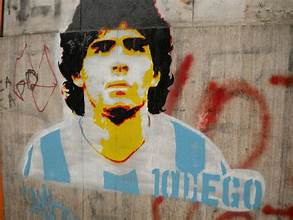
Expelled from the World Cup: The Fall of Football's Greatest Icon
Introduction
Diego Maradona’s expulsion from the 1994 World Cup caused shock, controversy and endless debate like few moments in football history. Already regarded as one of the greatest players ever, the Argentine legend arrived in the United States looking for redemption after years of personal struggles, and after serving a suspension from football.
For a brief moment it seemed like the Argentine captain was ready once more to inspire his country to World Cup glory. But instead his tournament came to an abrupt and ignominious end as he failed a routine drug test, bringing the curtain down on his international career.
More than 30 years after the event, it remains one of the defining stories of the 1994 World Cup. It was not merely the loss of a star player, but the downfall of a global sporting icon for whom brilliance and controversy had always co-existed.
Already a Legend
By the early 1990s, Diego Maradona was already considered a legend. He had captained Argentina to victory in the 1986 World Cup and inspired them to another run to the final four years later.
Domestically, having signed for Napoli from Barcelona in 1984, he had led them to their first ever Scudetto triumph in 1987, a feat he repeated three years later. They also won the UEFA Cup during this period.
Introduction to cocaine
Yet off the field, Maradona lived a colourful life.
Maradona later admitted that he was first introduced to cocaine while living in Naples, where the city's vibrant nightlife and associations with organised crime created an environment in which drugs were readily available. Although the exact circumstances remain disputed, Maradona consistently acknowledged that his addiction developed during this period and gradually became a destructive force in his personal and professional life.
There is no evidence that Maradona used cocaine to enhance his performances on the pitch – it is widely regarded as a recreational drug, and, if anything, prolonged use has a detrimental impact on the fitness, discipline and overall physical health of the users.
But by the late 1980s and early 1990s, his cocaine dependence had begun to catch up with Maradona, and led to a decline in firm and increasing disciplinary problems.
In March 1991, following Napoli’s win over Bari, Maradona was selected for a routine drugs test. Laboratory analysis found traces of cocaine in his urine, and a subsequent analysis confirmed the result.
He was suspended for football for 15 months by the Italian Football Federation, a decision that was subsequently upheld by FIFA.
Napoli retained his registration and expected him to return once he had served his suspension, but determined not to return to Italy, he moved to Spain with Sevilla instead. That proved to be a short-lived move, and, by the time of the 1994 World Cup, he was back in Argentina playing for Newell’s Old Boys.
Preparations for the World Cup
In preparation for the 1994 World Cup and determined to prove his critics wrong, Maradona embarked on an intense fitness programme. He lost a significant amount of weigh and seemed to have rediscovered some of the sharpness that made him one of the sport’s most gifted playmakers.
And his return to the national colours generated enormous excitement in Argentina where supporters hoped he could once again inspire them to glory.
Whilst coach Alfio Basile had assembled an impressive squad, with attacking talents such as Gabriel Batistuta and Claudio Caniggia, Maradona remained the team’s emotional leader. Although no longer at the absolute peak of his career, his vision, experience, and ability to control matches convinced many observers that Argentina could challenge for another World Cup title.
Argentina's Bright Start
Argentina began the tournament impressively, thrashing Greece 4 – 0 in their opening match. Batistuta scored a hat-trick, and Maradona added the fourth goal, a powerful left-footed shot outside the penalty area. He celebrated by sprinting directly towards a television camera, and his bulging-eye expression and emotional celebration became one of the most memorable images of the tournament.
Argentina followed their opening victory with a 2–1 win over Nigeria. Despite falling behind early, the South Americans recovered through two goals from Caniggia, with Maradona playing an influential role in midfield. Two victories from two matches left Argentina among the tournament favourites and seemingly on course for a deep run into the knockout stages.
No one suspected that Maradona had already played his final match at a World Cup.
The drugs’ test
After the win against Nigeria on 25 June 1994, Maradona was chosen at random for a standard drug screening, a routine part of the tournament’s anti-doping controls. At the time, the test drew little interest, as such checks were common and rarely produced major developments.
A few days later, FIFA revealed that his sample had returned a positive result for ephedrine and similar stimulant substances. The news shocked the football community.
Unlike cocaine, which had resulted in his suspension three years earlier, ephedrine is a stimulant that can boost alertness, reduce tiredness, and suppress appetite. It was banned during the 1994 World Cup due to its potential to provide a performance advantage. Laboratory analysis detected several ephedrine-related compounds in Maradona’s sample, and the result was verified through established testing protocols.
The announcement immediately eclipsed the tournament’s sporting narrative. Rather than focusing on Argentina’s strong displays, global media attention shifted to the captain’s downfall. The widely circulated image of Maradona leaving the pitch after the Nigeria match—smiling while holding hands with a FIFA official—later came to represent a turning point in his career.
“They cut off my legs”
FIFA responded quickly, removing Maradona from the rest of the tournament and later issuing a 15-month suspension from professional football. The decision was a severe setback for Argentina, as the loss of their captain, creative force, and inspirational leader significantly weakened their chances.
Maradona denied any intention to cheat, arguing that the failed test was the result of a dietary supplement taken during his World Cup preparation rather than an attempt to gain an unfair edge. People within his camp also claimed he had unknowingly consumed products containing ephedrine while undergoing an intense training and conditioning programme.
FIFA rejected this defence, citing its strict anti-doping policy, which holds players fully accountable for any banned substances found in their system, regardless of intent. The organisation stressed that firm enforcement was necessary to preserve fairness in the sport.
Following his exclusion, Maradona’s emotional reaction became widely remembered. In a public statement, he said, “Me cortaron las piernas” (“They cut off my legs,”).
The aftermath
Maradona’s removal had an immediate effect on Argentina’s World Cup run. Even with a talented squad, the absence of their leader was felt strongly on a psychological level.
Argentina went on to lose their final group match against Bulgaria, losing the momentum they had built from their first two wins. They still advanced to the Round of 16, but they no longer appeared to be serious contenders for the title.
In the knockout round, they met Romania in one of the tournament’s most exciting fixtures. Romania, led by Gheorghe Hagi, delivered a strong attacking performance and won 3–2, sending Argentina out of the competition.
It is impossible to know how things might have unfolded had Maradona remained in the squad. At 33, he was no longer the dominant force he had been in 1986, but his leadership, experience, and ability to change key moments could still have made a difference. Several teammates later suggested that the team was never emotionally the same after losing their captain.
Maradona never played for Argentina again. Although he continued his club career for a short period, the events of the 1994 World Cup effectively marked the end of his international journey. His final appearance for his country was not a triumphant farewell but a match remembered for what happened after the final whistle.
The lasting legacy
There is broad agreement that Maradona breached FIFA’s anti-doping rules, and under the regulations in force at the time, the authorities had a legitimate basis to exclude him from the competition. Even so, debate, particularly in Argentina, persists over whether the punishment matched the circumstances, especially considering the substance involved and his claim that it came from a permitted supplement.
More broadly, the episode is often viewed as part of the larger, more complex story of his career. His remarkable ability repeatedly took him to the highest level of the sport, while difficulties off the field often threatened to overshadow those accomplishments. The 1994 World Cup in the United States reflected that duality: in a matter of days, he displayed flashes of his enduring brilliance before becoming the focal point of a major scandal.
His legacy today reaches well beyond that tournament. He is still celebrated for his skill, imagination, and the inspiration he provided to supporters around the world. At the same time, his removal from the competition is frequently cited as an example of both the pressures faced by elite athletes and the need for consistent enforcement of anti-doping rules to protect sporting integrity.
Author Bio:
Andy Dalziel is a sports author with extensive experience writing about the games, teams, rivalries, and stories that capture the imagination of global fans. He has published three non-fiction sports books, with the latest “Football and War” exploring how international football carries the weight of deeper historical tensions between nations.