Luis Suárez: The World Cup Moments That Defined His Legacy
Introduction
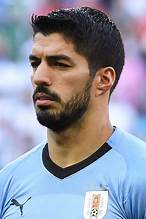
Few footballers have produced a career as contradictory as Luis Suárez. A striker of great ability, Suárez was celebrated for his goals, creativity, relentless work rate and fierce determination. He won league titles in the Netherlands, England and Spain, lifted the UEFA Champions League with Barcelona, and established himself as Uruguay's greatest goalscorer.
Yet alongside those achievements, his career was marked by a series of controversies that often threatened to overshadow his brilliance. Few elite players have divided opinion so sharply. To some, he embodied the win-at-all-costs mentality that separates the very best from the merely good. To others, he repeatedly crossed the line between fierce competitiveness and unacceptable behaviour.
Two incidents in particular have come to define the way the football world remembers Suárez: his deliberate goal-line handball against Ghana during the 2010 FIFA World Cup and his infamous bite on Italy defender Giorgio Chiellini four years later. They were very different moments, yet together they tell the story of a player whose competitive instinct was both his greatest strength and the source of his biggest controversies.
The 2010 World Cup: A Moment of Sacrifice or Unsporting Behaviour?
The 2010 FIFA World Cup in South Africa produced one of the most dramatic moments in the tournament's history when Uruguay met Ghana in Johannesburg, with a place in the semi-finals at stake. Ghana were attempting to become the first African nation ever to reach the last four of a World Cup, adding extra significance to an already compelling contest.
Their quarter-final had already delivered plenty of drama. Ghana took the lead shortly before half-time when Sulley Muntari unleashed a powerful long-range strike that flew beyond goalkeeper Fernando Muslera. Uruguay responded after the break through Diego Forlán, whose free-kick levelled the scores at 1-1. Neither side could find a winner during the remainder of normal time, taking the match into extra time.
As extra time entered its closing seconds, Ghana launched one final attack.
A free-kick into the penalty area caused panic inside the Uruguayan six-yard box. The ball eventually fell to Stephen Appiah, whose effort was blocked almost on the goal line. The rebound dropped invitingly to Dominic Adiyiah, whose header appeared destined to send Ghana into the semi-finals.
Suárez reacted instinctively.
Standing on the goal line, he deliberately used both hands to stop the ball crossing into the net.
It was an obvious handball, committed in full view of the referee.
Suárez was immediately shown a red card and Ghana were awarded a penalty. The responsibility fell to Asamoah Gyan, one of Ghana's most experienced players. His effort crashed against the crossbar, while Suárez, watching from the touchline before heading down the tunnel, celebrated the miss wildly.
Uruguay survived and went on to win the penalty shoot-out 4-2.
There was never any dispute that Suárez had broken the laws of the game. The referee applied them correctly by dismissing him and awarding Ghana a penalty.
The debate centred on something far more philosophical. Had Suárez committed an unforgivable act of cheating, or had he simply accepted the punishment attached to a deliberate foul in order to give his country one last chance?
Suárez himself never apologised. Instead, he famously described the handball as the "save" of the tournament and argued that Ghana still had the opportunity to score from the resulting penalty. Had Gyan converted, his actions would probably have been remembered merely as a desperate act of self-sacrifice rather than one of the defining controversies in World Cup history.
Opinion remains divided even today.
To many outside Uruguay, particularly across Africa, Suárez denied Ghana one of the greatest moments the World Cup has ever seen through deliberate gamesmanship. To many Uruguayans, however, he simply did what any player utterly committed to his country's cause would have done. He accepted the punishment, left the outcome in Ghana's hands and ultimately saw his gamble rewarded.
Four Years Later: The Bite That Changed His Reputation
By the time the 2014 World Cup arrived in Brazil, Suárez had established himself as one of the finest forwards in world football.
His remarkable season with Liverpool had transformed him into one of the Premier League's most feared attackers. Combining outstanding technical ability with extraordinary aggression, intelligence and movement, he appeared capable of deciding matches almost single-handedly.
However, his reputation had already become complicated.
Before arriving in Brazil, Suárez had twice been involved in biting incidents during his club career.
In 2010, while playing for Ajax against PSV Eindhoven, he bit midfielder Otman Bakkal on the shoulder during a heated Eredivisie encounter. Ajax suspended him internally, although many believed he escaped a more severe punishment.
Three years later, now playing for Liverpool, he again shocked the football world by biting Chelsea defender Branislav Ivanović during a Premier League match at Anfield. This time the Football Association imposed a ten-match suspension.
Most observers assumed the lesson had finally been learned.
Instead, history repeated itself.
During Uruguay's decisive group-stage match against Italy, Suárez became involved in an off-the-ball confrontation with Giorgio Chiellini inside the penalty area. Television replays appeared to show Suárez biting the Italian defender on the shoulder. Chiellini immediately appealed to the referee, pulling down his shirt to reveal the marks left behind.
Unlike the handball against Ghana, this incident carried no obvious tactical justification. It was not a calculated attempt to save a goal or keep Uruguay alive. It appeared instead to be an impulsive act born out of frustration and emotion.
The global reaction was swift.
FIFA launched an investigation using video evidence and imposed one of the harshest individual punishments in World Cup history. Suárez received a four-month ban from all football-related activity, preventing him even from training with Barcelona after completing his high-profile transfer from Liverpool. He was also suspended from international football for nine matches.
The punishment reflected not only the seriousness of the offence but also the fact that it represented the third biting incident of his professional career.
Whereas the Ghana handball continued to divide opinion, there was very little sympathy for Suárez following the Chiellini incident. It reinforced the belief among many that, despite his extraordinary talent, he struggled to control his emotions when placed under intense pressure.
A hero at home
Despite the controversies, Suárez remained one of Uruguay's greatest sporting heroes.
Many Uruguayans never viewed the Ghana handball as an act of cheating. Instead, they regarded it as the ultimate sacrifice for the national team. Suárez knowingly accepted a red card and the possibility of becoming the villain if Ghana converted the penalty. He did not escape punishment; he simply took the punishment because it offered Uruguay one final opportunity to survive.
When Gyan's penalty struck the crossbar and Uruguay progressed, the moment entered Uruguayan football folklore.
Even the biting incident four years later failed to destroy his standing at home.
Supporters acknowledged that his behaviour had been unacceptable, but they also recognised everything he had done for the national team over more than a decade. His goals, leadership and relentless commitment helped restore Uruguay as one of world football's leading nations after years outside the sport's elite.
Suárez continued to contribute well beyond Brazil.
He represented Uruguay again at the 2018 World Cup in Russia, scoring against Saudi Arabia as his country reached the quarter-finals before losing to eventual champions France.
He returned once more at the 2022 World Cup in Qatar, becoming one of a select group of players to appear in four World Cup tournaments. Although Uruguay were eliminated during the group stage, his passion remained undiminished, most visibly during his emotional reaction after the final whistle against Ghana, a match that inevitably revived memories of Johannesburg twelve years earlier.
By the time he retired from international football in September 2024, Suárez had amassed 142 caps and a national-record 69 goals.
Those statistics alone would have secured his place among Uruguay's greatest footballers. They also explain why many supporters in his homeland judge him first by what he achieved rather than by the controversies that dominated headlines elsewhere.
Lasting influence
Suárez's influence did not end when he stepped away from international football.
His public criticism of Marcelo Bielsa in 2024 demonstrated that his voice continued to carry enormous weight within Uruguayan football. Suárez questioned Bielsa's management style, suggesting that some players had become unhappy within the national team environment and that the coach's demanding methods had created unnecessary tensions.
The comments sparked widespread debate in Uruguay. Some believed Suárez had spoken out because he remained deeply invested in the future of the national side. Others argued that he should have kept such disagreements private.
When Bielsa later admitted that his relentless pursuit of perfection and tendency to focus on mistakes could sometimes have a negative effect on players, many inevitably drew comparisons with Suárez's earlier criticisms. Whether that amounted to a vindication of the former striker remains open to interpretation, but it underlined the respect that his opinions continue to command within Uruguayan football.
Ultimately, though, Suárez's legacy will always be shaped most powerfully by what happened on the World Cup stage.
His deliberate handball against Ghana remains one of the most debated incidents in football history because it sits on the fine line between calculated professionalism and outright gamesmanship. His bite on Chiellini, by contrast, remains impossible to defend and will forever be remembered as one of the tournament's strangest moments.
Taken together, they encapsulate the contradictions that defined Suárez's career.
Whether remembered as a genius, a villain or, perhaps most accurately, a little of both, Luis Suárez remains one of the most unforgettable footballers of his generation.
Author Bio:
Andy Dalziel is a sports author with extensive experience writing about the games, teams, rivalries, and stories that capture the imagination of global fans. He has published three non-fiction sports books, with the latest “Football and War” exploring how international football carries the weight of deeper historical tensions between nations.
More from Andrew Dalziel coming soon.
Visit the profile to follow and get notified when the next piece lands.