The Bogotá Bracelet Affair
Introduction
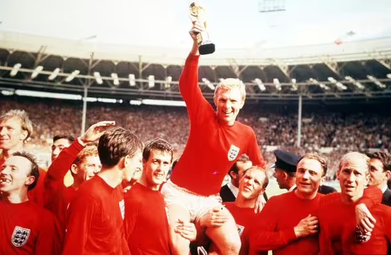
Bobby Moore was regarded as an English national hero. As captain of the side that won the 1966 World Cup, he was celebrated for his leadership, composure and sportsmanship. Rarely booked and never sent off, he stood out as a model professional in a far more physical era of football.
His reputation, however, came under threat in 1970 when he was arrested and detained in Colombia on suspicion of theft on the eve of the World Cup in Mexico. Moore consistently maintained his innocence throughout the ordeal. Over time, a range of alternative explanations and conspiracy theories emerged, with some suggesting the incident may have been engineered to disrupt England’s World Cup defence, and more extreme claims even alleging CIA involvement.
Travelling to Colombia
With the 1970 World Cup scheduled in Mexico City, England manager Alf Ramsey arranged a series of warm-up matches in Colombia and Ecuador to help the squad acclimatise to South American conditions.
The tour began in Colombia, with the squad arriving in Bogotá on 18 May 1970 and staying at the Hotel Tequendama.
On the evening of arrival, Moore and Bobby Charlton visited the hotel’s Fuego Verde jewellery shop. Charlton was reportedly selecting a gift for his wife when, shortly after their departure, shop assistant Clara Padilla claimed an emerald-and-diamond bracelet had gone missing. Moore was accused of taking it. Both players immediately agreed to be searched, and when nothing was found, the matter appeared to have been resolved.
Moore went on to captain England in a 4–0 victory over Colombia and then in a subsequent win against Ecuador.
Return to Colombia
When the squad returned to Bogotá on 25 May to travel on to Mexico, Colombian police detained Moore. Rather than being arrested publicly, British diplomatic intervention ensured he was presented voluntarily before a judge, avoiding a highly visible international incident.
He was formally charged with theft and temporarily barred from leaving the country.
Moore spent four days under house arrest at the residence of a senior Colombian football official. Two police officers remained with him throughout, although he was permitted limited movement throughout the house and maintained his fitness while awaiting a judicial decision.
During this period he was repeatedly questioned, and a reconstruction of the alleged incident was carried out at the jewellery shop. A witness also came forward claiming to have seen Moore take the bracelet. Moore continued to deny all allegations.
British government involvement
As the situation escalated into a diplomatic issue, the British government became increasingly involved. The British ambassador to Colombia, Sir Keith Morris, and embassy staff worked closely with local authorities to ensure due process was followed, successfully preventing a public arrest at the airport.
The Foreign Office monitored developments closely, instructing diplomatic staff to make representations to the Colombian authorities while remaining cautious about interfering in a domestic legal process.
Prime Minister Harold Wilson also took an interest in the case. With a general election approaching, and England’s World Cup campaign drawing national attention, the government recognised the wider significance of Moore’s availability to the team. Diplomatic pressure was therefore applied at senior level to encourage a swift resolution.
The prosecution case unravels
The case against Moore quickly began to weaken. Clara Padilla’s account contained inconsistencies, including the claim that Moore had hidden the bracelet in a left blazer pocket—despite the garment he wore reportedly having no such pocket.
Her testimony also changed under questioning, and the credibility of the alleged eyewitness was never firmly established. In addition, the reported value of the missing bracelet varied significantly, further undermining the reliability of the accusation.
Release
On 28 May 1970, a Colombian judge ruled that there was insufficient evidence to proceed with prosecution, and Moore was released on conditional bail.
He immediately travelled to Mexico and rejoined the England squad, where he was given a guard of honour by his teammates. He went on to captain the side for the remainder of the tournament, which ended in the quarter-finals with a defeat to West Germany after England had led by two goals early in the second half.
Although released, the case remained technically open for a period. The Colombian authorities briefly revisited the investigation later in 1970 but again found no grounds for prosecution. The matter was formally closed in 1972, with Moore effectively cleared of wrongdoing.
Conspiracy theories
In the absence of definitive conclusions, several theories have emerged regarding the incident.
Extortion attempt
One interpretation is that the allegation formed part of an attempted extortion scheme, with Moore accused in the hope that he, the Football Association or the British government might pay to resolve the matter quietly.
Supporters of this view point to inconsistencies in the evidence: Moore and Charlton were searched immediately after leaving the shop and nothing was found, the bracelet was never recovered, and witness accounts shifted over time. Critics argue these factors suggest fabrication or manipulation of the allegation.
However, no documented financial demand was ever made, and no individual has been identified as attempting to profit from the case.
Deliberate disruption of England’s World Cup preparations
Another theory suggests the incident may have been intended to disrupt England’s World Cup preparations by targeting their captain shortly before the tournament.
This interpretation gained traction in Britain due to the timing of Moore’s detention. However, Colombia had not qualified for the World Cup, and no clear sporting advantage would have been gained from England’s disruption. No credible evidence has linked any footballing body or government to such an intention.
CIA involvement
A more speculative theory, but one that has gained recent traction, proposes involvement by the CIA, given its presence in Latin America during the Cold War. Some accounts suggest the incident may have formed part of a wider political or intelligence operation.
However, no evidence has ever supported this claim. Declassified diplomatic records contain detailed accounts of the case but make no reference to intelligence agency involvement, and no Colombian investigations have identified any such connection.
The simplest explanation
The most straightforward explanation remains that of mistaken identity. According to this view, the shop assistant genuinely believed Moore was responsible, while local authorities pursued the allegation due to the seriousness of the claim and his international profile. Once the case became public, it became increasingly difficult for officials to dismiss it without due process.
The aftermath
Following Moore’s release, Clara Padilla became the subject of intense criticism in both Britain and Colombia. She was widely portrayed in the British press as having falsely accused the England captain, while many in Colombia also blamed her for the international embarrassment that followed.
Facing sustained hostility and threats, she left Colombia for the United States, where she lived for the rest of her life. She largely avoided public comment on the case for decades. In 2025, terminally ill with cancer, she was interviewed for a Colombian podcast and maintained her account, stating: “I know what I saw.”
This time Moore was not around to answer her charges. He had lost his own battle with cancer 33 years earlier at the age of 51.
Author Bio:
Andy Dalziel is a sports author with extensive experience of writing about the games, teams, rivalries, and stories that capture the imagination of fans around the world. He has published three non-fiction sports books, contributed extensively to three others, and written numerous articles for sports websites and blogs.
In his latest book “Football and War” he explores how international football often carries the weight of deeper historical tensions between nations. The book traces how the modern game—spread globally from its codification in 19th-century England—has become both a shared language and a stage on which historical conflicts are replayed. Matches between certain nations often carry meaning that extends far beyond sport, shaped by colonial histories, wars, and long-standing geopolitical tensions.
More from Andrew Dalziel coming soon.
Visit the profile to follow and get notified when the next piece lands.