The Two Ghost Goals that changed the World Cup forever
Introduction
Football history is built on unforgettable moments. Some are remembered for their brilliance: a stunning strike, a perfect pass, or a player producing something extraordinary on the biggest stage. Others live on for a different reason — moments of confusion, debate, and controversy that leave fans asking the same question decades later: “what really happened?”
Few World Cup controversies are as connected, ironic, or influential as the two famous “ghost goals” involving England and Germany. The first helped deliver England its greatest football triumph. The second contributed to one of its most painful tournament exits.
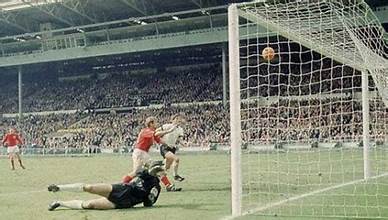
In 1966, Geoff Hurst’s disputed extra-time goal against West Germany became one of the defining moments of the World Cup final. England went on to win the tournament, but German players and supporters remained convinced that the goal should never have stood.
Forty-four years later, England found itself on the opposite side of history. Against a now unified Germany at the 2010 World Cup in South Africa, Frank Lampard’s shot clearly crossed the line but a goal was not awarded. This time, England was the team demanding justice.
Together, the two incidents represent football’s long struggle between tradition, human judgement, and technology.
Wembley 1966: The goal that helped win England the World Cup
The 1966 World Cup final at Wembley Stadium was already a dramatic encounter before Geoff Hurst’s controversial moment arrived.
England faced West Germany in front of a home crowd hoping to witness the nation’s first and only men’s World Cup triumph. The match was tense and physical, with both sides refusing to surrender.
West Germany took the lead, but England equalised and then moved ahead before a late German equaliser forced the match into extra time. It was then that one of football’s most debated moments occurred.
In the 101st minute, Alan Ball crossed into the German penalty area. Hurst controlled the ball before striking a powerful shot that hit the underside of the crossbar, bounced down towards the goal line, and returned into play.
Referee Gottfried Dienst was unsure whether it was a goal and consulted his assistant referee, Soviet official Tofiq Bahramov. After a brief discussion, Bahramov raised his flag and the goal was awarded.
The decision remains controversial because of Bahramov’s position. At the moment the ball struck the crossbar and dropped towards the ground, he was around 50 yards away and near the corner of the pitch rather than directly level with the goal line. From that angle, determining whether the entire ball had crossed the line was extremely difficult.
England led 3–2.
The German players immediately protested. Goalkeeper Hans Tilkowski and defender Wolfgang Weber were among those convinced the ball had not crossed the line and believed the decision changed the outcome of the final.
England’s players accepted the decision. Roger Hunt, who was closest to the incident, did not follow up the rebound because he believed the goal had been awarded. Supporters of the decision often cite this as evidence that players on the pitch thought it had gone in.
However, Hunt’s reaction is not definitive proof. Players naturally stop once the referee gives a decision, and his view of the incident was also different from the officials’.
Modern technology inconclusive
Modern analysis has produced conflicting conclusions. Some computer-based studies suggest the ball crossed the line by a small margin, while others argue that it probably bounced on or just in front of the line.
Unlike Frank Lampard’s disallowed goal in 2010, where television replays clearly showed the ball had crossed the line, the 1966 incident remains uncertain.
That uncertainty is why the debate has survived. Had the evidence clearly proved either outcome, the argument would have ended long ago. Instead, the goal remains one of football’s greatest mysteries.
The decision stood, England won the World Cup, and Geoff Hurst became a national hero. But the question remains: did the ball cross the line, or did one of football’s greatest finals turn on one of its greatest mistakes?
2010: The goal everyone saw except the officials
The setting was different, but the controversy felt strangely familiar.
England met Germany in the Round of 16 at the 2010 World Cup in South Africa. Germany dominated early and took a 2–0 lead, but England fought back. Matthew Upson reduced the deficit before one of the most famous non-goals in World Cup history occurred.
Frank Lampard received the ball outside the penalty area and struck a powerful shot over German goalkeeper Manuel Neuer. The ball hit the underside of the crossbar, bounced down behind the goal line, and spun back into play.
Under the laws of football, it should have been awarded as a goal because the entire ball had crossed the line.
However, referee Jorge Larrionda of Uruguay and assistant referee Mauricio Espinosa did not award it. They judged that the ball had not crossed the line and allowed play to continue.
The mistake was understandable given the speed of the incident. Lampard’s shot travelled quickly, and the ball almost immediately returned into play, creating the impression of a near miss.
The assistant referee was also not ideally positioned to judge the incident, and unlike today’s officials, he had no technology available to confirm the decision.
Television replays, however, showed that the ball had crossed the line by a significant distance. The incident was immediately recognised as a major refereeing error, with England manager Fabio Capello describing it as one of the most important mistakes he had witnessed.
The birth of goal-line technology
For decades, football relied entirely on the judgement of referees and their assistants. Traditionalists argued that mistakes were part of the sport and that technology could damage the game’s character.
However, the 2010 World Cup highlighted the weaknesses of that approach.
FIFA eventually approved goal-line technology, and it was introduced at the 2014 World Cup in Brazil. The system allowed officials to receive an immediate signal confirming whether the ball had crossed the line.
It represented a major turning point. One of football’s oldest problems finally had a technological solution.
Goal-line technology has not removed controversy from football. Arguments over refereeing decisions, VAR, and interpretation continue. But the era when a World Cup match could be decided by uncertainty over whether a ball crossed the line was effectively over.
Football’s great irony: England on both sides of history
For much of football history, controversial decisions were simply accepted as part of the game. Referees had no access to instant replays, goal-line cameras, or electronic assistance. They relied on their positioning, their assistants, and their judgement.
The 1966 final became the ultimate example of this reality. Because England won the trophy, the controversy remained a historical debate rather than a demand for reform.
Then, in 2010, the same problem returned — only this time technology existed to show exactly what had happened.
And England was on the wrong side.
Author Bio:
Andy Dalziel is a sports author with extensive experience writing about the games, teams, rivalries, and stories that capture the imagination of global fans. He has published three non-fiction sports books, with the latest “Football and War” exploring how international football carries the weight of deeper historical tensions between nations.