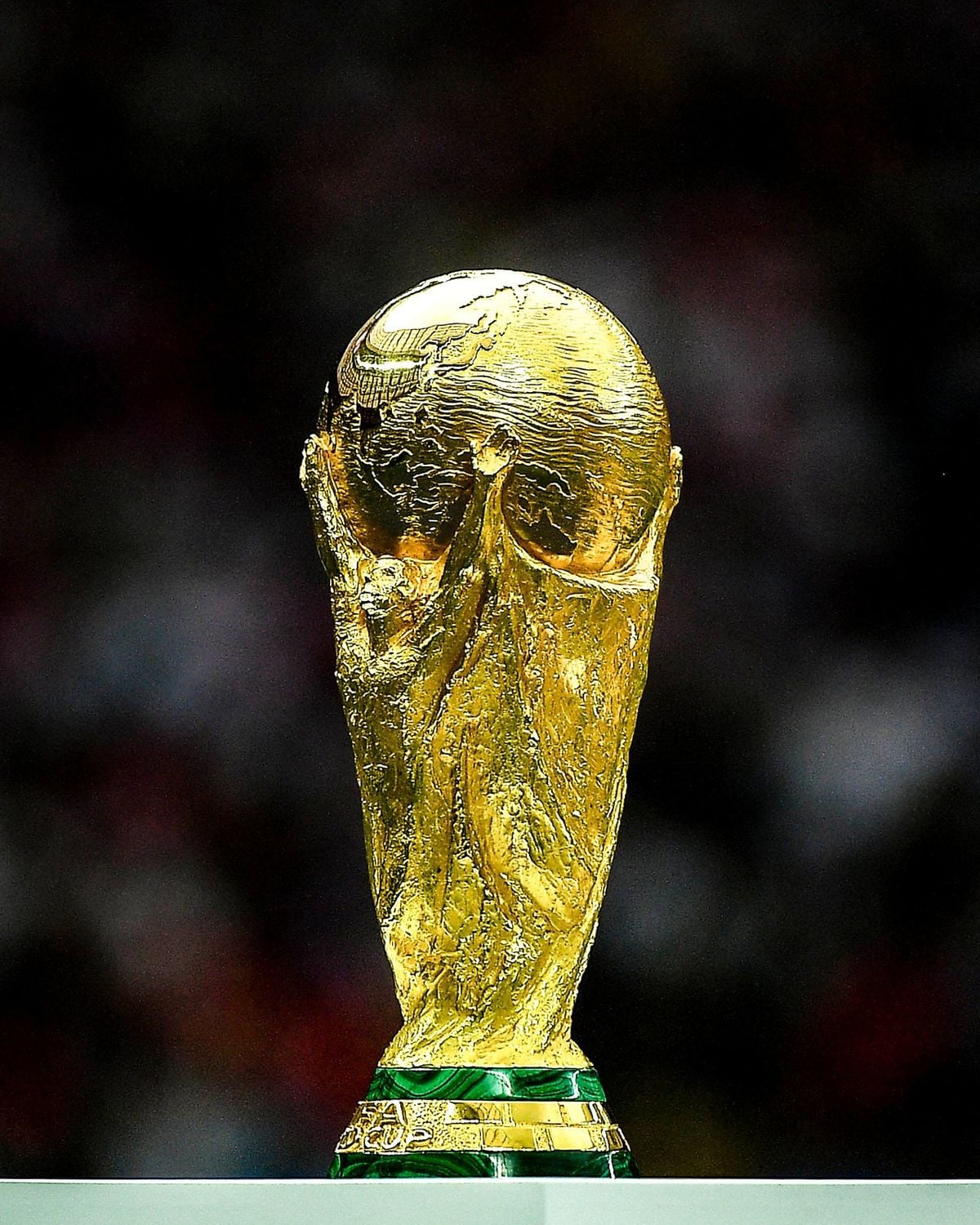
Five international football rivalries that were never just about football
Introduction
In June 1969, El Salvador and Honduras met in a series of three qualifying matches for the FIFA World Cup. Following the final game, diplomatic ties between the two nations deteriorated completely, and soon after, El Salvador initiated a military offensive against Honduras.
Despite lasting only a short time, the conflict—later known as the “Football War”—resulted in approximately 6,000 deaths, forced large numbers of people from their homes, damaged both economies, and contributed to long-term tensions between the two countries.
Although it remains one of the few examples where football was directly linked to the outbreak of armed conflict, the war illustrates how the sport can become intertwined with broader political and social disputes. Football is frequently described as “war without weapons”, reflecting the fierce emotions and intense rivalries it can generate. In many cases, the game acts as a symbolic arena where historical grievances and competition are expressed.
Numerous football rivalries originate from local disputes, with neighbouring towns or regions transferring old competitions over land, resources, or influence onto the football pitch. However, not all rivalries are rooted in geography. Nations such as England and Argentina have developed strong competitive animosity despite being separated by thousands of miles, while countries like Iran and Saudi Arabia, as well as Algeria and Egypt, maintain intense football rivalries even though they do not share a common border.
Here are five football rivalries that were never just about football, together with an illustration of each.
Argentina v England
Whilst it is easy to suggest that the Argentina and England rivalry only dates back to the Falklands War or Maradona and his “Hand of God” goal, its antecedents can be traced further back than that.
After Argentine independence from Spain in the 19th century, Britain became one of Argentina’s most important trading partners and investors during the 19th century. British capital financed railways, banks, and infrastructure, and there was a significant British community in Argentina.
It was also these traders and merchants who introduced the game of football to the country. However, there was often a sense of division between this immigrant community and the local populace, with the British often displaying a sense of cultural arrogance and superiority which was resented.
The “animals” comment
However, it was the 1966 World Cup which helped spark the flames of enmity.
The two sides met in the quarter-finals at Wembley. It was an extremely physical encounter and featured the controversial sending-off of the Argentine captain, Antonio Rattín, by the German referee Rudolf Kreitlein.
Rattín had become increasingly frustrated by some of the fouls committed against him and his team-mates, and his gestures and protests towards the referee, who spoke no Spanish, were interpreted as disrespectful. Kreitlein finally lost patience in the 35th minute and sent Rattín off, a comparatively rare decision at the time. Argentina initially refused to resume the game, and Rattín declined to leave the field for several minutes, sitting on the pitch in protest.
Without him, Argentina held on until the 79th minute, when Geoff Hurst—who had only started the match because Jimmy Greaves was injured—headed in a cross from Martin Peters.
But it was a comment made by the England manager after the match that attracted all the headlines: “Our best football will come against the right type of opposition — a team who come to play football, and not act as animals.”
The dispute is over exactly what he meant. Many people, especially in Argentina, understood the remark as Ramsey directly calling the Argentine players “animals”. That interpretation became widely accepted and caused considerable outrage.
Others have insisted that Ramsey was suggesting it was only their behaviour he was criticising, not the players themselves.
Nevertheless, it remained a source of resentment in Argentina for many years.
Saudi Arabia v Iran
Sporting encounters between Saudi Arabia and Iran reflect far more than competition on the field. They are shaped by longstanding political, religious and strategic rivalries between two of the Middle East’s most influential states. Both countries seek to expand their influence across the region, and this rivalry is often expressed through sport. As a result, football matches between them are frequently viewed as symbolic struggles for status and regional supremacy rather than simple athletic contests.
Saudi Arabia is widely regarded as the leading Sunni-majority power in the Middle East, while Iran is the foremost Shia-majority state. The Saudi political system is a conservative monarchy that has traditionally maintained close ties with the United States. Iran, in contrast, is an Islamic republic that has often positioned itself in opposition to Western influence.
Each country sees the other as a major obstacle to its ambitions for shaping the future of the region. A key source of tension lies in the historic division within Islam, which dates back to the seventh century. Following the death of the Prophet Muhammad, disagreement arose over who should lead the Muslim community. One group believed that leadership should be selected by the community itself; these followers became known as Sunnis. Another group argued that leadership should remain within the Prophet’s family, giving rise to the Shia branch of Islam.
Although Sunnis and Shias share the fundamental beliefs of Islam, differences have developed over centuries in religious practices, interpretations of law and forms of worship. Distinct approaches to prayer and religious authority also exist.
These theological distinctions have gradually become linked to political power and regional identity. Today, Sunni Muslims form the majority across much of the Islamic world, whereas Shia populations are concentrated in countries such as Iran and Iraq, as well as in parts of Yemen and Lebanon.
Saudi Arabia is particularly associated with a strict interpretation of Sunni Islam and has often viewed certain Shia traditions with suspicion. It also claims a special leadership role within the Sunni world because it is home to Islam’s two holiest cities, Mecca and Medina.
The Sword Dance
After Saudi Arabia secured victory in a World Cup qualifier in Iran in March 2009, their players celebrated by performing a traditional sword dance in front of the home crowd after the final whistle. The dance features participants carrying swords and moving in unison to rhythmic chants. Although it holds deep cultural significance in Saudi Arabia, many Iranian supporters viewed the celebration as a provocative display of superiority.
Media coverage of the incident further intensified reactions, with some outlets portraying the celebration as a statement of dominance over a long-standing rival. As a result, the event became a focal point in broader debates about nationalism, symbolism, and the place of sport in regional rivalries.
FIFA did not take disciplinary action, as the celebration did not violate any of its regulations.
In subsequent years, Iranian players occasionally imitated the dance following their own victories, demonstrating how it had become an enduring symbol within the rivalry. The Ardah itself is not intended as a threat. Originating as a tribal martial tradition associated with warriors carrying swords before battle, it is now commonly performed at weddings, national celebrations, state ceremonies, sporting events, and cultural festivals. UNESCO has recognised the Saudi Najdi Ardah as part of the world’s intangible cultural heritage.
Japan v South Korea
Although Japan and South Korea became the first countries to co-host a World Cup in 2002, they were not always so close.
The two countries are located around 550 miles apart in East Asia. Japan lies to the east of the Korean Peninsula, with the Sea of Japan separating them. Trade and political interactions between the two date back to the sixth century, when the kingdom of Baekje (which included much of present-day South Korea) established relations with Japan’s Yamato state.
For the thousand years or more that followed, the two nations coexisted, although Japanese pirates intermittently raided the Korean coast. During the Imjin War, which lasted from 1592 to 1598, Japanese forces led by Toyotomi Hideyoshi launched a large-scale invasion of Korea, resulting in enormous Korean losses.
While both countries remained largely isolationist, this began to change towards the end of the nineteenth century. Japan rapidly modernised, and Korea became a target, as Japan viewed it as a strategic gateway to mainland Asia.
Japan increasingly began to assert its regional dominance. In 1876, under the Treaty of Ganghwa, Korea was forced to open its ports to Japanese trade and influence. Following the First Sino-Japanese War, Japan defeated China and, as a result, strengthened its control over Korea. Although Korea remained nominally independent, it was firmly within Japan’s sphere of influence.
Japan’s position as the dominant regional power was further underlined when it defeated Russia in the Russo-Japanese War of 1904–1905.
In 1905, Japan took steps to further limit Korea’s sovereignty by assuming control of its foreign affairs. In 1910, Korea was formally annexed and absorbed into the Japanese Empire.
Japan imposed direct rule, abolished the Korean monarchy and replaced local government with Japanese officials. Political opposition was brutally repressed, and Koreans were relegated to second-class status. Although secret societies and underground movements did exist, they were met with severe crackdowns.
During the 1930s, many Koreans were forcibly conscripted into labour and the military, and some fought on the Japanese side during the Second World War. At the same time, many Korean women were forced to serve as so-called “comfort women” for the Japanese army, a practice now widely recognised as sexual slavery.
The human cost was immense. Hundreds of thousands are estimated to have died due to famine and food shortages caused by Japanese agricultural policies, including land confiscation. Many others perished through forced labour programmes, working in mines, factories or military campaigns under brutal conditions.
In 1965, Japan formally recognised South Korea and provided US$500 million in grants and loans, officially described as “reparation payments”. Many Koreans, however, argue that compensation to individuals and former comfort women was wholly inadequate.
As recently as 2019, South Korean courts ordered Japanese companies operating in South Korea to compensate victims of forced labour, prompting Japan to impose trade restrictions.
South Korea’s run to the semi-finals
South Korea’s journey to the semi-finals of the 2002 World Cup remains the most celebrated achievement in the nation’s football history, but it was also surrounded by controversy. Their victory over Italy came amid several disputed refereeing decisions. Francesco Totti was sent off for simulation in a decision widely regarded as harsh, Damiano Tommasi had a goal ruled out for offside, Choi Jin-cheul escaped punishment for a two-footed challenge on Gianluca Zambrotta, and Kim Tae-young avoided sanctions after elbowing Alessandro Del Piero.
South Korea then overcame Spain on penalties, but the match was again overshadowed by refereeing decisions, with Spain having two seemingly legitimate goals disallowed by the Egyptian referee.
While South Korean players were hailed as national heroes, many observers elsewhere viewed the results with scepticism. Later FIFA corruption scandals only added to speculation that factors beyond football may have influenced the tournament. Japanese fans and commentators were among those who voiced such concerns. The quality of coaching provided by Guus Hiddink has never been seriously questioned, but the standard of officiating during South Korea’s run remains a subject of debate.
USA v Mexico
While the United States, Mexico, and Canada will jointly host the 2026 World Cup, this does not obscure the fact that the United States and Mexico share one of the most intense and historically significant rivalries in international football, particularly within CONCACAF. The rivalry extends beyond sport, reflecting regional competition, cultural identity, and political undertones.
Geography and population dynamics intensify this competition. The long shared border and the large Mexican diaspora in the United States mean that matches are often played in environments with strong Mexican support, even on U.S. soil. This can create a challenging atmosphere for American players and heighten the emotional stakes.
Politics has also influenced the tone of the rivalry, particularly during the presidency of Donald Trump. For Mexico, defeat against the United States has often been seen as especially significant given its footballing heritage, while for the United States, victories over Mexico are frequently viewed as evidence of its development as a football nation. Trump’s broader approach to Mexico included criticism of its government policies alongside hardline positions on immigration and trade, as well as periods of pragmatic cooperation.
The historical backdrop adds further context. In 1846, the two countries went to war following territorial disputes after the U.S. annexation of Texas in 1845. U.S. forces advanced into northern Mexico, capturing major cities including Monterrey and Veracruz, while fighting also took place in Texas, New Mexico, and other northern regions.
The conflict ended with the Treaty of Guadalupe Hidalgo in 1848, through which Mexico ceded extensive territory to the United States, including present-day California, Nevada, Utah, Arizona, New Mexico, and parts of Colorado and Wyoming. The Rio Grande was established as the boundary of Texas.
Beyond this, there were additional episodes of conflict and intervention, most notably the U.S. occupation of Veracruz in 1914 during the Mexican Revolution.
In demographic terms, millions of people of Mexican origin live in the United States, forming the largest Hispanic or Latino community in the country. This includes both immigrants and U.S.-born citizens of Mexican descent. Large populations are concentrated in states such as California, Texas, Arizona, Illinois, and Nevada, where they contribute significantly to cultural, economic, and social life.
Not all individuals of Mexican origin reside in the country legally, though estimates vary. It is suggested that roughly a quarter of Mexican-born residents in the United States are undocumented, rather than a similar proportion of the total Mexican-origin population.
In recent years, immigration has become a deeply divisive issue in the United States and has also shaped relations with Mexico. Debates over border security, enforcement policies, and pathways to legal residency continue to polarise opinion. Measures such as family separations, deportations, and proposals for a border wall have further strained diplomatic and social relations between the two countries.
La Guerra Fría
In the lead-up to the 2002 World Cup qualifying campaign, tensions within CONCACAF were already high, with the United States and Mexico established as the region’s dominant rivals. When the United States scheduled a crucial qualifier in Columbus, Ohio, during the winter months, it attracted attention well beyond football circles.
On match day, conditions were severe even by North American standards. Heavy snowfall began before kick-off and continued throughout the match, quickly covering the pitch in a thick, uneven layer of snow. Lines became difficult to see, footing was unreliable, and every touch of the ball required extra control. The game shifted away from technical passing and fluid build-up play, becoming instead a test of endurance, physical strength, and adaptability.
The United States adapted more quickly to the conditions. Their approach became more direct, relying on long balls, aggressive pressing, and physical duels. Mexico, more accustomed to technical combinations on firm surfaces, struggled to establish rhythm. Attempts to play out from the back were repeatedly disrupted as the ball slowed in the snow or bounced unpredictably off frozen patches of turf.
As the match progressed, frustration increased. Tackles became more forceful and tempers began to rise. Mexico protested several incidents, believing they had been denied penalty appeals, while similar challenges elsewhere on the pitch were often left unpunished against the home side. Whether through interpretation or circumstance, refereeing decisions added further tension to an already difficult environment.
The United States broke the deadlock from a set-piece, capitalising on defensive uncertainty in the conditions. The opening goal shifted momentum decisively, forcing Mexico to commit players forward despite the difficulties posed by the pitch. A second goal late in the match secured the result.
When the final whistle blew, the 2–0 scoreline carried significance beyond the points. For the United States, it was viewed as a defining statement in qualification. For Mexico, it became a lasting grievance—an example of how venue selection and extreme weather conditions can influence a match as much as technical ability. In the years that followed, the game continued to be referenced in discussions about home advantage and the psychological impact of playing in severe conditions.
Chile v Peru
The Chile–Peru football rivalry goes far beyond the pitch. It is shaped by deep historical memory, especially the War of the Pacific in the late 19th century, alongside enduring political tensions and the way both nations use sport as a stage for national identity. Matches often carry symbolic weight, reflecting issues that long predate modern football.
Chile and Peru are neighbouring South American states on the Pacific coast, with a shared border that is relatively short, cutting through desert and coastal terrain that is sparsely populated and difficult to control, which has historically complicated relations between them. Both countries were colonised by Spain and gained independence in the early 19th century, but tensions soon emerged.
The defining conflict came with the War of the Pacific (1879–1884), triggered by disputes over mineral-rich territory in the Atacama Desert. Bolivia’s tax increase on Chilean companies escalated the situation, drawing Chile into war, with Peru pulled in through its alliance with Bolivia. Chile’s naval superiority proved decisive, allowing it to dominate supply routes and push inland, eventually occupying Lima in 1881. The war ended with the Treaty of Ancón in 1883.
Chile emerged with significant territorial gains, including Peru’s Tarapacá region and Bolivia’s coastline, leaving Bolivia landlocked. Peru suffered heavy losses and long-term political and economic disruption. The conflict remains deeply embedded in national education and identity in all three countries.
Although the war formally ended in the 19th century, its legacy persisted. Resentment over territorial loss and occupation continued to shape Peruvian politics and military thinking, while border issues were only fully settled decades later.
Tensions resurfaced dramatically in 1975, when Peru’s military government—emboldened by a major arms build-up—considered a possible offensive against Chile, which was diplomatically isolated following Augusto Pinochet’s rise to power. Some Peruvian leaders even spoke of reclaiming lost territory. Chile, in turn, monitored troop movements and prepared for potential conflict.
War was ultimately avoided as internal political shifts in Peru and economic pressures on both sides made escalation unsustainable, leading to a diplomatic resolution instead.
Chilean vandalism
In 2015, after a tense 2018 World Cup qualifying match in Lima that ended in a 4–3 victory for Chile, members of the Chile national team reportedly damaged the visiting dressing room at the Peruvian national stadium. The incident occurred following a match already marked by high emotion, given the longstanding rivalry between the Peru national football team and Chile national football team, as well as Chile’s recent success as reigning continental champions following their 2015 CONMEBOL Copa América title.
After the final whistle confirmed a dramatic win for Chile, the away dressing room became the focus of attention. It was later found in a state of disorder, with signs that post-match celebrations had crossed into disrespect for the venue. A message had been written on a wall in Spanish: “Respeto. Por aquí pasó el campeón de América” (“Respect. Through here passed the champion of America”), referencing Chile’s continental triumph earlier that year.
The phrase was widely interpreted as more than celebration. To many Peruvian supporters, it was seen as a provocative statement layered on top of defeat, while in Chile it was viewed by some as an expression of pride during a successful period for the national team.
The incident quickly drew attention beyond the stadium and became part of a broader discussion about conduct in South American football, where intense rivalries and strong emotions can sometimes blur the line between celebration and disrespect. In the days that followed, focus shifted away from the match itself and toward the symbolism of what had been left behind in the dressing room, reinforcing the sense of rivalry between the two sides.
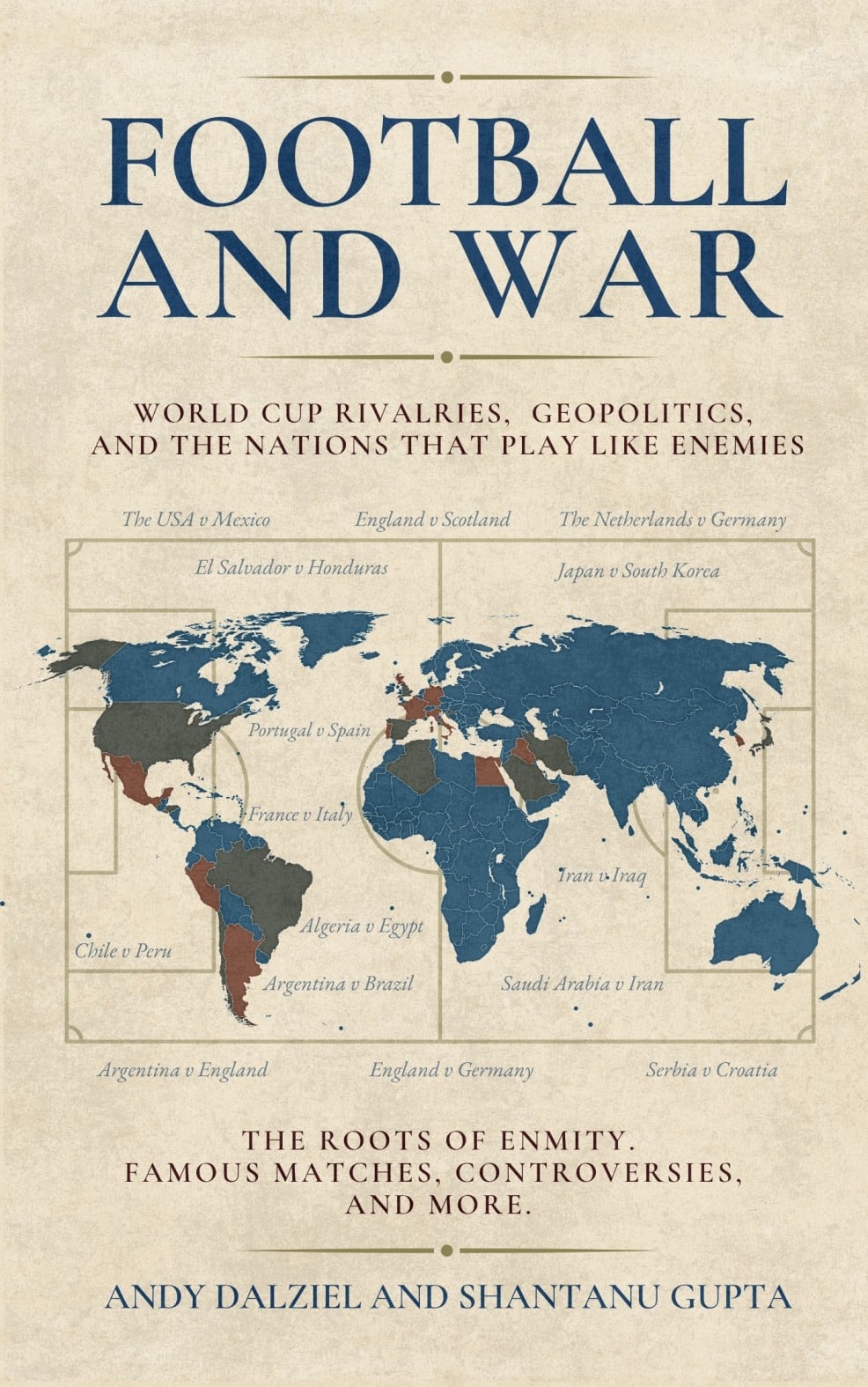
These five examples are drawn from Football and War: World Cup Rivalries, Geopolitics and the Nations That Play Like Enemies, a wider look at how international football rivalries are shaped by history, politics, war, borders and national identity.
More from Andy Dalziel coming soon.
Visit the profile to follow and get notified when the next piece lands.