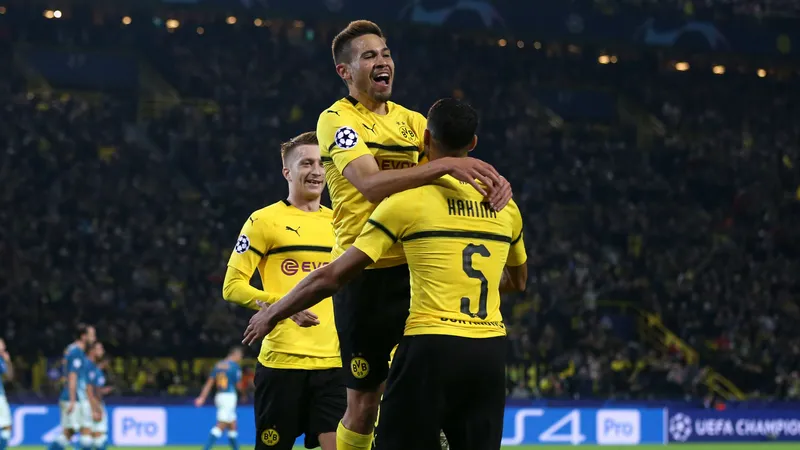
Photographer Christof Koepsel
Analyzing Lucien Favre's 4-2-3-1
After barely squeezing into the top four in the final weeks of the season, Borussia Dortmund had arrived at a crossroads last summer. The glory days of Jürgen Klopp and the relatively short-lived tenure of Thomas Tuchel had brought…
After barely squeezing into the top four in the final weeks of the season, Borussia Dortmund had arrived at a crossroads last summer. The glory days of Jürgen Klopp and the relatively short-lived tenure of Thomas Tuchel had brought trophies and beautiful football to the Westfalenstadion, with both young coaches establishing themselves as amongst the best in Europe while at North Rhine-Westphalia. However, the previous season had been a failed transition year, one in which the club didn't move forward or even stagnate, but move backward. They crashed out at the Champions League group stage, before losing to RB Salzburg in the Europa League Round of 16. They beat out Leverkusen and Leipzig, among others, for the final Champions League spot, but it was clear as day that they needed a new manager, someone who could deliver both top results and top performances.
With Tuchel leaving in the summer of 2017 due to a dispute with the board, Dortmund approached Lucien Favre, who, after successful spells at Hertha and Mönchengladbach, had guided Nice to third place. However, Nice blocked Dortmund's approach, causing them to look elsewhere. They appointed Ajax coach Peter Bosz, who lasted until December, and then Peter Stöger, neither of whom convinced the fans nor the club. Dortmund went back in for Favre in the summer of 2018, and this time, they got him.
Under Favre, Dortmund have been one of the best teams in Europe this season. They sit atop the Bundesliga, seven points above second-place Mönchengladbach and nine above third-place Bayern. They topped their Champions League group, even beating Atlético Madrid 4-0. Alongside Liverpool and Juventus, they're the only team who hasn't lost in the league yet. The results speak for themselves: Favre has transformed Dortmund.
Apart from bringing in Favre, Dortmund bolstered their squad with a productive transfer window. Thomas Delaney and Axel Witsel have formed a solid partnership in the middle of the pitch, Achraf Hakimi and Abdou Diallo have slid into defense, while Jacob Bruun Larsen returned from his loan spell to break into the starting line-up. In addition, Marius Wolf and Marwin Hitz have been reliable squad players, while Paco Alcácer is perhaps the hottest super-sub in football right now. Favre has gotten the most out of his squad, delivering both the red-hot results and the phenomenal performances that Dortmund fans yearned for last season.
Credits
Words
Denis Kika