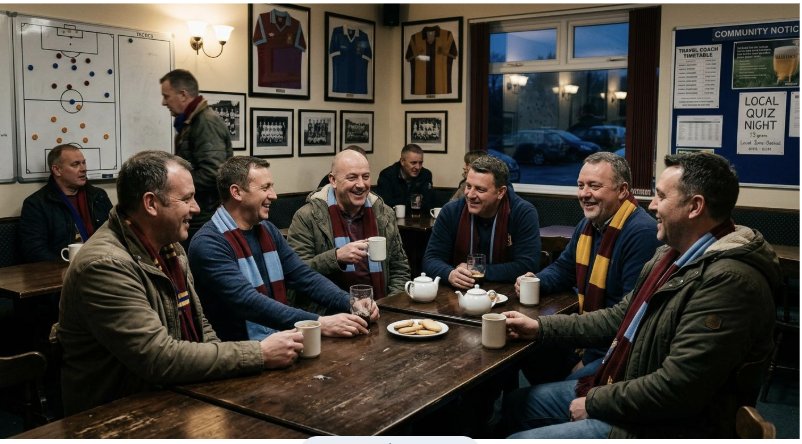
Beyond the 90 Minutes: How Supporter Communities Stay Connected
A football match is 90 minutes on the clock, plus whatever time the fourth official decides is necessary. Supporting a club, though, is never limited to that spell between kick-off and the final whistle.
Think of it like a well-drilled midfield. The game is the visible part, the moment everyone notices, but the structure has been built long before the first pass. Familiar faces on the train, the same table in the pub, the message thread ticking over during the week, the chat after a disappointing draw. These are the little connections that give a club its shape.
For many supporters, matchday is the meeting point rather than the whole occasion. It brings together people who may have different jobs, routines and opinions on the manager’s preferred system, yet share a language of formations, former players and very particular away-day memories. That sense of belonging often survives even when the football itself is frustrating, and let’s be honest, every club offers plenty of opportunities to practise patience.
The rituals that make a crowd feel like a community
Every club has its own matchday rhythm. Some supporter groups gather at a local café before setting off to the ground. Others have a pub that functions almost like an unofficial clubhouse, where the team news arrives alongside a familiar greeting. At non-league level, it might be a queue at the tea bar and a conversation with someone who volunteers behind it.
These rituals can look small from the outside. In practice, they’re how friendships settle into place.
The journey is part of the fixture
Travel groups are among the strongest examples. A coach to an away match creates a shared pocket of time, especially for supporters who do not have a regular group nearby. There is room for team selection debates, old stories and the gentle disagreement that comes with following football seriously.
The journey can matter as much as the destination:
- Someone new to away travel has people to sit with and practical help navigating an unfamiliar city.
- Regulars build a sense of continuity across long seasons.
- Organisers can share travel information, accessibility details and meeting points in one place.
- The return trip offers a natural post-match debrief, whether the result calls for celebration or a long look at the tactics.
At some clubs, supporter-run travel is formal and carefully organised. Elsewhere, it is a handful of people arranging rail tickets in a group chat. Both versions have value. The important bit is that nobody has to feel as though they are turning up alone.
Pubs, clubhouses and the art of the post-match debrief
There’s a particular kind of football conversation that only works after a game. The replay has barely finished, the referee’s decision has become more baffling with each retelling, and someone is explaining why a late substitution altered the match entirely.
Local pubs and clubhouses give supporters a place for that conversation to continue. They are not just venues near a stadium. At their best, they become social anchors, open to regulars, visiting fans and people who want to talk about far more than the score.
The culture varies enormously. A larger Premier League crowd may spread across several meeting spots, while a smaller club might centre its social life around one bar at the ground. In some leagues, supporter traditions are built around flags, songs and organised displays. In others, the strongest connection is through volunteering, fundraising or helping to keep a community club functioning.
Supporters’ trusts also provide a more formal route into club life. The Football Supporters’ Association supports fan representation and supporter-led groups across the game, while its network shows how varied those groups can be. Some focus on dialogue with club leadership. Others organise community work, preserve club history or give supporters a clear collective voice.
That matters because belonging should not be reserved for the loudest people in the stand. A trust meeting, a pre-match social or a volunteer shift can suit someone who loves football but does not see themselves as part of the singing section.
Keeping the connection going between fixtures
A blank weekend can feel oddly quiet when you are used to planning around the football. Thankfully, supporter communities have found plenty of ways to stay connected without needing a match to discuss.
The strongest ideas are usually low-pressure. Nobody should feel they need encyclopaedic knowledge of every reserve fixture from 1998 just to take part. Sometimes the point is simply to see familiar people and have a decent evening.
Quizzes, podcasts and five-a-side
A club-themed quiz can bring together supporters who would never otherwise sit in the same row. Questions can cover history, local landmarks, memorable kits and famous goals, but a good host leaves room for humour too. The person who knows every answer may be impressive, yet the team that enjoys itself tends to return.
Fan podcasts work in a similar way. They give supporters an outlet for longer conversations than a quick social post allows. A thoughtful episode might examine a tactical change, interview a community volunteer or look back at a defining season. Crucially, the best fan shows welcome disagreement without turning every opinion into a battle.
Five-a-side is another useful bridge between watching football and taking part in it. A casual weekly game can be especially welcoming when the organiser makes expectations clear: mixed abilities, sensible numbers, no pressure to prove anything. It is football as a social habit, not an audition.
Other popular off-match activities include:
- charity walks, food-bank collections and local clean-up events;
- shirt swaps or club-history evenings;
- prediction leagues played for bragging rights;
- watch-alongs for historic matches;
- book clubs focused on football writing;
- group chats for travel plans, news and the occasional questionable meme.
Many of us have been in group chats that become quieter after a poor result, then spring back into life the moment a transfer rumour appears. That is part of the charm. The chat is not just for information. It is a small shared space where people maintain a connection through the ordinary gaps in the calendar.
A welcoming space takes more than an open door
It is easy to say an event is “for everyone”. Making that true takes a bit more work.
Community organisers have to consider who can get there, what the venue feels like, whether people can hear and be heard, and whether newcomers understand how the evening works. There is no single formula because every supporter base is different, but a few practical choices make a noticeable difference.
Start with access and clear information
An event listing should say where it is, when it starts, what it involves and who to contact with a question. If there are step-free routes, quieter areas, seating or dietary options, mention them plainly. It saves people from having to ask in public or make assumptions.
Timing matters too. A midweek event at one location may suit some supporters and exclude others. Rotating venues, offering an occasional daytime gathering or using an online option can widen participation without losing the local feel.
Cost should be transparent. If an activity needs a contribution for a room, coach or quiz entry, say so upfront and explain what it covers. Free community events, volunteer-led sessions and pay-what-you-can arrangements can also help make a calendar feel open rather than closed-off.
Let different generations share the room
Football communities are richer when longtime regulars and newer supporters can talk without either group being treated as the “right” sort of fan. One person may remember standing on an old terrace; another may have joined after hearing a fan podcast. Both have something to bring.
A well-run event avoids putting people on the spot. Name badges for first-timers, a host who introduces small groups, and a simple activity to begin with can make arrivals less awkward. It sounds basic, but it works.
Moderation is just as important, particularly in online groups. Clear rules around respectful discussion, plus moderators willing to act on them, can stop a lively debate becoming hostile. Supporters do not need to agree about a high line or a transfer policy. They do need to know they can contribute without being mocked or shouted down.
Some of the most effective organisers are the ones who listen after an event. Was the venue suitable? Did people feel included? Would a different format work better next time? That feedback is not an administrative chore. It is how a community keeps its shape.
Football belonging is built in the ordinary moments
The lasting value of supporter culture is not always found in a cup final or a famous winner. More often, it lives in the routine: someone saving you a seat on the coach, a familiar face at a quiz, a voice note dissecting a defensive error on Sunday morning.
Clubs change managers, squads and tactics. Grounds are rebuilt. Fixture lists shift around television schedules. Yet supporters keep finding ways to meet, talk and contribute. The game gives people a reason to gather, but the community is what gives those gatherings a life beyond the result.
Companion entertainment for UK adults
For UK adults aged 18+ who choose to participate, regulated online leisure can be a separate off-match activity. For example, Jackpotjoy's online bingo sites may be an optional choice for some people when there is no fixture on, but it has no connection to football knowledge, match results or financial wellbeing.
Set limits before taking part and use the responsible-gambling tools offered by regulated operators, such as time-outs and spending limits. The Gambling Commission’s guidance on online gambling tools explains options including limit-setting, reality checks and time-outs.