From the Terraces to Streetwear: Why Retro Football Shirts Are More Popular Than Ever
Ask anyone who grew up watching football in the 90s about their first shirt, and watch their face change. There's usually a story: a birthday present, a hand-me-down from an older brother, a shirt that was two sizes too big and worn until the collar gave up. That feeling is a big part of why retro football shirts have gone from dusty charity-shop finds to something people actively hunt for, and sometimes pay serious money for.
But nostalgia alone doesn't explain it. Plenty of old things stay old. So what's actually going on?
They Don't Make Them Like They Used To
Open your wardrobe and pull out a modern replica. Now think of Brazil in 1970, the Netherlands in 1988, or England at Euro 96. The older shirts had character. Bold collars, chunky badges, sponsors that looked slightly ridiculous, patterns that would never get past a modern marketing meeting.
Today's kits are sharp, sure, but many follow the same template with the colours swapped. Older shirts came from a time when designers took risks, and some of those risks became legends. Nobody forgets an Italia 90 shirt once they've seen one.
There's also the fabric and the fit. Those baggy cuts, heavy cotton blends and shiny polyester panels feel completely different from today's skin-tight performance gear. For casual wear, that looser shape is exactly what people want right now.
Football Fashion Found Its Way to the High Street
Here's the part the old-school fans didn't see coming: the shirt left the stadium.
Fashion has always borrowed from the terraces. Casuals were dressing in Adidas, Fila and Sergio Tacchini decades before streetwear became a global industry. So when vintage sportswear started showing up on style pages and social feeds, it wasn't really a new idea. It was an old one getting a second wind.
These days you'll see a 90s Arsenal shirt under a bomber jacket, or a faded Milan top with wide-leg jeans and clean trainers. Nobody's wearing it to be a walking advert. They're wearing it because it looks good and it says something without trying too hard.
Music played its part too. Britpop bands, rappers and DJs have been pulling on old football tops for years, both on stage and off it. Once a shirt turns up in a music video or a festival crowd, it stops being "just football" and becomes part of a wider look.
A Shirt With a Story Beats a Shirt With a Logo
Every retro shirt carries a bit of history. Who wore it? What season was it? Did they win something, or fall apart spectacularly?
That's the fun of it. When you pull on a shirt from a title-winning season, you're wearing a small piece of that moment. When you find one from a chaotic mid-table year with a wonderfully odd sponsor, you've got a conversation starter. People love explaining their shirts, and other fans love asking.
That matters more than it sounds. In a world where everything is mass-produced and endlessly repeated, something with real memory attached feels rare.
Why Some Eras Stand Out More Than Others
Not every decade appeals in the same way. Ask ten collectors for their favourite period and you'll get ten different answers, but a few eras come up again and again. Here's a quick look at what makes each one special:
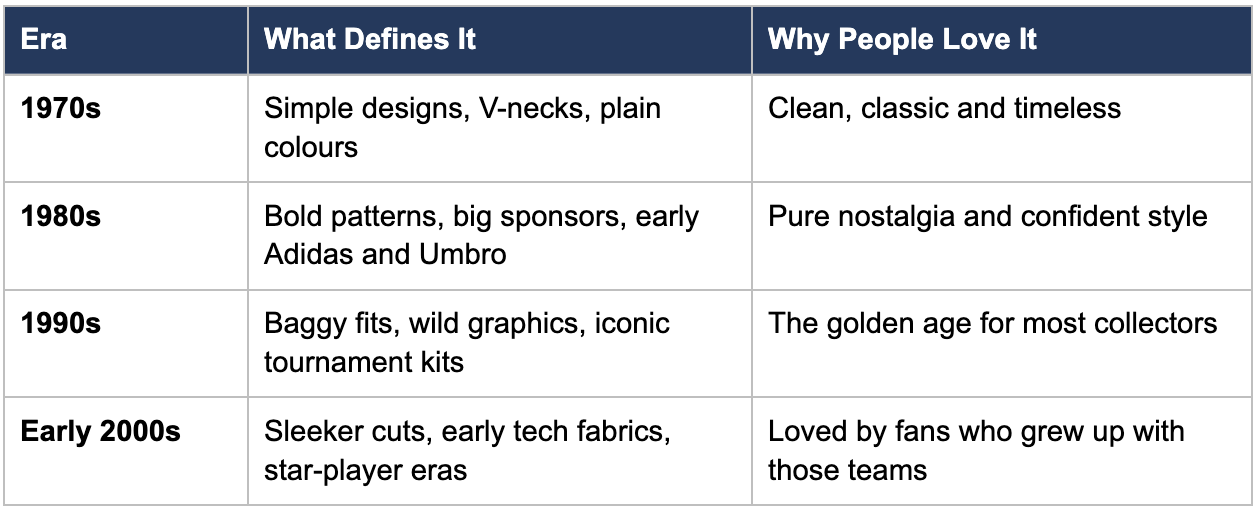
The 90s tend to win the popularity contest, largely because that's when kits became truly memorable. But the 70s and 80s are quietly gaining fans among people who prefer a more understated look.
It's Also a Smarter, Greener Way to Buy
There is also an element of practicality as well. The fact that you can purchase a second-hand shirt instead of a new one suggests that there will be one less shirt made from scratch. This point has become important today, especially among the younger generation that has been brought up on the fast-fashion concept.
In addition, there is a financial aspect involved as well. Certain shirts, especially those produced in significant periods or having a good state of condition, tend to retain their prices or increase in value. Although one should not treat the shirt as an investment, it is still reassuring to know that you will earn a profit from your Sunday morning shirt at some point in the future.
What to Look For Before You Buy
If you are a beginner in collecting, it is important for you to know some basic concepts that will help efficient collecting:
- Inspect the labels and stitching. Authentic shirts showed certain labels and the counterfeit ones tend to misplace the specs.
- Look closely at the condition. Cracked badges, faded prints and pulled threads all affect value. Some wear is charming, but know what you're paying for.
- Buy what you'll actually wear. The best shirt in your collection is the one you love enough to put on.
- Stick with sellers who know their stuff. A good seller can tell you the season, the manufacturer and the story behind the kit.
Looking After Your Collection
When you acquire a shirt that you absolutely adore, make sure to treat it with utmost love and respect. Make sure that you follow the washing etiquettes associated with it such as washing it inside out: using cool cycle for washing it, and using hang drying instead of tumble drying it. If you have decided to store some shirts that lie unused for a long time, fold them loosely instead of folding them to fit them in the drawer.
The Beautiful Game, Worn Well
Vintage shirts became popular because they combine three elements that one never tires of: nostalgia, fashion and a tiny hint of rebellion against uniformity. Whether you are an old-time fan who is remembering the past achievements or a person with a taste for vintage collars, there is a shirt that will suit you perfectly.
And honestly? Half the fun is the search.