How Football Managers Are Adapting to New Tactical Trends
Football management has changed considerably over the past decade. Coaches now work with detailed performance statistics, advanced video analysis, and players who must understand several tactical responsibilities. Traditional formations still matter, but managers increasingly focus on how their teams move, defend, and create chances during different phases of a match. These developments demand constant learning and careful preparation.
Modern football also reflects wider changes in how people consume sports and entertainment. Supporters follow tactical discussions, examine match statistics, and explore digital activities through platforms such as incaspin casino. Yet the main developments take place on the training ground, where coaches test new approaches and adjust their plans according to their squads. Their success often depends on how clearly they communicate instructions and how quickly players respond to changing match situations.
Tactical Systems Now Change During Matches
Managers once relied heavily on recognizable formations throughout entire matches. Teams commonly maintained a 4-4-2, 4-3-3, or 4-2-3-1 structure, with relatively clear responsibilities for each position. Coaches still use these systems, although the formation shown before kickoff rarely explains everything that happens afterward.
A team might defend in a 4-4-2 arrangement before switching to a 3-2-5 structure during possession. One full-back moves into midfield, while the other stays near the defensive line. The attacking midfielders advance between opposing defenders, creating several passing options near the penalty area.
These movements require precise coordination. Players must recognize when to change positions without leaving dangerous spaces behind them.
Managers increasingly divide their tactical preparation into specific phases:
● Build-up play: How defenders and midfielders move the ball away from their own penalty area.
● Attacking organization: How players create space and maintain passing options during sustained possession.
● Defensive organization: How the team protects central areas and controls opponents' movement.
● Attacking transitions: How players respond immediately after recovering possession.
● Defensive transitions: How the team reacts when an opponent wins the ball.
Coaches develop separate instructions for each situation. Rather than expecting players to follow one rigid formation, they teach principles that guide individual decisions.
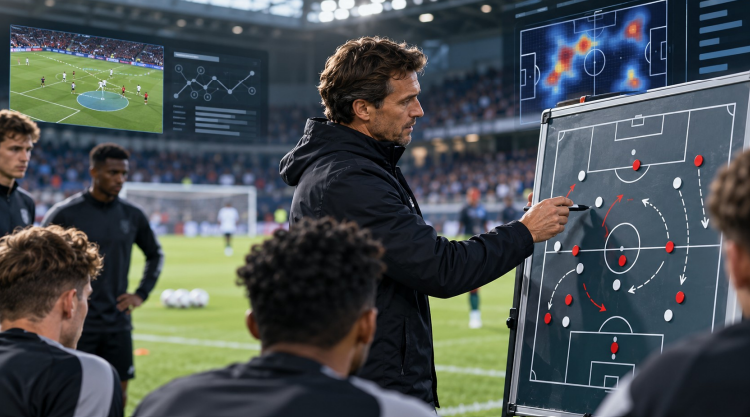
The Growing Importance of Positional Play
Positional play has attracted considerable attention because it helps teams control space and maintain passing connections. The concept encourages players to occupy specific areas according to the position of the ball, their teammates, and their opponents.
Managers use training exercises to explain these relationships. During possession drills, players must recognize when to remain wide, move centrally, or support a teammate from behind.
Spacing plays a central role. If several footballers move toward the ball simultaneously, they reduce the available passing options. When teammates occupy different areas, the player in possession can choose between short combinations, forward passes, and changes of direction.
However, positional principles do not require every player to remain in one location. Coaches encourage movement when it creates an advantage or responds to defensive pressure.
For example, a winger may move inside when an opposing full-back follows the attacking midfielder. Another teammate can then advance into the vacant wide area.
Managers spend considerable training time developing these movements because small positional errors can interrupt an entire attacking sequence.
Pressing Requires More Detailed Preparation
High pressing has become a familiar feature of professional football. Teams attempt to recover possession near the opponent's goal rather than retreating immediately into their own half.
The approach demands physical effort, but organization matters just as much as running speed.
A forward who presses a central defender without support may leave an easy passing route into midfield. Successful collective pressure requires several players to coordinate their movements and restrict available options.
Managers therefore establish pressing triggers. These situations tell players when to increase pressure.
A poor first touch, a backward pass, or a pass toward the touchline may encourage the attacking team to press aggressively.
Coaches also consider the risks. If an opponent escapes the initial pressure, the defending side may struggle to protect the space behind its midfield.
For that reason, managers increasingly combine aggressive pressing with periods of controlled defending. They may instruct their players to retreat into a compact structure when the opponent establishes secure possession.
The objective involves selecting the appropriate moment rather than pressing continuously.
Why Midfield Responsibilities Continue to Change
Midfielders now perform several tasks that once belonged to separate positions. A central player may help defenders circulate possession, support attacks near the penalty area, and protect the team against counterattacks.
This development influences recruitment, training, and tactical planning.
Some managers position a defensive midfielder between two central defenders during build-up. Others ask the same player to remain higher, creating a passing option behind the opponent's first pressing line.
The decision depends on the opposition's defensive structure.
Against a team that presses with two forwards, a manager might introduce a third player into the initial build-up line. Against a single striker, the coach may prefer additional midfield support.
These adjustments help teams maintain numerical advantages in specific areas.
Modern midfield training also places considerable attention on receiving the ball under pressure. Players practice checking their surroundings before possession reaches them, controlling passes with different body positions, and identifying forward options quickly.
Technical ability remains important, but tactical awareness determines how effectively players use those skills.
Full-Backs Have Taken on New Responsibilities
Few positions illustrate recent tactical changes as clearly as full-back.
Traditional responsibilities included defending wide areas, supporting wingers, and delivering crosses. Modern coaches still expect these contributions, but many also ask full-backs to operate in central midfield.
An inverted full-back moves inside during possession.
This movement can create an additional passing option, support ball circulation, and protect central spaces if the team loses possession.
The approach also changes the responsibilities of nearby players.
A central midfielder may advance into an attacking position, while a winger maintains width near the touchline. The remaining defenders adjust their positions to maintain defensive coverage.
Not every squad can execute this system effectively. Managers must consider individual qualities before introducing new responsibilities.
A player who excels at overlapping runs may struggle with receiving possession in crowded central areas. Another defender may understand midfield positioning but lack the speed to cover large distances along the touchline.
Coaches increasingly assess these differences when selecting their tactical approach.
Data Analysis Supports Tactical Decisions
Football clubs now collect extensive information about matches and training sessions. Analysts examine passing sequences, defensive actions, player movement, and the locations where teams recover possession.
Managers use this information to identify patterns that ordinary observation may miss.
For example, tracking data can show whether a defensive line maintains consistent distances between players. Passing information may reveal how often a team progresses through central areas or relies on wide combinations.
Coaches also examine the circumstances surrounding each action. A completed pass offers limited insight without information about defensive pressure, available alternatives, and the resulting position.
This distinction matters because statistics do not automatically explain performance.
A team may record substantial possession without creating many clear chances. Another side may attempt fewer passes while progressing into dangerous areas more frequently.
Managers combine numerical evidence with video footage and direct observations from training.
Data helps them ask specific questions, but tactical decisions still require human judgment.
Training Sessions Reflect Match Situations
As tactical systems become more demanding, managers must reconsider how they organize training.
Long sessions that focus exclusively on isolated technical exercises cannot prepare players for every competitive situation. Coaches increasingly incorporate tactical decisions into drills that resemble actual match conditions.
Small-sided games offer one practical method.
A manager might organize an exercise in which one team attempts to progress through a compact defensive structure. The opposing group practices coordinated pressing and immediate reactions after losing possession.
The coach can adjust the size of the playing area, the number of participants, or the available passing options.
These changes encourage specific behaviors without requiring constant verbal instructions.
Video analysis also supports learning. Managers show short sequences from previous matches and explain the decisions that influenced each situation.
However, information overload creates problems. Players need clear instructions they can remember during intense competition.
Effective preparation therefore requires coaches to select a manageable number of priorities for each session.
Tactical Adjustments Depend on Opponent Analysis
Modern managers rarely approach every opponent with identical instructions.
Before matches, coaching teams examine how the opposition builds attacks, defends wide areas, and responds to pressure. They also study individual tendencies, particularly in positions that influence possession.
An opponent may struggle when defenders receive passes facing their own goal. Another side might leave space behind advancing full-backs.
Managers develop plans that address these patterns while preserving their team's established principles.
The challenge involves balancing preparation with consistency.
Changing too many responsibilities before every match can confuse players and weaken established relationships. Maintaining the same approach regardless of the opposition can create predictable weaknesses.
Coaches must decide which adjustments offer practical benefits without disrupting familiar movements.
During matches, substitutions provide another tactical option. A manager may introduce an additional midfielder to control possession or use a second forward to increase pressure on central defenders.
Such decisions require an understanding of how individual changes affect the entire structure.
Managing Defensive Transitions
Attacking football creates defensive responsibilities that managers cannot ignore.
When a team commits several players forward, it must prepare for the possibility of losing possession. Opponents can exploit open spaces before defenders reorganize.
Coaches address this problem through rest defense, which describes how a team positions certain players while attacking to prepare for potential counterattacks.
For instance, two central defenders and a midfielder may maintain positions that allow them to respond quickly if an opponent intercepts a pass.
Their spacing matters. If they stand too close together, opponents may find room on the outside. If they spread too far apart, attackers can exploit central gaps.
Managers also instruct nearby players to apply immediate pressure after losing possession.
This reaction can delay the opponent's next pass and give teammates time to recover their positions. The approach requires coordination between attackers, midfielders, and defenders. Every player contributes to defensive security, even when the team controls possession.
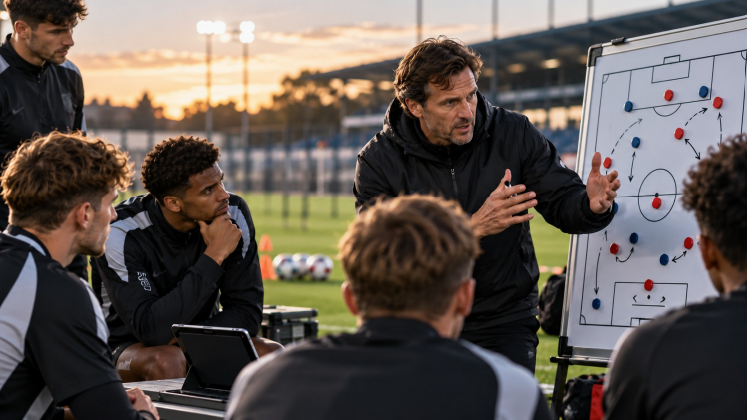
Communication Has Become a Major Coaching Skill
Tactical knowledge alone cannot guarantee that players understand a manager's ideas.
Coaches work with footballers who possess different experiences, technical abilities, and levels of tactical understanding. Explaining complex movements to an entire squad requires clear communication.
Managers increasingly rely on short video presentations, practical demonstrations, and individual conversations.
Rather than discussing every possible situation, they often establish simple rules.
A midfielder might receive instructions to support the central defender whenever an opponent closes the nearest passing route. A winger may learn to maintain width until a teammate enters the attacking channel.
These guidelines help players make decisions without waiting for instructions from the sideline.
Communication also matters when managers introduce unfamiliar roles. Players need to understand not only where to move but why that movement helps the team.
When footballers recognize the purpose behind an adjustment, they can respond more confidently to situations that training has not covered directly.
Physical Demands Influence Tactical Choices
Modern tactical approaches require managers to consider player fitness throughout the season.
Repeated pressing actions, quick transitions, and frequent positional changes place considerable demands on footballers.
Coaches cannot simply increase training intensity without considering recovery.
Sports science staff monitor workloads and help managers understand how players respond to different exercises. Training schedules may change according to match frequency, travel, and individual physical condition.
Rotation also affects tactical planning.
A replacement may possess different strengths from the regular starter, forcing the coach to modify certain movements.
Managers must prepare alternatives that allow the team to maintain its general structure without demanding identical performances from every player.
This becomes particularly important during periods with several matches in a short time.
What Comes Next for Football Management?
Football tactics will continue to develop as managers experiment with formations, pressing systems, and positional responsibilities.
Greater access to tracking information may help coaches examine player movement in further detail. Training methods will also change as clubs develop new ways to connect physical preparation with tactical learning.
Yet future progress will not depend entirely on technology or complex formations.
Managers still need to understand their players, recognize the opposition's strengths, and communicate instructions effectively.
A tactical idea only works when footballers can execute it consistently under competitive pressure.
The modern manager therefore combines several responsibilities: tactical planning, individual development, match preparation, physical workload management, and communication.
Successful adjustments rarely involve abandoning established principles after every new trend appears. Instead, coaches examine emerging approaches, identify their practical value, and introduce changes that suit their squads.
Football will continue to produce new tactical questions. Managers who approach those questions through observation, preparation, and clear decision-making will remain capable of responding to the sport's changing demands.