Hull City: Can the Championship Fairytale Survive Premier League Reality?
Hull City entered the 2026/27 Premier League season with a familiar problem for a newly promoted club. Everything that had worked in the Championship suddenly had to be tested against faster attacks, stronger squads and opponents capable of punishing small mistakes.
Few expected the Tigers to settle quickly. Their promotion itself had been unexpected. Sergej Jakirović took charge of a club that had narrowly avoided relegation to League One in the previous campaign and turned it into a play-off winner within a year. Hull finished sixth before beating Middlesbrough 1-0 at Wembley.
The early evidence in the Premier League has been encouraging. Hull opened the campaign by beating Manchester United 2-0, then beat fellow promoted side Coventry City away, held Aston Villa goalless, and earned a 2-2 draw at Chelsea.
These matches cannot define a season, of course. They can, however, tell us something about whether a promoted team's methods can survive at a higher level. In Hull's case, the answer is more interesting than the league table alone suggests.
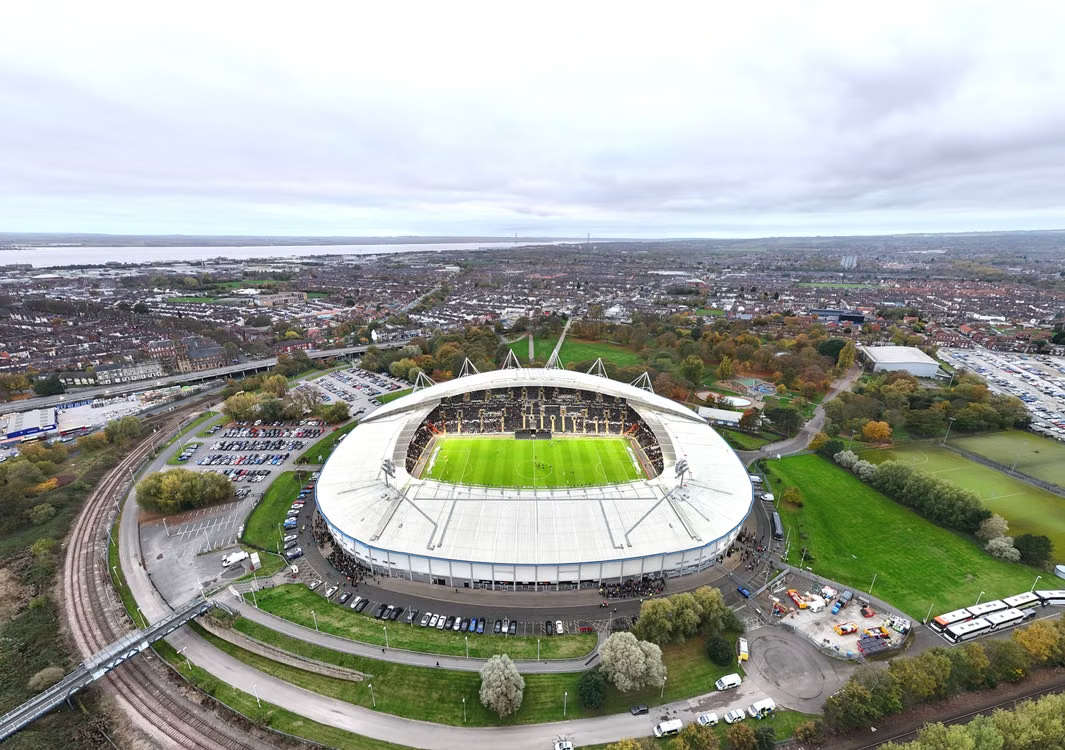
Hull City's Overall Performance Has Changed the Early Conversation
Before the season started, Hull were an obvious candidate for relegation. They earned promotion through the play-offs rather than automatic promotion, their defensive numbers raised concerns, and their squad entered a league where even established clubs can struggle to compete financially.
That context makes their opening matches significant. Jakirović's August performances were strong enough for him to receive the Premier League Manager of the Month award.
Results Have Changed Expectations, but Not the Main Objective
A strong August and September naturally create questions about how high Hull can finish. It would nevertheless be premature to discuss the upper part of the Premier League as a realistic target.
The betting market remains cautious. While Hull's performances have given observers more reasons to consider the possibility of survival, prices on a top-half finish remain long, while a bottom-half finish is still viewed as considerably more likely.
That distinction matters. Several encouraging performances show that Hull can compete. They do not yet show that Jakirović's team can maintain that level across 38 matches.
People who follow football markets also need to separate sporting analysis from promotional offers. Anyone considering betting should compare licensed operators, terms and available promotions rather than choosing a platform from a headline offer alone. Resources in the wider gambling-review sector, such as the SlotsCalendar UK 20 free spins page, show how users can examine promotional terms and compare operators before choosing.
From a football perspective, Hull have already achieved something more important: they have given themselves an early platform from which survival looks possible rather than theoretical.
Jakirović Has Not Tried to Turn Hull Into Something They Are Not
One of the most important decisions a promoted manager makes is deciding how much of the promotion-winning system should be retained.
Jakirović has so far resisted the temptation to radically change Hull's identity.
During their Championship campaign, Hull became comfortable playing directly, competing aggressively for loose balls and attacking before opponents could reorganise. Their football was based less on long periods of controlled possession and more on reaching useful areas quickly.
That approach remains visible in the Premier League.
Hull have regularly operated from a 5-4-1 defensive structure in their opening fixtures. Their possession figures have often been low, including less than a third of the ball in several matches. That is not necessarily a sign that they are losing control.
For this team, control often means controlling where the opponent is allowed to attack.
Why the Lower Block Makes Sense
Premier League teams possess players who can exploit open spaces much more efficiently than Championship opposition. Trying to press continuously with an imperfect structure could therefore expose Hull's defence.
Instead, a deeper shape offers several advantages:
- three central defenders protect the penalty area;
- wing-backs can drop alongside them to defend the width;
- midfielders remain close enough to compete for second balls;
- opponents are encouraged to move possession into less dangerous areas;
- Hull preserve space ahead of them for counter-attacks.
It is pragmatic football, but pragmatism should not be confused with passivity.
Hull still press when the circumstances are suitable. The difference is that they are more selective about when to do it.
Direct Football Remains One of Hull's Most Useful Weapons
Modern tactical analysis can sometimes treat direct football as something that needs to be eliminated. For Hull, it is a legitimate way of progressing the ball.
That was clear during their promotion season.
McBurnie offered Jakirović a target capable of competing with central defenders, protecting possession and turning difficult clearances into attacking situations. Hull could play beyond pressure rather than always trying to pass through it.
The value of that approach increases in the Premier League.
Teams such as Chelsea, Manchester City and Arsenal can make conventional build-up extremely difficult. They press with speed while simultaneously blocking short passing options. Playing directly into a striker can bypass several opponents with one action.
The important part is what happens after the long pass.
Transitions Could Decide Whether Hull Stay Up
The strongest part of Hull's Championship campaign was arguably their ability to attack disorganised opponents.
They scored regularly from fast breaks and became particularly dangerous after recovering possession in midfield. Jakirović encouraged his side to move forward immediately rather than automatically recycling the ball backwards.
That remains one of the clearest ways in which Hull can hurt Premier League opponents.
Many of the division's strongest sides push full-backs, midfielders and attacking players into advanced positions during sustained possession. If Hull regain the ball at the right moment, space can appear behind those players.
Width Gives Hull an Escape Route
Mohamed Belloumi and Hull's other quicker attacking players offer a different profile to McBurnie. The striker can occupy defenders centrally while runners attack the areas around him.
Those combinations mean Hull can threaten in several ways without requiring long spells of possession.
The challenge will be efficiency. A team that sees relatively little of the ball cannot afford to waste every promising transition. The better Premier League sides may allow only three or four genuinely dangerous counter-attacking situations in an entire match.
Hull need to make those moments count.
The Defence Still Provides the Biggest Reason for Caution
Hull's start has been positive, but their Championship defensive record cannot simply be ignored.
They conceded 66 goals during the promotion campaign. More concerning was the amount of good opportunities they allowed opponents to create. At times, their press was neither aggressive enough to win the ball nor compact enough to protect the space behind it.
That middle ground is dangerous.
When the first defensive line moved forward without the rest of the team following, opponents could play through the pressure and attack the back four directly. Championship sides did not always take advantage. Premier League forwards are far less likely to be as generous.
Hull therefore needed to improve both their personnel and their organisation.
Squad Depth May Be as Important as the Starting XI
A promoted team's strongest line-up can often compete with Premier League opposition. Problems usually appear when injuries, suspensions and fixture congestion reduce the manager's options.
Hull are no exception.
Their first-choice system demands significant physical work. Wing-backs must repeatedly cover large distances, and midfielders have to protect central spaces and then support counter-attacks.
Maintaining that intensity for an entire season is difficult.
Three areas will be particularly important:
- central defence, where Hull need enough depth to retain the back-five structure;
- central midfield, where second-ball recovery and defensive discipline are essential;
- centre-forward, because the direct approach becomes less effective without a reliable focal point.
Jakirović may therefore need several versions of the same tactical plan rather than one fixed starting side.
Survival Will Depend on What Happens After the Surprise Wears Off
Hull are no longer an unknown promoted club.
Manchester United, Aston Villa, Chelsea and Newcastle have already provided opponents with footage of how Jakirović intends to approach Premier League matches.
That is where the next stage of Hull's development begins.
The Tigers do not need to abandon the principles that earned promotion. In fact, doing so could remove many of the qualities that currently make them difficult to face.
They do, however, need more variation.
A successful Premier League season will therefore require Jakirović to answer several questions:
- Can Hull create enough when opponents give them possession?
- Can the defence maintain its early improvement?
- Will their counter-attacking efficiency remain high?
- Can the squad cope when important players are unavailable?
- Can Jakirović adjust once opponents learn how to limit Hull's preferred routes forward?
Hull Have Given Themselves a Genuine Chance
Promotion was unexpected. Hull's start to the Premier League season has surprised many for the same reasons.
Jakirović has built a team that understands its strengths. Hull are comfortable defending without dominating the ball, ready to play direct when needed and dangerous in transition. McBurnie gives them a reliable physical reference in attack, while the deeper defensive structure has so far reduced some of the problems that followed them out of the Championship.
None of that guarantees survival. What has changed, though, is the nature of the discussion.
Before the opening weekend, the question was whether Hull possessed enough quality to compete at all. Their first month has answered that. They can compete.
The more difficult question is whether they can continue doing it once opponents adapt, injuries arrive, and the season becomes less forgiving. That, rather than the early league position, will determine whether last season's remarkable promotion develops into something even more significant.