Online Slots vs Live Dealer Games: What Makes Each Format Different?
Check the pace and features of online slots and live dealer games. Learn how game rules, player choices, and real-time tables shape each format in practice.
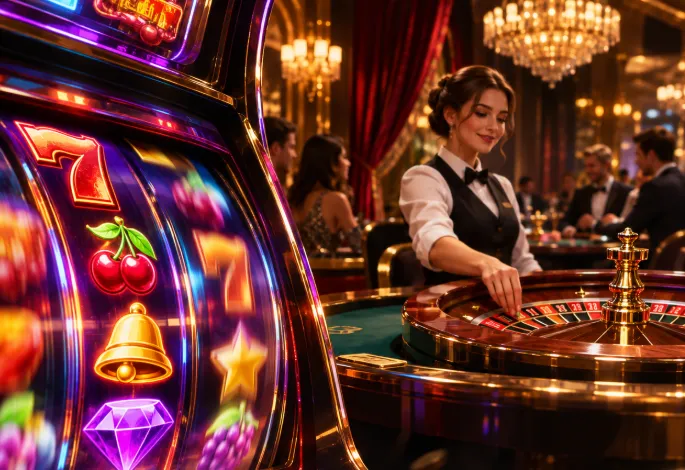
The initial appearance of online casino games often leads players to believe they are similar. This changes once gameplay begins. In slots, the only control the player has is choosing how much to bet and when to spin. After that, it is purely animated results. Like regular old online casino table games, live dealer games feature a human controlling the game; only in these games is that control done via video. This changes how demanding a game is.
The differences between various types of online casino games become evident when looking at subcategories like 1xBet casino. Here you will find games where the player controls the outcome by spinning reels, as well as games where the outcome is determined by the roll of dice or the draw of cards. The games featured within these subcategories also differ in art style and theme.
How the Two Formats Work
Online slots run through software that uses a random number generator, or RNG, to determine results. Pressing the spin button starts an animation, but the outcome does not depend on how long the reels appear to turn. Every spin follows the game’s programmed rules. Themes change without altering that process.
For readers comparing international casino brands, 1xBet Mongolia might appear alongside discussions of both formats. The country context matters, however. Mongolia prohibited paid betting and online gambling activities from July 1, 2025. Describing how these games work, therefore, does not establish that a particular service can legally operate or accept players there.
What Happens at a Live Table?
Live dealer games use cameras to broadcast a gaming table and human dealers. Players submit online decisions during a betting period, and a game outcome is generated based on the dealer’s actions and game rules. Some games use physical game props along with digital features to provide bonus game rounds. A variety of games are offered using different rules and equipment.
| Feature | Online slots | Live dealer games |
|---|---|---|
| Main presentation | Animated reels and symbols | Real-time video from a table |
| Outcome process | Software-based RNG | Physical actions, sometimes with digital features |
| Playing pace | Usually controlled by the individual | Guided by the dealer and round schedule |
| Social element | Usually limited | Dealer chat may be available |
| Common format | Reels, paylines, bonus rounds | Roulette, blackjack, baccarat |
Pace, Attention, and Player Decisions
Slots are fast-paced. Players aren't reliant on others to play a round, and players can take breaks between plays. Live games follow a set schedule, and players are given a fixed time to place bets. If players don't act within the allotted time, the bet is returned.
The major differences between the games are the kinds of decisions allowed. Roulette and slots are largely decisions of where to place a bet, and Blackjack is a decision of when to stop playing. Outcomes in all games are determined largely by chance.
Features That Change the Feel of Slots
Slots are designed through the strategic placement of artwork, audio effects, and rewards. There are countless artistic styles and auditory themes that can be combined with slot designs. Aside from the aesthetic differences between various slot games, common characteristics abound.
- Wild symbols are magnetic. They can join groups to complete lines.
- A qualifying combination can reward the player with a specified number of free spins.
- Events, usually triggered by combinations of symbols, can affect increases to the player’s reward.
At any given time, a player can view a game’s rules and potentially lucrative combinations. Knowing the game rules gives the player very little information regarding the probability of a payout. Return to player (RTP) is an expression that denotes the long-term, expected outcome of a game.
The Appeal of a Real Dealer
A live game has a different type of intimacy. The camera captures the dealer and the table from different angles. With chat available, players can communicate briefly with the dealer. Chat is not a substitute for gameplay and rules.
Connection speed and quality impact the live game. Video requires a considerable upload and download speed. Animation and graphics, on the other hand, do not require the same speed. There can also be a delay in the stream. Betting windows have a set time, and if the stream is delayed, players may not be able to place bets in time. Mobile data may also impact the game, and switching between the two may be noticeable.
It’s useful to look into a few game specifics before pitting games against each other.
- Familiarize yourself with the rules of the variant, and check betting limits.
- Inspect whether the game requires the player’s device to remain connected to the game server.
- Investigate bonus terms. Also, see how game results are stored and used.
Reading the Game Beyond Its Appearance
The mathematics of games is found in rules, payout tables, and stake limits. Volatility describes a game’s mathematics by telling how a game distributes returns among wins. Conversely, in live table games, the mathematics of a game is contained in the odds offered for payout. Also, different rules may be found in different variations of table games.
Two Formats, Two Different Rhythms
Due to their changeable art direction, slot machines lend themselves to shifting themes over short periods. Limited interactivity defines live dealer games, but a major draw for players is the synchronous nature of the games and the round’svisual progression. Expressing enjoyment over a particular style of game isn’t an indictment of others. Live dealer games integrated into Mongolia’s iGaming market would need to consider the country’s gaming laws, which prohibit most forms of online gambling, regardless of the game type or rules.