Sports Betting in Kenya: Rules, Costs and Checks Before a Stake
Sports betting in Kenya is a licensed activity, not an informal side market. The Gambling Control Act, 2025, which commenced in August 2025, replaced the old Betting, Lotteries and Gaming Act and moved supervision from the Betting Control and Licensing Board to the Gambling Regulatory Authority. This article explains how that framework applies to everyday sports betting, which account checks matter before money is deposited, and how stake size, tax and time limits change the real cost of a bet. The practical value is a short list a reader can use before opening an account with any operator.
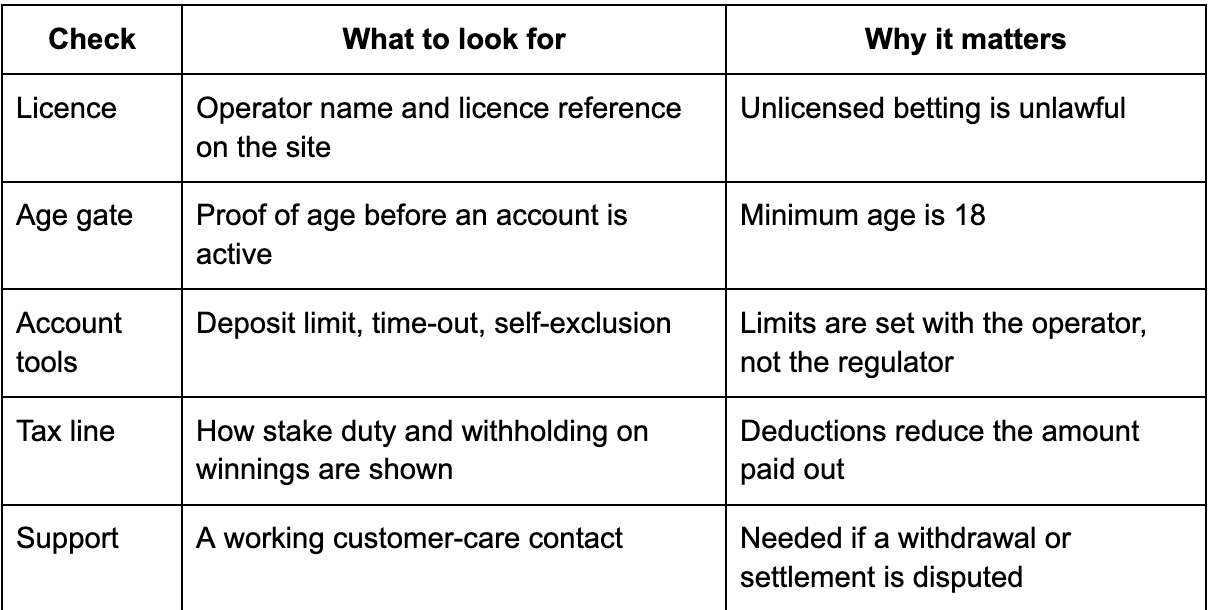
Online bookmaking is lawful only when the operator holds the relevant Kenyan licence. A foreign platform that takes bets from people in Kenya without local registration and a physical address in the country sits outside that framework. Readers should look for the licence reference on the site, confirm that registration asks for proof of age, and treat any offer that skips identity checks as a warning rather than a shortcut.
Football accounts for most local interest, from the Kenya Premier League to European leagues, though bookmakers also price basketball, tennis and other events. A reader who wants to bet Kenya league games and overseas fixtures on the same slip can compare market depth on 22Bet, then read the stake and settlement rules before any money moves. Odds are a price on an outcome, not a forecast, and a short price still loses often enough that a fixed budget matters more than the implied probability.
What the licence is meant to cover
The Gambling Regulatory Authority licenses online bookmakers and sets conditions on player registration, accounts and marketing. Under the 2025 Act, a licensee must be a body corporate with at least 30 percent of its shares held by Kenyan citizens, and gambling-related funds must sit in an account with a financial institution registered in Kenya. Advertising rules carried forward from the former board still expect a responsible-gambling line, a clear 18+ restriction, and no use of celebrities to glamorise betting.
Costs that sit outside the odds
Two charges usually sit between the stake and the payout. Excise duty applies to stakes, and withholding tax applies to winnings; the operator deducts them before payment. Rates change, so the figure on the bet slip matters more than a number remembered from last season. A 22Bet account, like any other licensed book, should show those deductions in the transaction history rather than only in a footer.
Before placing a first bet, it helps to:
- Confirm the operator’s Kenyan licence and that the domain matches the one on the licence details.
- Complete identity checks with a national ID or passport and set a deposit limit the same day.
- Decide a weekly loss limit in shillings and stop when it is reached, regardless of the next fixture.
- Read settlement rules for postponed matches, player props and cash-out before using those markets.
- Keep the bet reference if a payout is delayed, and raise it with the operator before escalating a complaint.
A few habits reduce the most common problems:
- Betting only money already set aside, never borrowed funds or rent.
- Avoiding combined slips with long odds built from several low-probability legs.
- Ignoring “reload” messages sent after a loss.
- Logging out once the planned fixtures are settled.
Conclusion
Legal sports betting in Kenya depends on a licensed operator, an age-verified account and a stake the player can afford to lose. The Gambling Regulatory Authority licenses firms and handles complaints about licensed ones; it does not manage personal limits or guarantee a result. Gambling is addictive, it is restricted to people aged 18 and over, and no price, promotion or recent winning ticket changes that.