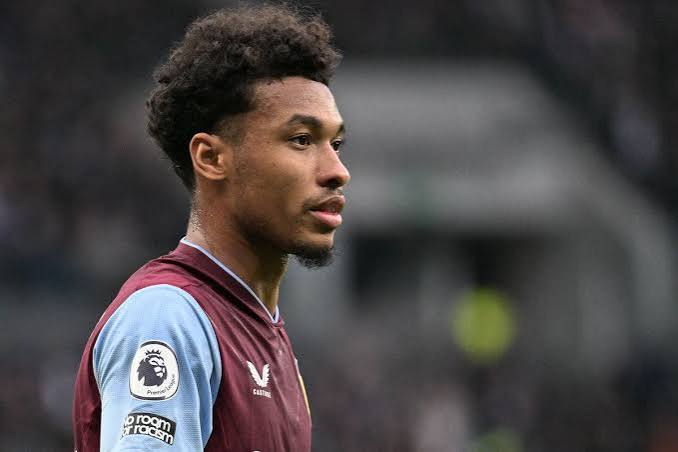
Boubacar Kamara: From Defensive Anchor to Central Midfield Controller — The Tactical Evolution Transforming Aston Villa
Introduction: The Evolution of a Modern Midfielder
Modern football increasingly demands midfielders who can perform multiple functions without compromising their team's tactical structure. The traditional defensive midfielder is expected to shield the back four, recover possession and provide a reliable passing option during build-up. A central midfielder, meanwhile, must connect defensive and attacking phases, progress the ball through congested areas and support the team's attacking movements.
The distinction between these roles has become less rigid. Today's elite midfielders are increasingly required to combine the defensive discipline of a number six with the mobility, technical ability and positional intelligence associated with a number eight.
Boubacar Kamara embodies this evolution at Aston Villa.
Since arriving from Marseille in 2022, the French midfielder has become an important component of Unai Emery's tactical structure. Initially valued primarily for his ability to protect the defence and disrupt opposition attacks, Kamara has also demonstrated the technical composure and positional versatility required to influence Villa's possession game.
His development should not be interpreted as a straightforward conversion from defensive midfielder to attacking central midfielder. Rather, it represents an expansion of his responsibilities: he can operate close to the centre-backs when Villa require defensive security, move into more advanced central positions to support progression and adjust his positioning according to the demands of each phase of play.
This adaptability is particularly important in Emery's system, where positional rotations and coordinated movements allow Villa to alter their attacking shape without losing their defensive organisation.
Kamara's significance lies in his ability to influence both the security and the progression of Aston Villa's midfield. He provides the defensive foundation that allows other players to advance while possessing the technical qualities to contribute to the construction of attacks himself.
To understand his tactical importance, it is necessary to examine his development, his relationship with Villa's other midfielders and the ways his positioning influences the team's ability to control matches.
1. The Foundation: Understanding Kamara's Defensive-Midfield Education
Before analysing Kamara's expanded role, it is important to understand the qualities that established him as a defensive midfielder.
During his time at Marseille, Kamara developed a reputation as a technically accomplished player capable of operating in both defensive midfield and central defence. This experience helped him develop an understanding of defensive spacing, positional discipline and the importance of anticipating danger before an opposition attack becomes threatening.
These qualities remain fundamental to his effectiveness at Aston Villa.
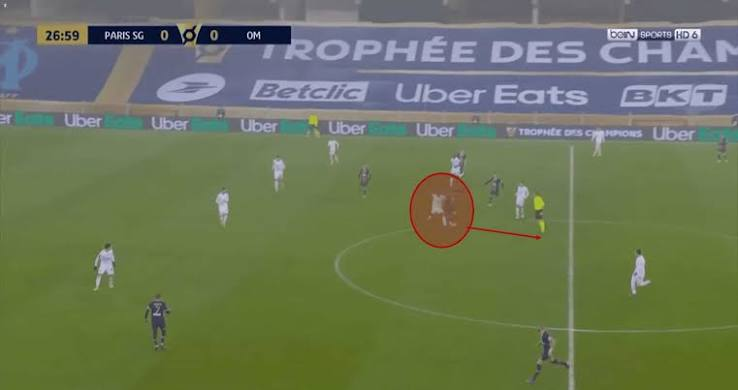
Positional intelligence and defensive anticipation
A defensive midfielder must do more than follow the movement of the ball. He must understand where the next pass might go, which opponent is attempting to find space between the lines and where his team could become vulnerable if possession is lost.
Kamara's positional awareness allows him to recognise these situations and adjust accordingly.
Rather than relying exclusively on tackles, he can occupy positions that restrict passing lanes, discourage forward progression and make it difficult for opponents to access central areas.
This is particularly valuable for Aston Villa because Emery's attacking structures can require full-backs and midfielders to move into advanced positions. When those players leave their original spaces, somebody must provide cover.
Kamara's understanding of defensive positioning helps Villa manage these movements. He can protect the central corridor, anticipate a potential counterattack and ensure that the team's attacking ambition does not automatically translate into defensive vulnerability.
His contribution is therefore not limited to actions that occur when an opponent has the ball. It also includes the positions he occupies before the opposition can create a dangerous situation.
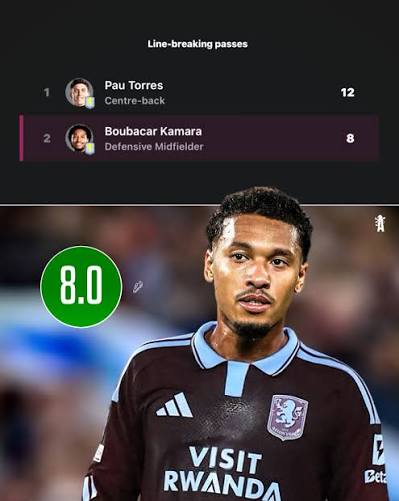
Composure under pressure
Kamara's technical qualities are equally important.
A defensive midfielder frequently receives possession in areas where a poor touch or misplaced pass can expose the team. He must be comfortable receiving the ball with opponents nearby, protecting it and identifying a passing option without unnecessarily slowing the attack.
Kamara can use short passes to maintain possession, connect with teammates and redirect the ball towards less congested areas. He can also look forward when the opposition's shape presents an opportunity to progress.
This combination of technical composure and defensive awareness provides the foundation for his broader role.
A midfielder who can protect the defence while helping the team advance possession gives his manager greater tactical flexibility than a specialist whose contribution is restricted to defensive actions.
Kamara's development at Villa should be understood through this combination of qualities.
2. From Number Six to a More Complete Central Midfielder
The distinction between a number six and a number eight is useful, but it should not be treated as an absolute division.
A number six generally operates in front of the centre-backs, protecting the defensive line and providing a connection during the first phase of build-up. A number eight typically has greater freedom to move through central midfield, support attacking combinations and occupy more advanced positions.
In practice, a midfielder can perform both functions during the same passage of play.
This is where Kamara's tactical versatility becomes particularly valuable.
Receiving higher up the pitch
When operating in a deep position, Kamara's primary passing options are often the centre-backs, full-backs and nearby midfielders.
Moving into a higher central position changes the angles available to him.
He can receive possession beyond the opposition's first pressing line, turn towards the attacking half and connect with teammates occupying the spaces between the opposition's midfield and defensive lines.
This movement can create problems for the opponent.
If an opposition midfielder advances to pressure Kamara, space may become available behind that player. A Villa attacker can then exploit the opening, receive a pass or move into a more dangerous position.
If the opponent refuses to engage, Kamara may have time to carry the ball forward or select a progressive pass.
His movement therefore creates possibilities even when he is not directly involved in the final action.
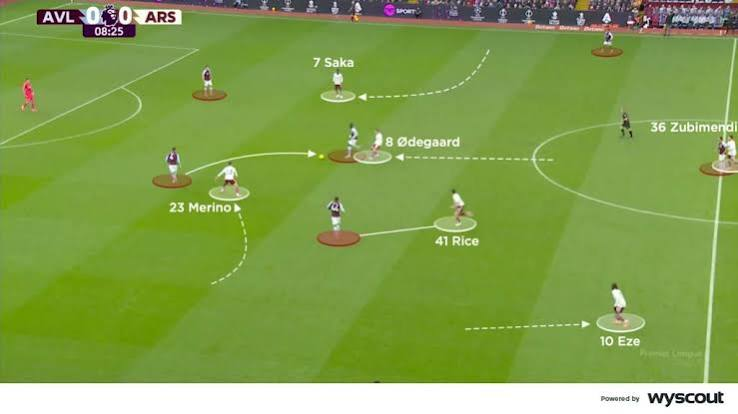
Carrying the ball through midfield
A central midfielder does not always need to advance possession through passing alone.
Sometimes, carrying the ball forward is the most effective way to disrupt an opponent's defensive structure.
When Kamara moves into space with the ball, an opposition midfielder may be forced to leave his position and confront him. That movement can create an opening for a teammate to receive possession.
The value of the carry lies not necessarily in beating several opponents but in forcing the opposition to reorganise.
Kamara's ability to retain possession while moving forward gives Villa another way to progress through midfield, particularly when passing lanes are temporarily blocked.
This is an important distinction between a midfielder who simply circulates possession and one who can actively change the opposition's defensive positioning.
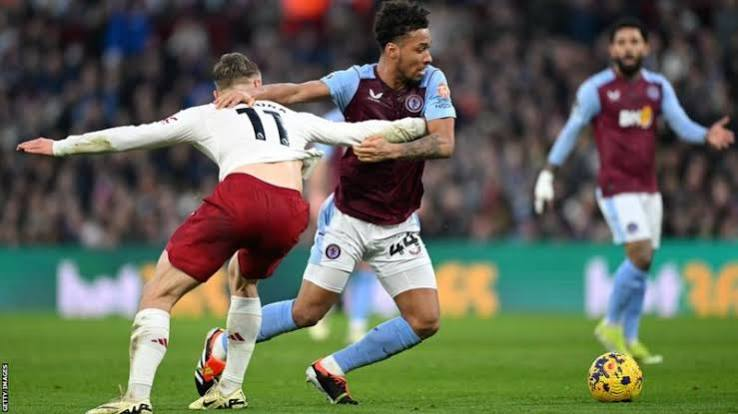
Rotating between defensive and central responsibilities
Kamara's development is best understood through positional rotation rather than a permanent change of position.
Consider a typical build-up sequence.
Villa's centre-backs begin with possession. Kamara drops towards them to offer a passing option and help the team move beyond the opposition's first line of pressure. Once the ball reaches the middle third, he can advance into a more progressive position while his midfield partner adjusts to provide balance.
The attacking players can then receive possession with more options available around them.
If the move breaks down, Kamara must recognise whether to challenge for the ball, close a passing lane or recover into a position that protects the centre-backs.
In a single sequence, he may therefore perform the functions of both a defensive midfielder and a more progressive central midfielder.
The evolution is not about abandoning the number six role. It is about making that role more dynamic.
This gives Emery the flexibility to adjust the team's shape without necessarily changing personnel.
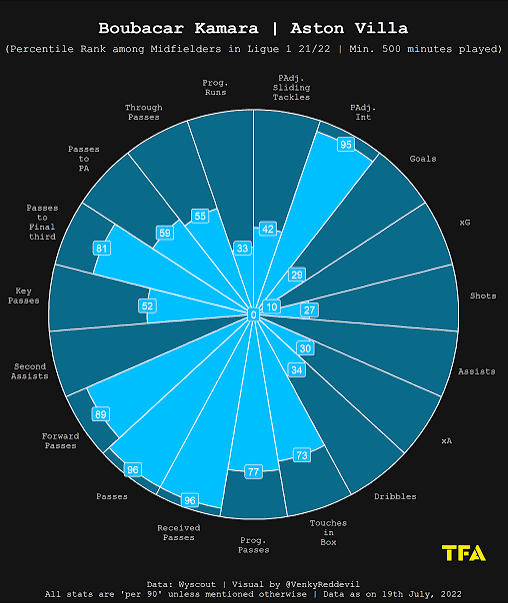
3. How Kamara Changes Aston Villa's Midfield Dynamics
A midfield should not be evaluated solely by the individual quality of its players. Its effectiveness depends on how those players complement one another, occupy space and coordinate their movements.
Kamara's value becomes clearer when his influence on the wider midfield structure is considered.
Creating freedom for more attacking midfielders
One of the most important principles of midfield organisation is balance.
If both central midfielders remain close to the defensive line, Villa may struggle to provide sufficient support to their attacking players. If both advance simultaneously, the team may become vulnerable when possession is lost.
Kamara helps resolve this problem through his defensive awareness and positional flexibility.
When a midfield partner moves forward, Kamara can remain behind the ball, protect the central channel and prepare to deal with a turnover. When the situation allows him to advance, his teammate can adjust to maintain the team's defensive balance.
This relationship allows Villa to commit players forward without automatically sacrificing protection in midfield.
It also helps explain why Kamara's influence cannot be measured exclusively through his own goals, assists or progressive passes.
Some of his greatest contributions come from the freedom his presence provides to other players.
A midfielder who consistently protects the space behind an advancing teammate can enable that teammate to take greater creative risks. In this sense, Kamara contributes to Villa's attacking potential even when he is not directly involved in the chance-creating action.
Improving the connection between defence and attack
One of the most difficult challenges in possession football is progressing the ball from the defensive line into advanced areas.
A team can dominate possession between its centre-backs and full-backs without creating meaningful opportunities if its midfielders cannot receive the ball in useful positions.
Kamara helps address this problem by offering a reliable connection between the defensive and attacking units.
He can drop deep to support the initial build-up, receive under pressure and help the team progress into midfield. Once Villa establish possession higher up the pitch, he can provide another passing option or support the circulation of the ball.
His importance lies in helping the team maintain continuity between different phases of possession.
Without this connection, Villa's attacking players may become isolated, while the defenders are left circulating the ball without a clear route forward.
Kamara helps reduce that separation.
Controlling the rhythm of possession
Midfield control is not simply about passing accurately. It is about understanding when to accelerate an attack and when to retain possession until a better opportunity emerges.
Kamara can contribute to both situations.
When Villa need to settle the game, he can help maintain possession through short, reliable passes. When an opponent commits players forward or leaves a passing lane open, he can help move the ball into a more advanced position.
This flexibility is important because an effective attacking system cannot operate at the same speed in every situation.
Against an aggressive press, Villa may need to progress quickly through the available space. Against a compact defensive block, patience and repeated circulation may be necessary to draw opponents out of position.
Kamara's ability to connect different areas of the pitch helps Villa manage these changing demands.
He is not necessarily the team's primary creative midfielder, but he can help create the conditions in which the more attack-minded players become effective.
Maintaining central compactness
Kamara's defensive responsibilities are particularly important when Villa's full-backs advance or their attacking midfielders move into the half-spaces.
These movements can create numerical advantages in attack, but they can also leave spaces behind the ball.
If Villa lose possession in such circumstances, the opposition may attempt to exploit the central areas before the defenders have recovered their positions.
Kamara can help prevent this by maintaining an appropriate distance from the defensive line, blocking forward passing lanes and adjusting his position according to the movement of his teammates.
His ability to move between supporting possession and protecting the centre makes him valuable to the team's overall structure.
The attacking and defensive aspects of his game are therefore connected. His defensive discipline helps make Villa's attacking movements possible, while his technical ability allows him to contribute to the possession that precedes those movements.
4. Kamara Within Unai Emery's Tactical Framework
Emery's football is built around positional organisation, coordinated pressing and the ability to alter the team's shape according to the circumstances of a match.
Aston Villa have used structures including the 4-2-3-1 and variations that create a 3-2-4-1 during possession. The precise arrangement depends on the players selected, the opposition and the phase of play.
Kamara's versatility makes him useful within these different structures.
The double pivot in a 4-2-3-1
In a 4-2-3-1, two central midfielders operate ahead of the defensive line.
One midfielder may remain deeper to protect the defence, while the other is encouraged to advance. However, these responsibilities can change throughout a match.
Kamara can provide the defensive security required when his partner moves forward. His technical ability also allows him to contribute to the build-up rather than functioning exclusively as a ball-winning presence.
This arrangement gives Villa a balanced midfield platform.
The team can advance possession through one midfielder while retaining another player capable of protecting the central space if the attack breaks down.
The effectiveness of the arrangement depends on coordination. Kamara must recognise when to remain behind the ball, when to move forward and when to adjust his position to compensate for his teammate's movement.
The 3-2-4-1 and the importance of the midfield platform
When Villa build in a 3-2-4-1 structure, three players may form the first line of possession while two midfielders operate ahead of them.
The attacking line can then occupy more advanced central and wide positions.
The two midfielders are important because they connect the defensive platform with the players responsible for creating and finishing chances.
Kamara's role within this structure is not simply to remain deep and recycle possession. He can adjust his position to provide a passing option, support progression and maintain protection behind the attack.
Against an aggressive press, his ability to receive the ball and find a teammate can help Villa escape pressure. When the team progresses into the final third, he can provide support behind the attacking line or remain in a position that allows him to respond to a turnover.
The precise details depend on the match, but the principle remains consistent: Villa need their midfielders to combine progression with defensive security.
Managing transitions
Transitions are among the most important moments in modern football because the team that has just lost possession may not yet have recovered its defensive shape.
When Villa win the ball, Kamara can help determine whether the team should counterattack immediately or retain possession until its attacking structure is restored.
If an immediate forward pass is available, he can help connect the ball to an advancing teammate. If the opponent has recovered its shape, he can help Villa retain possession and begin another attacking sequence.
His responsibilities are equally important when Villa lose the ball.
He must assess whether to press the nearest opponent, close a passing lane or recover towards the centre-backs.
These decisions influence whether Villa can regain possession quickly or prevent the opposition from launching a dangerous counterattack.
For Emery, Kamara's ability to contribute on both sides of the transition is a significant tactical advantage.
Against an aggressive press
High pressing teams attempt to restrict the time and space available to midfielders.
In these circumstances, Kamara's ability to receive possession under pressure and retain the ball becomes particularly valuable.
If he can receive with his body open towards the opposition goal, he may be able to bypass the first pressing player through a forward pass or controlled carry.
If the forward route is blocked, he can retain possession and help Villa identify another route through the press.
His experience as a defensive midfielder remains important because he understands the risks of receiving possession in vulnerable areas.
The objective is to use his technical ability to progress the ball without exposing the team to unnecessary turnovers.
When Villa lose possession
The most important consideration is what happens when an attacking move breaks down.
If Kamara advances into a higher position, another player may need to provide defensive cover. If both central midfielders move forward simultaneously, Villa could leave the centre-backs exposed.
Kamara must therefore assess the attacking opportunity against the potential defensive risk.
Sometimes, the correct decision is to advance and support the attack. At other times, remaining behind the ball is more valuable because it allows him to intercept a forward pass or delay the counterattack.
This balance is central to his tactical importance.
His role is not defined by how often he advances, but by whether his movements help Villa progress possession without compromising their defensive structure.
5. The Midfield Partnership: Kamara and Aston Villa’s Other Central Midfielders
Kamara’s development from a predominantly defensive midfielder into a player capable of contributing higher up the pitch illustrates how complementary midfield profiles can improve Aston Villa’s overall structure.
His primary strengths remain his defensive awareness, positional discipline, ball retention and ability to disrupt opposition possession. However, his capacity to carry the ball forward, support progression and occupy more advanced central positions gives Villa additional tactical options.
These qualities become particularly valuable when combined with teammates who offer different strengths, including progressive passing, movement between the lines, creative distribution and attacking penetration.
When an attacking midfielder moves into an advanced position to receive between the lines, Kamara can provide support behind the ball. This creates an additional passing option while helping Villa retain defensive cover against potential counterattacks.
Equally, when Kamara advances with possession, another midfielder can adjust their position to maintain the connection between the attacking unit and the defensive line.
The objective is not to assign one player exclusively to defence and another exclusively to attack. Instead, Villa's midfielders must recognise when to advance, when to maintain their positions and when to cover the spaces left by their teammates.
This positional flexibility is essential to a team that seeks to control possession while remaining capable of pressing aggressively and transitioning quickly between defensive and attacking phases.
How Kamara Can Improve His Teammates' Effectiveness
Progressive midfielders benefit from receiving possession in situations where they can turn, play forward or exploit gaps in the opposition's defensive structure.
Kamara can help create these conditions.
By attracting pressure, retaining possession and occupying a central position, he can encourage opponents to adjust their defensive shape. This may open passing lanes for a teammate or create opportunities for an attacking player to receive the ball between the lines.
A typical sequence might involve Kamara receiving the ball from a centre-back, drawing an opposition midfielder towards him and releasing possession to a teammate positioned beyond the first line of pressure.
The receiving player can then turn towards goal, find a forward between the lines or switch the ball into an available wide area.
Kamara may not deliver the final pass, but his positioning, composure and decision-making can help create the conditions for the attacking action.
This is an important aspect of collective midfield performance: the player who creates the opportunity for a progressive pass does not always receive statistical recognition for the action that follows.
Kamara's ability to provide defensive security and progress possession can give his more attack-minded teammates greater freedom to influence the game in advanced areas. In return, their movement and passing options can help transform his work in possession into meaningful attacking opportunities.
The effectiveness of this arrangement depends on coordination. When one midfielder advances, another must recognise whether to hold position, move into a supporting space or prepare to protect the team against a turnover.
For Aston Villa, this is not simply a question of individual quality. It is a matter of creating a midfield structure in which each player's movement strengthens the overall tactical organisation.
6. What Changes When Kamara Operates Higher Up the Pitch?
Kamara's more advanced positioning can provide Aston Villa with additional options in several important match situations. Rather than abandoning his defensive responsibilities, he can contribute to different phases of play while retaining an understanding of the spaces he may need to protect.
Against a Compact Defensive Block
Teams defending with two narrow lines often attempt to prevent opponents from playing through the centre. They seek to restrict passing lanes between their midfield and defensive units, forcing the attacking team to circulate possession in wider areas.
If Kamara remains close to the centre-backs throughout the attacking phase, Villa may have fewer options in front of the opposition's midfield line. Their possession can become predictable, particularly when the opponent is comfortable allowing the defenders to retain the ball.
Moving into a higher central position can provide an additional passing option and force the opposition to make a decision.
An opposing midfielder may step forward to close Kamara down, potentially creating space behind the pressing player. Alternatively, the midfielder may maintain their position, allowing Kamara to receive possession and assess his next action.
Both responses can create opportunities for Villa to move the ball into more advanced areas, provided the surrounding players recognise and exploit the space.
Kamara can also help Villa sustain attacks by offering a passing option when the initial route forward is blocked. Rather than forcing a difficult pass, he can retain possession, recycle the ball and help the team reorganise its attacking shape.
His role is therefore not limited to receiving the ball and attempting to progress immediately. Sometimes, his value lies in helping Villa maintain control until a more favourable opening emerges.
Kamara's movement does not automatically break down a compact defence, but it gives Villa another way to challenge its organisation. The important consideration is whether his positioning creates a useful passing angle, draws an opponent away from a dangerous area or allows a teammate to receive possession in a more advantageous position.
The tactical benefit comes from the relationship between his movement and the movements of those around him. When that relationship is coordinated, Kamara can contribute to attacking progression without compromising the midfield's overall balance.
7. Kamara's Defensive Importance: The Foundation of Villa's Attacking Freedom
A midfielder's responsibilities do not end when his team loses possession.
For a side that commits players forward, defensive organisation during transitions is essential.
Kamara contributes through his ability to protect central spaces, anticipate passing options and help the team recover its defensive shape.
When Villa lose the ball, he can press the nearest opponent if the situation allows. Alternatively, he can position himself to block a forward pass and prevent the opposition from advancing directly towards the centre-backs.
The correct decision depends on the location of the ball, the availability of defensive cover and the positioning of the opposition's attackers.
This distinction is important because pressing aggressively is not always the most effective defensive action.
If a midfielder moves towards the ball without considering the space behind him, he may open a passing lane that the opposition can exploit. Sometimes, delaying the attack is more useful than attempting an immediate recovery.
Kamara's defensive awareness can help Villa manage these situations.
His presence is particularly valuable when the full-backs have advanced and the attacking midfielders are occupying higher positions. The team needs somebody capable of recognising the danger and protecting the spaces that have been left behind.
In this respect, Kamara's defensive qualities do not conflict with his expanded midfield role. They make it possible.
8. Measuring the Evolution: What the Statistics Should Tell Us
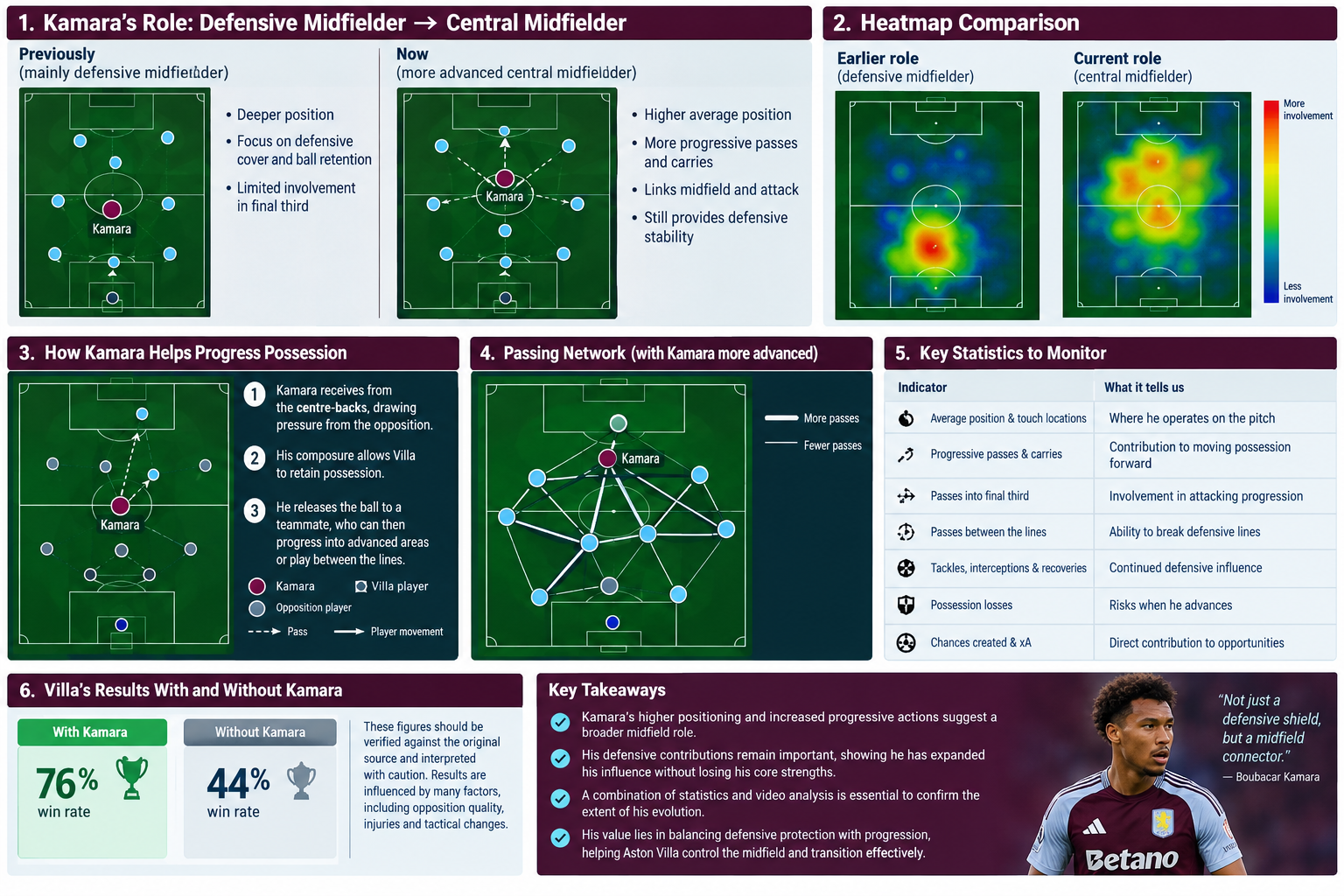
Assessing Boubacar Kamara’s development requires more than examining his nominal position. To determine whether he is taking on greater central-midfield responsibilities, analysts must evaluate his positioning, ball progression and defensive contribution.
Key indicators include:
Indicator Tactical significance
Average position and touch locations Shows where Kamara operates on the pitch.
Progressive passes and carries Measures his contribution to moving possession forward.
Passes into the final third Reveals his involvement in attacking progression.
Tackles, interceptions and recoveries Evaluates his continued defensive influence.
Possession losses Highlights potential risks when he advances.
Chances created and expected assists Measures his direct contribution to creating opportunities.
These statistics should be combined with video analysis. An increase in progressive passes and carries, alongside strong defensive numbers, could indicate that Kamara is expanding his influence without losing the qualities that make him effective in a deeper role.
What Villa's Results Can Tell Us
A previous version of this analysis cited a January 2026 BBC Sport report that reportedly recorded Aston Villa winning 76% of matches with Kamara and 44% without him. These figures should be verified against the original report before publication.
Although such a difference could highlight his importance, it does not prove that his presence alone determines Villa's results. Opponent quality, injuries and tactical changes must also be considered.
Ultimately, Kamara's value lies in his ability to combine defensive protection with midfield progression. The strongest evidence of his evolution would be improved ball progression and positional influence without compromising Villa's defensive balance.
9. The Limitations: What Kamara Needs to Become a More Complete Number Eight
Kamara's ability to operate in central midfield should not be confused with possessing every characteristic of a conventional attacking number eight.
There are important differences between progressing possession, creating chances and consistently influencing the final third.
Improving penetration
Kamara's value has traditionally been associated with ball retention, defensive work and the ability to connect teammates.
A more advanced role may require him to attempt more passes through compact defensive structures.
This involves recognising when an opponent has left a passing lane open and executing the forward pass before the opportunity disappears.
The objective should not be to encourage unnecessary risk. Instead, he must continue developing his ability to distinguish between situations in which retaining possession is appropriate and those in which a more ambitious pass could create a meaningful advantage.
Timing forward runs
An effective number eight must know when to arrive in advanced areas.
Moving forward too early can remove an important passing option from the build-up. Moving too late can allow the opposition to recover its defensive shape.
Kamara must therefore coordinate his movement with the ball carrier and his midfield partner.
His positional awareness provides a useful foundation, but an expanded role places additional demands on his timing and understanding of attacking spaces.
Preserving defensive coverage
The principal danger of moving Kamara higher is that Villa could lose their most reliable central defensive reference point.
If both midfielders advance simultaneously, the opposition may find space to attack through the middle when possession changes hands.
This is why positional rotation is so important.
Whenever Kamara advances, another player must understand how to maintain the team's balance. Likewise, when Kamara stays deeper, the more advanced midfielder must recognise the spaces available to receive possession.
The objective is to improve Villa's attacking potential without weakening their defensive structure.
Understanding the difference between progression and creation
A midfielder can be highly effective at progressing possession without being the team's principal chance creator.
Progression moves the ball from one phase of play to another. Creation involves the final or near-final action that generates a shooting opportunity.
Kamara can contribute to Villa's attacking development by carrying the ball forward, connecting teammates and opening passing lanes, even if other midfielders remain responsible for most of the team's chances.
His evolution should therefore be assessed according to the tactical responsibilities he performs rather than an expectation that he must become an attacking midfielder.
10. The Coaching Perspective: How Emery Can Maximise Kamara's Value
From a coaching perspective, the objective should be to expand Kamara's influence in possession while preserving his defensive strengths.
Three principles are particularly important.
Principle One: Encourage coordinated positional rotations
Kamara should have the freedom to advance when space becomes available, but his movement must be coordinated with his teammates.
If another midfielder advances, Kamara can provide cover. If a teammate drops deep to help the build-up, Kamara can move into a higher position when the structure permits.
These rotations allow Villa to alter their midfield shape without losing defensive balance.
They also make the team's attacking movements more difficult to predict because opponents cannot assume that each midfielder will occupy the same position throughout the match.
Principle Two: Improve his ability to receive on the half-turn
Receiving on the half-turn allows a midfielder to see both the ball and the direction of the attack.
For Kamara, this skill is particularly valuable when receiving between the opposition's pressing and midfield lines.
If he receives with his body facing his own goal, he may need an additional touch or a backward pass before progressing possession.
If he receives with his body open towards the opposition goal, he may be able to play forward immediately, carry the ball into space or find a teammate between the lines.
The difference can be decisive against opponents who press aggressively.
Developing this aspect of his game would help him turn secure possession into more effective progression.
Principle Three: Maintain clear defensive reference points
Even when Kamara advances, he must retain an understanding of the spaces he is responsible for protecting.
He needs to recognise when to remain behind the ball, when to move towards an opponent and when to protect the central channel.
His success should therefore be evaluated through both attacking and defensive outcomes.
A more advanced position is beneficial only if it improves the team's ability to progress possession without creating disproportionate defensive risks.
The ideal outcome is a midfielder who can influence attacks while retaining the awareness and discipline required to protect the team when those attacks break down.
11. Why Kamara's Development Matters to Aston Villa's Long-Term Structure
Kamara's importance extends beyond his individual performance because Aston Villa need a midfield capable of responding to different opponents and match situations.
Against an aggressive pressing team, they require composure and reliable passing options.
Against a compact defensive block, they need players who can move possession through central areas and create space for attacking teammates.
When protecting a lead, they require positional discipline and the ability to disrupt opposition attacks.
When chasing a goal, they need additional support in advanced areas without becoming unnecessarily vulnerable to counterattacks.
Kamara's combination of defensive awareness and technical ability gives Emery options across these different scenarios.
His versatility can also influence team selection. A manager who trusts a midfielder to protect the defence may feel more comfortable selecting a more attack-minded partner.
Likewise, a midfielder who can operate at different heights provides greater flexibility when the team needs to adjust its shape without making substitutions.
This versatility can become particularly valuable during a demanding season involving domestic and European competition, when injuries, suspensions and fixture congestion require changes to the starting eleven.
Nevertheless, Kamara cannot compensate indefinitely for poor spacing or uncoordinated movement elsewhere in the team.
His effectiveness depends on the relationships around him and the extent to which his teammates understand their responsibilities during different phases of play.
Villa's midfield must function as a coordinated unit rather than a collection of individuals performing isolated tasks.
Conclusion: The Defensive Anchor Who Gives Villa More Tactical Freedom
Boubacar Kamara's development at Aston Villa illustrates the changing demands of modern central midfield.
His defensive intelligence remains a defining quality, but his ability to retain possession, connect defensive and attacking phases, carry the ball forward and adjust his positioning allows him to influence a broader range of situations.
Under Unai Emery, these qualities are especially valuable because Villa's tactical system requires players to change positions and responsibilities without losing the team's overall structure.
Kamara can protect the defence when teammates advance, provide a passing option during build-up and support progression when the opposition leaves space in central midfield. When possession is lost, he can help close passing lanes and restore defensive organisation.
His contribution is therefore not adequately captured by goals and assists alone. Much of his influence lies in the spaces he protects, the passing options he provides and the freedom his presence gives other midfielders.
However, the most accurate interpretation of his evolution is not that he has abandoned the defensive-midfield position and become a conventional number eight. It is that he has developed the ability to perform additional central-midfield functions while retaining the defensive qualities that make him valuable.
Kamara's tactical importance lies in his ability to help Aston Villa advance without losing control of what happens behind the ball.
For Emery, this combination provides something more valuable than a simple positional conversion: a midfielder who can adapt to the demands of the match, complement different teammates and help maintain the balance between attacking ambition and defensive security.
That is what makes Kamara such an important component of Villa's midfield structure. He is not merely the player who protects the defence. He is also part of the mechanism that allows the team to progress, combine and attack with greater tactical freedo