
Jérémy Jacquet: The Defensive Evolution of Liverpool Under Andoni Iraola — From Rennes Prospect to Premier League Enforcer
Modern defending is no longer defined exclusively by tackles, clearances and the ability to win aerial duels. At the highest level, a centre-back must defend space, recognise danger before it develops, break opposition pressing lines, recover possession aggressively and initiate attacks without compromising the team's defensive structure.
This is the context in which Jérémy Jacquet's emergence at Liverpool FC becomes particularly interesting. Having developed through French football at Stade Rennais, the young French defender has quickly established himself as a significant component of Andoni Iraola's defensive structure during the 2026–27 campaign.
Jacquet's early performances suggest that Liverpool have acquired more than a physically capable centre-back. He brings front-foot defending, composure under pressure, progressive distribution and the confidence to defend away from the immediate protection of his defensive line. These qualities are especially valuable in a team whose tactical identity demands intensity without the ball and vertical progression when possession is recovered.
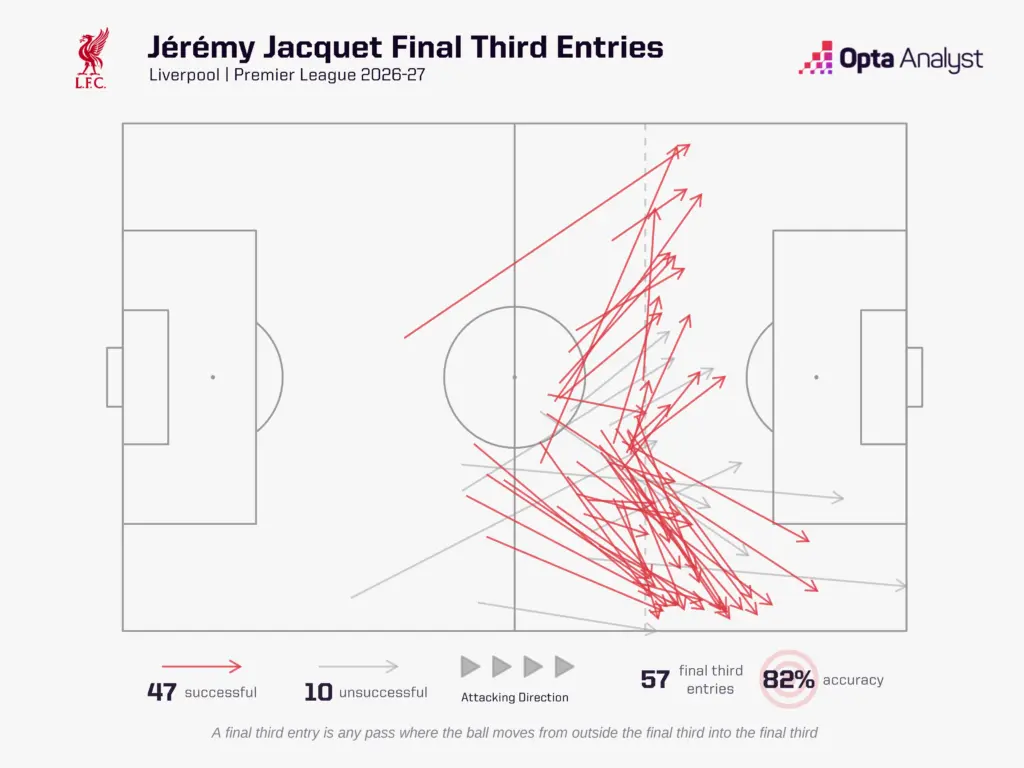
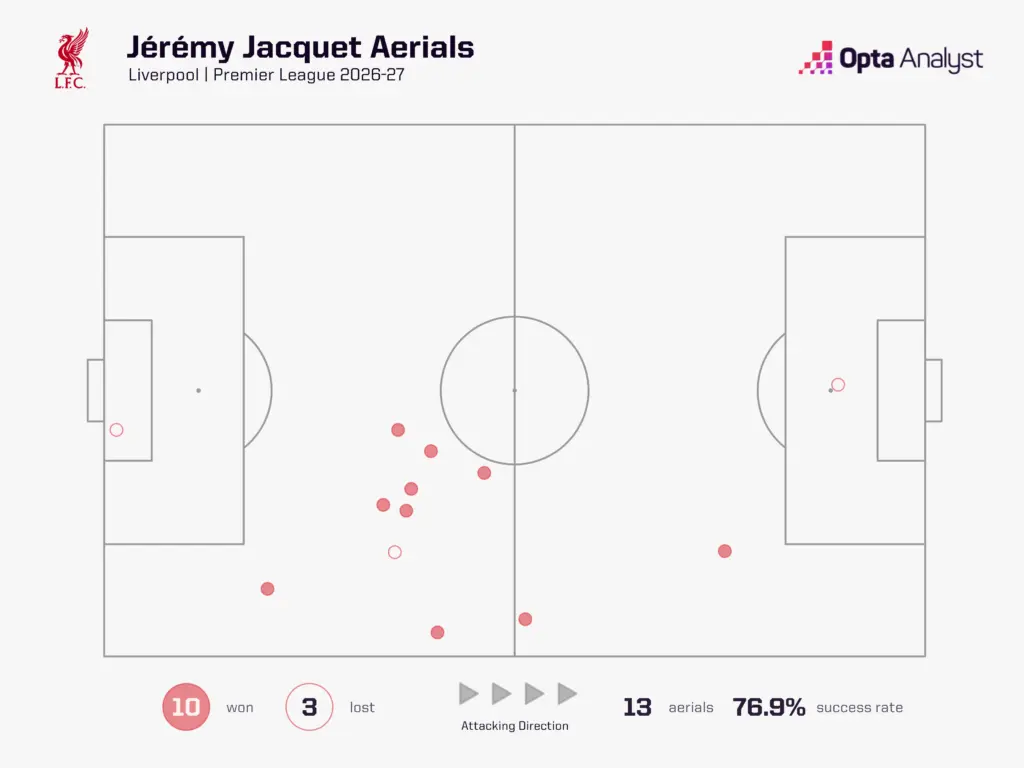
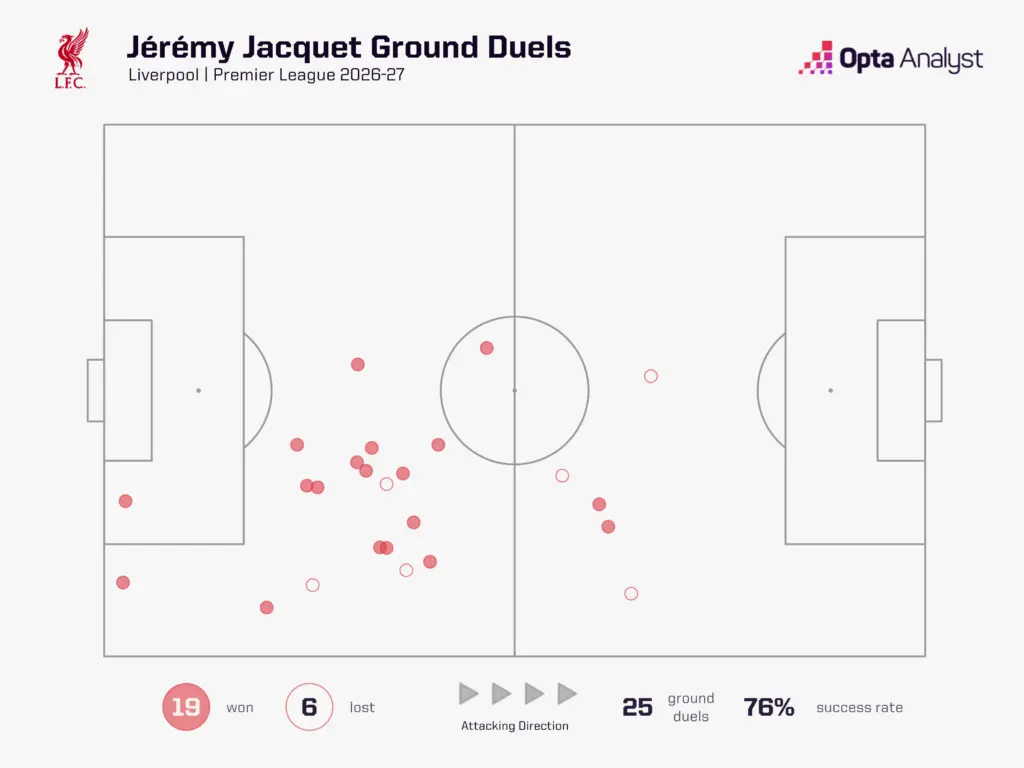
The statistical evidence is encouraging. According to Opta Analyst's assessment published on 11 October 2026, Jacquet had won 76% of his ground duels, 76.9% of his aerial duels and completed 73.3% of his attempted tackles under its specialised tackling measure. He had also attempted 57 passes into the opposition's final third in the Premier League.
Those numbers help explain why his adaptation has attracted attention. However, their real significance lies in how they translate into Liverpool's defensive organisation, build-up play and ability to control matches.
1. The Rennes years: Building the foundations of a modern centre-back
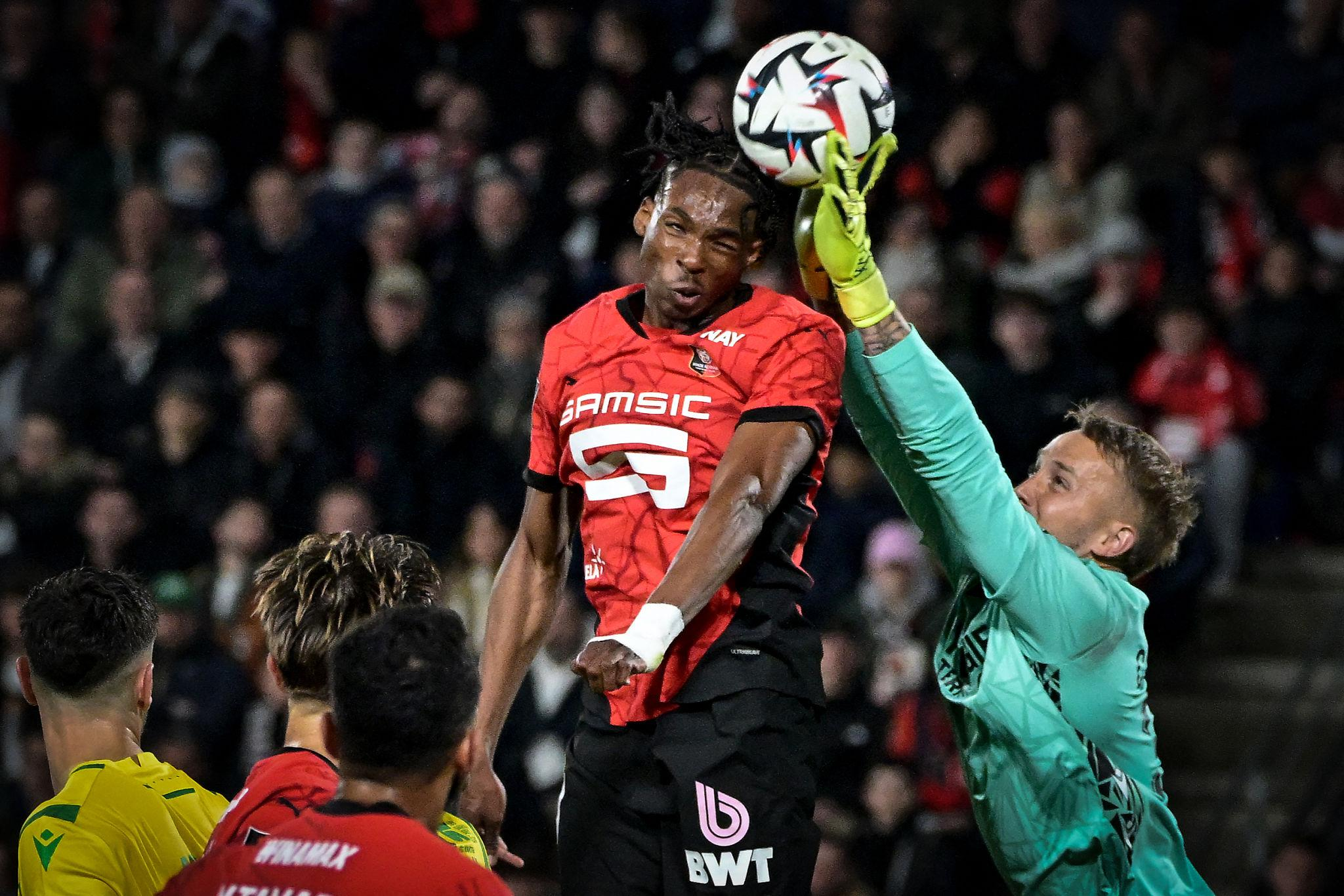
Jacquet's development at Rennes provided the foundation for the defender Liverpool now have at their disposal. Born on 13 July 2005, he progressed through French football at a young age, gaining senior experience with Rennes and during a loan spell at Clermont Foot before becoming a regular consideration in Rennes' first-team plans.
His progress was not simply a story of a young defender accumulating appearances. It was about developing the decision-making required to operate in defensive systems that ask centre-backs to do more than remain close to their penalty area.
Liverpool officially announced an agreement to sign Jacquet from Rennes in January 2026, with the defender scheduled to complete the remainder of the French campaign before moving to Anfield for the 2026–27 season. At the time of the announcement, he had made 18 Ligue 1 appearances that season and had accumulated 31 appearances for Rennes since his senior debut in January 2024. He had also featured for Clermont and helped France reach the 2024 UEFA European Under-19 Championship final, earning selection in the tournament's Team of the Tournament.
What Rennes taught him
The first major component of Jacquet's development was his willingness to defend forward.
Some centre-backs instinctively retreat when an attacker receives possession between the lines. Jacquet's emerging profile suggests a different response: assess the receiver's body orientation, close the space and challenge before the attacker can turn and accelerate.
This approach can disrupt an opponent's attack at its source. Instead of allowing a midfielder to turn and play a pass into the striker, the centre-back attempts to remove that passing opportunity before the move develops.
The second component was his development in possession. Playing at Rennes gave him experience of a football environment in which defenders must contribute to the first phase of construction, rather than simply passing sideways to a full-back or clearing the ball under pressure.
The third was his exposure to senior football while still young. Experience at Clermont and Rennes gave him opportunities to learn when to engage an opponent, when to protect the space behind him and when to simplify his distribution.
These are not qualities that automatically make a defender elite. They provide the foundations on which tactical discipline, physical adaptation and consistent decision-making can be built.
Why Liverpool were prepared to invest
Liverpool's reported £60 million agreement for Jacquet represented a substantial investment in a young defender whose senior experience was still developing. The club's decision reflected the potential value of securing a centre-back who could contribute both immediately and over the longer term.
His profile offered three particularly attractive qualities:
- Defensive aggression: a willingness to engage attackers before they can establish control.
- Technical security: the ability to move possession forward rather than treating every pressured situation as a clearance.
- Developmental potential: the opportunity to refine his positioning and decision-making alongside experienced defenders.
The move also placed him in a demanding environment. Playing for Liverpool means defending large spaces, managing transitions and coping with opponents who can punish a single positional error. The challenge was to translate his promise in France into reliable performances in English football.
His opening months suggest that he has made an encouraging start.
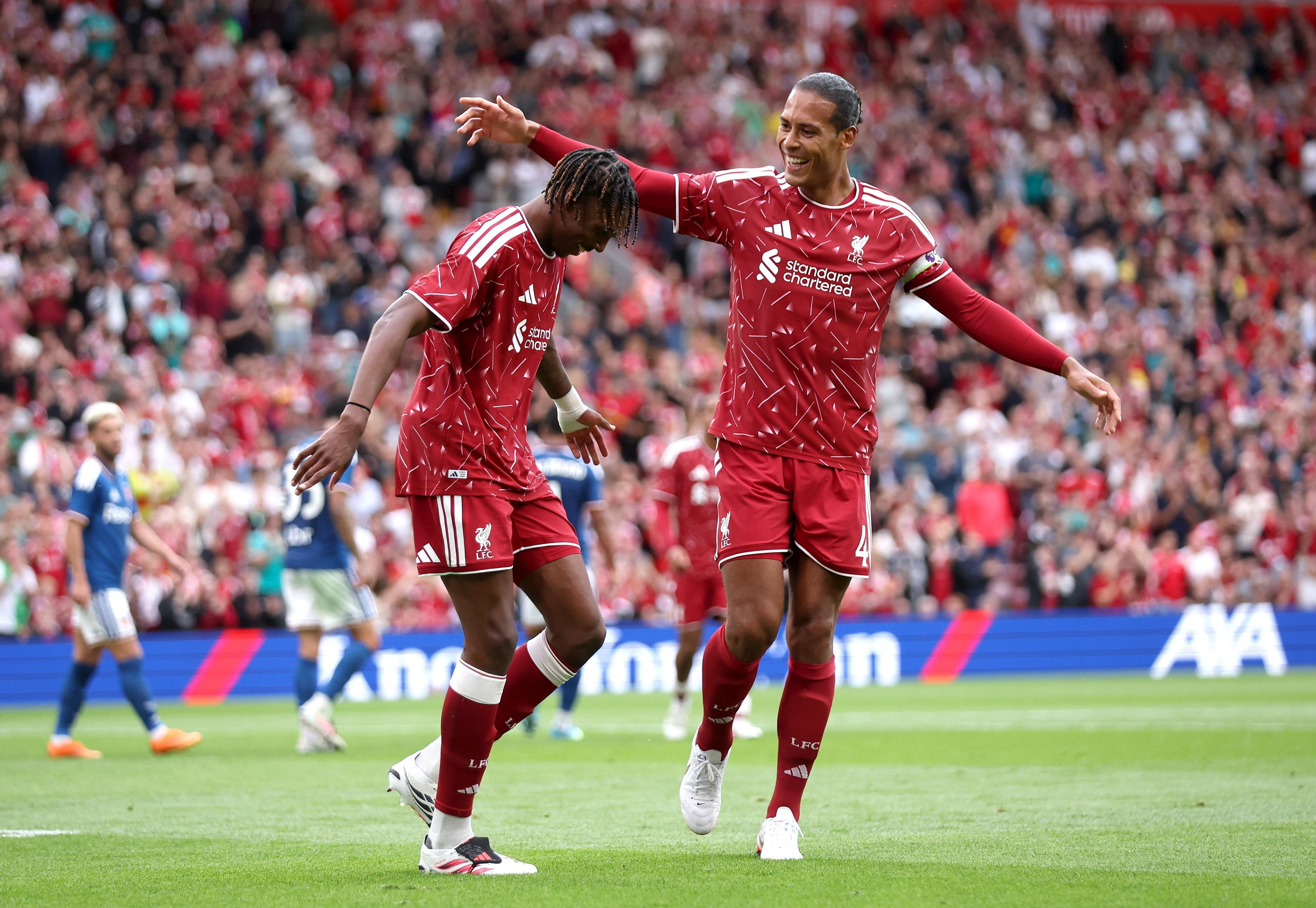
Jacquet's arrival at Liverpool coincided with a significant change in the club's centre-back options. The departure of Ibrahima Konaté to Real Madrid opened a route into the starting eleven, while Virgil van Dijk provided the experience and leadership needed to support a younger defensive partner.
The interesting part is not simply that Jacquet has played regularly. It is the nature of the responsibilities entrusted to him.
Iraola has asked him to defend aggressively, maintain the team's compactness, cover space when the defensive line is stretched and contribute to Liverpool's progression with the ball. This requires a centre-back who can make decisions quickly rather than one who depends on a deep defensive block for protection.
A statistical snapshot of Jacquet's form
The following figures, published by Opta Analyst on 11 October 2026, provide a useful snapshot of his Premier League performances. They should be treated as an early-season sample, not a definitive measure of his long-term level
Ground duels won
19 of 25
Aerial duels won
76.9%
10 of 13
Tackling success
73.3%
11 of 15 true tackles
Final-third passes attempted
57
Premier League
Long passes completed
23/36
64% completion
Interceptions per 90
1.7
Early-season average
These numbers point towards a defender who contributes in three connected areas: stopping attacks, winning possession and moving the ball into dangerous territory.
The most important distinction is between defensive activity and defensive effectiveness. A defender can make numerous tackles because his positioning is poor, or complete many passes without actually advancing his team's attack. Jacquet's duel success and forward-passing numbers suggest that his activity has been productive in both phases.
The comparison with Konaté
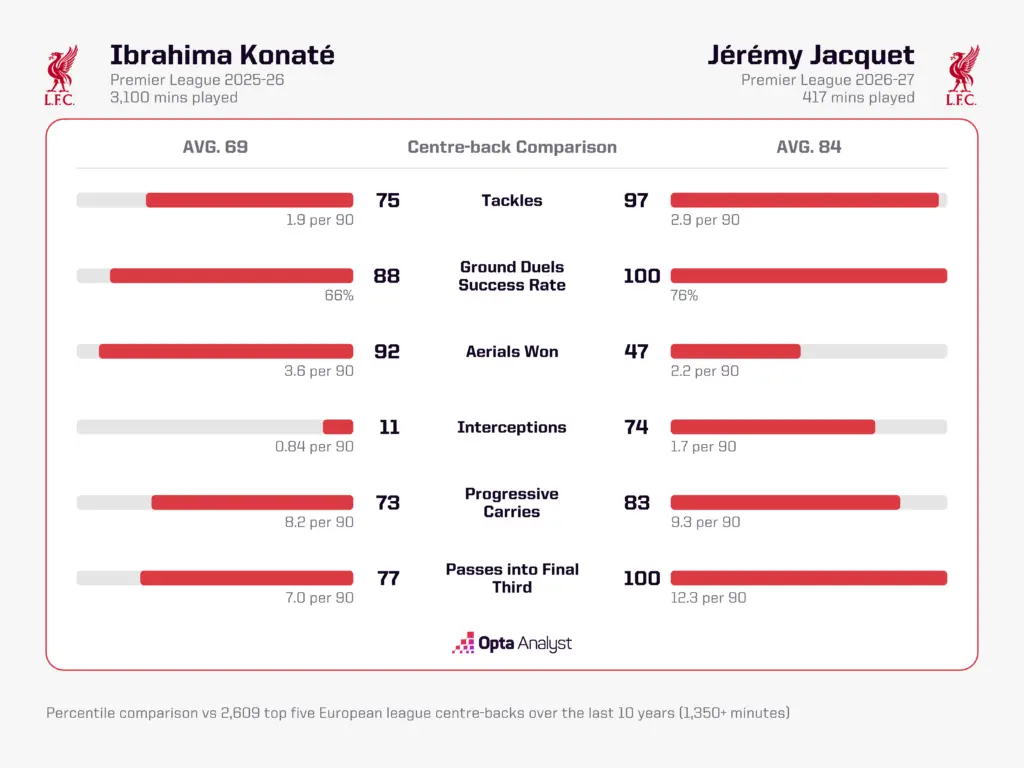
The comparison suggests that Jacquet offers more frequent intervention on the ground, more interceptions and slightly more progressive carrying. Konaté, meanwhile, recorded more aerial duels won per 90.
That distinction matters because Liverpool are not necessarily replacing Konaté with a defender who performs every task identically. They are introducing a player whose early output points towards a more proactive contribution to pressing, interceptions and progression.
However, the sample sizes, opponents, tactical responsibilities and stages of the season differ. These figures do not prove Jacquet is already a better centre-back overall. They show why his profile is particularly attractive to Iraola.
3. How Jacquet is strengthening Liverpool's defensive structure
A. Front-foot defending: stopping danger before it develops
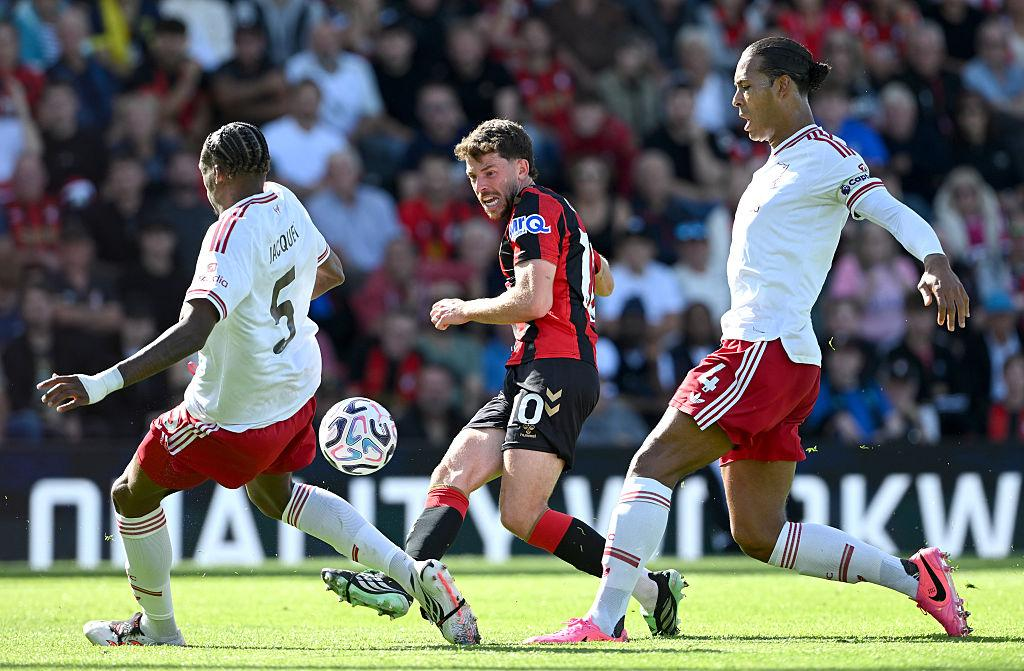
One of Jacquet's most valuable traits is his willingness to engage an attacker early.
Imagine an opposition midfielder receiving the ball between Liverpool's midfield and defensive lines. The striker is positioned between the centre-backs, while a winger begins a diagonal run behind the full-back. Jacquet must make a rapid decision. If he stays too deep, the midfielder can turn and play a pass through the defensive line. If he steps forward without sufficient cover, a simple one-touch pass can expose the space behind him.
His front-foot approach allows him to close down the receiver before the attack develops. If he wins the ball, Liverpool can immediately transition into attack. If the opponent plays backwards, the press has still succeeded in reducing forward momentum.
This is the value of proactive defending: it can prevent an opponent from reaching the stage where a tackle inside the penalty area becomes necessary.
Opta's early-season figures support this interpretation. Jacquet had attempted 15 true tackles and succeeded in 73.3% of those actions, while recording 1.7 interceptions per 90 minutes.
The tactical caveat is equally important. A defender who steps forward must read the movement of his partner and the holding midfielder. Aggression without coordinated cover creates gaps; aggression supported by good positioning can suffocate an attack.
B. Recovery defending and protecting space behind the line
Liverpool's defensive line cannot always remain close to its goalkeeper. When the team presses high, the centre-backs must defend considerable space behind them.
Consider an opponent who beats Liverpool's first pressing line with a pass into midfield. The receiver immediately releases a runner into the channel between Jacquet and the right-back.
Jacquet has to turn, accelerate, judge the runner's angle and decide whether to attack the ball or delay the move until support arrives. His positioning before the pass is crucial: a defender who anticipates the danger can begin recovering before the runner gains a decisive advantage.
This is where his combination of anticipation and willingness to engage becomes important. He can help Liverpool defend higher up the pitch without automatically retreating towards the penalty area every time possession is lost.
Nevertheless, no centre-back can eliminate the danger of balls played behind a high line. Liverpool still need their full-backs to recover intelligently and their midfielders to counter-press, preventing opponents from playing uncontested passes into open space.
C. Ground duels: controlling the space around the striker
Centre-backs are frequently judged on their aerial dominance, but modern attacks often depend on combinations played along the ground.
A striker might receive with his back to goal, attempt to roll his marker and lay the ball off to an advancing midfielder. Jacquet's ability to contest ground duels gives Liverpool an opportunity to disrupt this sequence before the second attacker can receive possession facing forward.
His 19 wins from 25 ground duels, or 76%, provide evidence of early-season effectiveness in these situations.
This matters particularly against teams that use a mobile centre-forward rather than a traditional target man. Such strikers try to pull centre-backs out of position, create space for runners and turn simple passes into dangerous combinations.
Jacquet's challenge is to remain aggressive without following the striker too far. Sometimes the best defensive action is to hold the line, allow a midfielder to apply pressure and protect the space behind.
That ability to distinguish between a duel he should contest and a movement he should track will be an important measure of his continued development.
D. Aerial security and second-ball control
Jacquet's aerial numbers are another encouraging element of his adaptation.
He won 10 of his first 13 Premier League aerial duels in Opta Analyst's October assessment, a success rate of 76.9%. His 75.5% aerial success in Ligue 1 the previous season suggests this was not merely a sudden improvement after moving to England.
Opta Analyst
Consider an opponent playing directly towards a centre-forward to bypass Liverpool's press. Jacquet must judge the flight of the ball, make contact while under pressure and direct the clearance towards a teammate rather than simply sending it back into the danger area.
Winning the initial header is only the first task. Liverpool's midfield must also be positioned to collect the second ball. If Jacquet wins the aerial contest but the opposition recovers possession immediately, the defensive benefit is reduced.
His aerial competence therefore gives Iraola a useful first line of protection against direct football, but it works best when the whole team remains organised around the expected second ball.
4. The Bournemouth performance: A practical demonstration of Jacquet's value
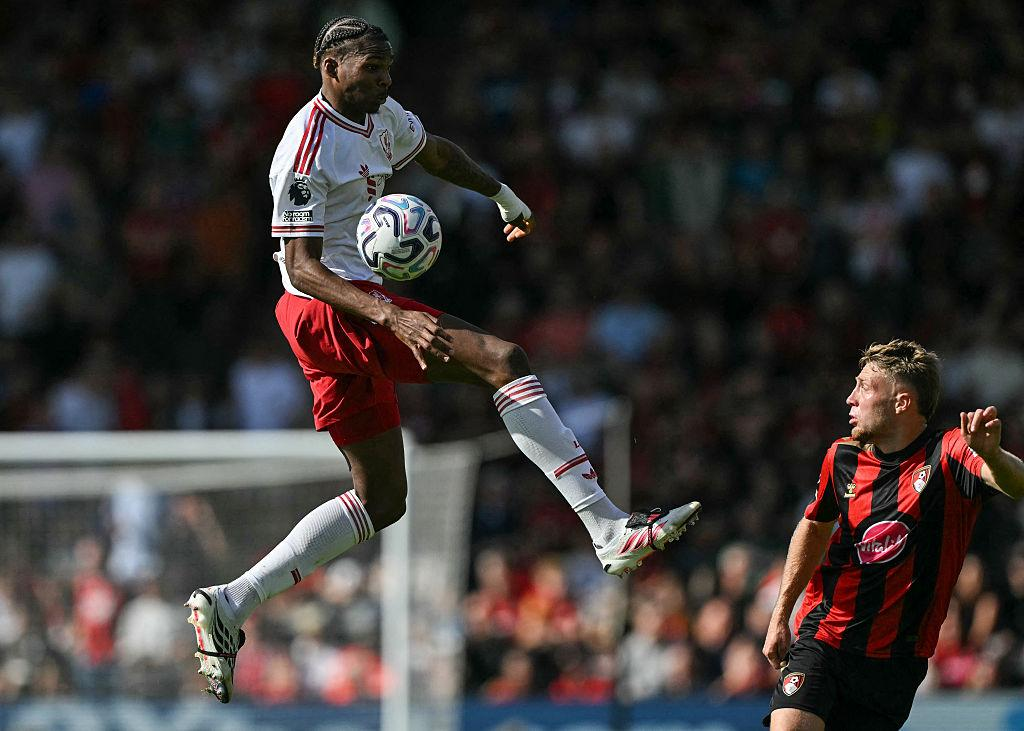
One of the clearest illustrations of Jacquet's contribution came in Liverpool's 1–0 victory away to Bournemouth on 20 September 2026.
Liverpool's official match analysis highlighted his positioning, vital interceptions and a last-ditch block. Bournemouth were restricted to an expected-goals total of 0.76, their lowest at home in the Premier League up to that point in 2026. Jacquet was awarded Player of the Match.
His performance is worth examining because it brought together the defensive and technical qualities that make him suited to Iraola's system.
Trait one: Anticipation rather than reactive defending
Interceptions are particularly valuable when they prevent a pass from reaching its intended recipient.
Imagine Bournemouth progressing through midfield, attempting to find an attacker positioned between Liverpool's defensive and midfield lines. Jacquet must recognise the intended passing lane and move towards the ball before it reaches the receiver.
If he reads the situation correctly, he can cut out the pass without needing to commit to a tackle. Liverpool then regain possession while the opposition is still spread across the pitch.
This is an important distinction. A reactive defender responds after an opponent has established control; an anticipatory defender can prevent that control from being established in the first place.
Jacquet's recorded interceptions and the defensive actions highlighted in Liverpool's analysis support the view that anticipation is an important part of his game. The match report does not, however, provide a complete breakdown of every interception or the exact passing sequence behind each one.
Trait two: The last-ditch block
The same Bournemouth performance featured a last-ditch block, demonstrating that Jacquet's proactive approach does not mean he is unwilling to defend close to his own goal.
When an opponent breaks through the initial defensive pressure, the centre-back must switch from anticipation to emergency defending. That requires him to adjust his body position, close the shooting angle and time his intervention without unnecessarily exposing the goalkeeper.
The ability to perform both tasks matters. A centre-back who only excels at stepping into midfield can become vulnerable when an opponent bypasses the press. Jacquet's Bournemouth performance offered evidence of his ability to contribute in both situations.
Trait three: Passing that advances the team
Jacquet recorded 71 touches and completed 54 of 61 passes against Bournemouth. Ten of those passes were classified by Opta as line-breaking.
88.5% Pass completion
10Line-breaking passes
71 Touches
0.76 Bournemouth expected goals
These numbers illustrate why his contribution cannot be assessed solely by looking at tackles and clearances.
When a centre-back breaks an opposition line with a pass, he can eliminate several opponents from the immediate defensive phase and allow a midfielder or forward to receive possession facing the opposition goal.
That can accelerate Liverpool's attack, force the opposing midfield to retreat and create opportunities before the opposition has reorganised its defensive block.
The Bournemouth match is therefore a useful example of Jacquet's overall value: he helped Liverpool restrict chances while also contributing to the construction of their attacks.
5. What Jacquet adds to Iraola's tactical setup
Iraola's football is associated with aggressive pressing, compactness around the ball, rapid transitions and defenders who can participate actively in possession. At Liverpool, Jacquet's qualities give him another way to implement those principles.
The central tactical question is this: Can Liverpool defend aggressively while maintaining enough technical control to avoid giving possession straight back to the opposition?
Jacquet's early performances suggest he can help.
A. Building from the back without sacrificing forward momentum
One of the challenges for teams that dominate possession is moving the ball beyond the opposition's first pressing line.
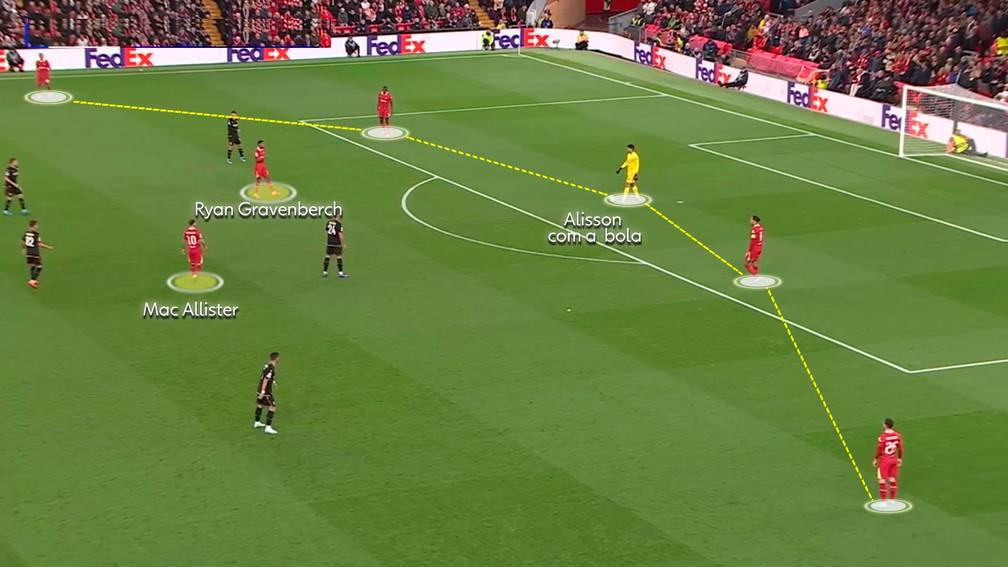
Suppose Liverpool's goalkeeper plays to Van Dijk, who attracts an opposition forward. The opponent's midfield then shifts towards Liverpool's left side, attempting to block the passing lanes into the centre.
Jacquet's positioning on the other side of the defensive line gives Liverpool another passing option. If the pressing forward moves towards Van Dijk, Jacquet can receive the ball and look for a forward pass into midfield, a diagonal ball towards the full-back or a longer pass into the attacking half.
The important point is that he does not have to force the forward pass every time. If the opposition has closed the central route, recycling possession can be the correct decision.
His 57 passes into the opposition's final third and 23 completed long passes from 36 attempts, as recorded in the October Opta assessment, indicate that he has already contributed to Liverpool's vertical progression.
For Iraola, this makes Jacquet more than a defender who protects the goal. He can help Liverpool move their attacking structure up the pitch.
B. Compressing the pitch through aggressive positioning
A high defensive line can make a team more compact because the defenders remain close to the midfield. That reduces the space in which opponents can receive the ball and turn.
However, the system only works if the defenders recognise when to step forward and when to retreat.
Consider an opposition midfielder receiving the ball with his back to goal. Jacquet can advance to challenge him, while Van Dijk remains positioned to protect the deeper space. If the midfielder is unable to turn, Liverpool's pressure can force a backward pass or a turnover.
If the midfielder succeeds in releasing a runner behind Jacquet, Van Dijk and the goalkeeper must be prepared to cover the exposed space.
This is where the partnership becomes crucial. Jacquet's aggression can be an asset when coordinated with Van Dijk's positioning and leadership; without that coordination, the same trait can create vulnerabilities.
C. Counter-pressing after possession is lost
Counter-pressing means attempting to recover possession immediately after losing it, before the opponent can organise a counterattack.
Centre-backs contribute by advancing behind their midfielders, closing passing lanes and preventing the opposition from playing an easy forward pass.
Imagine Liverpool lose possession in the attacking half. The nearest midfielder presses the ball carrier, while Jacquet moves forward to reduce the space available to an opposition striker dropping into midfield.
If the ball is played into that striker, Jacquet can challenge the receiver. If the opponent instead attempts a pass into the channel, he must turn and protect the space behind.
This is a demanding role because it requires him to defend both the immediate passing option and the threat of a ball played beyond him.
His early interception and ground-duel figures suggest that he has the attributes to contribute to this approach. They do not, by themselves, measure Liverpool's counter-pressing effectiveness, which depends on the coordinated movements of the entire team.
D. Turning defensive recoveries into attacking opportunities
The transition immediately after a regain is another area in which Jacquet's distribution can be valuable.
A conventional defensive clearance might relieve pressure but return possession to the opposition. Jacquet's ability to find a teammate further up the pitch creates the possibility of turning the regain into an attacking move.
For example, after intercepting a pass into the striker, he could find a central midfielder who has moved into space. That midfielder can then play forward to an attacker before the opposition restores its defensive shape.
Alternatively, Jacquet can use a longer pass to bypass the opposition midfield entirely.
His 23 completed long passes from 36 attempts provide evidence of his willingness and ability to use this option. The quality of those passes and the team's subsequent decisions will determine how often they produce genuinely dangerous attacks.
The tactical benefit is clear: Liverpool can move from defending to attacking with fewer unnecessary touches, provided the forward players are positioned to receive the ball.
6. Key traits: A coaching assessment
The following assessment summarises the qualities Jacquet has demonstrated and the tactical conditions under which they are most valuable.
1. Front-foot defending

Jacquet is prepared to leave the defensive line to challenge a receiver. This can interrupt attacks before the opponent turns and progresses. The coaching priority is ensuring that a teammate covers the space he vacates.
2. Aerial competitiveness

His early 76.9% Premier League aerial success gives Liverpool an encouraging option against direct passes and crosses. Consistency across a larger sample will determine how sustainable that level is.
3. Progressive distribution
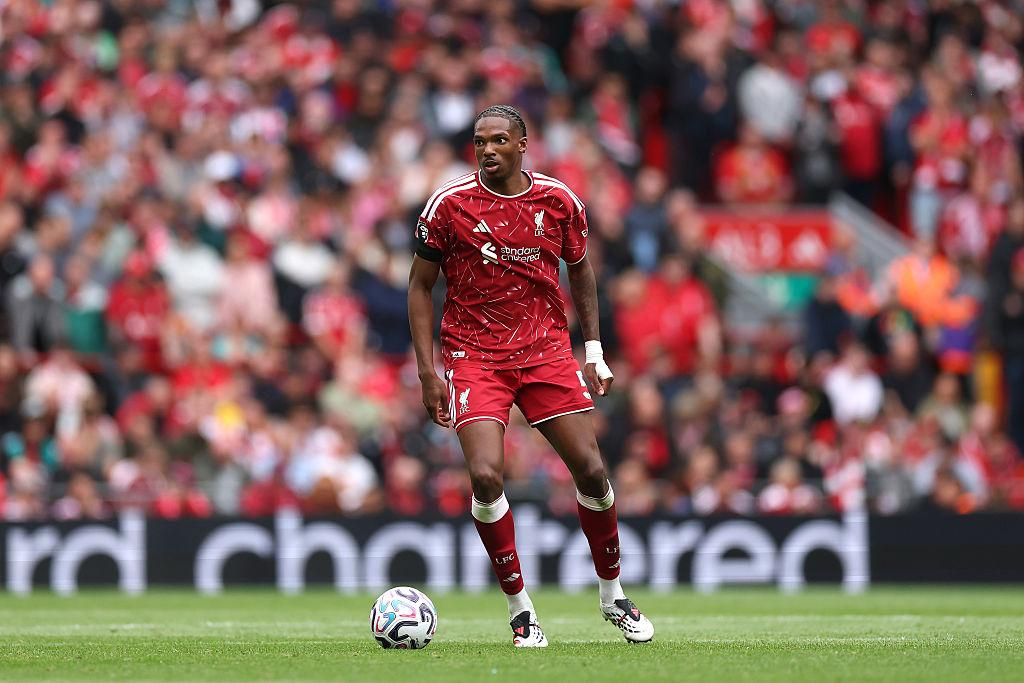
His line-breaking and long passing can bypass opposition pressure. He gives Iraola a centre-back capable of contributing directly to territorial progression rather than simply circulating possession.
4. Interceptions and anticipation
Reading the opponent's intentions allows him to intervene before a pass reaches its target. The risk is overcommitting to an anticipated pass and leaving an opponent free in the space behind.
5. Partnership potential
Playing alongside Van Dijk gives Jacquet an experienced defensive reference point. Their coordination will be particularly important when Liverpool press high, defend transitions and face strikers who move away from the centre-backs.
7. Current form: How has Jacquet started the 2026–27 season?
As of 19 October 2026, Jacquet's opening Premier League performances have been among the encouraging developments in Liverpool's season.
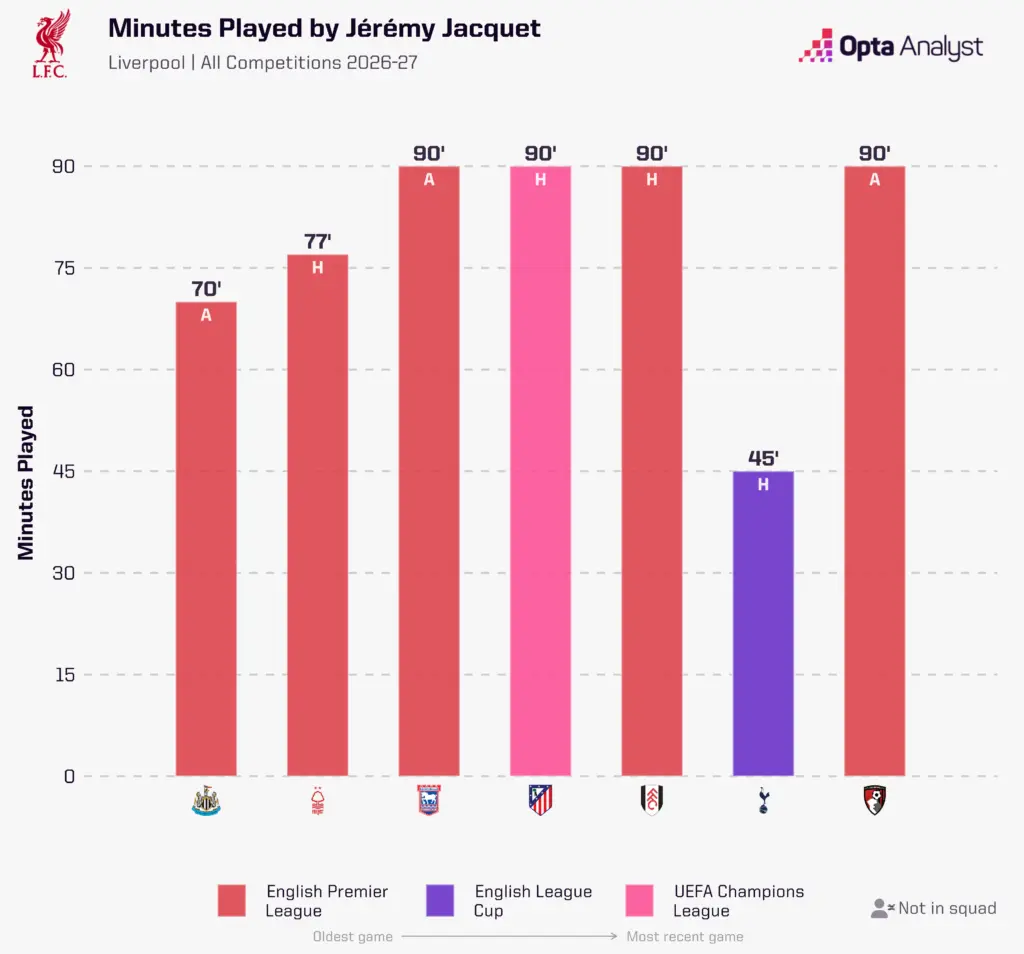
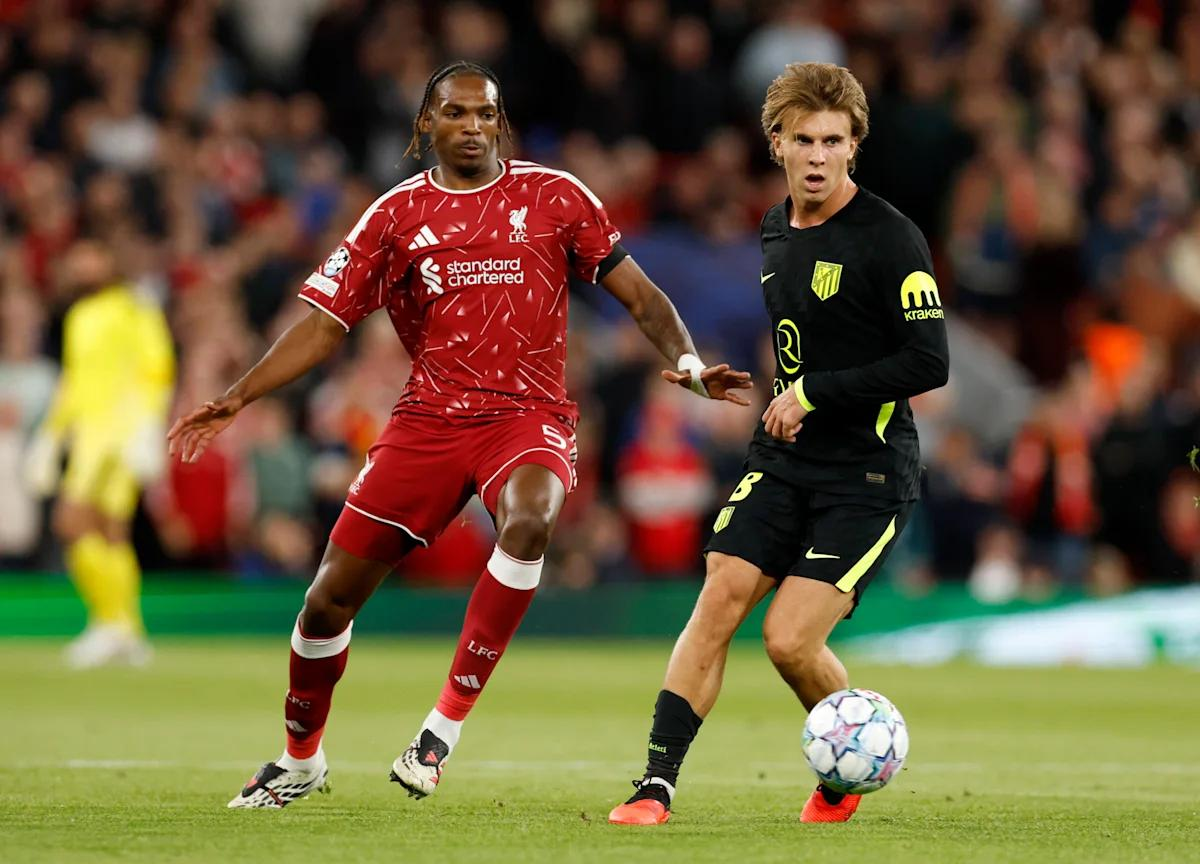
Opta Analyst reported on 11 October that he had started Liverpool's first five league matches and their Champions League victory over Atlético Madrid. Its subsequent player record listed him as having appeared in all seven of Liverpool's Premier League matches, starting each one. He also played the full 90 minutes in Liverpool's 2–1 victory over Brentford on 17 October.
His performance against Bournemouth was particularly important because it combined defensive reliability with effective ball progression. The three consecutive league clean sheets achieved around that period also provided evidence of Liverpool's improving defensive organisation, although clean sheets are a collective outcome rather than the achievement of one centre-back alone.
Jacquet's first senior France call-up further reflected his growing reputation. He started Nations League matches against Türkiye and Italy, with Zinedine Zidane praising his bravery and performances in duels. He subsequently missed the return fixture against Italy after what Zidane described as a slight knock.
His start has not been completely free of concerns. He was substituted early in matches against Newcastle United and Nottingham Forest while his minutes were being managed following fitness setbacks. Centre-back also remains a position where one positional error can have a disproportionate impact on the result.
The sensible conclusion is that Jacquet has made an impressive start, rather than that he has already established himself as a finished product.
8. What still needs improvement?
A detailed assessment should consider the limitations alongside the strengths.
First, consistency in defending space. His aggressive approach can be effective, but experienced forwards will try to exploit the space he leaves when stepping out of the defensive line. He must learn when to challenge and when to maintain the defensive structure.
Second, decision-making under pressure. His progressive passing is an asset, but forward passes in congested areas carry risk. The ability to recognise when to play forward and when to retain possession is central to becoming a dependable first-choice centre-back.
Third, sustained performance over a full season. Early-season duel percentages can fluctuate significantly as the number of contests increases. Liverpool will need to see these qualities maintained against different types of opponents, including physical target forwards, quick transition teams and sides that dominate possession.
Fourth, partnership coordination. Jacquet's ability to defend forward must be matched by Van Dijk's positioning, the full-backs' recovery runs and the midfield's protection of central areas. Defensive stability cannot be built around one player's individual statistics.
These are not reasons to dismiss his start. They are the areas that will determine whether promising early form develops into elite-level consistency.
9. The bigger picture: Is Jacquet changing Liverpool's defence?
The most persuasive argument in Jacquet's favour is that he is contributing to more than one phase of Liverpool's play.
Defensively, he has demonstrated an ability to contest ground and aerial duels, intercept passes and challenge attackers before they can establish control. In possession, he has shown that he can break lines and distribute over longer distances. Those two dimensions complement Iraola's preference for a team that presses aggressively and moves the ball forward with purpose.
His development also gives Liverpool a potentially valuable long-term option at centre-back. At 21, he has the opportunity to improve his reading of the game while learning alongside an experienced defender in Van Dijk.
It would be premature to declare him a definitive upgrade on Konaté after a limited comparison across different seasons. Nevertheless, the early statistical evidence suggests that Jacquet can offer Liverpool a different and potentially valuable defensive profile.
For Iraola, the attraction is not simply the prospect of another defender who can make tackles. It is the prospect of a centre-back who can defend aggressively, win possession and help launch the next attack.
The verdict: Jérémy Jacquet is improving Liverpool's defensive options by combining front-foot defending with progressive distribution. His Bournemouth performance provided the clearest early example of those qualities working together, while his subsequent league appearances have reinforced the impression that he can handle significant responsibility. The next step is to sustain that level against a broader range of opposition and demonstrate that his aggression, positioning and technical security remain reliable throughout the season.
If he continues to develop in those areas, Jacquet could become an important part of the defensive foundation on which Iraola builds Liverpool's next phase.