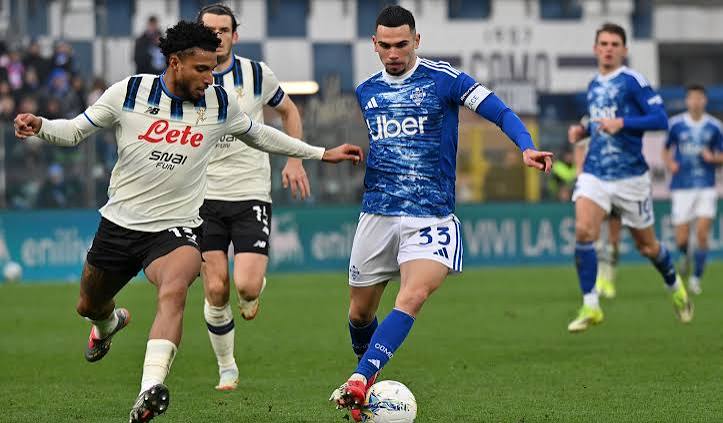
Lucas Da Cunha: From Serie B Reinvention to France Debut Dominance – A Technical Midfielder’s Breakthrough
Lucas Da Cunha played 89 minutes against Belgium and 87 minutes against Italy in the ongoing UEFA Nations League.He had a stellar debut against Belgium, averaging 97 touches, recording high recoveries, and earning praise for his work rate and technical control in midfield. He was never in doubt against Italy, averaging 78 accurate passes, but made a costly defensive error that led to Italy's 68th-minute equaliser before being subbed off. Lucas made 83 completed passes from 89 attempts, a completion rate of roughly 93%. He completed 6 of 8 long passes, highlighting his ability to switch play from deeper areas. He made 6 recoveries, won 4 duels, and made 2 tackles. He hit the post with a long-range effort in the second half and maintained possession effectively despite Belgium's pressing, rarely surrendering the ball unnecessarily. These performances open the player up to evaluation as we delve into what makes him unique and why his skill trait is crucial to the Zidane setup.
BACKGROUND
Lucas Da Cunha, born on 9 June 2001 in Roanne, France, is a youth product of Rennes. He established himself as a highly regarded youth prospect, representing France from U16 to U19 level and winning both the UEFA European Under-17 and Under-19 titles. He was particularly decisive in the 2019 U19 final, scoring a hat-trick. In the final of the 2018–19 Championnat National U19, he scored a hat-trick to help his team lift the trophy. In December 2017, Da Cunha signed his first professional contract with Rennes. He made his professional debut in a 3–2 Coupe de la Ligue loss to Amiens on 18 December 2019.
His transition to senior football, however, was less straightforward. On 30 September 2020, Da Cunha signed a contract with Nice. He subsequently joined Lausanne-Sport on a season-long loan.[5] On 17 January 2022, Da Cunha joined Clermont on a loan deal until the end of the season. He accumulated relatively modest Ligue 1 experience and struggled to establish himself as a regular at the highest level in France. On 16 January 2023, Nice sold Da Cunha to Serie B club Como for €500,000 under Cesc Fàbregas. He signed a contract until the end of June 2026.
The move created a shift;Da Cunha underwent a significant tactical transformation. Originally used primarily as a wide or attacking player, he was gradually converted into a central midfielder capable of operating deeper in possession. The positional change proved decisive. Da Cunha became an important part of Como's promotion campaign, helped the club establish itself in Serie A and subsequently developed into one of its most influential players. By 2026, he had also assumed the captaincy, reflecting his growing importance both on and off the pitch.
He possesses dual French-Portuguese nationality through his Portuguese father, but remained committed to France after progressing through the country's youth system. His club form eventually earned him a first senior call-up from Zidane for the 2026–27 UEFA Nations League.
The Midfielder Created by Reinvention
The most interesting aspect of Da Cunha's development is that he did not abandon his attacking instincts when he moved deeper.
He carried them with him.
That distinction is important.
A converted midfielder can sometimes become overly conservative, focusing almost exclusively on circulation and defensive positioning. Da Cunha has retained the creativity of his earlier career while adding the responsibilities of a central midfielder.
His left foot gives Como and now France an additional angle of progression.
From deeper positions, he can receive possession, turn away from pressure and immediately look forward. His passing repertoire allows him to combine short passes around the first line of pressure before switching play into wider areas.
This makes him particularly useful in possession-oriented structures.
He doesn't need to dominate the ball with spectacular actions. Instead, his influence comes from repeatedly making the correct decision.
Receive.
Scan.
Turn.
Progress.
Recycle.
Switch.
Repeat.
That rhythm is central to his game.
What Makes Da Cunha Different?
The modern number six exists in several forms.
Defensive specialists focus on protection.
Physically dominant midfielders cover enormous spaces.
Controllers use possession as their primary weapon.
Da Cunha sits somewhere between these categories.
He is not necessarily the most physically imposing midfielder, particularly given his approximately 1.74m frame. Nor is he a traditional ball-winning destroyer.
His defensive game instead relies heavily on anticipation, positioning and reading the next action.
He attempts to arrive before the duel rather than relying exclusively on winning the duel itself.
That distinction is crucial.
Technical Security
Da Cunha's first touch allows him to receive the ball without immediately being forced backwards.
This is particularly valuable in central midfield because receiving between opposing lines carries significantly greater risk than receiving in wide areas.
His ability to orient his body before receiving lets him move forward quickly.
Progressive Passing
His left foot provides a natural passing angle that can open different routes through midfield.
He can combine with nearby players through short passes before attempting to break defensive lines with a forward ball or diagonal switch.
This makes him an important connector between defence and attack.
Tempo Control
One of his most understated qualities is his ability to control rhythm.
A midfielder does not always have to accelerate the game.
Sometimes the correct decision is to slow it down.
Da Cunha appears comfortable with both.
When space exists, he can accelerate circulation. When pressure becomes intense, he can recycle possession and allow his team to reorganise.
Press Resistance
His technical quality becomes especially valuable when opponents attempt to press aggressively.
Rather than immediately releasing the ball, he can use his first touch and body orientation to escape pressure.
This creates an important tactical advantage.
If an opponent commits an additional player to press him and Da Cunha escapes that pressure, the opposition has effectively removed one player from another area of the pitch.
That can create the next passing opportunity.
Defensive Intelligence Rather Than Physical Dominance
Perhaps the biggest misconception about Da Cunha is judging his defensive ability solely by physical characteristics.
He is not built like a traditional destroyer.
But defensive midfield is not exclusively about physical power.
Positioning can prevent danger before a tackle becomes necessary.
Da Cunha's ability to occupy the right space lets him intercept passing lanes, win second balls, and protect the centre-backs.
His defensive contribution is therefore based more on anticipation than confrontation.
This will remain an important area of development at international level because elite midfielders will test him physically and tactically.
But his early performances suggest he understands the defensive responsibilities of playing as the deepest midfielder.
Why the Positional Change Matters
Da Cunha's story also illustrates how modern football increasingly values positional flexibility. The player who arrived at Como was not simply converted from winger to midfielder overnight.
Instead, his existing qualities were repurposed.
His attacking instincts became useful for moving the ball forward.
His technical ability became useful for receiving under pressure.
His vision became useful for switching play.
His movement became useful for finding passing angles.
The positional transformation therefore did not erase his identity.
It expanded it.
That may ultimately be the most important achievement of his development.
The Zidane Factor
From a tactical perspective, Da Cunha's profile is an understandable attraction for Zinédine Zidane.
France already possesses midfielders with physical power, athleticism and defensive intensity. What Da Cunha could offer is a different dimension: a left-footed controller who can operate deep while still adding progressive value.
His ability to receive the ball under pressure can help France build from the back.
His passing range can help manipulate defensive blocks.
His positioning can provide structural balance.
His attacking instincts mean he is not simply a safety-first midfielder.
The challenge now is consistency.
International football provides fewer opportunities to build chemistry than club football. Da Cunha has spent years learning Como's movements, patterns and positional relationships. France requires him to build those connections much faster.
His early performances suggest that the transition has been remarkably smooth.
Lucas Da Cunha's Tactical Role: The Progressive Pivot
Lucas Da Cunha operates primarily as a **central midfielder**, most often in a defensive-midfield or single/double-pivot role (the modern "number 6" or deep-lying playmaker). His current identity stems from a deliberate reinvention under Cesc Fàbregas at Como, where he shifted from a wide attacker into the heart of midfield.
Core Positional Responsibilities
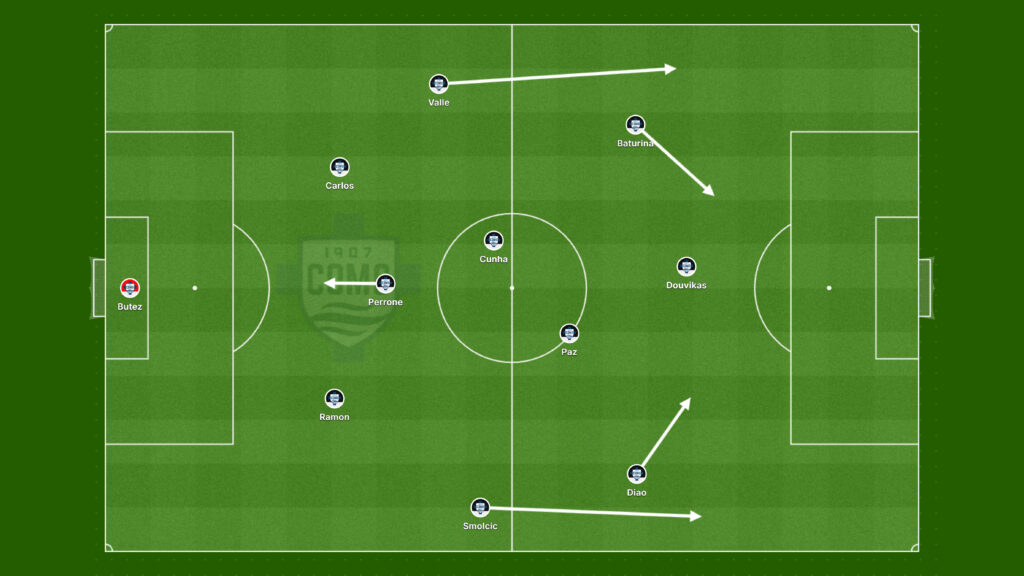
In possession, he functions as the primary **build-up and progressive hub**. He typically drops between or just in front of the centre-backs to receive the ball under pressure, then dictates the tempo. Key tasks include:
- Receiving with his back to goal or under immediate pressure and turning out cleanly.
- Playing short combinations to escape the press or switching play with accurate long diagonals.
- Progressing the ball into advanced zones through progressive passes rather than pure carrying.
- Maintaining numerical superiority in the first phase of build-up (common in Como's 4-2-4 or 2-3-2-3 structures).
Out of possession, he provides the **defensive screen**. He sits in front of the back line, covers central channels, makes recoveries and interceptions, and helps the team maintain compact shape. He is not a pure destroyer; his value lies more in positioning, anticipation and clean ball-winning than in aggressive duels or aerial dominance.
Tactical Context at Como under Fàbregas
Fàbregas identified that Da Cunha's technical security, spatial intelligence and composure were better utilised deeper than on the wing. He has become the constant in a possession-oriented, rotation-heavy system. Typical patterns include:
- Forming part of a double pivot or acting as the fixed pivot while a partner (or full-back) rotates higher.
- Enabling full-backs and attacking midfielders to push forward by occupying the central space.
- Contributing to settled possession in the opposition half and recycling the ball when attacks break down.
- Occasional involvement in set-piece delivery (corners and free-kicks).
Fàbregas has publicly stated he would happily field "eleven Da Cunhas," underlining the player's tactical reliability, coachability and ability to execute complex positional instructions.
Tactical Context with France under Zidane
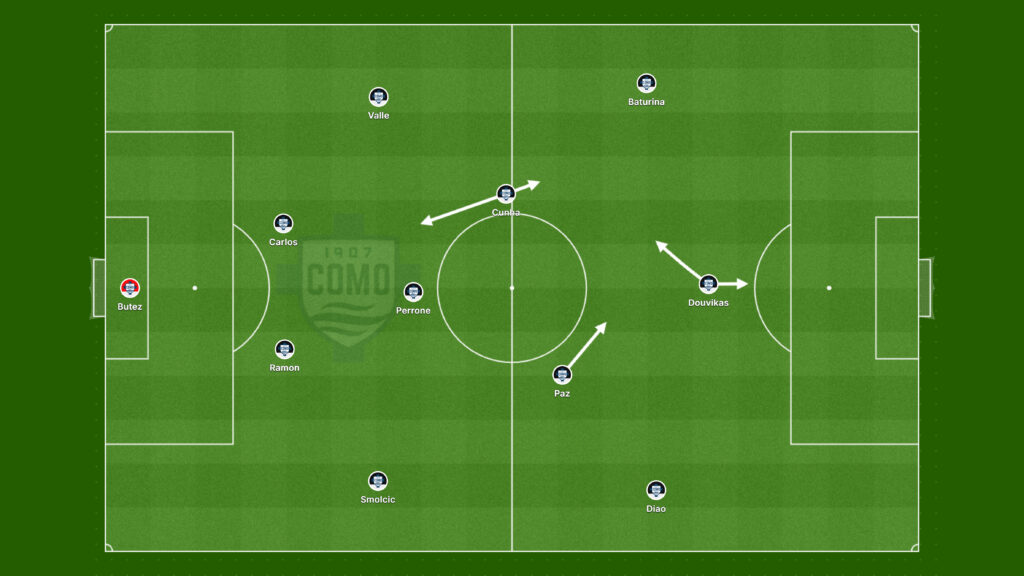
In his first senior caps (Belgium and Italy, September–October 2026), Da Cunha was deployed as the deepest midfielder in a three-person midfieldZidane asked him to play "freely" and exactly as he does at club level. He:
- Anchored the midfield in front of the defence.
- Controlled tempo against organised pressing (notably versus Belgium).
- Linked defence to the more advanced midfielders and wide attackers with both short and progressive passes.
- Offered a technically secure alternative to more physical or box-to-box profiles already available in the French squad.
His debut performance (high touch volume, excellent pass completion, recoveries, and a near-goal from distance) confirmed he can translate the same role to international level without looking overawed.
Strengths That Define the Role
- Exceptional first touch and composure under pressure.
- High-quality short and long passing (especially progressive and switch-of-play passes).
- Strong game intelligence and spatial awareness — he reads the next phase of play early.
- Versatility within the midfield unit (can operate as the single pivot, in a double pivot, or slightly higher if required).
- Leadership and tactical discipline that make him a natural organiser.
Limitations Within the Role
He is not an elite pure defensive midfielder in the physical sense (size, aerial ability, pure tackling volume). His defensive contribution relies more on positioning and recovery running than on dominating physical contests. In higher-intensity transitions or against very aggressive presses, he must rely on technical security rather than physical power. Summary.
Da Cunha's tactical role is that of a modern progressive pivot / deep-lying controller. He receives under pressure, sets the tempo, progresses the ball cleanly, and provides the structural base that lets more dynamic teammates operate higher up the pitch. The shift from wide attacker to this central role under Fàbregas unlocked his full potential and created a profile that is relatively rare in French football — a technically assured, left-footed organiser who can both protect and create from deep midfield.
Conclusion: A Career Rewritten Through Adaptation
Lucas Da Cunha's rise is not simply the story of a talented footballer finally receiving recognition.
It is the story of a player who changed the definition of his own position.
Once viewed primarily as a creative wide player, he has developed into a technically sophisticated central midfielder capable of controlling possession, progressing the ball and contributing defensively.
His France debut against Belgium offered an early demonstration of that evolution. The statistics were impressive, but his composure mattered more. He looked comfortable taking responsibility in the deepest part of midfield despite entering an unfamiliar international environment.
His subsequent start against Italy reinforced the impression that his debut was not simply an isolated performance.
At 25, Da Cunha's international career is only beginning.
The next stage will be about proving that the qualities that transformed him at Como can consistently survive against the highest level of international opposition.
If that development continues, France may have found something more valuable than another midfielder.