Manu Kone and the redefinition of the defensive midfield role.
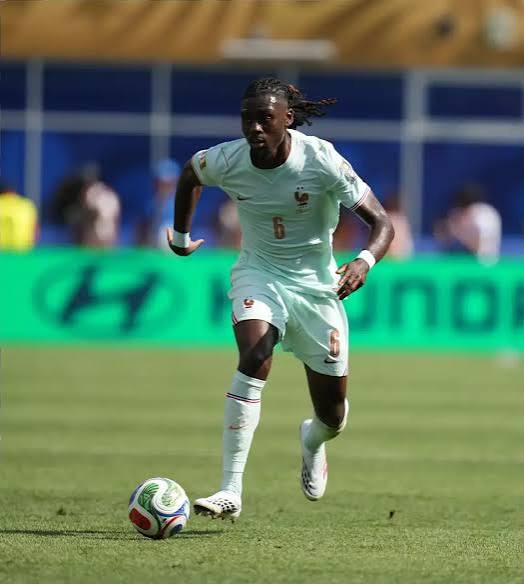
France had been one of the best teams of the 2026 World Cup, they looked and played like genuine champions. The Didier Deschamp side has combined defensive approach with attacking brilliance, producing some of the tournament's most dominant performances. Their fluid attacking combinations, particularly the chemistry between Michael Olise and Kylian Mbappé, have transformed France into one of the most feared teams in the competition. Olise’s creativity between the lines, his ability to manipulate space, and his understanding with Mbappé have consistently dismantled opposition defensive structures, allowing France to control matches both with and without possession.
Olise has emerged as France chief creator, drifting effortlessly between the lines, manipulating defensive shapes and consistently finding Mbappé in dangerous positions. Their chemistry has transformed France attack into one of the most devastating units at the tournament.Yet whileforwards often dominate headlines, championships are frequently decided elsewhere. This World Cup has introduced another protagonist.
Opportunity Born from Adversity
France suffered a major setback when Aurélien Tchouaméni sustained a thigh injury during the knockout stages. The Real Madrid midfielder has become one of the defining holding midfielders of his generation, combining defensive authority with composure in possession. His absence threatened to destabilise France midfield, particularly against opponents capable of pressing aggressively through central areas.
Instead, it created an opportunity for Manu Koné. After impressing against Paraguay, the ASRoma midfielder retained his place against Morocco in the quarter-finals. Rather than merely filling Tchouaméni’s role, Koné interpreted it differently. And perhaps more importantly, he demonstrated how football understanding of the No. 6 continues to evolve.
Controlling the Game Beyond Defensive Actions
Against Morocco, Koné's influence extended far beyond traditional defensive responsibilities. Whenever France built from deep, he consistently positioned himself between Morocco first and second pressing lines, providing an outlet for the centre-backs before immediately progressing possession into Midfield. His first instinct was rarely to recycle possession. Instead, he looked forward.
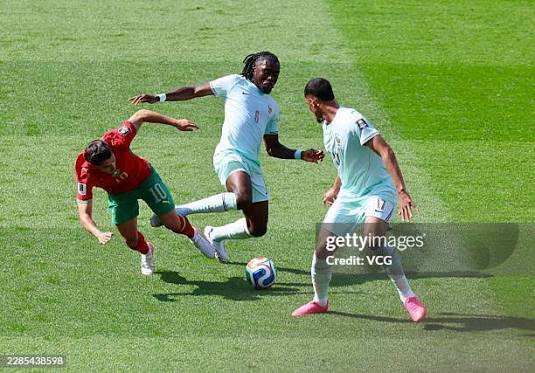
A subtle body feint eliminated one opponent, A progressive carry bypassed another. A vertical pass broke Morocco midfield line. Each action forced Morocco's defensive block to retreat while allowing France attacking players to receive possession in advantageous positions. Rather than measuring his performance through tackles or interceptions, Koné controlled the game through progression. His role became one of connection. He linked defence to midfield, Midfield to attack, Control to penetrate. That distinction defines modern elite midfield play.
The Evolution of a Complete Midfielder
Born in Colombes, France, Manu Koné emerged through Toulouse’s academy before establishing himself in the Bundesliga with Borussia Mönchengladbach. His performances quickly attracted attention from Europe's biggest clubs. A move to AS Roma accelerated his tactical development further, exposing him to the demands of Serie A—a league where positional discipline and defensive intelligenceremain fundamental. There, Koné evolved beyond an athletic ball- winning midfielder and He became a controller between the middle and low areas of the pitch.
Why Koné Is Different
At first glance, Koné possesses every physical attribute associated with elite defensive Midfielders. He covers enormous distances and wins duels; He recovers possession consistently, He presses aggressively. He has the stamina to sustain intensity throughout ninety minutes. Yet those qualities only explain part of his game. His greatest strength lies in what happens immediately after regaining possession. Where previous generations of holding midfielders prioritised safety, Koné prioritises progression. Every turnover becomes an opportunity to attack. Rather than simply retaining possession, he seeks to eliminate opponents through progressive carries or incisive vertical passes. This mentality transforms defensive actions into attacking advantages.
Elite Press Resistance
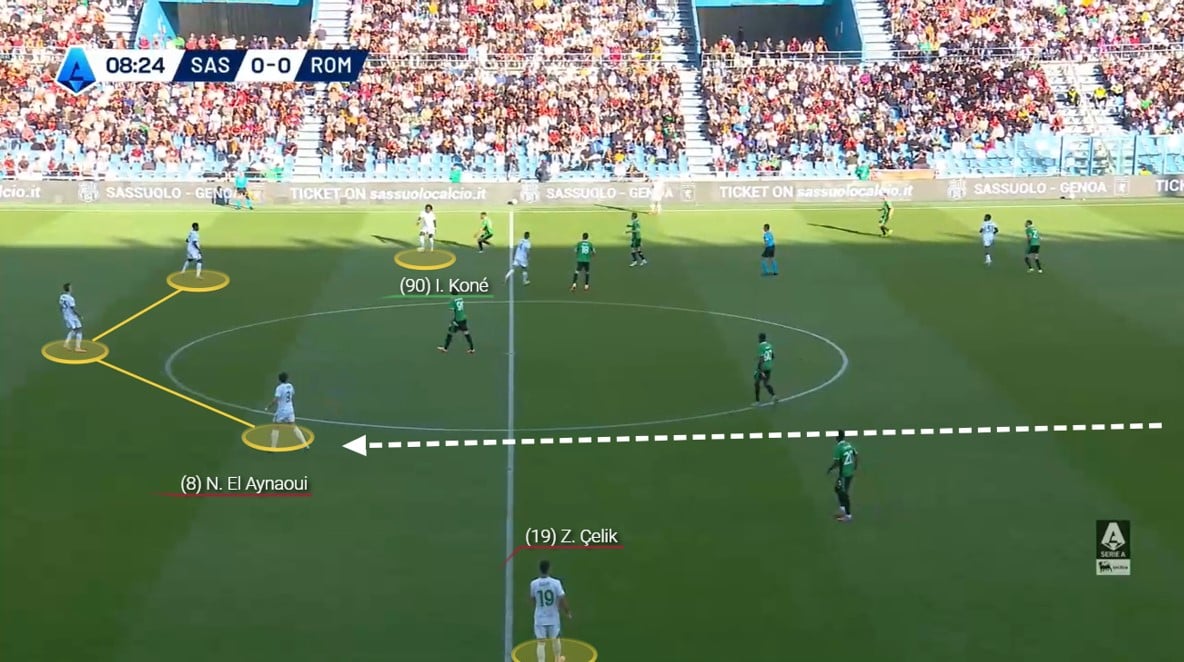
One of Konés defining qualities is his composure under pressure. Elite teams increasingly rely on coordinated pressing systems designed to force turnovers in central areas. Koné consistently neutralises those traps. Receiving the ball with an open body shape, he scans before the ball arrives, inviting pressure before escaping it with intelligent turns, disguised touches and explosive acceleration. Instead of avoiding pressure, he manipulates it. Opponents commit. Space opens elsewhere. France advances. It is one of the most valuable skills in modern Football.
Manipulating Space
Football is increasingly played through occupation of space rather than fixed positions.Koné understands this instinctively. During France's build-up, he rarely remains stationary. He drifts into half-spaces. Drops alongside centre-backs. Rotates with Adrien Rabiot. Occasionally advances beyond the opposition midfield line. These constant positional adjustments create uncertainty. Should an opposing midfielder follow him? Or maintain shape? Either decision creates space elsewhere. Those movements rarely appear on highlight reels. Yet they underpin France's entire attacking structure.
Intelligence Without the Ball
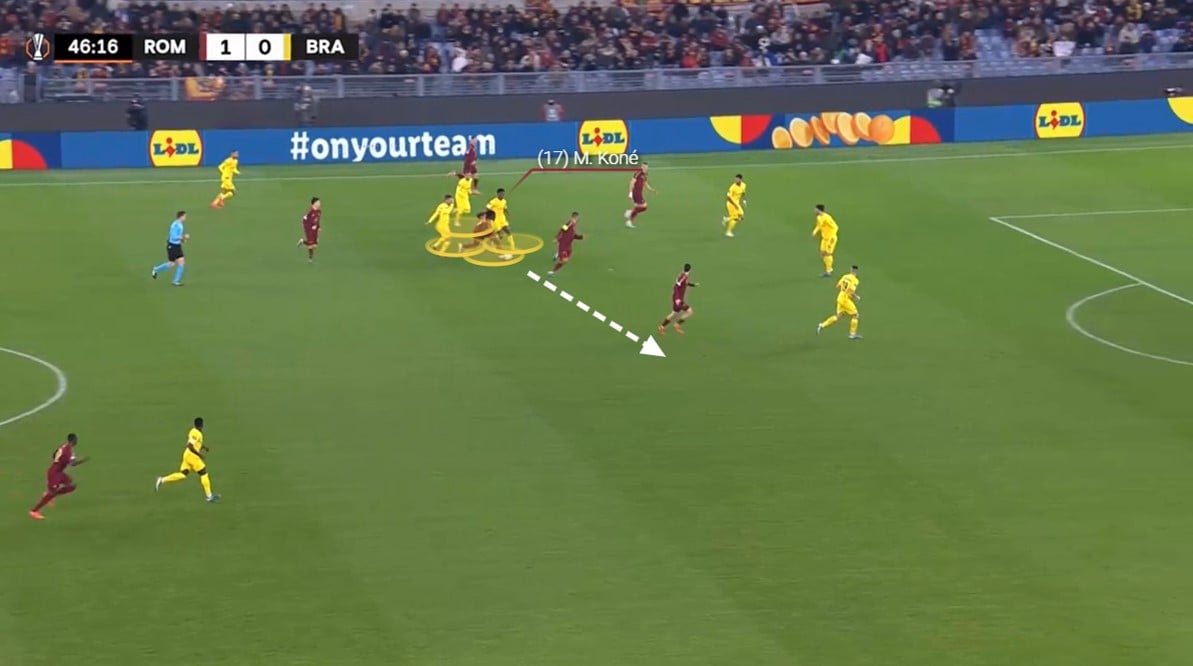
Equally impressive is Koné's work without possession.Rather than chasing the ball, he protects space.He anticipates passing lanes before they develop.He positions himself to intercept transitions. He subtly directs opponents towards areas where France can collectively press. His defending is proactive rather than reactive. Much of his best work happens before danger fully materialisesThat level of anticipation separates good midfielders from elite ones.
Tactical Profile
Modern analytics increasingly capture the qualities that define midfielders like Koné. While tackles and interceptions remain useful indicators, they no longer tell the complete story.
The modern No. 6 is evaluated across multiple phases of play.
Tactical Attribute Why It Matters
Progressive Carries Breaks opposition pressing lines through dribbling.
Progressive Passes Advances possession into dangerous zones.
Press Resistance Maintains control under intense pressure.
Ball Recoveries Regains possession to initiate attacks.
Counterpress Regains Wins the ball immediately after turnovers.
Defensive Positioning Prevents attacks before they develop.
Passing Network Influence Serves as the team's central connector.
Tempo Control Determines when to accelerate or slow possession.
Spatial Manipulation Creates passing lanes through movement.
These metrics reflect a broader shift in how football values midfield play.The position is no longer defined solely by defensive output.m It is defined by influence.
THE EVOLVING OF A NUMBER 6
For years, football reduced the defensive midfielder to a simple description. Win the ball. Protect the centre-backs. Play the easy pass. Repeat. The role was built on sacrifice rather than expression. The best practitioners were often the least celebrated. Claude Makélélé gave the position its identity. Javier Mascherano elevated its intensity. Casemiro perfected its aggression. Their brilliance lay in preventing danger before anyone else noticed it. But football never stands still.
The rise of positional play, coordinated pressing and structured build-up has fundamentally changed what managers demand from the player at the base of midfield. Today's elite No. 6 is no longer judged solely by the duels he wins or the tackles he makes. He is expected to organise possession, resist pressure, dictate tempo, manipulate opposition structures and, only then, extinguish danger. The position has evolved from destroyer to conductor. Few players illustrate that transformation more clearly than Manu Koné.
When Aurélien Tchouaméni suffered a thigh injury during the knockout stages, Didier Deschamps appeared to have lost the structural foundation of his midfield. Replacing Tchouaméni is rarely straightforward. His ability to screen the defence, dominate aerial duels and control transitions has made him indispensable for both club and country. Deschamps did not find another Tchouaméni. He found another solution.Watch France closely and another pattern emerges. Koné is never occupying space accidentally.
During build-up he drops alongside the centre-backs to create numerical superiority. Moments later he drifts into the left half-space to combine with Adrien Rabiot.Seconds later he arrives between opposition lines, offering Michael Olise another passing angle. The position listed on the teamsheet tells only part of the story. His actual role changes every phase.He is simultaneously an outlet.A connector, A controller. A defender, A playmaker, A reference point. This positional fluidity has become the defining characteristic of elite midfielders. Football increasingly rewards players who interpret space rather than simply occupy positions. Koné appears to understand that instinctively.
Why Every Elite Coach Wants This Profile
Look across Europe's leading clubs and the pattern becomes impossible to ignore.Manchester City's midfield revolves around Rodri's ability to control both possession and transitions.Arsenal ask Declan Rice to defend space before driving attacks forward.
Barcelona continue searching for a successor capable of reproducing Sergio Busquets' intelligence rather than merely his defensive output. Liverpool, Bayern Munich and Paris Saint-Germain have all prioritised midfielders who combine athleticism with technical authority.
The game's tactical evolution has created a new premium.Managers no longer want players who specialise in destruction. They want players who transform defensive actions into attacking opportunities. Koné belongs firmly within that category. His value lies not simply in recovering possession, but in deciding what happens next. That is a far rarer quality.
The Midfielder of the Future
Football rarely announces its revolutions.They arrive quietly. A goalkeeper begins playing thirty metres outside his box.A full-back moves into midfield.A centre-back becomes the team's chief playmaker.
Before long, those ideas become ordinary. The defensive midfielder is undergoing the same transformation. The position is no longer defined by tackles won or interceptions made. It is defined by control—of space, of tempo, of transitions and, ultimately, of matches.
Manu Koné embodies that shift. Not because he has abandoned the defensive principles that once defined the role, but because he has expanded them. Every recovery becomes the beginning of an attack. Every reception under pressure becomes an opportunity to unbalance an opponent. Every movement without the ball creates possibilities for those around him.
If France lift the World Cup, history will remember the goals, the celebrations and the stars who filled the highlight reels. Students of the game, however, may remember something else. The tournament in which one midfielder quietly demonstrated that football's most demanding position had evolved again. Manu Koné is not simply France's answer to Aurélien Tchouaméni.
He is a glimpse of where the No. 6 is going next.
More from Cerebralcardo coming soon.
Visit the profile to follow and get notified when the next piece lands.