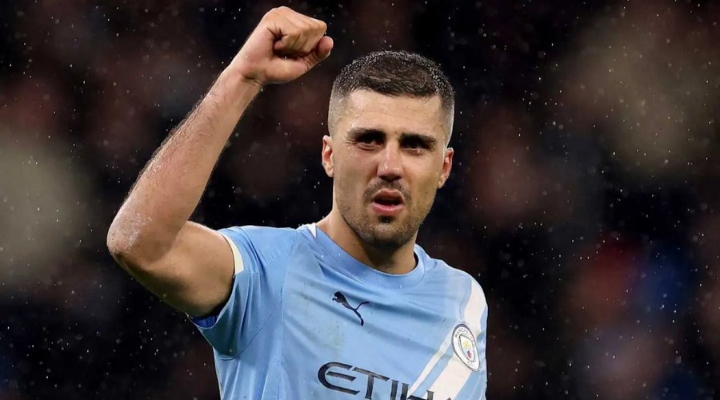
Barcelona Want Rodri. But Do They Actually Need Him?
Barcelona are pursuing Manchester City's midfield controller, but signing the world's best No. 6 could force them to rethink the roles of Pedri, Gavi and the entire midfield.
Barcelona are running out of time. With Manchester City rejecting their latest proposal for Rodri and negotiations reportedly moving towards a decisive 48-hour window, the Spanish midfielder is suddenly closer to the Camp Nou than he has been at any point this summer. Barcelona appear willing to push towards a package worth €70 million or more. On paper, it makes perfect sense. Rodri is the elite No. 6 Barcelona have been searching for since Sergio Busquets left. He can control tempo, resist pressure, protect the defence and turn chaotic matches into controlled ones. At 30, he remains one of the most complete midfielders in world football. But Barcelona's pursuit creates an uncomfortable question. Do they actually need him? Pedri is already the creative heartbeat of the midfield. Gavi provides intensity, Frenkie de Jong remains an elite ball-progressor, while Marc Bernal represents the club's long-term investment in the pivot position. Rodri would undoubtedly make Barcelona better. The question is whether he would make them better enough to justify reshaping everything around him. Why Rodri Is So Difficult to Replace Before questioning whether Barcelona needs Rodri, there is one uncomfortable truth they must confront: he is almost impossible to replace. Rodri is not simply a midfielder who protects the defence. He controls the space in front of it, dictates possession and gives his team an escape route when opponents try to suffocate the build-up. That combination is precisely what Barcelona have lacked since Sergio Busquets left. Frenkie de Jong can carry the ball through pressure. Pedri can manipulate space between the lines. Gavi can turn defensive intensity into attacking momentum. But none naturally provides Rodri's combination of positional discipline, physical presence and control as a lone pivot. His greatest quality may be his ability to make difficult situations look ordinary. Against an aggressive press, Rodri can drop towards his centre-backs, receive under pressure, protect possession and find passes that remove several opponents from the game. Against a low block, he can slow the match down, circulate possession and move opponents from one side to another. He does not simply pass the ball. He controls what happens after the pass. His positioning allows full-backs to advance without leaving the centre exposed, while his passing gives attacking midfielders permission to occupy higher positions. His defensive awareness also allows teammates to press aggressively because someone is positioned to deal with transitions. Barcelona would immediately benefit from that security. Pedri could receive higher up the pitch. Gavi could press without constantly worrying about the space behind him. Barcelona could lose possession with a midfielder already positioned between the ball and the centre-backs. That is what Rodri brings. And that is why the pursuit makes sense. The problem is that signing the perfect No. 6 does not happen in isolation. It changes the responsibilities of everyone around him. The Midfield Problem Rodri Would Create The irony of Barcelona's pursuit is that Rodri could solve one problem while creating another. For years, Barcelona have searched for the next Sergio Busquets. Now that a player capable of providing similar structural security is potentially available, they must confront an uncomfortable reality: their midfield is already full of players who need the ball. Rodri would immediately claim the deepest role. Pedri would be the biggest beneficiary. With Rodri controlling the first phase, Pedri could remain higher between the lines, where his ability to receive, turn and manipulate defensive structures becomes more dangerous. Instead of repeatedly dropping towards the centre-backs, he could concentrate on creating in the final third. Gavi would also become more liberated. His greatest strength is aggression. He wants to press, jump onto opponents and attack second balls. A positional anchor behind him would allow Gavi to leave the midfield line without immediately exposing the centre. Rodri could become the safety mechanism that makes Gavi's intensity possible. But then comes Frenkie de Jong. De Jong's ability to receive deep, carry possession through pressure and accelerate the ball remains one of his defining qualities. The problem is that Rodri would occupy the territory where De Jong is most comfortable. If Rodri becomes the undisputed No. 6, De Jong would have to adapt. He could play alongside Rodri, but that could limit his freedom. He could move higher, but Pedri already occupies the creative interior role. Or he could become an elite rotation option. Then there is Marc Bernal. The teenager represents something important to Barcelona: a potential long-term answer to the pivot position developed within their own system. Rodri would not eliminate Bernal's pathway, but it would slow it considerably. Learning behind one of the world's greatest holding midfielders could accelerate Bernal's development rather than damage it. That is the paradox. Rodri does not create a midfield problem because he is a bad fit. He creates one because he is such a good fit that Barcelona would have to reorganise everything around him. Rodri vs. Flick Comparison There is another reason Barcelona's pursuit deserves scrutiny. The question is not simply whether Rodri fits Barcelona. It is whether Barcelona's current football fits Rodri. Hansi Flick has built his Barcelona around intensity, verticality and aggressive transitions. His teams want to recover the ball quickly, attack space immediately and push opponents backwards before they can reorganise. Rodri's greatest strength is different. He controls games. He slows them down when necessary, gives his team an extra second to breathe and provides the positional security to move opponents around without losing control of the centre. That does not make him incompatible with Flick. In fact, it could make Barcelona more complete. But it would force a tactical compromise. Barcelona's younger midfielders are increasingly comfortable playing at high speed. Pedri accelerates combinations between the lines, Gavi thrives when matches become physical and chaotic, while De Jong can break pressure through his carrying. Rodri would introduce something different: control before acceleration. That could be exactly what Barcelona needs. Their aggressive approach can become vulnerable when the first press is beaten. With the defensive line pushed high, losing possession centrally can expose enormous spaces behind the midfield. Rodri can reduce that danger through positioning, anticipation and control of second balls. But there is a trade-off. If Barcelona increasingly rely on Rodri to dictate the first phase, they may move towards a more possession-dominant and controlled interpretation of football. The team would become less dependent on chaos and more dependent on structure. That raises the biggest tactical question of the transfer. Is Barcelona signing Rodri to improve Flick's football, or because Rodri could eventually change what Flick's football looks like? A midfield of Rodri, Pedri and Gavi could combine three different strengths: control, creativity and aggression. Rodri anchors the structure, Pedri manipulates space and Gavi attacks the next action. But football is rarely that simple. The moment Rodri arrives, Barcelona must decide which version of themselves they want to prioritise: the vertical, aggressive Barcelona Flick has built, or a more controlled side capable of dominating matches through an elite pivot. Rodri does not merely offer another midfield option. He offers Barcelona a choice about their tactical identity. The €80 Million Question Eventually, Barcelona's tactical debate has to meet a financial one. Rodri's quality is not in question. The question is whether Barcelona can justify spending a potential €70–80 million package, alongside a substantial salary, on a player who would reshape an already talented midfield. For most clubs, signing Rodri would be an obvious decision. For Barcelona, it is more complicated. The club has spent years operating under financial restrictions, making every major transfer more than a footballing decision. Every euro committed to one position is money that cannot be used elsewhere. If Rodri arrives, Barcelona would possess an extraordinary collection of midfield profiles. But they must ask whether that is the best use of their resources. Could the same investment strengthen another area? Could it provide greater depth in attack or at full-back? Could Barcelona instead accelerate Bernal's development while trusting De Jong at the base? These questions do not mean Rodri is unnecessary. They mean that being the right player is not the same as being the right investment. Rodri would also not be arriving as a long-term project. Barcelona would be paying a premium fee for immediate certainty, with greater uncertainty around resale value and long-term contribution. Barcelona are not buying potential. They are buying certainty. And certainty is expensive. Barcelona's Real Decision Barcelona are not deciding whether Rodri is good enough for them. That question was answered years ago. They are deciding whether he is important enough to change the direction of their midfield. Rodri would bring almost everything Barcelona have been missing: control, defensive security, press resistance and the ability to dictate matches from the deepest position. He could liberate Pedri, empower Gavi and give Barcelona the defensive platform their aggressive football sometimes lacks. But he would also force difficult decisions. De Jong's role would change. Bernal's pathway could become longer. Flick's football might become more controlled. Barcelona would also commit significant resources to a position already occupied by talented players. That is why the transfer should not be judged simply by asking whether Rodri fits. He does. The real question is whether Barcelona are prepared to build around what his arrival represents. Because Rodri is more than a No. 6. He is a tactical philosopher. Signing him means choosing control. Rejecting him means trusting the evolution already taking place. Barcelona are not deciding whether they need Rodri. They are deciding whether they need to become a different Barcelona to make him truly worth it.