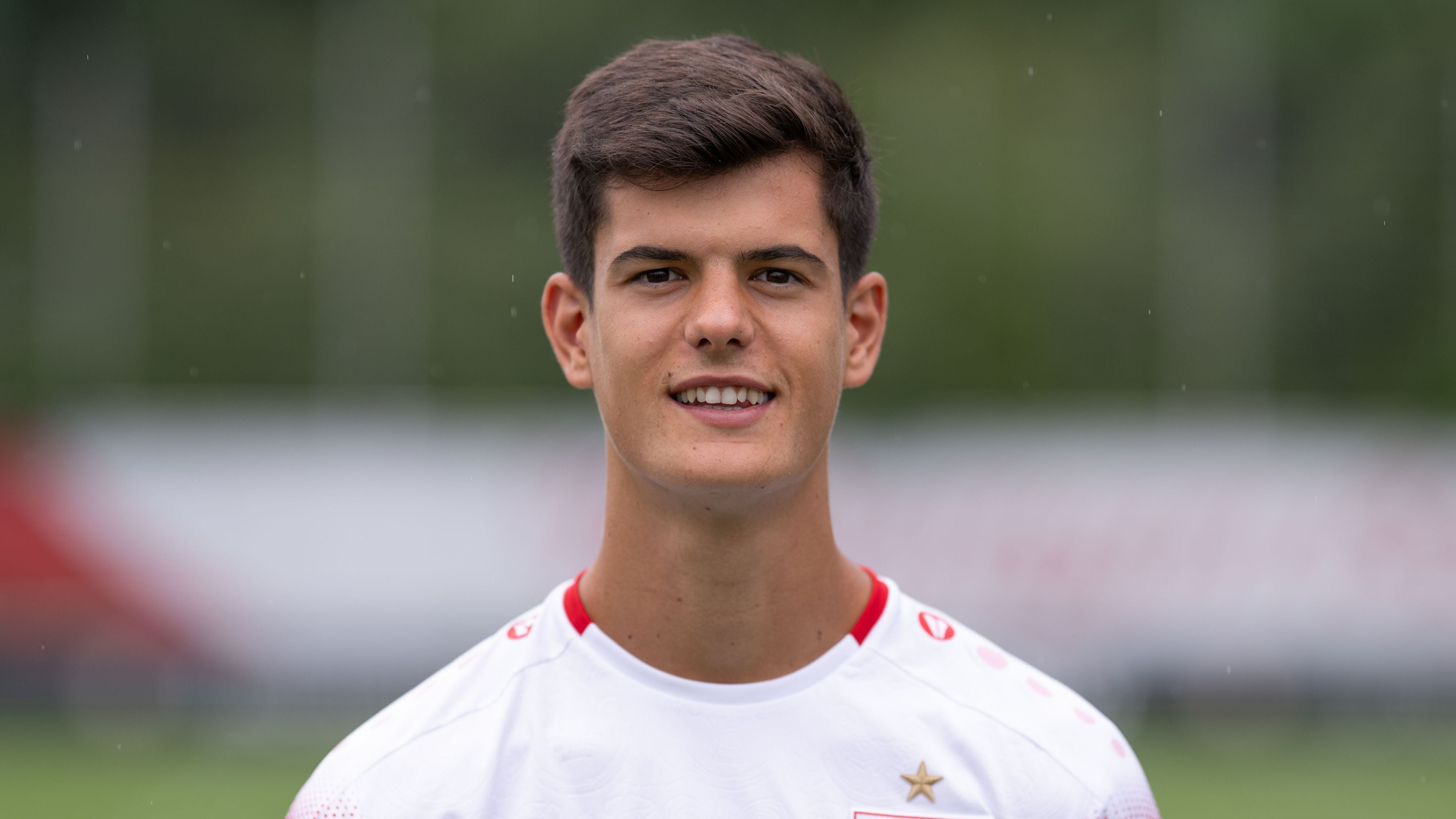
Chema Andrés: Brighton’s New Tactical Anchor
Brighton have lost Carlos Baleba but signed a very different No. 6. Chema Andrés could make Fabian Hürzeler’s aggressive football more sustainable.
Brighton & Hove Albion did not need another reminder that their football comes with a price. The 4-3 defeat was not simply a story about conceding four goals. Brighton could dominate possession and still find themselves vulnerable the moment their first wave of pressure was beaten. That is the trade-off in Hürzeler’s football: the more players Brighton send forward, the more important the players left behind become. That is why Chema Andrés is such an interesting signing. Brighton have already lost Carlos Baleba to Manchester United, while Mats Wieffer is currently injured. Yet instead of replacing Baleba with another midfielder who can simply cover ground and carry the ball, Brighton have gone in a different direction. Andrés does not solve problems in the same way. He may be there to prevent some of those problems from appearing in the first place. Brighton did not buy another Baleba Baleba was valuable because he could solve problems himself. If Brighton lost the ball, he could recover ground. If an opponent pressed him, he could carry through it. If there was space ahead, he could attack it himself. Andrés offers a different answer. He is less interested in escaping pressure with the ball than in moving it before pressure becomes a problem. His statistical profile makes that obvious. He ranked in the 78th percentile for completed forward passes and the 66th percentile for progressive passes, while sitting in just the 7th percentile for progressive carries. At first glance, that last number looks like a weakness. It might actually explain the signing. Andrés progresses the team without needing to carry it, moving the ball before pressure arrives and allowing the next player to make the aggressive movement. That changes the question Brighton are asking of their No. 6. Instead of asking, “Can you get us out of trouble yourself?” they may be asking, “Can you put everyone else in a better position to avoid it?” It is a subtle change, but an important one. Stuttgart showed the blueprint Andrés' first season at Stuttgart provides a better clue than his reputation ever could. The 21-year-old arrived from Real Madrid in 2025 and gradually became an important rotation option in a team that qualified for the Champions League and reached the DFB-Pokal final. He made 41 appearances in all competitions during the 2025/26 season, including 25 Bundesliga appearances and nine in the Europa League. But his importance was not about dominating matches. It was about understanding what the players around him needed. His relationship with Angelo Stiller at Stuttgart offers a useful blueprint. When Stiller moved forward to influence possession, Andrés could hold the deeper position rather than following the play. That meant Stuttgart could have one midfielder looking to advance the attack while another remained connected to the centre-backs. It sounds simple, but that separation matters. The progressive midfielder does not have to constantly look over his shoulder, while the deeper player does not need to chase the game. One moves the team forward. The other makes sure the team still has a structure behind the ball. That relationship could be important at Brighton. Andrés does not need to dictate every attack. He can become the player who makes it possible for somebody else to take more risks. His biggest strength may be what he does not do Modern midfielders are often judged by how much they can do. Andrés' appeal could come from doing less. Not less work, but less movement for the sake of movement. When Brighton build from the back, the temptation is to look at the players receiving between the lines or the full-back moving into the final third. The more interesting player might be the one staying behind them. If a full-back moves forward, Andrés can remain underneath. If another midfielder enters a half-space, Andrés can hold his position. If a forward drops towards the ball, Andrés does not necessarily have to follow. His positioning gives Brighton a reference point. That matters because Hürzeler's system often asks players to abandon their starting positions. Someone has to remember where the team came from. Andrés could be that player. The safety mechanism behind Hürzeler’s chaos This is where the signing starts to make sense beyond the individual. Imagine Brighton attacking with a full-back high on one side and a midfielder moving into the opposite half-space. Another player drops towards the ball while the front line pushes towards the box. The full-back is now ahead of the ball. The midfielder has moved inside. Another player may have dropped towards possession. Brighton have created options, but they have also reduced the number of players protecting the centre. If the next pass reaches its target, Brighton can attack the space they have created. If it is intercepted, the same structure can work against them. The first reaction is to counter-press, but that is not guaranteed to work. An opponent can play through the first challenge, clip the ball over the pressure or simply find the free player. Suddenly Brighton are defending while several of their players are still recovering their positions. This is where Andrés could change the equation. His job would not be to stop every counter-attack alone, but to give Brighton a player already positioned to deal with the second phase. That could mean blocking the first central pass rather than immediately stepping towards the ball. It could mean holding his position while a centre-back moves across. Or it could simply mean buying two seconds for Brighton's midfielders to recover. Those two seconds are often the difference between an opponent attacking an open defence and Brighton resetting behind the ball. That is the difference between chasing a transition and preparing for one. And it could allow Hürzeler to keep asking his players to attack with the same freedom. The 193-centimetre advantage Andrés' physical profile also fits the problem Brighton face after their press is beaten. At 193 centimetres, he gives Brighton a very different presence in front of their defence. His aerial numbers are particularly strong, and that matters when an opponent decides there is no point trying to play through Brighton's pressure. Teams can go over it. A long pass into midfield can simply be an attempt to escape pressure and fight for the second ball. For Brighton, winning that second ball allows them to attack again, while losing it exposes their structure. Andrés' size and ability in aerial duels give Brighton another way to control that moment. His defensive value also appears more connected to anticipation than frantic chasing. Strong regaining and interception numbers suggest a player who can win possession through positioning. That complements his passing profile. He can win the ball, then move it. He does not need to turn every recovery into a 30-metre run. The real winners could be around him The most significant consequence of Andrés' arrival may not involve Andrés at all. It could change what Brighton asks from the players around him. If Hürzeler trusts Andrés to maintain the base of midfield, another midfielder can move higher without constantly worrying about the space behind them. That could benefit Yasin Ayari. It could benefit Jack Hinshelwood. It could give Matt O'Riley or Diego Gómez more freedom to attack spaces rather than spending every phase thinking about defensive cover. The same principle could help Brighton's attacking rotations. A midfielder who knows somebody is protecting the structure can take a risk. That risk is part of what makes Hürzeler's football dangerous. Brighton do not want to become a conservative team simply because they lost Baleba. They want to remain aggressive without becoming fragile. Andrés could provide the platform for that balance. This is why comparing him directly with Baleba misses the point. Leeds will offer the first clue The timing of Andrés' arrival makes this more than a long-term experiment. Brighton face Leeds on September 5, and Hürzeler has confirmed that Andrés is physically ready and in contention. With Wieffer unavailable, there is an immediate opportunity for Brighton to see what their new midfielder can offer. The better question is whether Brighton look different around him. Does one midfielder feel comfortable pushing higher because Andrés stays behind? Do Brighton's full-backs receive more freedom to advance? When possession is lost, is Andrés already occupying the central space rather than having to sprint back into it? If the answers are positive, Brighton may have found something they lacked. Not another player who can rescue the team after the structure breaks. A player who helps stop the structure from breaking so easily. Brighton have changed the question It would be easy to describe Andrés as Baleba's replacement. It is probably more accurate to say Brighton have replaced one midfield function with another. Baleba could solve pressure by carrying the ball away from it. Andrés may solve pressure by moving the ball before it arrives. Baleba could recover space through athleticism. Andrés may protect space through positioning. Neither approach is automatically better. But for a team built around Hürzeler's aggressive rotations, Andrés' profile could be particularly useful. Chelsea showed the danger on August 30. Brighton can dominate the ball, create chances and still lose control when their first line of pressure disappears. That is the problem Andrés has been brought in to help address. He will still have to prove that he can handle the speed of the Premier League. Opponents will test his mobility, press him aggressively and look for ways to drag him away from the centre. His low carrying numbers could also become an issue when Brighton need someone to escape pressure individually. Those questions cannot be answered by statistics from Stuttgart. They have to be answered on the pitch. But Brighton's thinking behind the transfer is becoming clearer. They did not simply lose Carlos Baleba and search for another midfielder who looked like him. They chose something different. Baleba gave Brighton the ability to escape problems through power and carrying. Andrés may give them something quieter: the ability to make those problems less likely in the first place. That is why his arrival matters beyond the position he plays. If Andrés can hold the structure while everyone else moves, Hürzeler does not have to sacrifice his attacking identity to gain more control. They chose a player who might allow everyone else to be more aggressive because someone is finally responsible for what happens when the aggression fails. That could make Chema Andrés much more than Brighton's new No. 6. He could be the player who makes Hürzeler's chaos sustainable.