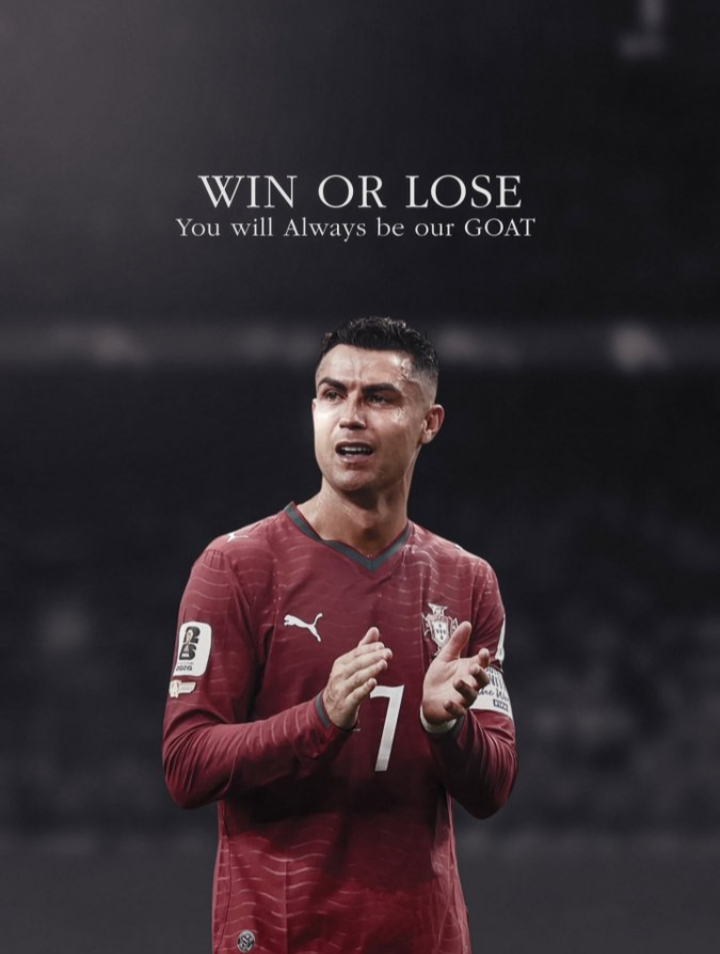
The Last Opponent Cristiano Ronaldo Could Never Defeat
Portugal's World Cup ended against Spain. Cristiano Ronaldo's World Cup journey ended against something much bigger.
There was no dramatic farewell speech. No grand gesture. No attempt to make the moment about himself.
When the final whistle echoed around Dallas Stadium, Cristiano Ronaldo simply stood still. Around him, Spain celebrated a place in the quarter-finals after Mikel Merino's stoppage-time winner had broken Portugal's resistance. Red shirts sprinted across the pitch. The crowd roared. Fireworks exploded above the stadium. Ronaldo barely moved. For the first time in twenty-three years wearing Portugal's colours, there was nowhere left to run. Then the tears came. His teammates reached him first. Bruno Fernandes wrapped an arm around his captain. Bernardo Silva stood beside him, unable to hide his own disappointment. Even Spain's players paused their celebrations. Rodri embraced him. Then came perhaps the most symbolic image of the entire tournament. Lamine Yamal, eighteen years old and born four years after Ronaldo made his Portugal debut, walked over to comfort the man whose posters had once hung on bedroom walls across the football world. It was football's past and future standing together in silence. Moments later, Ronaldo applauded the travelling Portuguese supporters one final time before disappearing slowly into the tunnel. That image will remain long after the result is forgotten. Not because Portugal had been eliminated. But because football had just witnessed Cristiano Ronaldo's final World Cup.
The Trophy Was Never the Point
For months, every conversation surrounding Ronaldo centred on one question. Could he finally win the World Cup?
It was an understandable discussion. The World Cup remained the only major honour missing from one of football's greatest careers. Every tournament seemed like another opportunity to complete the collection. Yet somewhere along the way, people misunderstood what this final World Cup truly represented. This tournament was never really about winning the trophy. It was about proving something that Ronaldo had spent an entire career trying to prove. That excellence could survive longer than anyone believed possible. At forty-one years old, he was not supposed to be leading Portugal's attack. He was not supposed to be scoring goals. He certainly was not supposed to become the first player in football history to score in six different World Cups. And yet he did. His two goals during the tournament took his World Cup tally to eleven, making him Portugal's greatest World Cup goalscorer. His twenty-seven appearances extended another record. More importantly, every minute he spent on the pitch challenged football's accepted timeline. Entire careers had started and ended while Cristiano Ronaldo was still chasing another tournament. The trophy would have been a perfect ending. It was never the reason people could not stop watching.
The Career That Became a Chase Against Time
Looking back now, Ronaldo's career feels less like a collection of achievements and more like one endless pursuit. Every mountain he climbed simply revealed another one waiting behind it. Leaving Madeira as a homesick twelve-year-old to join Sporting CP.
Earning Manchester United players' admiration so quickly that they convinced Sir Alex Ferguson to sign him after a single friendly. Transforming himself from an unpredictable winger into the world's most complete goalscorer. Winning Ballons d'Or. Breaking Champions League records. Scoring goals that seemed to ignore gravity. Captaining Portugal to their first European Championship. Every chapter followed the same pattern. Once Ronaldo reached the summit, he immediately looked for another. Nothing ever seemed enough. That relentless pursuit became the defining feature of his career. Other players chased success. Ronaldo chased perfection. Even his famous training sessions reflected that obsession. While football evolved around him, Ronaldo rebuilt himself repeatedly. Nutrition changed. Recovery methods improved. Cryotherapy, personalised sleep routines and detailed biometric analysis became normal because players like Ronaldo treated their bodies like long-term projects rather than temporary gifts. His longevity was not luck. It was work. Thousands of unseen hours designed to delay the one opponent he knew would eventually arrive, that was Time.
When The Children Became His Opponents
Nothing captures Ronaldo's extraordinary longevity better than the opponents he faced across his international career. When he made his Portugal debut in 2003, he shared the pitch with Rui Costa, a player born in 1972.
Twenty-three years later, his final World Cup match came against Lamine Yamal, born in 2007. That is not simply longevity. That is an entire generation of football. Yamal represents everything Ronaldo once was. Fearless. Unpredictable. Too young to understand limits. For Yamal, Ronaldo had always existed. He grew up watching his bicycle kick against Juventus. He copied the celebrations. Like countless young footballers around the world, he learned the game while Ronaldo was already rewriting its record books. Then, suddenly, they were sharing the same World Cup. The image of Yamal comforting Ronaldo after the final whistle almost felt impossible. Years earlier, another photograph had quietly captured the beginning of football's changing generations. Lionel Messi holding baby Lamine Yamal during a charity photoshoot. Now Yamal had become the player embracing Ronaldo as another era quietly disappeared. Football rarely gives us moments like that. It usually moves from one generation to the next without allowing them to truly meet. This World Cup became the exception. For one brief summer, football's old kings and new heirs stood on the same stage. And somewhere beneath the lights in Dallas, one generation gently helped another walk away.
The Obsession That Changed Football
Portugal's World Cup ended the same way many of Ronaldo's greatest nights had begun. With hope.
Roberto Martínez trusted his captain from the first whistle. Ronaldo led the line for the full ninety minutes, searching for the goal that would extend both Portugal's tournament and his own World Cup story. Spain made sure neither happened. They controlled possession, slowed the rhythm, and gradually squeezed Portugal deeper into their own half. Ronaldo found himself isolated, touching the ball only nineteen times as Spain's defenders denied him the space that had defined so much of his career. Yet even then, there were reminders. A sharp first-half strike forced Unai Simón into a brilliant save. One movement inside the penalty area briefly lifted seventy thousand supporters from their seats. For a second, it looked like another famous chapter might be beginning. Instead, football chose a different ending. As extra time seemed inevitable, Ferran Torres delivered one final cross into the area. Mikel Merino arrived at the perfect moment, volleying Spain into the quarter-finals in stoppage time. One goal. One swing of a boot. One entire era quietly brought to its conclusion. Football has always been cruel in moments like these. Legends rarely choose their own ending. The game chooses it for them.
More Than Numbers
The easiest way to remember Cristiano Ronaldo is through statistics. Nine hundred and seventy-six career goals. One hundred and forty Champions League goals. Five Ballons d'Or. Portugal's all-time leading scorer. The first player to score in six different World Cups.
The numbers are extraordinary. They are also incomplete. They explain what Ronaldo achieved. They do not explain why he mattered. His greatest influence was never confined to scoreboards. He changed what footballers believed was physically possible. Before Ronaldo, careers naturally declined in a player's early thirties. Recovery was simple. Training routines were conventional. Nutrition was often an afterthought. Ronaldo treated ageing like an opponent that could be studied, analysed and delayed. His body became a laboratory. Sleep coaches replaced late nights. Cryotherapy replaced ordinary recovery sessions. Every meal, every sprint, every hour of rest became part of a career measured not in seasons but in decades. The modern footballer did not simply inherit better sports science. They inherited Cristiano Ronaldo's obsession with finding every possible advantage. That influence will survive long after every record eventually falls.
Football's Greatest Chase
Every great player leaves behind trophies. Only a handful leave behind an idea. Pelé taught football to dream. Cruyff taught football to think. Messi reminded football that genius could still feel effortless. Ronaldo taught football that greatness could be built.
His career rejected the romantic belief that talent alone decides destiny. Every celebration, every sprint, every comeback after criticism carried the same message. Work harder. Stay longer. Demand more. That philosophy transformed millions of young footballers across the world. Some copied his stepovers. Others copied the famous "Siu." The smartest copied something much deeper. His discipline. Entire generations entered academies believing improvement had no limit because Cristiano Ronaldo spent two decades proving exactly that. Perhaps that is his greatest legacy. Not the goals. Not the trophies. Not even the records. The belief that excellence is a choice repeated every single day.
The Tunnel That Closed an Era Eventually every career arrives at the same destination. For Cristiano Ronaldo, it arrived beneath the bright lights of Dallas Stadium. As he disappeared into the tunnel, the noise of the crowd slowly faded behind him. The celebrations became distant. The cameras stayed fixed on his back for just a few seconds longer before finally turning elsewhere. Football always moves on. It has to. Soon the conversation will belong to Mbappé. To Haaland. To Yamal. To the players who will define the next decade. That is how the sport survives. But for one final moment, football stood still. A boy who once left Madeira carrying nothing but impossible ambition walked away from the World Cup as the first man ever to score in six different editions, Portugal's greatest World Cup goalscorer, and one of the defining athletes the game has ever produced. There was something strangely fitting about his final image. Not lifting a trophy. Not celebrating a goal. Simply walking. Alone. Because that is how every great career eventually ends. The medals stay behind. The records remain in the history books. The crowds slowly go home. Only the memories keep walking. One day another player will score more goals. Another striker will break another record. Another superstar will become football's biggest name. That is inevitable. What may never happen again is a career that stretched across three generations, survived football's greatest rivalries, reinvented itself again and again, and kept chasing perfection long after everyone else believed the pursuit was over. Cristiano Ronaldo spent twenty-three years trying to outrun every opponent placed in front of him. Defenders. Goalkeepers. Critics. Expectations. Pressure. Age. In the end, there was only one opponent he could never defeat. Time. And perhaps there is no shame in losing to the only rival that remains undefeated. As the tunnel swallowed Cristiano Ronaldo for the final time, it did not simply close on a World Cup career. It closed on one of football's greatest chapters.
More from Dhruv Kapoor coming soon.
Visit the profile to follow and get notified when the next piece lands.