Portugal vs Uzbekistan: Possession, Panic, and Other Long-Term Commitments
There are football teams that use possession as a tool. Then there is Portugal, who seem increasingly interested in obtaining legal custody of the football itself. Under Roberto Martínez, possession is no longer merely a means to an end. It has become a long-term relationship, complete with trust, commitment, and the occasional inability to let go.
Against DR Congo, Portugal completed nearly 800 passes and enjoyed around 75% possession. By the final whistle, the ball had spent so much time with Portuguese players that it probably qualified for citizenship. The opposition spent long stretches chasing shadows, yet somehow emerged from the experience relatively unharmed.
This is where Portugal's current dilemma begins. Possession is wonderful. It controls territory, dictates tempo, and makes analysts nod approvingly while drawing arrows on tactical boards. Unfortunately, football remains stubbornly attached to goals, and goals are not awarded for passing sequences that resemble carefully choreographed office meetings.
The challenge against Uzbekistan is therefore not one of domination. Portugal will dominate. Everybody knows they will dominate. The real question is whether they can transform ownership into influence, because there is a difference between controlling the football and controlling the match.
Uzbekistan's Defensive Block: The Tactical Equivalent of Customer Service
Most people hear the phrase "defensive block" and imagine eleven men desperately protecting their penalty area like tenants avoiding rent collectors. Uzbekistan's approach is slightly more sophisticated than that. They are not interested in merely surviving Portugal's possession. They are interested in making it profoundly inconvenient.
Under Fabio Cannavaro, Uzbekistan are likely to defend in a compact 4-4-2 or 4-5-1 shape. Their objective is not to win the ball immediately but to dictate where Portugal can play. In tactical terms, this is called controlling access. In everyday terms, it is the football equivalent of a nightclub bouncer deciding your shoes aren't quite suitable.
Portugal's midfielders will frequently receive possession and look up expecting possibilities. Instead, they may find a series of closed doors, blocked corridors, and defensive bodies occupying every interesting space. The central zones will be protected with the kind of determination usually reserved for family recipes and inheritance disputes.
The cleverness of this approach lies in its patience. Uzbekistan do not need to stop Portugal from having possession. They merely need to stop Portugal from enjoying it. Eventually, repetitive circulation can become frustrating, and frustration has destroyed more attacks than poor technique ever has.
Khusanov: The Human Insurance Policy
Every defensive structure has one player who allows everybody else to be slightly braver than common sense recommends. For Uzbekistan, that player is Abdukodir Khusanov. His pace gives the entire defensive system a safety net that many underdogs simply do not possess.
Most teams facing Portugal instinctively retreat. The logic is understandable. Portugal have enough technical quality to punish open spaces, and the safest response often appears to be hiding near your own penalty area and hoping for divine intervention. Uzbekistan, however, possess a defender capable of altering that calculation.
Khusanov's recovery speed means the defensive line can afford to stand slightly higher. Not recklessly high, of course. This is football, not a social experiment. But high enough to compress the pitch and reduce the space Portugal typically enjoy between midfield and defence.
The consequence is significant. Portugal's attackers thrive when they can receive between lines and turn toward goal. By reducing those spaces, Uzbekistan force Portugal into slower, wider circulation. The game begins to resemble somebody repeatedly trying the same locked door and being surprised it remains locked.
Vitinha And The Search For Meaningful Possession
At some point in every Portuguese attack, the ball finds Vitinha. This is not coincidence. It is practically a constitutional requirement. He is the player responsible for deciding whether possession remains decorative or becomes dangerous.
Without him, Portugal can occasionally resemble an expensive roundabout. The ball moves beautifully from player to player. Everybody appears organised. Everybody appears busy. Yet somehow nothing particularly meaningful occurs.
Vitinha's greatest strength lies in recognising moments. He understands when to circulate and when to accelerate. He understands that possession is valuable, but only if it eventually leads somewhere more exciting than another sideways pass.
For Uzbekistan, limiting Vitinha's influence is essential. Force him deeper, and Portugal become predictable. Allow him to receive facing forward, however, and the entire defensive structure begins asking uncomfortable questions of itself.
Joao Neves And The Art of Arriving Uninvited
Timing is one of football's most underrated skills. Coaches discuss positioning endlessly, yet positioning without timing is rather like arriving at a wedding after everyone has gone home. Technically, you reached the correct destination. Practically, you have missed the point entirely.
João Neves understands this better than most. His value lies not in occupying advanced spaces but in arriving there at precisely the right moment. He appears just as defenders become occupied elsewhere, which is football's equivalent of slipping into a queue nobody realised existed.
Against compact blocks, these movements are particularly dangerous. Defenders prefer clear responsibilities. Mark this player. Protect this zone. Follow this runner. Timing-based arrivals disrupt those certainties and replace them with hesitation.
And hesitation is expensive. One delayed decision can create a passing lane. One delayed step can create a shooting opportunity. Against organised teams, such moments often determine the outcome more than elaborate tactical plans.
Wing Isolation: Why Wingers Need Colleagues More Than They Admit
Football has a habit of celebrating the final act while ignoring the preparation. A winger beats his defender, the crowd erupts, and social media produces a three-minute compilation within the hour. Meanwhile, the ten tactical actions that made the situation possible receive approximately the same recognition as the person operating the stadium floodlights.
Portugal's wide attackers will only thrive if the structure around them functions properly. Isolation is not an individual achievement. It is a collective project disguised as individual brilliance.
Movements inside the pitch matter enormously. Midfield rotations, underlapping runs, and inverted full-backs all exist to distort defensive references. The goal is simple: create uncertainty elsewhere so that a winger eventually receives the ball against a single defender.
Without these manipulations, Uzbekistan can comfortably double up in wide areas. With them, however, the entire defensive block begins stretching in directions it would rather avoid. Suddenly a one-versus-one duel becomes possible, and football's most dangerous situations often begin there.
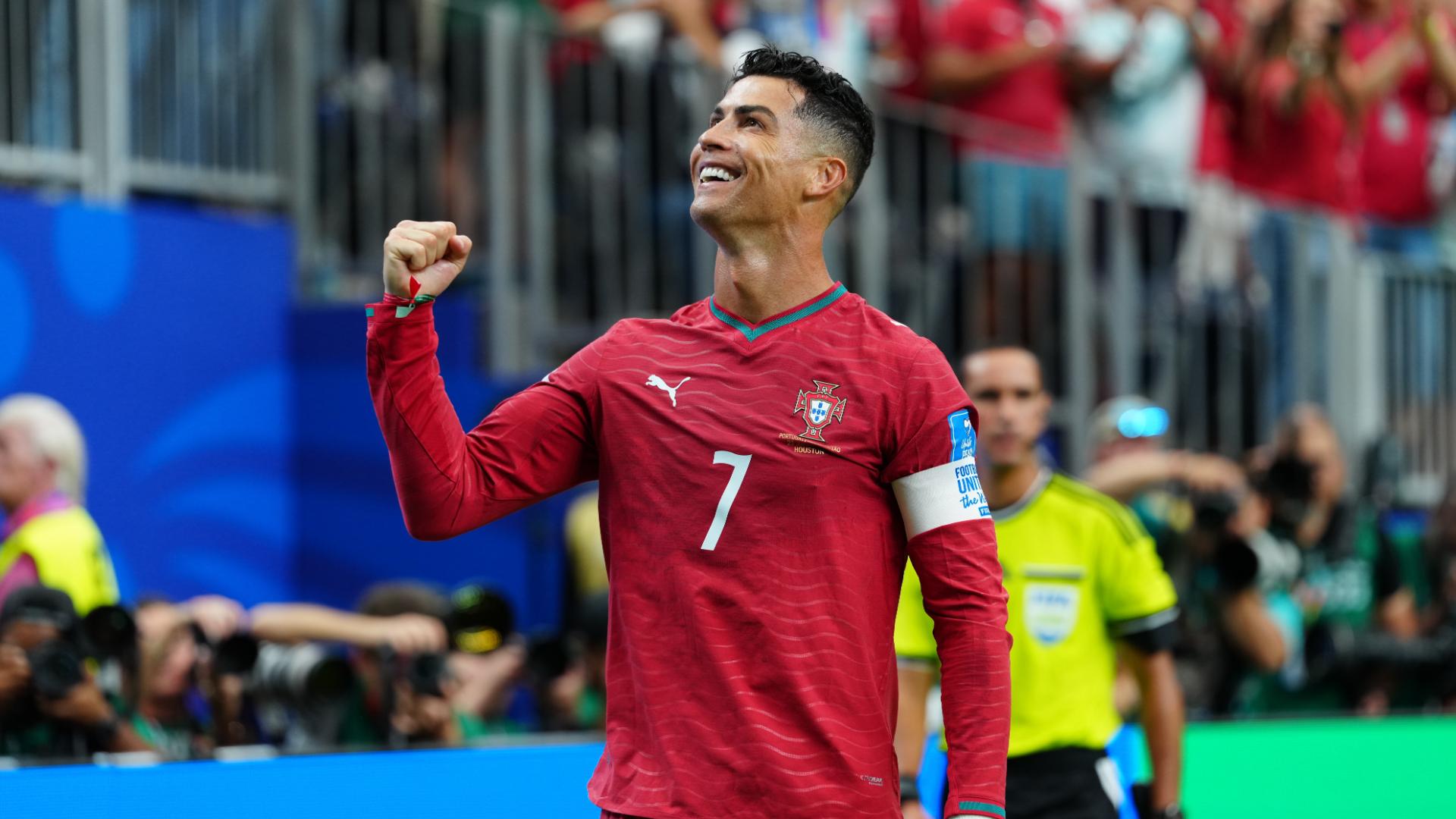
Ronaldo and The Pull of Human Attention
Cristiano Ronaldo's role in this Portugal side is fascinating because it increasingly revolves around influence rather than involvement. There was a time when every attack flowed through him. Now, many of Portugal's best attacks emerge because opponents cannot stop thinking about him.
Defenders remain obsessed with his positioning. They check over shoulders. They adjust distances. They communicate constantly. Even when Ronaldo is not touching the ball, he remains the most important thing occupying their minds.
This creates opportunities elsewhere. Midfield runners encounter less attention. Wide players find larger pockets of space. Second balls become easier to attack because defensive concentration is already committed to Ronaldo's presence.
The danger for Portugal lies in misunderstanding this dynamic. Ronaldo should be the reference point, not the destination of every move. The moment every attack becomes an attempt to find him directly, the entire structure becomes easier to predict. The best version of Portugal uses Ronaldo as gravity, not as a shortcut.
Portugal's Rest Defence: What Happens When Possession Files for Divorce
Possession teams love discussing what happens when they have the ball. They are considerably less enthusiastic about discussing what happens immediately afterward. This is understandable. Nobody enjoys planning for disaster while everything appears to be going well.
Portugal commit numbers forward aggressively. Full-backs advance high. Midfielders support attacks. The shape expands in search of superiority. It is ambitious, proactive, and aesthetically pleasing.
The problem arrives when possession disappears. Suddenly the same attacking structure that looked intelligent five seconds earlier begins looking suspiciously vulnerable. Space emerges behind advanced players, and transitions become dangerous.
Uzbekistan do not require lengthy attacking sequences to exploit those moments. One pass can break a line. Two passes can create a chance. Against possession-heavy teams, the most dangerous attacks often occur immediately after possession has been lost rather than during settled play.
The Final Third Problem: When Control Meets Hesitation
Portugal's biggest challenge is not creativity. It is timing. Again and again, they reach dangerous zones only to delay the decisive action. The attack reaches the final third, surveys the available options, and appears to request a committee meeting before proceeding.
Against DR Congo, this issue was particularly visible. Portugal controlled territory comfortably. They controlled possession comfortably. Yet too many attacks ended with the defensive block still organised and prepared.
The final pass often arrived slightly too early or slightly too late. Against elite defensive structures, those margins matter enormously. Opportunities are temporary. Space exists briefly before disappearing again.
This is why the match may ultimately be decided not by Portugal's ability to control possession, but by their ability to recognise moments. Possession creates possibilities. Timing transforms possibilities into chances. And chances, unlike possession statistics, have a habit of deciding football matches.
Prediction: The Difference Between Ownership and Influence
Portugal will almost certainly dominate possession. They will circulate the ball confidently, control territory, and spend long periods camped inside Uzbekistan's half. None of that is particularly controversial.
The real challenge is ensuring that possession serves a purpose. Against DR Congo, Portugal spent ninety minutes proving they could own the football. Against Uzbekistan, they must prove they can weaponise it.
If Vitinha gains access between lines, if João Neves times his arrivals correctly, and if the wide rotations successfully isolate defenders, Portugal should gradually stretch the Uzbek structure beyond its limits. The wall may hold for a while, but eventually even organised resistance begins to crack.
Prediction:Portugal 4–1 Uzbekistan.
This time, Portugal should finally remember that the ball is a means rather than a destination.
By Tobi Peter
@keepIT _tactical
More from Tobi Peter coming soon.
Visit the profile to follow and get notified when the next piece lands.