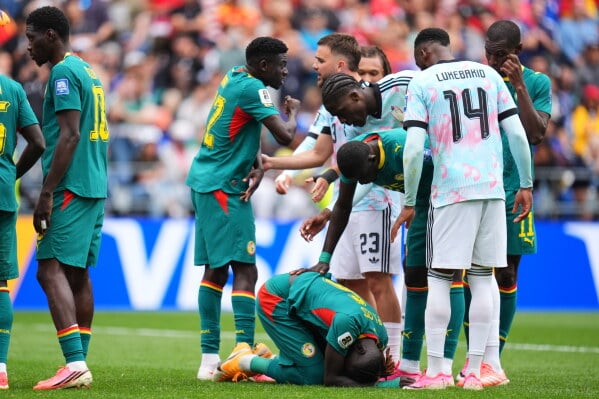
Senegal vs Belgium Tactical Review: Sleepless in Seattle
Tactical Analysis: How Belgium Escaped Senegal in a Dramatic 2026 FIFA World Cup 3-2 Thriller
The city where Hollywood taught us that love can arrive when the night seems longest.
This time, it was heartbreak that kept the lights on.For eighty-seven glorious minutes, Senegal were writing tomorrow. The Round of 16 was not a dream. It was a destination already within touching distance.
Then football remembered its oldest trick
Three minutes.
Two Belgian goals.
One collapsing certainty.
Ninety became one hundred and twenty.
Hope became survival.
Survival became agony.
And just when penalties had begun to clear their throat.
Just when twenty-two weary souls believed fate had deferred its verdict..
One whistle.
One penalty.
One final kick.
One final cruelty.
Belgium lived.
Senegal were left searching the Seattle night for answers that football never promises to give.
Sleepless in Seattle was supposed to be a story about destiny arriving at exactly the right moment. This became its footballing opposite: a night when destiny waited until the final heartbeat, knocked on the wrong door, and left an entire nation staring into the darkness, wondering how a place in the Round of 16 could disappear in the time it takes to close your eyes.
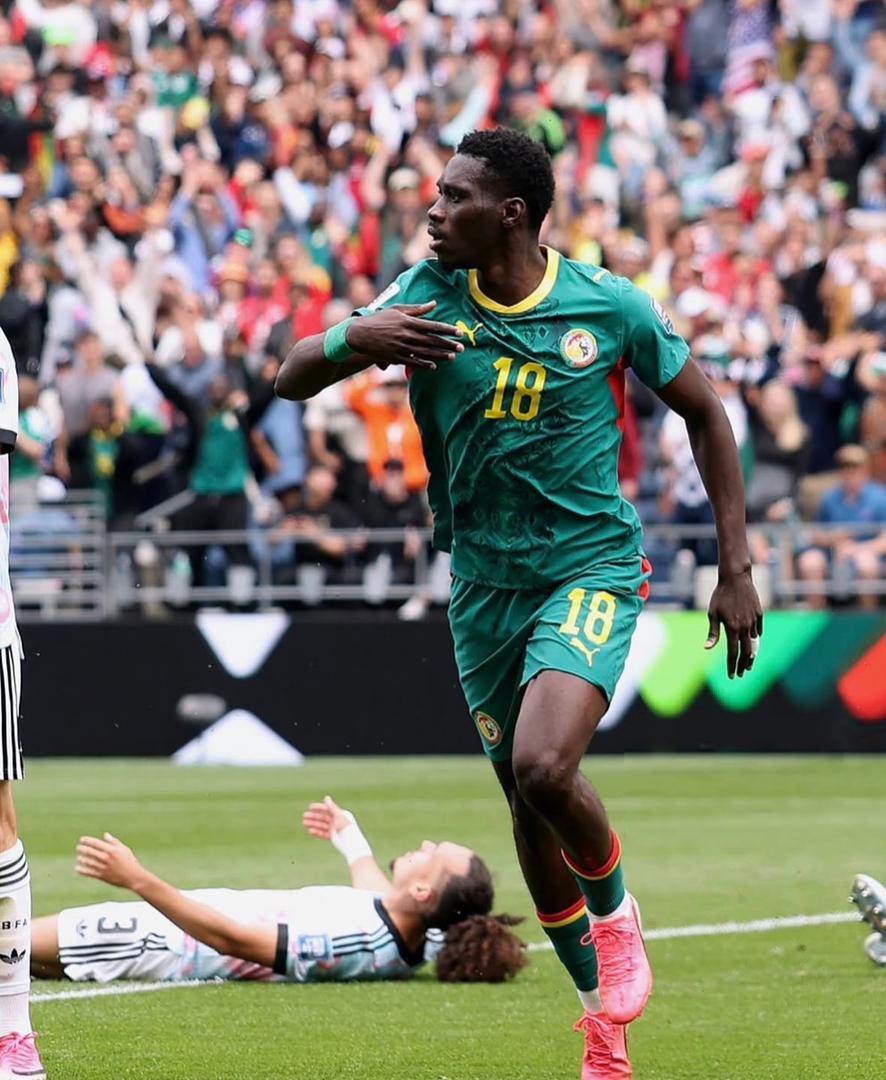
Winning Without The Ball:Senegal's Selective Pressing Structure:
Senegal's greatest defensive achievement was not winning the ball early—it was ensuring Belgium almost always received it facing the wrong direction, in the wrong spaces, and at the wrong tempo.Rather than engaging in an aggressive man-oriented press, Pape Thiaw's side defended through invitation. They allowed Belgium's centre-backs time, encouraging passes that appeared safe while quietly removing the options that would have accelerated the attack. The first line curved its pressing runs to screen access into midfield instead of attacking the ball directly. Every movement asked Belgium the same question: can you progress without your central connections? For long periods, the answer was no.
Belgium's back four—Brandon Mechele, Arthur Theate, Timothy Castagne and Maxim De Cuyper—were frequently allowed to exchange passes without immediate pressure. This apparent freedom disguised a carefully designed trap. Sadio Mane and Iliman Ndiaye curved their pressing runs rather than sprinting directly at the ball, using their cover shadows to block access into Kevin De Bruyne, Youri Tielemans and Hans Vanaken between the lines. Belgium therefore interpreted circulation as control, when in reality Senegal had already determined where the next pass would travel.
The pressing became considerably more aggressive once Belgium played into wide areas. As soon as Castagne or De Cuyper received facing their own goal, Ismaila Sarr or sadio Mane accelerated from the outside, while Habib Diarra or Pape Gueye immediately jumped forward to eliminate the inside passing lane. Simultaneously, Idrissa Gana Gueye shifted laterally to screen De Bruyne's movements between the lines. Rather than trapping Belgium against the touchline through numbers alone, Senegal trapped them by removing every forward-facing solution before applying pressure to the ball.Equally significant were the pressing triggers themselves. Senegal did not jump because Belgium entered a particular zone; they jumped because Belgium lost time advantage. A backward-oriented first touch from Vanaken, a square pass into Tielemans, or a hesitant reception by De Bruyne immediately activated the midfield. Habib Diarra repeatedly left his nominal position to press from Belgium's blind side, while Pape Gueye advanced to compress the space behind him, ensuring Belgium rarely had time to turn and connect vertically.
This collective timing explains why Belgium struggled to establish connections despite enjoying long spells of possession. De Bruyne frequently drifted into pockets seeking to connect with Charles De Ketelaere, but Diarra's anticipation and Gana Gueye's positioning consistently prevented him from receiving on the half-turn. When De Ketelaere dropped to link play, Moussa Niakhate and Pathe Ciss resisted the temptation to follow him aggressively, instead holding the defensive line and trusting the midfield to compress the space in front. Belgium therefore occupied promising positions without ever creating advantageous relationships between them.
Perhaps the most sophisticated element of Senegal's pressing structure appeared after they regained possession. While Diarra, Gana Gueye and Pape Gueye compressed centrally, Ismaila Sarr deliberately remained high and wide, pinning Arthur Theate and Brandon Mechele deep. On the opposite side, Sadio Mane positioned himself to attack the space behind Castagne, while Iliman Ndiaye drifted into the left half-space to become the immediate vertical outlet. Senegal were therefore organising their attack while they were still defending. By the time the interception arrived, the transition had already begun.
This was the fundamental difference between the two teams. Belgium believed control came from accumulating passes. Senegal understood that control came from manipulating the opponent's decisions.
Vertically As A Weapon Against Rest Defence
Belgium's rest defence was never truly resting. It was already being occupied by future problems before the transition even began.During sustained possession, Timothy Castagne and Maxim De Cuyper advanced to support the attack, while Youri Tielemans positioned himself close to Kevin De Bruyne to facilitate combinations. Although this created numerical superiority around the ball, it also widened the distances between the remaining defenders. Mechele and Theate frequently found themselves protecting large horizontal spaces with little immediate support, inviting Senegal to attack the channels rather than the centre.
No player exploited these moments more intelligently than Habib Diarra. His opening goal reflected more than an instinct for arriving in the box; it reflected an understanding of transition timing. Rather than sprinting ahead of the play, Diarra delayed his movement until Belgium's first defensive action had already begun. By attacking the second line instead of the first, he arrived outside the immediate field of vision of Belgium's midfielders, transforming a partially cleared situation into a clear scoring opportunity.
Sarr's role complemented this perfectly. Whereas Diarra destabilised Belgium through delayed central arrivals, Sarr stretched them through immediate width and depth. Every time Senegal regained possession, his first movement was away from the ball rather than towards it, forcing Castagne and Theate to turn and defend open space. That single run expanded Belgium's defensive line, creating larger passing windows for Ndiaye and Mane to exploit inside. Verticality, in this context, was never about playing direct football; it was about manipulating the orientation of the opponent's defenders.
The deeper lesson lay in Belgium's interpretation of defensive security. They believed rest defence could be established by leaving players behind the ball. Senegal demonstrated that rest defence depends less on numbers than on reference points. Mechele and Theate were often numerically sufficient, yet they lacked stable references because Diarra, Sarr and Ndiaye constantly altered their movements after the regain.
When Protecting the Lead Changes the Game
The most significant tactical adjustment of the match was never announced by a substitution or a change of formation. It emerged after Senegal doubled their advantage. At 2–0, the objective was no longer to create instability in Belgium's possession but to protect the stability of their own defensive block. This seemed like a minor alteration but it fundamentally changed the match.
Until then, Senegal had defended by disrupting Belgium's relationship with time—They compressed Belgium's decision-making time before possession could become dangerous. Now,the distances of the first jump shortened, the midfield hesitated before leaving the defensive line, and Belgium began receiving passes with fractions of a second more than they had previously enjoyed. Nicolas Raskin could now receive before Habib Diarra arrived. Youri Tielemans was able to lift his head before Idrissa Gana Gueye compressed the space. Timothy Castagne and Maxim De Cuyper advanced without immediately being forced backwards
Belgium immediately recognised this new reality. Rather than forcing risky vertical passes through crowded central spaces, they became increasingly patient in circulating possession until Senegal's block shifted one step too late. Each successful sequence gave Belgium another opportunity to establish themselves higher up the pitch, reducing the distances required to sustain attacks after losing possession.
Lukaku:The Substitute That Swung The Game.
Substitutions are often evaluated through their direct actions: a goal, an assist or a decisive intervention. Yet some substitutions alter a match long before they alter the scoreline. Romelu Lukaku's introduction belonged to the latter category. His influence was not initially measured in touches or shots but in the way he reorganised the relationships between every player around him. Belgium did not merely gain another striker. They acquired a new reference point around which the entire attacking structure could reorganise itself.
Until Lukaku entered, Belgium attempted to manipulate Senegal through movement into space. Kevin De Bruyne, Hans Vanaken and Charles De Ketelaere drifted between lines, hoping to disconnect Habib Diarra, Idrissa Gana Gueye and Pape Gueye from the defensive line. Senegal remained largely unmoved. Moussa Niakhate and Pathe Ciss could hold their positions because Belgium's occupation of the last line lacked permanence. There was movement, but there was no fixed problem demanding an immediate defensive response.
Lukaku changed that immediately. Rather than searching for free space, he occupied defenders. He positioned himself directly between Niakhate and Ciss, forcing both centre-backs to orient their bodies towards him rather than towards the ball. This represented an important tactical shift. Belgium no longer sought to manipulate empty spaces; they sought to manipulate defensive references. The object of attack was no longer the pitch itself but the attention of Senegal's defenders.
This distinction transformed Belgium's attacking structure. With Niakhate and Ciss permanently engaged by Lukaku's presence, the distances between Senegal's defensive and midfield lines gradually increased. Diarra could no longer jump aggressively onto De Bruyne without exposing the space behind him. Gana Gueye became reluctant to abandon the central corridor, fearing the passing lane into Lukaku's feet. Belgium's midfield suddenly received with a degree of temporal freedom that had been absent throughout the opening seventy minutes.
The effect was perhaps most visible in Belgium's second-ball structure. Earlier in the match, crosses frequently ended Senegal's defensive work because clearances travelled beyond the Belgian attackers. With Lukaku pinning both centre-backs, however, those clearances became less controlled. Knockdowns, loose balls and partial headers increasingly fell towards Youri Tielemans, Nicolas Raskin and Diego Moreira,who had advanced into positions around the edge of the penalty area. Belgium were no longer constructing isolated attacks. They were constructing continuous possessions inside Senegal's defensive third.
Lukaku's physical presence also altered the function of Belgium's wide players. Timothy Castagne and Maxim De Cuyper no longer crossed hopefully into an area occupied by moving targets. They now delivered towards a stable reference capable of contesting aerial duels, shielding defenders and creating unpredictable rebounds. Consequently, the value of every cross increased. Even unsuccessful deliveries prolonged the attack because Belgium had reorganised themselves to dominate the second phase rather than simply the first.
Lukaku's goal therefore should not be interpreted as the beginning of Belgium's comeback but as its logical continuation. By the time he scored, he had already reshaped the contest for several minutes. His greatest contribution was not the finish itself but the new shape he imposed upon the game. Space had previously defined Belgium's attacking intentions. Lukaku replaced space with reference points, transforming every duel, every clearance and every cross into a problem Senegal could no longer solve with the collective certainty that had characterised their first hour.
Extra Time:The Consequence of Belief
The decisive resource in extra time is belief— the conviction that one's next action will succeed.Once it begins to erode, the structure may remain visible, but its function gradually disappears. The first instinct for Senegal, was no longer to influence Belgium's next pass but to survive Belgium's current attack. Belgium experienced the opposite transformation. Every successful recovery reinforced the certainty that the next attack would return to Senegal's penalty area. Nicolas Raskin demanded possession more frequently, Youri Tielemans advanced with greater authority towards second ball,while Thomas Meunier and Arthur Theate immediately squeezed the pitch after every clearance. Belgium no longer attacked in isolated moments; they attacked in uninterrupted sequences, confident that possession would soon return if it was temporarily lost.
That belief was equally reflected in the behaviour of Belgium's wingers. Earlier, Jeremy Doku had repeatedly received to feet, attempting to eliminate Krepin Diatta through individual dribbling before Senegal's defensive block had been sufficiently stretched. As the match evolved, the function of the wide players changed completely. Leandro Trossard began holding the width for longer before delivering early crosses towards Lukaku, while Dodi Lukebakio, introduced from the bench, constantly attacked the space behind Ismail Jakobs, forcing Senegal's back line to defend its full width. The wingers were no longer asked simply to beat their direct opponents. They became the players responsible for enlarging the distances between Senegal's defenders, making Lukaku's occupation of the centre even more influential. Lukebakio's energetic contribution from the bench epitomised Belgium's successful tactical reshuffle.
The decisive penalty therefore should not be understood as an isolated incident or an unfortunate conclusion. It represented the endpoint of a process that had been unfolding since Belgium regained control of the match's rhythm.
Conclusion
The Round of 32 has merely opened the book. The Round of 16 will ask even harder questions. The quarter-finals will demand even greater courage. The semi-finals will stretch belief to its breaking point. And the final —final will ask one nation to carry immortality while another carries memory.
There will be moments that steal our breath. There will be goals that silence continents. There will be saves that defy reason, tears that defy language, and victories that defy probability. We will celebrate. We will grieve. We will wonder how the same game can be so exquisitely beautiful and so relentlessly cruel.
Because this is football.
And this,
This is the World Cup.
By Tobi Peter