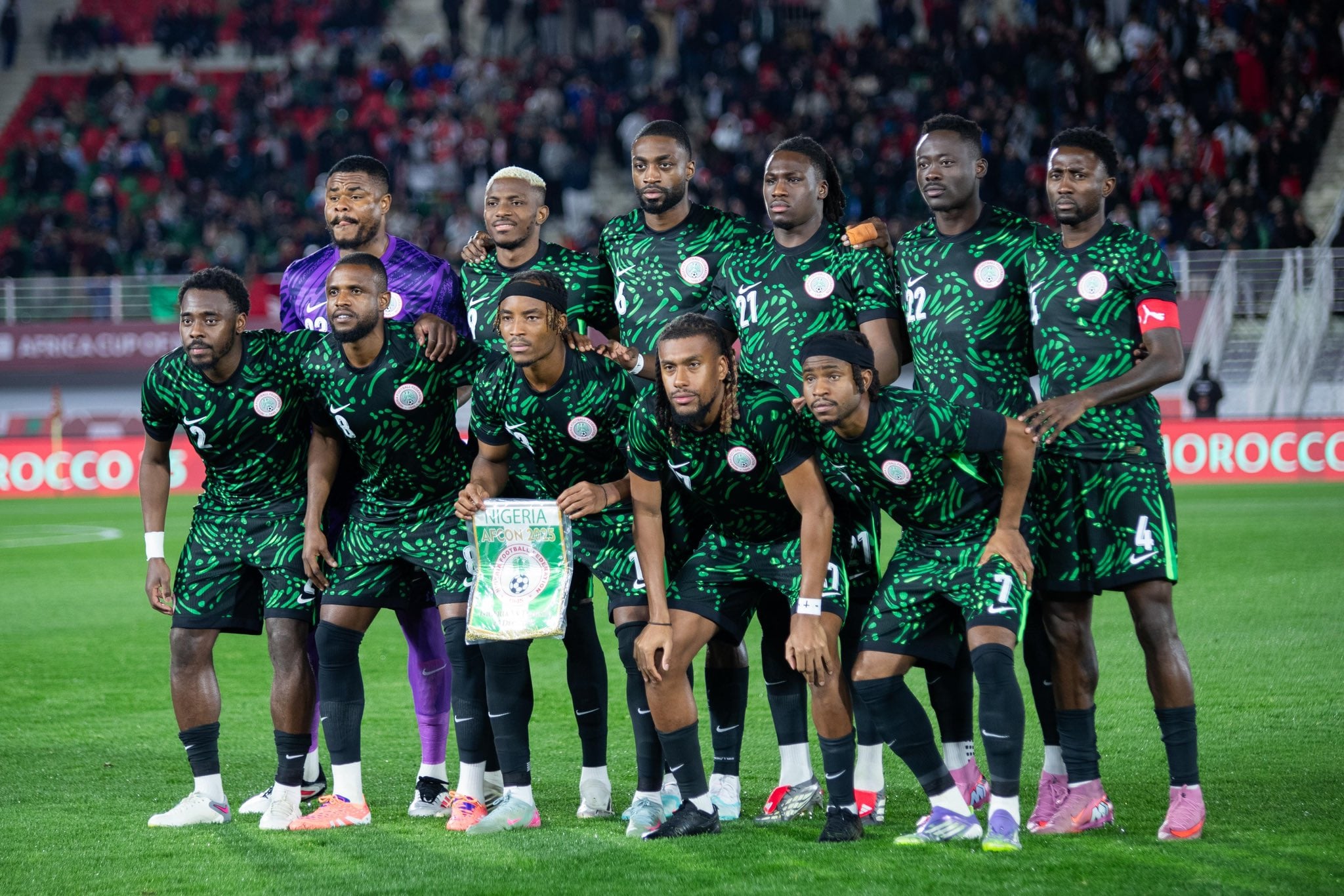
TACTICAL PREVIEW: GUINEA VS NIGERIA
There was a time when the gods of African football seemed to smile upon Nigeria.
When the road twisted, Nigeria found a way. When the night grew dark, somehow there was green in the morning. World Cups came and went, generations rose and disappeared, heroes became memories, but Nigeria endured. Not always elegantly. Not always convincingly. But somehow, almost inevitably, Nigeria were there.
And then, the gods fell silent.
The Super Eagles were not at the 2026 World Cup.
The Super Falcons will not be at the 2027 World Cup.
For the first time, Africa’s great queens fell before the WAFCON semi-finals. For the first time, a Women’s World Cup will arrive without Nigeria.
A nation that once treated qualification almost as inheritance has discovered the cruelty of exclusion.
Two teams.
Two World Cups.
Two empty seats at football’s greatest tables.
And now, another African evening descends.
Bissau.
Not a final. Not yet.
No trophy tonight. No medals.
Only three points.
And perhaps that is what should frighten Nigeria most.
Because catastrophe rarely introduces itself as catastrophe.
It whispers.
A point surrendered.
A chance wasted.
An away night dismissed as recoverable.
There is still time.
There are still games.
We will fix it later.
Nigeria know those words.
They followed them towards the 2026 World Cup.
Right to the door.
Then watched somebody else walk through it.
And now another door stands open.
Another campaign.
Another warning.
Another night when tomorrow can be protected today.
The gods once smiled upon Nigeria.
Then they fell silent.
Tonight, in Bissau, Nigeria must discover whether they have need them back on their side .
Nigeria’s Possession Contradiction: Having the Ball Without Controlling the Game
Nigeria’s victory over Madagascar provided an interesting indication of Eric Chelle’s tactical dilemma ahead of this match. Nigeria started in what was essentially a 4-4-2 diamond, with Wilfred Ndidi and Alex Iwobi providing the deeper midfield presence, Samuel Chukwueze and Ademola Lookman operating narrower than conventional wingers, and George Ilenikhena alongside Akor Adams up front. Chelle eventually moved towards something closer to a 4-2-3-1, giving Nigeria greater width against a Madagascar side defending very narrowly. The change was significant because Nigeria’s initial problem was not a lack of attacking players in central areas, but arguably that too many of them were occupying similar spaces without sufficiently changing Madagascar’s defensive structure.
The precise formation, however, matters less than the distances and relationships it produced. With Ola Aina capable of providing width from the right and Bruno Onyemaechi advancing from the opposite side, Nigeria could theoretically occupy several different vertical and horizontal lines around the opposition block, while Iwobi connected underneath and Lookman or Chukwueze moved between the lines. But occupation alone does not create an advantage: what matters is whether those positions generate different passing angles, force defenders to divide their attention or increase the distances an opponent must cover. Calling the structure a 4-4-2, 4-2-3-1 or even a 3-2-5 once a full-back advances describes the photograph; it does not explain the interactions inside it.
Madagascar exposed the potential weakness of those interactions because their narrowness transformed Nigeria’s apparent numerical superiority into spatial congestion. Iwobi could move towards the ball, Lookman could drift inside and one of the forwards could withdraw from the centre-backs, but every additional Nigerian arriving centrally did not necessarily create another useful option; sometimes it merely allowed one Madagascan defender to influence two receivers within the same field of vision. T If Lookman, Iwobi and a dropping forward occupy adjacent vertical lines without sufficient staggering, Nigeria can have three players around two opponents and still possess only one realistic forward passing lane.
Against Guinea-Bissau, Nigeria could encounter the same problem if Lookman, Iwobi and the centre-forward continually move towards one another rather than stretching the opposition across different lines.
Guinea-Bissau, meanwhile, should be relatively comfortable allowing Nigeria’s centre-backs and full-backs to have possession. Emiliano Te’s 4-2-3-1 can quickly become something resembling a 4-5-1, with the wide players dropping alongside the midfield and the central players protecting passes into Nigeria’s attacking midfielders. Calvin Bassey might therefore see plenty of the ball, while Semi Ajayi could repeatedly switch possession towards Ola Aina on the opposite side. But Guinea-Bissau will probably regard those passes as relatively harmless if Dalcio and the midfield remain compact, Renato Nhaga prevents easy central progression and Mama Balde remains positioned to attack the space Nigeria leave behind when possession changes hands.
This means the possession statistics could be slightly misleading. Nigeria might finish with 65 or even 70 per cent of the ball, spend long periods inside Guinea-Bissau’s half and appear to be dominating, while still playing largely on Guinea-Bissau’s terms. The revealing moments will come when Nigeria’s circulation actually forces a defender to abandon his position: perhaps Bassey carrying forward draws out a midfielder, Iwobi’s movement forces Dalcio towards him, or Aina’s positioning pulls Guinea-Bissau’s left-sided defender wider and creates room for Lookman inside. The relevant question, then, isn’t simply how much possession Nigeria have. It is whether that possession forces Guinea-Bissau to defend differently.
Manipulating the Block: Width, Iwobi, Bassey and the Creation of the Free Player
Chelle’s decision to introduce greater width against Madagascar offered an obvious clue about Nigeria’s approach here, although the solution is more complicated than simply getting the ball wide. If Ola Aina receives near the right touchline, for example, the important moment might actually occur somewhere else. Guinea-Bissau must decide whether their left-sided midfielder follows him, whether the left-back steps forward, whether a central midfielder shifts across, or whether they simply allow Aina to receive and preserve their compactness. Nigeria should therefore use circulation towards the wing not simply to cross, but to provoke defensive movement before returning into the half-space: the purpose of going outside is often to create something inside
Alex Iwobi could be particularly important in creating those situations. There is a considerable difference between Bassey moving the ball across the defensive line through Ajayi before Aina receives and Bassey finding Iwobi centrally before Iwobi releases Aina towards the right. The destination is essentially the same, but the defensive journey is not: Iwobi’s central reception can encourage a Guinea-Bissau midfielder to move inwards before the ball travels outside, meaning Aina receives while the defensive block is still shifting rather than already positioned to confront him. That difference might last barely a second, but this is often where the real advantage exists: Aina can be physically unmarked for five seconds and yet only genuinely free during the brief moment when his nearest opponent is moving in the wrong direction.
This is also why Bassey’s willingness to carry the ball could become surprisingly important. If Guinea-Bissau are happy to leave Nigeria’s centre-backs in possession while protecting passes into Iwobi and Lookman, there is little benefit in Bassey repeatedly exchanging harmless passes with Ajayi. Instead, he can advance five yards, then another five, until a midfielder faces an uncomfortable choice between continuing to screen the Nigerian behind him and stepping forward to confront the ball. If he jumps, the player he was screening becomes accessible; if he stays, Bassey can continue advancing and Nigeria gain ground without needing to force a pass.
The same logic should shape how Nigeria attempt to find Ademola Lookman. Seeing Lookman between the lines does not automatically mean the ball should immediately be played into him. An early pass from Iwobi might find Lookman facing his own goal, with a midfielder recovering behind him and a centre-back ready to step forward and little room to turn; playing first towards Bruno Onyemaechi can change all three of those conditions. If Onyemaechi’s reception draws Guinea-Bissau towards the touchline and shifts their back four across, the subsequent pass inside can reach Lookman against a defender who is moving rather than one who has been waiting for him.
Moses Simon could perform a similar function on the left. Bassey finding Simon before Nigeria work possession back through Iwobi might appear unnecessarily circuitous, but Simon’s involvement can change Guinea-Bissau’s shape before Iwobi receives again. The crucial detail is what happens to the defenders between those passes: one turns towards the touchline, another moves across to cover, somebody else loses sight of Lookman, and the distance between two midfielders briefly increases. Nigeria have not simply moved the ball; they have changed the conditions under which the next player receives it.
That is probably the clearest measure of whether Nigeria’s possession is actually working.
Creating Lookman’s Game: Isolation, Support and the Threats Around Nigeria’s Most Dangerous Player
There is a second problem with simply trying to “get Lookman on the ball”: Guinea-Bissau know Nigeria want to do it too. The question therefore becomes what exists around Lookman when possession reaches him. If he receives in the left half-space with Onyemaechi behind him, Iwobi approaching the same zone and the centre-forward dropping towards the ball, Guinea-Bissau can compress three Nigerian players with relatively little defensive movement. Lookman has possession, but every supporting movement has effectively brought another defender towards Nigeria’s most dangerous attacker.
Nigeria therefore need to think carefully about the difference between supporting Lookman and creating space for Lookman. Onyemaechi does not always need to approach him for a combination; sometimes continuing beyond him towards the outside is the better form of support because it forces the full-back to account for two different directions. Iwobi, similarly, does not always need to arrive alongside Lookman. Remaining underneath can preserve a backward connection, give Nigeria security if the attack fails and, crucially, prevent Guinea-Bissau’s midfielder from simply collapsing onto Lookman without leaving Iwobi available behind him. The quality of the relationship comes from complementary distances, not proximity for its own sake.
The centre-forward becomes even more important here. Without Victor Osimhen, Nigeria lose not only finishing but the constant threat of a striker attacking the space behind the defensive line, and whoever plays as the nine must reproduce at least part of that function. If the striker continually drops towards Lookman, the nearest centre-back can become aggressive: he knows the space behind him is no longer immediately occupied and can step into Lookman’s receiving zone. But if the nine remains high, perhaps positioning himself between the two centre-backs or threatening the channel outside one of them, stepping forward suddenly carries a consequence. The striker can therefore create space for Lookman without touching the ball simply by making the defender responsible for that space reluctant to leave it.
This produces a more useful attacking structure around Nigeria’s most creative player. Onyemaechi can threaten beyond or outside him, the striker can stretch the defence vertically, and Iwobi can remain underneath, leaving Lookman as the player between those three reference points rather than merely another body inside the same cluster. Now the defender confronting Lookman has a genuine dilemma: become aggressive and potentially release the striker, remain compact and allow Lookman to turn, or receive help from a midfielder and risk freeing Iwobi underneath. Nigeria are no longer asking Lookman to defeat an organised defensive situation individually; the positioning of his team-mates is making the defensive situation less organised before he acts.
There may even be occasions when the best way to use Lookman is not to give him the ball. If Guinea-Bissau begin narrowing towards him early, his positioning can become a form of attraction: two defenders become concerned with denying one Nigerian, leaving Aina, Simon or the opposite half-space with more favourable conditions elsewhere. Nigeria must recognise those moments rather than treating every Lookman movement as an instruction to find him.
Rest Defence, Beto and Guinea-Bissau’s Transition Chain
Nigeria’s greatest defensive problem against Guinea-Bissau may emerge while they have the ball. Imagine Aina advancing high on the right, Onyemaechi doing the same on the opposite side, Iwobi moving beyond Ndidi and both wide attackers narrowing around the final line. Nigeria would appear to have established excellent attacking occupation, perhaps with six or seven players surrounding Guinea-Bissau’s block, but underneath that attack Bassey and Ajayi could suddenly be responsible for an enormous amount of space. If possession is then lost, it is tempting to diagnose the counter-attack from the moment of the misplaced pass. In reality, the turnover may merely reveal a defensive problem Nigeria created several passes earlier.
This is the fundamental purpose of rest defence. It should not be understood simply as leaving enough players behind the ball, because five poorly positioned players can control a transition less effectively than three players occupying the correct spaces. Nigeria must organise possession according to what Guinea-Bissau could do with the next possession: where the first forward pass can travel, where the second ball is likely to fall, which Nigerian is prepared to attack the receiver and who protects the depth behind him. Every attacking movement therefore has a defensive consequence. Aina going higher changes Ajayi’s responsibility; Onyemaechi advancing changes Bassey’s; Iwobi moving beyond the ball changes what Ndidi must protect.
Beto is the player who makes those relationships particularly important. His value in transition is not simply that he can be targeted with a long pass, but that his reception can provide Guinea-Bissau with an exit from Nigeria’s counterpress. After a regain, Nigeria’s nearest players will naturally collapse around the ball, attempting to recover possession before Guinea-Bissau can escape; one direct pass into Beto can eliminate that entire pressure if he protects the ball and connects with Mama Baldé or Franculino Djú moving beyond him. In that sense, Beto’s first touch or lay-off can function almost like Guinea-Bissau’s first progressive pass. The duel with Bassey or Ajayi is therefore not merely about winning the header: it is about preventing one contact from transforming a Nigerian attack into a Guinea-Bissau transition.
This also changes how the first duel should be understood. Nigeria do not necessarily need Bassey to win every aerial contest against Beto; they need to control what happens around it. Bassey can attack the first ball while Ajayi protects the depth behind the duel, Ndidi positions himself where the knockdown is likely to arrive and the far-side defender narrows early enough to prevent the entire defensive line becoming stretched. Then even a Beto header does not automatically constitute a successful transition, because Guinea-Bissau’s next receiver is immediately confronted. The second ball is therefore not an incidental consequence of the duel. Against Guinea-Bissau, it may effectively be the first organised action of their attacking phase.
This is why Ndidi could become Nigeria’s most important defensive player precisely when Nigeria are attacking. His positioning should continually respond not simply to where the ball is, but to what the players around him have just done: when Aina advances, Ndidi can shade towards the space that movement exposes; when Bassey carries forward, he must recognise that Nigeria have temporarily lost one member of their protective line; when Iwobi moves higher, Ndidi becomes increasingly responsible for maintaining the connection between possession and the centre-backs. Following the ball too closely can therefore be dangerous. Ndidi needs to position himself partly according to an event that has not happened yet.
Nigeria’s best rest defence will therefore not necessarily produce spectacular recovery tackles from Ndidi or desperate interventions from Bassey. It may produce nothing visible at all: Beto is marked too tightly for the direct pass, Baldé’s channel is already covered, the second-ball zone belongs to Ndidi, and Guinea-Bissau decide not to counter because the route is no longer attractive. Nigeria’s defence against the counter-attack begins not when they lose possession, but while they still have it.
Structural Solutions: Asymmetry, Five-Lane Occupation and Directional Pressing
The obvious way for Nigeria to stretch Guinea-Bissau would be to push both full-backs forward, but that would create precisely the transition spaces discussed earlier. A more sensible approach would be asymmetric. Aina can advance on the right while Onyemaechi remains deeper alongside Bassey and Ajayi, giving Nigeria a back three when possession develops further forward. Ahead of them, Usor can move inside from the right, Simon provide width on the left and Lookman occupy the space between Guinea-Bissau’s midfield and defence, with Iwobi connecting the attack and Ndidi remaining in position to protect against the turnover. Nigeria would still have players across the full width of the pitch without leaving Bassey and Ajayi alone whenever possession changes hands.
This does not mean Chelle needs to impose a rigid front five. Nigeria can occupy the left wing, left half-space, centre, right half-space and right wing while constantly changing which player occupies each zone. Lookman might drift centrally as Simon remains outside him; Usor can come inside when Aina overlaps; Iwobi can occasionally move beyond the midfield line when somebody else provides the connection underneath. The important thing is that those movements do not drag several Nigerian players into the same space. If Nigeria maintain their width and staggering, one Guinea-Bissau defender cannot easily cover two Nigerian attackers at once.
That spacing should also improve the quality of Nigeria’s crossing. There is little value in Aina receiving wide and immediately delivering towards an organised back four simply because Nigeria have successfully reached the flank. A cross after Guinea-Bissau have shifted from one side of the pitch to the other is a completely different proposition: centre-backs are adjusting their positions, midfielders are recovering towards their own goal and the far-side defender may have lost sight of the runner behind him. Nigeria can then choose the appropriate delivery, whether an early ball behind the defensive line, a far-post cross, a cutback after reaching the byline or a clipped pass from the half-space. The point is not that Nigeria need to cross more, but that they need to create better moments to cross.
The same distinction between initiative and control applies when Nigeria do not have the ball. Guinea-Bissau might appear to be an obvious opponent to press high, but they do not necessarily need to play through Nigeria’s pressure. If Chelle sends six players forward and Guinea-Bissau simply play directly towards Beto, one accurate pass can remove those six Nigerians from the immediate contest. Beto can then compete for the first ball or hold it long enough for Baldé and Franculino to run beyond him. Nigeria could therefore produce an impressive-looking high press while actually making Guinea-Bissau’s preferred route towards goal easier.
There is a case, then, for Nigeria varying the height of their pressure. Sometimes they can engage Guinea-Bissau’s first line; sometimes a controlled mid-block might be preferable, particularly if it reduces the space around Beto and keeps Nigeria’s defenders connected to Ndidi. The more interesting option is to make a particular pass look available and then increase the pressure once Guinea-Bissau take it. Nigeria might allow a centre-back possession while blocking the straightforward route into central midfield, encouraging him instead to find the full-back near the touchline.
That pass can become the trigger. Nigeria’s winger can close the receiving full-back, Iwobi can prevent the easy return into midfield, Aina or Onyemaechi can step towards Guinea-Bissau’s next wide option and Ndidi can remain inside to protect against the escape pass. The touchline effectively becomes another defender because Guinea-Bissau suddenly have fewer directions in which they can play. Rather than chasing possession everywhere, Nigeria have decided where they want Guinea-Bissau to have it before committing numbers towards the ball.
That is the common theme between Nigeria’s approach in and out of possession. When attacking, Chelle’s side should not commit every player forward simply because the opportunity exists; when crossing, they should not deliver simply because the ball has reached a wide position; when pressing, they should not increase the pressure simply because Guinea-Bissau have started passing from the back. In each case, Nigeria need to establish favourable conditions before committing to the decisive action. The important question is not simply when Nigeria attack, cross or press, but what the opposition structure looks like when they choose to do it.
Game-State Control: Why Patience May Decide the Match
Perhaps the most interesting point in this contest will come if, after half an hour, nothing has happened. Nigeria might have most of the possession, Guinea-Bissau might have spent long periods inside their own half, and the score might still be 0–0. That is when Chelle’s side will face a different type of tactical test. The temptation will be to interpret the absence of goals as evidence that they need more: another player forward, quicker deliveries into the box, more bodies around the penalty area. But there is an important difference between increasing attacking quality and simply increasing attacking quantity.
In fact, 0–0 might suit Guinea-Bissau precisely because it encourages that impatience. Every five minutes without a Nigerian goal increases the temptation to take another small risk. Individually, those decisions might appear harmless; collectively, they can change the nature of the contest. Nigeria could gradually turn a game they are controlling into the more open, transitional match Guinea-Bissau would prefer.
A Nigerian goal would change things considerably. Guinea-Bissau could no longer spend the entire contest protecting the same spaces. At some stage their midfield would have to advance, their full-backs would have to take greater risks and the distances within their defensive shape would increase. Suddenly Nigeria would not need to manufacture every opening themselves. Lookman, Simon, Usor and the centre-forward could attack spaces created by Guinea-Bissau’s need to equalise.
Conceding first would provide the more difficult examination. Simply introducing another forward would not necessarily be the answer. Chelle would instead need to alter the relationships within Nigeria’s attack without allowing the team to become increasingly stretched. Otherwise Guinea-Bissau’s lead would not merely change the score; it would change Nigeria’s behaviour.
That is why this match may ultimately be decided as much by Nigeria’s response to the scoreline as by their starting formation. Guinea-Bissau want Nigeria to reach the point where possession becomes frustration and frustration becomes risk. Nigeria need to ensure those stages never automatically follow one another.
By Tobi Peter
@keepIT_tactical