The Curious Case Of Mamadou Sangare
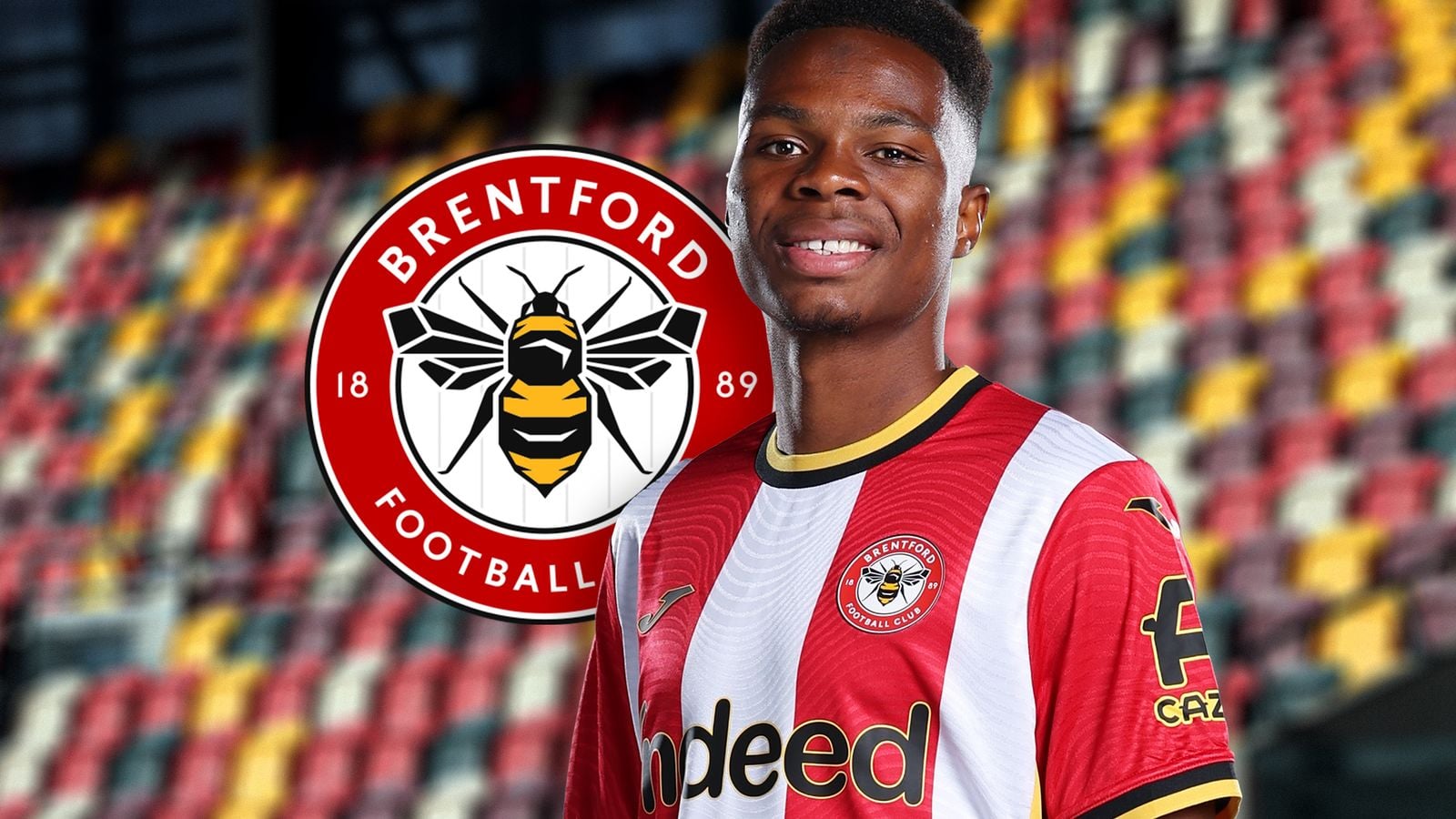
Mamadou Sangare, best EPL player and Brentford's £39M signing that redefined defensive midfield position in premier league
There was a time when the name Mali travelled across the world on a tide of gold.
But before the gold, there was a king.
Sundiata Keita. The Lion of Mali. The man who rose from adversity to forge an empire from the fragments of a fractured kingdom. A conqueror who did not merely inherit history, but seized it by the throat and gave it a name,Mali
And then came Mansa Musa.
If Sundiata built the kingdom, Musa made the world look upon it in wonder. His legendary pilgrimage to Mecca carried such extraordinary wealth across the Sahara that the price of gold itself was said to have felt his passing. Timbuktu flourished. Knowledge travelled. And far beyond the dunes of West Africa, the name Mali became synonymous with a civilisation of astonishing ambition.
Empires, though, are mortal.
Their palaces crumble. Their borders disappear. Their kings pass into legend.
But some legacies refuse to be buried.
Centuries later, another son of Mali would emerge — not with an army, nor with caravans of gold, but with a football at his feet.
Salif Keita. The Black Panther. A pioneer who carried the artistry of Malian football into Europe, opening doors through which others would follow.
Among them, his nephew, Seydou Keita. A midfielder of intelligence and steel, who would rise through the great arenas of European football, leaving his own mark on the game’s grandest stages.
Different men. Different eras. One enduring inheritance.
And now, the story turns another page.
A young man is beginning to announce himself.
A name, for now. A promise, perhaps. A question the future has yet to answer.
He is not Sundiata, the empire-builder. He is not Mansa Musa, the king whose wealth astonished the world. He is not Salif, the pioneer, nor Seydou, the conqueror of European midfields.
He must become something else. Something entirely his own.
And that is where the fascination begins.
Because Mali has already given the world its kings, its gold, its pioneers and its champions.
What it has not yet given the world is the final chapter of its story.
The empire is gone. The caravans have fallen silent. The gold belongs to history.
But on a football pitch, another kind of treasure may be waiting to be discovered.
And his name is Sangare
Beyond the 6/8 Dichotomy: Understanding Sangare Through Functions Rather Than Positions
The temptation with Mamadou Sangaré is to settle the positional question immediately. Is he a No 6 or a No 8? There is evidence for both descriptions, but neither is especially satisfying. Sangare can begin possession alongside another holding midfielder, sometimes dropping towards the centre-backs to help the first phase of build-up, yet his involvement rarely ends there. Once the ball moves beyond the opposition’s first line, he is comfortable advancing with it, combining higher up or continuing his run towards the edge of the box. Calling him a six explains his starting point; calling him an eight often explains where he ends up.
The double pivot is particularly useful because it gives Sangare a reference point without making that reference restrictive. Two holding midfielders do not have to remain level, and Sangare is most interesting when the relationship becomes staggered. If his partner stays behind the ball,
He can move beyond the opposition’s midfield line; if his partner advances, Sangare can become the player responsible for circulation and protection underneath the attack. This creates a small but important problem for opponents using man-orientated pressure. Following Sangare towards the centre-backs can open the space he has vacated, whereas allowing him to receive may give him the opportunity to turn and attack the next line.
That dilemma explains why Sangare should be analysed through responsibilities rather than starting coordinates. Consider him receiving right-of-centre with an opposition midfielder moving towards him. His initial position suggests a No 6, but an open first touch can take him beyond the presser and immediately change the picture: the next midfielder must now decide whether to step forward, a defender may have to protect the space behind, and one of Sangares team-mates becomes available because somebody has been drawn towards the ball. If Sangare releases possession wide and continues forward, another exchange occurs. The midfielder who originally provided build-up security has effectively become an additional attacking player without the team changing shape or formally altering his role.
This is more significant than simply calling him versatile. Versatility usually describes a player capable of performing different roles in different matches; Sangare’s appeal is his capacity to perform different midfield functions within the same possession. His location changes because the problem changes: first the team needs an outlet from the centre-backs, then somebody to break pressure, then somebody to commit the next defender, then somebody to support ahead of the ball.
Progression Through Manipulation: Carrying, Passing, And The Pass Before the Pass
One of Sangare’s most interesting qualities is his ability to make a pass more dangerous by choosing not to play it immediately. Having escaped the initial pressure, he will often advance with the ball even when a passing option is already available. The reason is quite important. A pass moves possession from one player to another, but carrying the ball can force opponents to abandon their positions, change their defensive angles and open passing lanes that were previously protected.
There is also something particularly useful about Sangare being left-footed, especially when operating on the right of a double pivot. From that position, receiving onto his stronger foot can allow him to open his body towards the centre, with the option of driving diagonally into midfield or passing towards the opposite half-space. This creates an awkward choice for the nearest opponent. Close the inside passing lane and Sangare may have room to advance; move towards the ball and he can release it into the space being vacated. His positioning is therefore significant not simply because of where he receives, but because of the different directions in which he can threaten the opposition from that starting point.
His switches of play at Lens offered another illustration of this. Matthieu Udol, operating on the left, was a particularly useful outlet when opponents had shifted across to defend the ball side. As possession circulated through midfield, opposition players would naturally move towards Sangare, narrowing the distances between themselves and leaving greater space towards the opposite touchline. Sangaré could then find Udol with a diagonal pass, allowing the wing-back to receive before the defensive block had recovered its width. The quality of the delivery mattered, of course, but so did the timing. Playing the same pass before the opposition had shifted across would not necessarily have created the same advantage. Sangaré’s contribution was recognising when the opponents’ attempts to protect one area had left another vulnerable.
These passes also explain why Sangare’s creative influence can be greater than his assist numbers suggest. At Lens, Sangare could switch possession towards Udol, who would then deliver the cross that produced a shooting opportunity. The final ball belonged to Udol, but the earlier pass might have been the action that forced the defence to turn, retreat and reorganise. Sangaré’s value as a creator therefore extends beyond assists or even the final pass before a shot. More importantly, opponents cannot defend against him by concentrating exclusively on his passing or carrying. If they remain compact and protect the central lanes, he can advance until somebody engages him; if they step forward, he can exploit the opening; if they overload the ball side, he can switch play. What makes Sangare difficult to contain is not simply the range of options available to him, but his ability to make one option more valuable by threatening another.
Defending Forward: How Sangare Wins the Ball
Mamadou Sangare’s defensive statistics suggest a fairly straightforward conclusion: he is an excellent ball-winner. His tackling, interceptions and recoveries certainly support that description, but they do not fully explain why he wins possession so regularly. Sangare is particularly interesting because of what happens before the challenge. He watches the player in possession, recognises which passing options are being closed by his team-mates and starts moving towards the most likely destination. The eventual interception might appear to be the product of an impressive burst of acceleration, but the crucial advantage was often established a moment earlier, when Sangare recognised where the next pass was likely to go.
When an opposition centre-back looking to find a midfielder between the lines. Sangare does not necessarily stand directly in front of the intended receiver, which would make the passing lane obviously unavailable. Instead, he can position himself slightly to one side, remaining close enough to challenge while allowing the midfielder to appear free. If the centre-back is being pressed from an angle that prevents him switching play, the pass into midfield becomes more predictable. Sangare can then move as the centre-back prepares to release possession, approaching from outside the receiver’s immediate field of vision. What initially looked like a sensible pass becomes a difficult reception, with Sangare arriving before the midfielder has established control.
The important point is that the apparent availability of the receiver can be misleading: the passing lane might be open, but the receiver does not necessarily have the time or body position to use it.
There is a similar element of anticipation in Sangare’s work around second balls. When an opponent plays long towards a striker, the obvious focus is the contest between the forward and centre-back, but Sangare is often more concerned with where the next touch will send possession. If the defender challenges from behind, for example, the ball might drop towards the area immediately in front of the back line; if the striker attempts to flick it onwards, the relevant space changes. Sangare’s starting position and movement towards these areas can determine whether his team collects the loose ball or faces another attack. This is particularly useful in matches involving frequent aerial contests, where controlling the second contact can be more important than winning the first.
His counterpressing follows much the same logic, although the circumstances are different. When possession breaks down, Sangare does not always retreat immediately into midfield. If the opponent receiving the ball is facing backwards, has taken a heavy touch or lacks a straightforward forward pass, he can close down aggressively before the opposition establishes possession. Sometimes this produces an immediate tackle; on other occasions, it forces a hurried clearance or directs the ball towards a team-mate who completes the recovery.
Sangare’s greatest defensive contribution is his judgement of when a seemingly available passing option is actually vulnerable.
Freedom and Its Costs: The Risks of Sangare's Aggression
There is, inevitably, a downside to Sangare’s eagerness to win possession. His anticipation and willingness to step forward are among his greatest strengths, but they can also leave space behind him when an opponent manages to escape the challenge.
Imagine an opposition midfielder dropping towards the ball with Sangare following closely. The obvious danger appears to be that the receiver might turn, but the more troublesome possibility is that he never intends to. Instead, he plays a simple pass back to the original passer, allowing a third player to run into the space Sangare has vacated. What initially looked like an opportunity to win possession has become a way for the opposition to play through midfield. Against teams comfortable using wall passes and third-man combinations, Sangare’s aggression can therefore become something to exploit rather than avoid.
This helps explain why playing alongside another central midfielder suits him. In a double pivot, Sangare can step forward knowing that somebody else is available to protect the space behind him, although the arrangement requires more than one player permanently sitting deep. At Lens, his partnership with Adrien Thomasson offered the possibility of alternating those responsibilities. When Sangare advanced, Thomasson could remain behind the ball; when Thomasson moved forward, Sangare could provide the deeper passing option and defensive cover. The benefit was not simply greater security. It also made the midfield less predictable, because opponents could not always assume which player would move forward and which would remain in position. The important consideration was the distance between them: if both advanced simultaneously, the protection provided by the double pivot could quickly disappear.
A lone holding-midfield role would present Sangare with a different challenge. Playing as the only midfielder directly in front of the defence requires greater caution when leaving that position, particularly against opponents who keep a No 10 between the lines or position forwards ready to receive into the channels. If Sangare steps out to press and the ball is played around him, there may be nobody immediately available to prevent the next pass towards the back line. That does not mean he is incapable of playing as a lone six, but it would require him to make different decisions about when to engage and when to hold his position. The question is whether those additional responsibilities would reduce the opportunities for him to demonstrate his most distinctive qualities. A role in which he can contribute to the initial build-up before advancing alongside a covering midfielder appears a more important natural use of his strengths.
There is also room for greater selectivity in possession. Sangare’s ability to escape pressure and carry forward is valuable, but beating the first opponent does not automatically mean the next action should be another forward movement. Sometimes a short sideways pass, allowing a team-mate to receive facing play, can be more useful than continuing into an increasingly crowded area. The same judgement applies defensively: stepping towards the ball might offer an opportunity for a tackle, but remaining in position could prevent two or three dangerous passing options at once.
The next stage of Sangare’s development is therefore recognising when the best contribution is to resist the temptation to intervene.
Transition-Controlling Connector: What Sangare Is, What He Could Become, and Why Brentford Fits
There is a temptation to describe Mamadou Sangare as a box-to-box midfielder, which is understandable considering the ground he covers and the variety of situations in which he becomes involved. But that description doesn't quite capture what makes him unusual. Box-to-box suggests a player who contributes at both ends of the pitch, whereas Sangare's value is often found in what happens between those contributions. He can turn a defensive recovery into an attacking opportunity almost immediately, or find himself in a position to win the ball back because of a forward run he made moments earlier. His importance is not simply that he performs different midfield duties, but that he can move between them without requiring his team to reorganise around him.
That makes Brentford an interesting destination. Their preference for playing forward relatively quickly means midfielders are regularly involved in situations where possession is contested rather than comfortably established. A long pass towards the forwards might produce a second ball in midfield; a turnover could leave an opponent retreating towards his own goal; an attack down one flank might create an opportunity to switch towards the other. These are precisely the circumstances in which Sangare can be influential. He is comfortable attacking loose balls, carrying into the space behind a retreating midfielder and identifying opportunities before the opposition has settled into its defensive shape.
The challenge for Brentford is to make use of those instincts without allowing matches to become unnecessarily stretched, particularly when Sangare has advanced beyond the position from which he would ordinarily protect the defence.
What would make him a more complete player is greater authority over the rhythm of a match, rather than simply responding effectively to its changes. He does not need to become a conservative holding midfielder, nor should Brentford necessarily ask him to abandon the adventurous instincts that make him valuable. The challenge is to become more selective about when those instincts should take over. The next step for Sangare is not learning how to influence more situations, but recognising when the best way to influence a match is to control the situations that arise in the first place.
By Tobi Peter
@keepIT_tactical
Credits
Words